
Table of Contents
Index to Financial Statements
As filed with the Securities and Exchange Commission on July 27, 2004
Registration No. 333-113865
UNITED STATES
SECURITIES AND EXCHANGE COMMISSION
Washington, D.C. 20549
Amendment No. 5
to
FORM S-1
REGISTRATION STATEMENT
Under
THE SECURITIES ACT OF 1933
MetroPCS Communications, Inc.
(Exact name of registrant as specified in its charter)
| Delaware | 4812 | 20-0836269 | ||
| (State or other jurisdiction of incorporation or organization) |
(Primary Standard Industrial Classification Code Number) |
(I.R.S. Employer Identification No.) |
8144 Walnut Hill Lane, Suite 800
Dallas, Texas 75231
(214) 265-2550
(Address, including zip code, and telephone number, including area code, of registrant’s principal executive offices)
Roger D. Linquist
President, Chief Executive Officer,
Secretary and Chairman of the Board
8144 Walnut Hill Lane, Suite 800
Dallas, Texas 75231
(214) 265-2550
(Name, address, including zip code, and telephone number, including area code, of agent for service)
Copies to:
| Andrews Kurth LLP 600 Travis, Suite 4200 Houston, Texas 77002 (713) 220-4200 Attn: Henry Havre Kin Gill |
Latham & Watkins LLP 885 Third Avenue, Suite 1000 New York, New York 10022 (212) 906-1200 Attn: Ian Blumenstein |
Approximate date of commencement of proposed sale to the public: As soon as practicable following the effectiveness of this registration statement.
If any of the securities being registered on this Form are to be offered on a delayed or continuous basis pursuant to Rule 415 under the Securities Act, check the following box. ¨
If this Form is filed to register additional securities for an offering pursuant to Rule 462(b) under the Securities Act, please check the following box and list the Securities Act registration statement number of the earlier effective registration statement for the same offering. ¨
If this Form is a post-effective amendment filed pursuant to Rule 462(c) under the Securities Act, check the following box and list the Securities Act registration statement number of the earlier effective registration statement for the same offering. ¨
If this Form is a post-effective amendment filed pursuant to Rule 462(d) under the Securities Act, check the following box and list the Securities Act registration statement number of the earlier effective registration statement for the same offering. ¨
If the delivery of the prospectus is expected to be made pursuant to Rule 434, check the following box. ¨
CALCULATION OF REGISTRATION FEE
| Title of Each Class of Securities to be Registered |
Proposed Maximum Aggregate Offering Price (2) |
Amount of Registration Fee (2) | ||
| Common stock, par value $0.0001 per share (1) |
$607,200,000 | $76,933 (3) |
| (1) | Includes shares of common stock issuable upon the exercise of the underwriters’ over-allotment option. |
| (2) | Estimated solely for the purpose of calculating the amount of the registration fee pursuant to Rule 457(o) under the Securities Act of 1933, as amended. |
| (3) | The registrant has previously paid these fees. |
The registrant hereby amends this registration statement on such date or dates as may be necessary to delay its effective date until the registrant shall file a further amendment which specifically states that this registration statement shall thereafter become effective in accordance with Section 8(a) of the Securities Act of 1933 or until the registration statement shall become effective on such date as the Securities and Exchange Commission, acting pursuant to said Section 8(a), may determine.
Table of Contents
Index to Financial Statements
The information in this prospectus is not complete and may be changed. We may not sell these securities until the Securities and Exchange Commission declares our registration statement effective. This prospectus is not an offer to sell these securities and is not soliciting an offer to buy these securities in any state where the offer or sale is not permitted.
SUBJECT TO COMPLETION, DATED JULY 27, 2004
PROSPECTUS
24,000,000 Shares

MetroPCS Communications, Inc.
Common Stock
This is an initial public offering of 24,000,000 shares of common stock of MetroPCS Communications, Inc. No public market currently exists for any class of our capital stock. We are selling 12,000,000 of the shares of common stock offered under this prospectus, and certain of our stockholders, referred to in this prospectus as the selling stockholders, are selling the remaining 12,000,000 shares. We will not receive any of the net proceeds from the shares sold by the selling stockholders.
We currently anticipate the initial public offering price of our common stock to be between $20.00 and $22.00 per share. Our shares have been approved for quotation on the Nasdaq National Market under the symbol “MPCS.”
See “ Risk Factors” beginning on page 8 to read about risks that you should consider before buying shares of our common stock.
Neither the Securities and Exchange Commission nor any other regulatory body has approved or disapproved of these securities or passed upon the adequacy or accuracy of this prospectus. Any representation to the contrary is a criminal offense.
| Per Share |
Total | |||||
| Public offering price |
$ | $ | ||||
| Underwriting discounts |
$ | $ | ||||
| Proceeds, before expenses, to us |
$ | $ | ||||
| Proceeds, before expenses, to the selling stockholders |
$ | $ | ||||
The underwriters may purchase up to an additional 3,600,000 shares of common stock from the selling stockholders at the initial public offering price less the underwriting discount to cover over-allotments.
The underwriters expect to deliver the shares on , 2004.
| Bear, Stearns & Co. Inc. | Merrill Lynch & Co. |
UBS Investment Bank
JPMorgan
Thomas Weisel Partners LLC
The date of this prospectus is , 2004.
Table of Contents
Index to Financial Statements
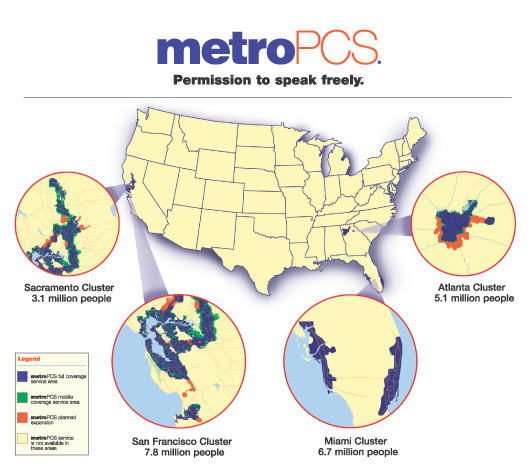
Table of Contents
Index to Financial Statements
You should rely only on the information contained in this prospectus. We have not authorized anyone to provide you with information different from that contained in this prospectus. We are offering to sell, and seeking offers to buy, shares of common stock only in jurisdictions where offers and sales are permitted. The information contained in this prospectus is accurate only as of the date of this prospectus, regardless of the time of delivery of this prospectus or of any sale of our common stock.
| Page | ||
| 1 | ||
| 8 | ||
| 17 | ||
| 17 | ||
| 18 | ||
| 19 | ||
| 20 | ||
| Management’s Discussion and Analysis of Financial Condition and Results of Operations |
22 | |
| 39 | ||
| 47 | ||
| 55 | ||
| 65 | ||
| 66 | ||
| 71 | ||
| 73 | ||
| Material U.S. Federal Tax Considerations for Non-U.S. Holders |
81 | |
| 84 | ||
| 87 | ||
| 90 | ||
| 91 | ||
| 92 | ||
| 92 | ||
| 92 | ||
| F-1 |
i
Table of Contents
Index to Financial Statements
This summary contains selected information about us and this offering. You should carefully read this entire prospectus, including the section entitled “Risk Factors,” and our consolidated financial statements and the accompanying notes included elsewhere in this prospectus.
MetroPCS
We are among the fastest growing wireless communications providers in the United States, measured by annual percentage growth in customers and revenue. We offer wireless voice and data services on a no-contract, flat rate, unlimited usage basis in the San Francisco, Miami, Atlanta and Sacramento metropolitan areas, which include a total population of 22.6 million people. We launched service in all of these areas in the first quarter of 2002, except for San Francisco, which we launched in September 2002. We reported positive net income after four quarters of operations and one million customers after eight quarters of operations. As of March 31, 2004, we had approximately 1.15 million customers. We believe that we reached these growth and profitability milestones significantly faster than any other U.S. wireless carrier and that our no-contract, flat rate, unlimited usage service offering will allow us to continue to penetrate our existing markets and further drive our growth and profitability. In addition, we believe our services can be successfully introduced in new markets, and we continue to assess attractive expansion opportunities.
We provide wireless voice and data services to the mass market, which we believe is underserved by traditional wireless carriers. Our service, branded under the “metroPCS” name, allows our customers to place unlimited wireless calls within a local calling area and to receive unlimited calls from any area under our simple and affordable flat monthly rate plan of $35. For an additional $5 per month, our customers may place unlimited long distance calls from within a local calling area to any number in the continental United States. For additional fees, we also provide caller ID, voicemail, text messaging, camera functions, downloads of ringtones, games and content applications, international long distance and other value-added services. Our calling plans differentiate us from the more complex plans and long-term contracts required by other wireless carriers. Our customers pay for our service in advance, eliminating any customer credit exposure, and we do not require a long-term service contract. Our customers currently average approximately 1,800 minutes of use per month, compared to approximately 675 minutes per month for customers of traditional wireless carriers. We believe that average monthly usage by our customers also exceeds the average monthly usage for typical wireline customers. Average usage by our customers indicates that a majority of our customers use us as their primary telecommunications service provider, and our customer survey results indicate that approximately 35% of our customers use us as their sole telecommunications service provider.
To date, our strategy has resulted in high rates of customer acceptance and strong financial performance. For the year ended December 31, 2003, we reported total revenues of $459.5 million, net cash provided by operating activities of $109.6 million and net income of $20.6 million. In 2003, our net income declined from net income of $139.1 million reported in 2002, primarily as a result of a $279 million pre-tax gain realized on the sale of 10 MHz of spectrum in our Atlanta market in February 2002. As of December 31, 2003, we had $902.5 million of total assets, $236.0 million of cash and cash equivalents and $195.8 million of total debt.
Competitive Strengths
Our principal competitive strengths are:
| Ÿ | Our flat rate calling plans, which provide unlimited usage within a local calling area with no long-term contracts |
| Ÿ | Our focus on densely populated markets, which provide significant operational efficiencies |
1
Table of Contents
Index to Financial Statements
| Ÿ | Our leadership position as the lowest cost provider of wireless telephone services in the United States |
| Ÿ | Our state-of-the-art CDMA 1XRTT network, which provides more efficient use of spectrum than other commonly deployed wireless technologies |
| Ÿ | Our deep spectrum portfolio, which provides us with operational flexibility and the ability to swap or sell spectrum |
Business Strategy
Our business strategy is to:
| Ÿ | Continue to target the underserved customer segments in our markets |
| Ÿ | Offer affordable, fixed price calling plans without long-term service contracts |
| Ÿ | Maintain our position as the lowest cost wireless telephone services provider in the United States |
| Ÿ | Expand into attractive markets through acquisitions and spectrum swaps |
As a result of our business strategy, we have ranked among the leaders in the U.S. wireless industry in incremental market penetration in every quarter since we launched operations. Historically, approximately 42% of our gross customer additions have been first time wireless customers. We believe our rapid adoption rates and customer mix demonstrate that our service is expanding the overall size of the wireless market and better meeting the needs of many existing wireless users. Our operating strategy, network design and rapidly increasing scale should allow us to maintain our cost leadership position, as we further reduce our operating costs per customer and enhance profitability in the future.
We expect that attractive expansion opportunities will become available, and we plan to target new markets that complement our existing footprint or can be operated as a standalone cluster with growth and profitability characteristics similar to our existing markets. Consistent with this strategy, on July 8, 2004, we agreed to pay $43.5 million in cash to acquire two 10MHz PCS licenses for areas in Tampa and Sarasota, Florida, with a total population of approximately 3.3 million people. These markets have similar characteristics to our existing markets and are geographically contiguous to our existing operations in southwest Florida.
2
Table of Contents
Index to Financial Statements
The Offering
| Common stock offered by MetroPCS |
12,000,000 shares |
| Common stock offered by the selling stockholders |
12,000,000 shares |
Capital stock to be outstanding after this offering:
| Common stock |
97,106,870 shares |
| Class A common stock |
90 shares |
| Voting rights |
Holders of the common stock offered in this prospectus will have one vote per share. However, with respect to all matters submitted to a vote of stockholders for which a separate class vote is not required, the holders of our Class A common stock, consisting of Roger D. Linquist (our President, Chief Executive Officer, Secretary and Chairman of the Board) and C. Boyden Gray (a member of our board of directors), will have, collectively, votes equal to 50.1% of the aggregate voting power of all shares entitled to vote. The holders of our common stock will have, collectively, votes equal to 49.9% of the aggregate voting power of all shares entitled to vote. |
| In addition, the holders of Class A common stock will be entitled to a separate class vote to elect five members of our board of directors, and the holders of common stock will be entitled to a separate class vote to elect four members of our board of directors. |
| Following this offering, we intend to petition the FCC for the ability to convert our Class A common stock into common stock, with one vote per share. We expect to complete this process within approximately nine months of the consummation of this offering. However, we cannot assure you that the FCC will grant this request in a timely fashion or at all. See “Legislation and Government Regulations” and “Description of Capital Stock.” |
| Use of proceeds |
We estimate that the net proceeds to us from this offering will be approximately $235.0 million. We intend to use the net proceeds to us for general corporate purposes, including continued expansion of our networks in existing markets and expansion into new markets, including through acquisitions. In addition, we may use a portion of the net proceeds to redeem a portion of our 10 3/4% senior notes due 2011. We will not receive any proceeds from the sale of common stock by the selling stockholders. See “Use of Proceeds.” |
| Nasdaq National Market symbol |
“MPCS.” |
| Risk factors |
See “Risk Factors” beginning on page 8 of this prospectus for a discussion of factors you should consider carefully before deciding to invest in our common stock. |
3
Table of Contents
Index to Financial Statements
The number of shares of capital stock to be outstanding upon consummation of this offering:
| Ÿ | is based upon our outstanding capital stock as of May 31, 2004; |
| Ÿ | gives effect to a one for two reverse stock split of our outstanding common, which occurred on July 23, 2004; |
| Ÿ | gives effect to the conversion of all of our outstanding Series D preferred stock into common stock, which will occur concurrently with the consummation of this offering (including shares of common stock to be issued in respect of unpaid dividends on our outstanding Series D preferred stock that have accumulated as of May 31, 2004); |
| Ÿ | excludes shares of common stock to be issued in respect of unpaid dividends on our outstanding Series D preferred stock that have accumulated subsequent to May 31, 2004; |
| Ÿ | excludes 16,010,389 shares reserved for issuance under our equity compensation plans (of which 10,627,486 shares are currently issuable upon the exercise of outstanding options with a weighted average exercise price of $2.3959 per share) and 1,215,570 shares issuable upon the exercise of outstanding warrants with a weighted average exercise price of $0.5697 per share; and |
| Ÿ | assumes no exercise of the underwriters’ over-allotment option. |
MetroPCS Communications, Inc., a Delaware corporation, was incorporated on March 10, 2004, and is the holding company parent of MetroPCS, Inc., a Delaware corporation. MetroPCS, Inc. was incorporated on June 24, 1994. We operate principally through two subsidiaries and hold PCS licenses in 15 subsidiaries. Our principal executive offices are located at 8144 Walnut Hill Lane, Suite 800, Dallas, Texas 75231, and our telephone number is (214) 265-2550. Our website URL is www.metropcs.com. The information on our website is not a part of this prospectus.
4
Table of Contents
Index to Financial Statements
Summary Consolidated Financial and Other Data
The following table sets forth summary consolidated financial and other data of MetroPCS Communications, Inc. at March 31, 2004, for the years ended December 31, 2001, 2002 and 2003 and for the three months ended March 31, 2003 and 2004. We derived our summary consolidated financial data for each of the three years in the period ended December 31, 2003 from the audited consolidated financial statements included elsewhere in this prospectus. We derived our summary consolidated financial data at March 31, 2004 and for the three months ended March 31, 2003 and 2004 from our unaudited consolidated financial statements included elsewhere in this prospectus. You should read the summary consolidated financial and other data in conjunction with “Capitalization,” “Selected Consolidated Financial and Other Data,” “Management’s Discussion and Analysis of Financial Condition and Results of Operations” and the consolidated financial statements, including the notes thereto, included elsewhere in this prospectus.
| Year Ended December 31, |
Three Months Ended March 31, |
|||||||||||||||||||
| 2001 |
2002 |
2003 |
2003 |
2004 |
||||||||||||||||
| (In thousands) | ||||||||||||||||||||
| Statement of Operations Data: |
||||||||||||||||||||
| Revenues: |
||||||||||||||||||||
| Service revenues |
$ | — | $ | 102,137 | $ | 370,920 | $ | 75,999 | $ | 132,921 | ||||||||||
| Equipment revenues |
— | 23,458 | 88,562 | 23,399 | 40,077 | |||||||||||||||
| Total revenues |
— | 125,595 | 459,482 | 99,398 | 172,998 | |||||||||||||||
| Operating expenses: |
||||||||||||||||||||
| Cost of service (excluding depreciation included below) |
— | 61,881 | 118,335 | 25,929 | 40,909 | |||||||||||||||
| Cost of equipment |
— | 100,651 | 155,084 | 44,213 | 64,047 | |||||||||||||||
| Selling, general and administrative expenses (excluding non-cash compensation) |
27,963 | 55,515 | 90,556 | 18,046 | 28,916 | |||||||||||||||
| Non-cash compensation |
1,455 | 1,115 | 7,379 | 241 | 3,256 | |||||||||||||||
| Depreciation and amortization |
208 | 21,394 | 41,900 | 9,047 | 12,774 | |||||||||||||||
| (Gain) loss on sale of assets |
— | (278,956 | )(1) | 333 | 111 | 87 | ||||||||||||||
| Total operating expenses |
29,626 | (38,400 | ) | 413,587 | 97,587 | 149,989 | ||||||||||||||
| Income (loss) from operations |
(29,626 | ) | 163,995 | 45,895 | 1,811 | 23,009 | ||||||||||||||
| Other (income) expense: |
||||||||||||||||||||
| Interest expense |
10,491 | 6,805 | 11,254 | 1,755 | 5,572 | |||||||||||||||
| Interest income |
(2,046 | ) | (964 | ) | (1,061 | ) | (140 | ) | (616 | ) | ||||||||||
| (Gain) loss on extinguishment of debt |
7,109 | — | (603 | ) | — | (201 | ) | |||||||||||||
| Total other expense |
15,554 | 5,841 | 9,590 | 1,615 | 4,755 | |||||||||||||||
| Income (loss) before income taxes and cumulative effect of change in accounting principle |
(45,180 | ) | 158,154 | 36,305 | 196 | 18,254 | ||||||||||||||
| Provision for income taxes |
— | (19,087 | ) | (15,665 | ) | (113 | ) | (7,417 | ) | |||||||||||
| Income (loss) before cumulative effect of change in accounting principle |
(45,180 | ) | 139,067 | 20,640 | 83 | 10,837 | ||||||||||||||
| Cumulative effect of change in accounting, net of tax |
— | — | (74 | ) | (74 | ) | — | |||||||||||||
| Net income (loss) |
$ | (45,180 | ) | $ | 139,067 | $ | 20,566 | $ | 9 | $ | 10,837 | |||||||||
| Other Financial and Operating Data (GAAP): |
||||||||||||||||||||
| Net cash provided by (used in) operating activities |
$ | (32,401 | ) | $ | (64,523 | ) | $ | 109,618 | $ | (4,826 | ) | $ | 24,368 | |||||||
| Net cash provided by (used in) investing activities |
24,183 | (73,494 | ) | (137,321 | ) | (26,623 | ) | (70,527 | ) | |||||||||||
| Net cash provided by (used in) financing activities |
41,708 | 157,066 | 201,951 | 5,581 | (4,697 | ) | ||||||||||||||
| Cash used for capital expenditures |
133,604 | 212,305 | 117,212 | 26,899 | 73,338 | |||||||||||||||
5
Table of Contents
Index to Financial Statements
| Year Ended December 31, |
Three Months Ended March 31, |
|||||||||||||||||||
| 2001 |
2002 |
2003 |
2003 |
2004 |
||||||||||||||||
| Other Financial and Operating Data (Non-GAAP): |
||||||||||||||||||||
| Adjusted EBITDA (in thousands) (2) |
$ | (27,963 | ) | $ | (92,452 | ) | $ | 95,507 | $ | 11,210 | $ | 39,126 | ||||||||
| Adjusted EBITDA margin (3) |
— | — | 21 | % | 11 | % | 23 | % | ||||||||||||
| Covered POPs (at period end) (4) |
— | 16,964,450 | 17,662,491 | 17,197,196 | 17,942,763 | |||||||||||||||
| Customers (at period end) |
— | 513,484 | 976,899 | 708,965 | 1,150,954 | |||||||||||||||
| Average monthly churn (5) |
— | 4.4 | % | 4.6 | % | 3.5 | % | 3.8 | % | |||||||||||
| Average revenue per user (ARPU) (2) |
— | $ | 39.17 | $ | 37.68 | $ | 39.50 | $ | 40.00 | |||||||||||
| Cost per gross addition (CPGA) (2) |
— | 158.50 | 99.86 | 104.97 | 96.74 | |||||||||||||||
| As of March 31, 2004 | ||||||
| Actual |
As Adjusted (6) | |||||
| (In thousands) | ||||||
| Balance Sheet Data: |
||||||
| Cash and cash equivalents |
$ | 185,109 | $ | 420,119 | ||
| Property and equipment, net |
519,549 | 519,549 | ||||
| Total assets |
895,220 | 1,130,230 | ||||
| Total debt, net of unamortized discount |
193,102 | 193,102 | ||||
| (1) | In February 2002, we sold 10 MHz of excess spectrum in our Atlanta market resulting in a pre-tax gain of $279.0 million. |
| (2) | We utilize certain financial measures that are not calculated in accordance with generally accepted accounting principles, or GAAP, to assess our financial performance. A non-GAAP financial measure is defined as a numerical measure of a company’s financial performance that (i) excludes amounts, or is subject to adjustments that have the effect of excluding amounts, that are included in the comparable measure calculated and presented in accordance with GAAP in the statement of operations or statement of cash flows; or (ii) includes amounts, or is subject to adjustments that have the effect of including amounts, that are excluded from the comparable measure so calculated and presented. |
| Adjusted earnings before interest, taxes, depreciation and amortization, or adjusted EBITDA, average revenue per user, or ARPU, and cost per gross addition, or CPGA, are non-GAAP financial measures utilized by our management to judge our ability to meet our liquidity requirements and to evaluate our operating performance. We believe these measures are important in understanding the performance of our operations from period to period, and although every company in the wireless industry does not define each of these measures in precisely the same way, we believe that these measures (which are common in the wireless industry) facilitate key liquidity and operating performance comparisons with other companies in the wireless industry. The following tables reconcile our non-GAAP financial measures with our financial statements presented in accordance with GAAP. |
| We have presented adjusted EBITDA because this financial measure, in combination with other GAAP and non-GAAP financial measures, is an integral part of the internal reporting system utilized by management to facilitate evaluation of our ability to meet future debt service, capital expenditure and working capital requirements and fund future growth. Adjusted EBITDA is a supplement to GAAP financial information and should not be construed as an alternative to, or more meaningful than, cash flows from operating activities, as determined in accordance with GAAP. The following table reconciles adjusted EBITDA to net cash provided by (used in) operating activities. |
| Year Ended December 31, |
Three Months Ended March 31, |
|||||||||||||||||||
| 2001 |
2002 |
2003 |
2003 |
2004 |
||||||||||||||||
| (In thousands) | ||||||||||||||||||||
| Calculation of Adjusted EBITDA: |
||||||||||||||||||||
| Net cash provided by (used in) operating activities |
$ | (32,401 | ) | $ | (64,523 | ) | $ | 109,618 | $ | (4,826 | ) | $ | 24,368 | |||||||
| Interest expense, net of interest income |
8,445 | 5,841 | 10,193 | 1,615 | 4,956 | |||||||||||||||
| Bad debt expense |
— | (381 | ) | (991 | ) | (749 | ) | (433 | ) | |||||||||||
| Accretion of asset retirement obligation |
— | — | (50 | ) | (25 | ) | (79 | ) | ||||||||||||
| Non-cash interest |
(3,882 | ) | (3,028 | ) | (3,090 | ) | (784 | ) | (688 | ) | ||||||||||
| Deferred rents |
(949 | ) | (1,853 | ) | (1,160 | ) | (414 | ) | (435 | ) | ||||||||||
| Cost of abandoned cell sites |
— | — | (824 | ) | (477 | ) | (183 | ) | ||||||||||||
| Non-deferred tax |
— | 8,993 | 1,643 | — | — | |||||||||||||||
| Working capital changes |
824 | (37,501 | ) | (19,832 | ) | 16,870 | 11,620 | |||||||||||||
| Adjusted EBITDA |
$ | (27,963 | ) | $ | (92,452 | ) | $ | 95,507 | $ | 11,210 | $ | 39,126 | ||||||||
6
Table of Contents
Index to Financial Statements
| We believe average revenue per user, or ARPU, is a useful measure to evaluate our per-customer service revenue realization and to assist in forecasting our future service revenues. ARPU is calculated exclusive of activation revenues, as these amounts are a component of our costs of acquiring new customers and are included in our calculation of CPGA. ARPU is also calculated exclusive of E-911 charges, as these are generally pass through charges that we collect from our customers and remit to the appropriate government agencies. |
| Average number of customers for any measurement period is determined by dividing (a) the sum of the average monthly number of customers for the measurement period by (b) the number of months in such period. Average monthly number of customers for any month represents the sum of the number of customers on the first day of the month and the last day of the month divided by two. The following table shows the calculation of ARPU for the periods indicated: |
| Year Ended December 31, |
Three Months Ended March 31, |
|||||||||||||||||
| 2002 |
2003 |
2003 |
2004 |
|||||||||||||||
| (In thousands, except average number of customers and ARPU) |
||||||||||||||||||
| Calculation of Average Revenue Per User (ARPU) |
||||||||||||||||||
| Service revenues |
$ | 102,137 | $ | 370,920 | $ | 75,999 | $ | 132,921 | ||||||||||
| Less: |
Activation revenues | (3,018 | ) | (14,410 | ) | (1,860 | ) | (3,186 | ) | |||||||||
| E-911 charges | — | (5,823 | ) | (1,166 | ) | (2,076 | ) | |||||||||||
| Net service revenues |
99,119 | 350,687 | 72,973 | 127,659 | ||||||||||||||
| Divided by: Average number of customers |
210,881 | 775,605 | 615,876 | 1,063,815 | ||||||||||||||
| ARPU |
$ | 39.17 | $ | 37.68 | $ | 39.50 | $ | 40.00 | ||||||||||
| We utilize cost per gross addition, or CPGA, to assess the efficiency of our distribution strategy, validate the initial capital invested in our customers and determine the number of months to recover our customer acquisition costs. This measure also provides a gauge to compare our average acquisition costs per new customer to those of other wireless communications providers. Activation revenues and equipment revenues related to new customers are deducted from selling costs in this calculation as they represent amounts paid by customers at the time their service is activated that reduce our acquisition cost of those customers. Additionally, equipment costs associated with existing customers, net of related revenues, are excluded as this measure is intended to reflect only the acquisition costs related to new customers. The following table shows the calculation of CPGA for the periods indicated: |
| Year Ended December 31, |
Three Months Ended March 31, |
|||||||||||||||||
| 2002 |
2003 |
2003 |
2004 |
|||||||||||||||
| (In thousands, except gross customer additions and CPGA) |
||||||||||||||||||
| Calculation of Cost Per Gross Addition (CPGA): |
||||||||||||||||||
| Selling expenses |
$ | 26,526 | $ | 44,076 | $ | 9,879 | $ | 12,214 | ||||||||||
| Less: |
Activation revenues |
(3,018 | ) | (14,410 | ) | (1,860 | ) | (3,186 | ) | |||||||||
| Less: |
Equipment revenues |
(23,458 | ) | (88,562 | ) | (23,399 | ) | (40,077 | ) | |||||||||
| Plus: |
Equipment revenue not associated with new customers |
578 | 17,150 | 1,035 | 16,729 | |||||||||||||
| Plus: |
Cost of equipment |
100,651 | 155,084 | 44,213 | 64,047 | |||||||||||||
| Less: |
Equipment costs not associated with new customers |
(2,050 | ) | (24,030 | ) | (2,541 | ) | (21,201 | ) | |||||||||
| Gross addition expenses |
99,229 | 89,308 | 27,327 | 28,526 | ||||||||||||||
| Divided by: Gross customer additions |
626,050 | 894,348 | 260,320 | 294,886 | ||||||||||||||
| CPGA |
$ | 158.50 | $ | 99.86 | $ | 104.97 | $ | 96.74 | ||||||||||
| (3) | Adjusted EBITDA margin is calculated by dividing adjusted EBITDA by total revenues. |
| (4) | POPs represents the aggregate number of persons in a given area. Covered POPs represents the estimated number of POPs in our markets that reside within the areas covered by our network. |
| (5) | Average monthly churn represents (a) the number of customers who have been disconnected from our system during the measurement period less the number of customers who have reactivated service, divided by (b) the sum of the average monthly number of customers during such period. A customer’s handset is disenabled if the customer has failed to make payment by the due date and is disconnected from our system if the customer fails to make payment within 30 days thereafter. See “Management’s Discussion and Analysis of Financial Condition and Results of Operations—Customer Recognition and Disconnect Policies.” |
| (6) | As adjusted to reflect our sale of 12,000,000 shares of common stock in this offering at an assumed initial public offering price of $21.00 per share and our receipt of the estimated net proceeds to us from this offering. |
7
Table of Contents
Index to Financial Statements
You should consider carefully the following factors and other information in this prospectus.
Risks Related to Our Business
We have a limited operating history and our recent performance may not be indicative of our future results.
We began offering service in the first quarter of 2002, and we had no revenues prior to that time. Consequently, we have a limited operating and financial history upon which to evaluate our financial performance, business plan execution and ability to succeed in the future. You should consider our prospects in light of the risks, expenses and difficulties we may encounter, including those frequently encountered by new companies competing in rapidly evolving markets. If we are unable to execute our plans and grow our business, our financial results would be adversely affected.
If we experience a higher rate of customer turnover than forecasted, our costs could increase and our revenues could decline, which would reduce our profits and could reduce the trading price of our common stock.
Our average monthly rate of customer turnover, or churn, for the three months ended June 30, 2004 was approximately 5.2%, an increase over our average monthly churn rate for the three months ended March 31, 2004 of 3.8%. A higher rate of churn would reduce our revenues and increase our marketing costs to attract the replacement customers required to sustain our business plan, which would reduce our profit margin and could reduce the trading price of our common stock. Many wireless service providers have historically experienced a high rate of customer turnover. Our rate of customer turnover may be affected by several factors, including the following:
| Ÿ | network coverage; |
| Ÿ | reliability issues, such as dropped and blocked calls; |
| Ÿ | handset problems; |
| Ÿ | the inability of our customers to cost-effectively roam onto other wireless networks; |
| Ÿ | affordability; and |
| Ÿ | customer care concerns. |
Unlike many of our competitors, we do not require our customers to enter into long-term service contracts. As a result, our customers retain the right to cancel their service at any time without penalty, and we expect our churn rate to be higher than other wireless carriers.
Additionally, as of November 24, 2003, FCC rules require all wireless carriers to provide for wireless number portability for their customers in the top 100 metropolitan statistical areas. As a result, wireless customers in these markets now have the ability to change wireless carriers, but retain their wireless telephone number. Although to date these wireless number portability rules have not resulted in substantial increases in the frequency with which customers switch wireless carriers, it is too soon to predict the long-term effect of these rules on customer turnover. In addition, these number portability requirements are likely to result in added capital expenditures for us to make necessary system changes.
Our internal controls over revenue reporting are insufficient to detect in a timely manner misstatements that could occur in our financial statements in amounts that may be material.
Our customers pay in advance for our services. In accordance with generally accepted accounting principles, amounts received in advance are recorded on our balance sheet as deferred revenue, and are recognized as
8
Table of Contents
Index to Financial Statements
service revenues on our statement of operations only when the services actually are rendered. See “Management’s Discussion and Analysis of Financial Condition and Results of Operations—Critical Accounting Policies and Estimates.” Because we currently prepare service revenue calculations and reconciliations of deferred revenue balances manually, the process is inherently subject to error. This issue may become more significant as our business expands and our product offering becomes more complex.
In July 2003, during the preparation of quarterly financial statements, management noted that the balance of the deferred revenue accounts relative to service revenues had fluctuated from period to period in an inconsistent manner. Management called this inconsistency to the attention of our auditors. In August 2003, management and our auditors noted that the reconciliation of deferred revenue did not include all the appropriate accounts receivable and deferred revenue accounts, and was not prepared on a timely basis. In September 2003, management concluded that we were understaffed in our revenue accounting function and that we did not have personnel with the appropriate experience required to properly account for activity resulting from the billing system.
In October 2003, in connection with the review of our interim financial statements, our auditors issued a letter to us describing these deficiencies. In February 2004, in connection with the audit of our financial statements for the year ended December 31, 2003, our auditors identified the lack of automation in the revenue reporting process as a “material weakness” in our internal controls over revenue reporting. The Public Company Accounting Oversight Board has defined material weakness as “a significant deficiency, or combination of significant deficiencies, that results in more than a remote likelihood that a material misstatement of the annual or interim financial statements will not be prevented or detected.” This means that there is a risk that a material misstatement in the deferred revenue accounts and the related service revenue accounts in our financial statements for a future period is reasonably possible.
To address revenue reporting, management made significant changes to the manual service revenue calculations and deferred revenue reconciliation processes to insure proper revenue reporting and a more timely and complete monthly reconciliation of accounts receivable balances provided by our billing system to the corresponding balances in our general ledger and the related deferred revenue accounts. To further enhance our internal controls, subsequent to December 31, 2003, we have added a Vice President–Controller and a Director of Revenue Accounting, each of whom has several years of relevant experience with revenue and billing systems in the telecommunications industry. We have also hired a senior accounting professional whose focus is to insure that we are effectively utilizing all of the functions available in our billing system, expand the related reporting capabilities, and continue to enhance and further automate our processes related to revenue accounting.
Management believes, and our auditors have advised us based on their review of our financial statements for the three months ended March 31, 2004, that the material weakness still exists due to the lack of automation in this area. Moreover, our auditors have advised us that they will not be able to confirm that the material weakness has been fully remediated until they complete an audit of our financial statements. We expect our next audit to be completed in March 2005. If we are not able to remediate this weakness, we may not be able to prevent or detect a material misstatement of our financial statements.
Our inability to manage our planned growth could increase our costs and adversely affect our level of service.
We have experienced rapid growth and development in a relatively short period of time and expect to continue to experience growth in the future. The management of such growth will require, among other things, continued development of our financial and management controls and management information systems, stringent control of costs, diligent management of our network infrastructure and its growth, increased capital requirements associated with marketing activities, the ability to attract and retain qualified management personnel and the training of new personnel. Failure to successfully manage our expected growth and development could have a material adverse effect on our business, increase our costs and adversely affect our level of service. Additionally, the costs of acquiring new customers could affect our near-term profitability
9
Table of Contents
Index to Financial Statements
adversely. See “Management’s Discussion and Analysis of Financial Condition and Results of Operations—Liquidity and Capital Resources.”
The wireless industry is experiencing rapid technological change, and we may lose customers if we fail to keep up with these changes.
The wireless communications industry is experiencing significant technological change, as evidenced by the ongoing improvements in the capacity and quality of digital technology, the development and commercial acceptance of advanced wireless data services, shorter development cycles for new products and enhancements and changes in end-user requirements and preferences. We may lose customers if we fail to keep up with these changes.
We are dependent on our FCC licenses, and our ability to provide service to our customers and generate revenues could be harmed by adverse regulatory action or changes to existing laws or rules.
The FCC regulates the licensing, construction, modification, operation, ownership, sale and interconnection arrangements of wireless communications systems, as do some state and local regulatory agencies. We cannot assure you that the FCC or the state and local agencies having jurisdiction over our business will not adopt regulations or take other actions that would adversely affect our business by imposing new costs or requiring changes in our current or planned operations, or that the Communications Act of 1934, from which the FCC obtains its authority, will not be amended in a manner that could be adverse to us.
Our principal assets are our FCC licenses to provide personal communications services. The loss of any of these licenses could have a material adverse effect on our business. Our FCC licenses are subject to revocation if we are found not to have complied with the FCC’s rules or the Communications Act’s requirements. We also could be subject to fines and forfeitures for such non-compliance, which could affect our business adversely. For example, absent a waiver, failure to comply with the FCC’s enhanced 911, or E-911, requirements or with number portability requirements could subject us to significant penalties. In addition, because we acquired our licenses in an “entrepreneur’s block” FCC auction, our licenses are subject to additional FCC requirements, which dictate the manner in which our voting control and equity must be held during the first ten years we hold the licenses (until 2007 with respect to our current licenses), and obligate us to make quarterly installment payments to the FCC on the debt we owe to the FCC for our licenses. Failure to comply with these requirements could result in revocation of the licenses and/or fines and forfeitures, and/or could require us to pay the outstanding debt to the FCC on an accelerated basis, any of which could have an adverse effect on our business. Finally, our current licenses expire in January 2007, and although the FCC’s rules provide for renewal, there is no guarantee that the FCC will renew all or any of our licenses. Failure to have our licenses renewed would affect our business adversely. See “Legislation and Government Regulations.”
In addition, the market value of FCC licenses has been subject to significant volatility in the past. There can be no assurance as to the market value of our FCC licenses or that the market value of FCC licenses will not be volatile in the future.
Our business strategy is relatively new and unproven and may not succeed in the long term.
A major element of our business strategy is to offer consumers a service that allows them to make unlimited local and/or long distance calls from within a local calling area, depending on the service plan selected, and receive unlimited calls from any area for a flat monthly rate without entering into a long-term service contract. This is a relatively new approach to marketing wireless services and it may not prove to be successful in the long term. From time to time, we also evaluate our service offerings and the demands of our target customers and may modify, change or adjust our service offerings or trial new service offerings as a result. We cannot assure you that these service offerings will be successful or prove to be profitable.
10
Table of Contents
Index to Financial Statements
We face intense competition from other wireless and wireline communications providers.
We compete directly in each of our markets with other wireless providers and with wireline providers as a mobile alternative to traditional landline service. Many of our competitors have substantially greater resources and larger market share than we have, which may affect our ability to compete successfully. Additionally, many of our competitors offer larger coverage areas or nationwide calling plans that do not require additional charges for roaming, and the competitive pressures of the wireless communications industry have caused other carriers to offer service plans with increasingly large bundles of minutes of use at increasingly lower prices. These competitive plans could adversely affect our ability to maintain our pricing, market penetration and customer retention. Furthermore, the FCC may pursue policies designed to make available additional spectrum for the provision of wireless services in each of our markets, which may increase the number of wireless competitors and enhance the ability of our wireless competitors to offer additional plans and services.
We also compete with companies that use other communications technologies, including paging and digital two-way paging, enhanced specialized mobile radio and domestic and global mobile satellite service. These technologies may have advantages over the technology we use and may ultimately be more attractive to customers. We may compete in the future with companies that offer new technologies and market other services that we do not offer. Some of our competitors do or may offer these other services together with their wireless communications service, which may make their services more attractive to customers. In addition, energy companies, utility companies and cable operators are expanding their services to offer communications services.
Our success depends on our ability to attract and retain qualified management and other personnel.
Our business is managed by a small number of key executive officers. The loss of one or more of these persons could disrupt our ability to react quickly to business developments and changes in market conditions, which could reduce profits and the trading price of our common stock. We believe our future success will also depend in large part on our continued ability to attract and retain highly qualified technical and management personnel. We believe that there is and will continue to be intense competition for qualified personnel in the personal communications services industry, and we may not be successful in retaining our key personnel or in attracting and retaining other highly qualified technical and management personnel. None of the members of our management team is party to an employment agreement.
We rely on third parties to provide our customers and us with equipment and services that are integral to our business.
We have entered into agreements with third-party contractors to provide equipment for our network and services required for our operation, such as customer care and billing and payment processing. Some of these agreements are subject to termination upon short notice. The loss or expiration of these contracts or our inability to renew them or negotiate contracts with other providers at comparable rates could harm our business. Our reliance on others to provide essential services on our behalf also gives us less control over the efficiency, timeliness and quality of these services.
We may incur higher than anticipated intercarrier compensation costs, which could increase our costs and reduce our profit margin.
When our customers use our service to call customers of other carriers, we are required to pay the carrier that serves the called party. Similarly, when a customer of another carrier calls one of our customers, that carrier is required to pay us. While in most cases we have been successful in negotiating agreements with other carriers that limit our compensation obligations, some carriers have claimed a right to unilaterally impose unreasonably high charges on us. The wireless industry has sought clarification from the FCC that federal law prohibits such unreasonable and unilaterally imposed charges. We cannot assure you that the FCC will rule in our favor. An adverse ruling or FCC inaction could result in carriers successfully collecting such fees from us, which could increase our costs and reduce our profit margin.
11
Table of Contents
Index to Financial Statements
Concerns about whether mobile telephones pose health and safety risks may lead to the adoption of new regulations, to lawsuits and to a decrease in demand for our services, which could increase our costs and reduce our revenues.
Media reports and some studies have suggested that, and additional studies have been undertaken to determine whether, radio frequency emissions from wireless handsets may be linked to various health concerns, including cancer, and may interfere with various electronic medical devices, including hearing aids and pacemakers. In addition, lawsuits have been filed against other participants in the wireless industry alleging various adverse health consequences as a result of wireless phone usage. While many of these lawsuits have been dismissed on various grounds, including a lack of scientific evidence linking wireless handsets with such adverse health consequences, future lawsuits could be filed based on new evidence or in different jurisdictions. If any suits do succeed, or if plaintiffs are successful in negotiating settlements, additional suits likely would be filed. Additionally, purported class action litigation has been filed seeking to require that all wireless telephones include an earpiece that would enable the use of wireless telephones without holding them against the user’s head. While it is not possible to predict the outcome of this litigation, circumstances surrounding it could increase the cost of our wireless handsets and other operating expenses.
If consumers’ health concerns over radio frequency emissions increase, consumers may be discouraged from using wireless handsets, and regulators may impose restrictions or increased requirements on the location and operation of cell sites or the use or design of mobile telephones. Such new restrictions or requirements could expose wireless providers to further litigation, which, even if not successful, may be costly to defend. In addition, compliance with such new requirements could adversely affect our business. The actual or perceived risk of radio frequency emissions could also adversely affect us through a reduction in customers or a reduction in the availability of financing in the future.
In addition to health concerns, safety concerns have been raised with respect to the use of wireless handsets while driving. There is a risk that local governments may adopt regulations restricting the use of wireless handsets while driving, which could reduce demand for our services.
Our indebtedness could affect our financial health adversely.
As of March 31, 2004, we had $193.1 million of outstanding indebtedness, which could have important consequences. For example, it could:
| Ÿ | increase our vulnerability to general adverse economic and industry conditions; |
| Ÿ | require us to dedicate a substantial portion of our cash flow from operations to payments on our indebtedness, thereby reducing the availability of our cash flow to fund working capital, capital expenditures and other general corporate purposes; |
| Ÿ | limit our flexibility in planning for, or reacting to, changes in our business and the industry in which we operate; and |
| Ÿ | limit our ability to borrow additional funds. |
In addition, the indenture governing our senior notes contains restrictive covenants that limit our ability to engage in activities that may be in our long-term best interest. Our failure to comply with those covenants could result in an event of default that, if not cured or waived, could result in the acceleration of all of our debts and require us to allocate our financial resources to repay such debts. See “Description of Certain Indebtedness.”
Despite current indebtedness levels, we and our subsidiaries will be able to incur substantially more debt. This could further exacerbate the risks associated with our leverage.
We and our subsidiaries are able to incur substantial additional indebtedness in the future. The terms of the indenture governing our senior notes do not fully prohibit us or our subsidiaries from doing so. If new debt is added to our and our subsidiaries’ current debt levels, the related risks that we and they now face could intensify.
12
Table of Contents
Index to Financial Statements
Risks Related to the Offering
A limited number of stockholders control us, and their interests may be different from yours.
Our certificate of incorporation and the stockholders agreement to which our current stockholders are parties provide that, upon the consummation of this offering, with respect to all matters submitted to a vote of stockholders for which a separate class vote is not required, the holders of our Class A common stock will have, collectively, votes equal to 50.1% of the aggregate voting power of all shares entitled to vote, and the holders of our common stock will have, collectively, votes equal to 49.9% of the aggregate voting power of all shares entitled to vote. In addition, the holders of Class A common stock will be entitled to a separate class vote to elect five of the nine members of our board of directors. Although we expect to petition the FCC for the ability to combine our Class A common stock and our common stock into a single class of capital stock after the consummation of this offering, we cannot assure you that the FCC will grant this request in a timely fashion or at all. See “Legislation and Government Regulations” and “Description of Capital Stock.”
Roger D. Linquist (our President, Chief Executive Officer, Secretary and Chairman of the Board) and C. Boyden Gray (a member of our board of directors) together own all outstanding shares of our Class A common stock. In addition, after consummation of this offering, our executive officers and directors and principal stockholders together will beneficially own shares representing approximately 44.3% of the voting power underlying our common stock and 73.2% of the voting power underlying all classes of our capital stock, including shares subject to options and warrants that confer beneficial ownership of the underlying shares. As a result, these controlling stockholders will have the ability to determine the composition of our board of directors and to control our future operations and strategy.
Conflicts of interest between the controlling stockholders and our public stockholders may arise with respect to sales of shares of capital stock owned by the controlling stockholders or other matters. In addition, the interests of the controlling stockholders and other existing stockholders regarding any proposed merger or sale may differ from the interests of our public stockholders, especially if the consideration to be paid for the common stock is less than the price paid by public stockholders.
This concentration of ownership could also have the effect of delaying or preventing a change in our control or otherwise discouraging a potential acquirer from attempting to obtain control of us, which in turn could have a material and adverse effect on the market price of our common stock or prevent our stockholders from realizing a premium over the market prices for their shares. See “Principal and Selling Stockholders” for more information about the beneficial ownership of our capital stock by our executive officers, directors and principal stockholders.
There has been no prior market for our capital stock, and an active trading market may not develop.
Prior to this offering, there has been no public market for any class of our capital stock. An active trading market may not develop following the closing of this offering or, if developed, may not be sustained. The lack of an active market may impair your ability to sell your shares at the time you wish to sell them or at a price that you consider reasonable. The lack of an active market may also reduce the fair market value of your shares. An inactive market may also impair our ability to raise capital by selling shares and may impair our ability to acquire other companies or technologies by using our shares as consideration.
You may not be able to seek remedies against Arthur Andersen LLP, our former independent public accountants, with respect to our financial statements that were audited by Arthur Andersen LLP.
In February 2002, we appointed PricewaterhouseCoopers LLP to serve as our independent registered public accounting firm for fiscal year 2001 after previously dismissing Arthur Andersen LLP. On June 15, 2002, Arthur Andersen LLP was convicted of federal obstruction of justice arising from the government’s investigation of Enron Corp., and subsequently ceased operations. Arthur Andersen LLP had audited our financial statements for
13
Table of Contents
Index to Financial Statements
the fiscal years ended December 31, 1999 and 2000. Financial statements for those periods have not been reviewed by our current independent registered public accounting firm. Purchasers of our common stock may have no effective remedy against Arthur Andersen LLP in connection with any material misstatement or omission in those financial statements.
We do not intend to pay dividends in the foreseeable future.
We have never declared or paid any cash dividends on our common stock. For the foreseeable future, we intend to retain any earnings to finance the development and expansion of our business, and we do not anticipate paying any cash dividends on our common stock. Payment of any future dividends on our common stock will depend upon our earnings and capital requirements, the terms of our debt instruments and any preferred stock and other factors our board of directors considers appropriate. In addition, because we are a holding company, we depend on the cash flows of our subsidiaries to pay any potential dividends. The ability of our subsidiaries to distribute funds to us is and will be restricted by the terms of existing and future indebtedness, including the indenture governing our senior notes, and by applicable state laws that limit the payments of dividends. See “Description of Certain Indebtedness.”
Our stock price is likely to be very volatile.
Prior to this offering, you could not buy or sell our common stock publicly. Although the initial public offering price will be determined based on several factors, the market price after this offering may vary from the initial offering price. The market price of our common stock is likely to be highly volatile and could be subject to wide fluctuations in response to factors such as the following, some of which are beyond our control:
| Ÿ | variations in our operating results; |
| Ÿ | operating results that vary from the expectations of securities analysts and investors; |
| Ÿ | changes in expectations as to our future financial performance, including financial estimates by securities analysts and investors; |
| Ÿ | changes in market valuations of other PCS companies; |
| Ÿ | announcements of technological innovations or new services by us or our competitors; |
| Ÿ | announcements by us or our competitors of significant contracts, acquisitions, strategic partnerships, joint ventures or capital commitments; |
| Ÿ | additions or departures of key personnel; |
| Ÿ | future sales of our capital stock; |
| Ÿ | stock market price and volume fluctuations; and |
| Ÿ | general political and economic conditions, such as a recession. |
Substantial sales of our common stock could adversely affect our stock price.
Sales of a substantial number of shares of common stock after this offering, or the perception that such sales could occur, could adversely affect the market price of our common stock by introducing a large number of sellers to the market. Given the volatility that will likely exist for our shares, such sales could cause the market price of our common stock to decline.
Immediately after this offering, we will have 97,106,870 shares of common stock outstanding. We have reserved an additional 16,010,389 shares of common stock for issuance under our equity compensation plans, of which 10,627,486 shares are subject to outstanding options. In addition, we have reserved 1,215,570 shares of common stock for issuance upon the exercise of outstanding warrants. Following this offering, all of the shares
14
Table of Contents
Index to Financial Statements
of common stock to be sold in this offering will be freely tradable without restriction or further registration under the federal securities laws unless purchased by our affiliates, as that term is defined in Rule 144 under the Securities Act, and an additional 32,683,857 shares will be freely tradable pursuant to Rule 144(k) under the Securities Act. The remaining 40,423,013 shares of our outstanding common stock will be restricted securities under the Securities Act, subject to restrictions on the timing, manner and volume of sales of such shares.
After this offering, the stockholder parties to our stockholders agreement, who will collectively hold 73,106,870 shares of our common stock, will be entitled to certain rights with respect to the registration of the sale of such shares under the Securities Act. By exercising their registration rights and causing a large number of shares to be sold in the public market, these holders could cause the market price of our common stock to decline. See “Description of Capital Stock—Stockholders Agreement.”
Following the consummation of this offering, we also intend to file a registration statement on Form S-8 under the Securities Act covering shares of common stock reserved for issuance under our equity compensation plans; that registration statement will automatically become effective upon filing.
We cannot predict whether future sales of our common stock, or the availability of our common stock for sale, will adversely affect the market price for our common stock or our ability to raise capital by offering equity securities.
Anti-takeover provisions affecting us could prevent or delay a change of control.
Provisions of Delaware law and of our certificate of incorporation and bylaws could make it more difficult for a third party to acquire control of us. For example, we are subject to Section 203 of the Delaware General Corporation Law which would make it more difficult for another party to acquire our company without the approval of our board of directors. Additionally, our certificate of incorporation authorizes our board of directors to issue preferred stock without requiring any stockholder approval, and preferred stock could be issued as a defensive measure in response to a takeover proposal. These provisions could make it more difficult for a third party to acquire us even if an acquisition might be in the best interest of our stockholders. See “Description of Capital Stock.”
Our certificate of incorporation provides for two classes of directors, those elected by holders of our Class A common stock and those elected by holders of our common stock. The classification of our board of directors could have the effect of delaying or preventing a change in control or otherwise discouraging a potential acquirer from attempting to obtain control of us. See “Description of Capital Stock.”
The indenture governing our senior notes contains limitations concerning mergers, consolidations and certain sales of assets by us. These limitations may further deter takeover attempts. In particular, the indenture requires us to give holders of the senior notes the opportunity to sell us their senior notes at 101% of their principal amount plus accrued and unpaid interest in the event of a change of control, as such term is defined in the indenture. See “Description of Certain Indebtedness.”
Our business is subject to regulation by the FCC and state regulatory commissions or similar state regulatory agencies in the states in which we operate. The FCC and some states have statutes or regulations that would require an investor who acquires a specified percentage of our securities or the securities of one of our subsidiaries to obtain approval to own those securities from the FCC or the applicable state commission. Therefore, such regulatory agencies have the ability to prevent a change of control even if such an acquisition is in the best interests of our stockholders.
You will experience immediate and substantial dilution.
The initial public offering price will be substantially higher than the net tangible book value of each outstanding share of common stock. Purchasers of common stock in this offering will suffer immediate and
15
Table of Contents
Index to Financial Statements
substantial dilution. The dilution will be $14.59 per share in the net tangible book value of the common stock at an assumed initial public offering price of $21.00 per share.
Our management has broad discretion in the application of proceeds, which may increase the risk that the proceeds will not be applied effectively.
Our management will have broad discretion in determining how to spend the net proceeds we receive from this offering. Accordingly, we can spend the net proceeds from this offering in ways which turn out to be ineffective or with which our stockholders may not agree.
The requirements of being a public company may strain our resources and distract management.
Until recently, we were not subject to the reporting requirements of the Securities Exchange Act of 1934 or the other rules and regulations of the Securities and Exchange Commission relating to public companies. We have been working with our independent legal, accounting and financial advisors to identify those areas in which improvements should be made to our financial and management control systems to manage our growth and our obligations as a public company. These areas include corporate governance, corporate control, internal audit, and financial reporting and accounting systems. We have made, and will continue to make, improvements in these and other areas, including the establishment of an internal audit function, and the addition of new personnel in finance and accounting areas. However, we cannot assure you that these and other measures we may take will be sufficient to allow us to satisfy our obligations as a public company on a timely basis.
16
Table of Contents
Index to Financial Statements
We estimate that the net proceeds to us from the sale of common stock in this offering will be approximately $235.0 million at an assumed initial public offering price of $21.00 per share and after deducting underwriting discounts and commissions and estimated transaction fees and expenses payable by us. We will not receive any proceeds from the sale of common stock by the selling stockholders.
We intend to use the net proceeds to us for general corporate purposes, including continued expansion of our networks in existing markets and expansion into new markets, including through acquisitions. In addition, we may use a portion of the net proceeds to redeem a portion of our 10 3/4% senior notes due 2011 at a redemption price equal to 110.750% of the principal amount of redeemed notes, plus accrued and unpaid interest on such notes.
We have never declared or paid a cash dividend on our common stock. For the foreseeable future, we intend to retain any earnings to finance the development and expansion of our business, and we do not anticipate paying any cash dividends on our common stock. Payment of any future dividends on our common stock will depend upon our earnings and capital requirements, the terms of our debt instruments and any preferred stock and other factors our board of directors considers appropriate. In addition, because we are a holding company, we depend on the cash flows of our subsidiaries to pay any potential dividends. The ability of our subsidiaries to distribute funds to us is and will be restricted by the terms of existing and future indebtedness, including the indenture governing our senior notes, and by applicable state laws that limit the payments of dividends. See “Description of Certain Indebtedness.”
17
Table of Contents
Index to Financial Statements
The following table sets forth our cash and cash equivalents and consolidated capitalization as of March 31, 2004 on an actual basis, and on a pro forma basis to reflect:
| Ÿ | our sale of 12,000,000 shares of common stock in this offering at an assumed initial public offering price of $21.00 per share and our receipt of the estimated net proceeds to us from this offering; and |
| Ÿ | the conversion of all of our outstanding Class B common stock into common stock and Series D preferred stock into common stock (including shares of common stock to be issued in respect of unpaid dividends on our outstanding Series D preferred stock that have accumulated as of March 31, 2004). |
You should read this table together with “Selected Consolidated Financial and Other Data,” “Management’s Discussion and Analysis of Financial Condition and Results of Operations” and the consolidated financial statements of MetroPCS Communications, Inc., including the notes thereto, included elsewhere in this prospectus.
| As of March 31, 2004 |
||||||||
| Actual |
Pro Forma |
|||||||
| (unaudited) | ||||||||
| (In thousands) | ||||||||
| Cash and cash equivalents |
$ | 185,109 | $ | 420,119 | ||||
| Total debt: |
||||||||
| FCC notes, net of unamortized discount |
$ | 39,285 | $ | 39,285 | ||||
| Senior notes |
150,000 | 150,000 | ||||||
| Other debt |
3,817 | 3,817 | ||||||
| Total debt, net of unamortized discount |
193,102 | 193,102 | ||||||
| Series D cumulative convertible redeemable participating |
||||||||
| preferred stock, par value $.0001 per share, 4,000,000 shares designated and 3,500,953 shares issued and outstanding, actual; none designated, issued or outstanding, pro forma |
384,267 | — | ||||||
| Stockholders’ equity: |
||||||||
| Class A common stock, par value $.0001 per share, 300 shares authorized, and 90 shares issued and outstanding |
— | — | ||||||
| Class B common stock, par value $.0001 per share, 60,000,000 shares authorized and 4,113,785 shares issued and outstanding, actual; none authorized, issued or outstanding, pro forma |
— | — | ||||||
| Common stock, par value $.0001 per share, 240,000,000 shares authorized and 37,239,375 shares issued and outstanding, actual; 300,000,000 shares authorized and 94,798,683 shares issued and outstanding, pro forma |
4 | 9 | ||||||
| Additional paid-in capital |
92,420 | 717,008 | ||||||
| Subscription receivable |
(93 | ) | (93 | ) | ||||
| Deferred compensation |
(4,328 | ) | (4,328 | ) | ||||
| Retained earnings |
6,383 | 1,062 | ||||||
| Total stockholders’ equity |
94,386 | 713,658 | ||||||
| Total capitalization |
$ | 671,755 | $ | 906,760 | ||||
18
Table of Contents
Index to Financial Statements
Our pro forma net tangible book value as of March 31, 2004 was approximately $372.5 million, or $4.50 per share of our common stock and Class A common stock. Pro forma net tangible book value represents the amount of total tangible assets less total liabilities, divided by the sum of the number of shares of our common stock and Class A common stock outstanding, assuming conversion of all outstanding shares of Series D preferred stock into common stock. Without taking into account any other changes in the net tangible book value after March 31, 2004, other than to give effect to our sale of shares of common stock in this offering at an assumed initial public offering price of $21.00 per share and our receipt of the estimated net proceeds from this offering, our as adjusted pro forma net tangible book value as of March 31, 2004 would have been approximately $607.5 million, or $6.41 per share. This represents an immediate increase in net tangible book value of $1.91 per share to existing stockholders and an immediate dilution of $14.59 per share to new investors. The following table illustrates this per share dilution:
| Assumed initial public offering price per share |
$ | 21.00 | ||
| Pro forma net tangible book value per share before this offering |
4.50 | |||
| Increase per share attributable to new investors |
1.91 | |||
| As adjusted pro forma net tangible book value per share after this offering |
6.41 | |||
| Dilution per share to new investors |
$ | (14.59 | ) | |
The following table summarizes, on a pro forma basis as of March 31, 2004, the differences between existing stockholders and the new investors with respect to the number of shares of common stock purchased from us, the total consideration paid and the average price per share paid before deducting the underwriting discounts and commissions and estimated offering expenses payable by us.
| Shares Purchased |
Total Consideration |
Average Price Per Share | ||||||||||||
| Number |
Percent |
Amount |
Percent |
|||||||||||
| Existing stockholders |
82,798,773 | 87.3 | % | $ | 482,012,000 | 65.7 | % | $ | 5.82 | |||||
| New investors |
12,000,000 | 12.7 | % | 252,000,000 | 34.3 | % | 21.00 | |||||||
| Total |
94,798,773 | 100.0 | % | $ | 734,012,000 | 100.0 | % | $ | 7.74 | |||||
The foregoing table assumes no exercise of stock options or warrants. As of March 31, 2004, there were options outstanding to purchase 10,574,475 shares of common stock at a weighted average exercise price of $2.3046 per share and warrants outstanding to purchase 3,137,460 shares of common stock at a weighted average exercise price of $ 0.2304 per share. To the extent outstanding options and warrants are exercised, there will be further dilution to new investors. If these outstanding options and warrants were exercised in full, the additional dilution would be approximately $0.58 per share to new investors, based on receipt of the monetary consideration for the shares and the increase in the number of shares outstanding resulting from those exercises.
If the underwriters’ over-allotment option is exercised in full, the number of shares of common stock held by existing stockholders will be reduced to 83.5% of the total number of shares of common stock outstanding after this offering, and the number of shares of common stock held by new investors will be increased to 15,600,000 shares, or 16.5% of the total number of shares of common stock outstanding after this offering.
19
Table of Contents
Index to Financial Statements
SELECTED CONSOLIDATED FINANCIAL AND OTHER DATA
The following table sets forth selected consolidated financial and other data of MetroPCS Communications, Inc. as of and for the years ended December 31, 1999, 2000, 2001, 2002 and 2003 and as of and for the three months ended March 31, 2003 and 2004. We derived our selected consolidated financial data as of December 31, 2002 and 2003 and for each of the three years in the period ended December 31, 2003 from the consolidated financial statements, which were audited by PricewaterhouseCoopers LLP and are included elsewhere in this prospectus. We derived our selected consolidated financial data as of December 31, 2001 from the consolidated financial statements, which were audited by PricewaterhouseCoopers LLP. We derived our selected consolidated financial data as of and for the years ended December 31, 1999 and 2000 from the consolidated financial statements, which were audited by Arthur Andersen LLP. We derived our selected consolidated financial data as of and for the three months ended March 31, 2003 and 2004 from our unaudited consolidated financial statements, which are included elsewhere in this prospectus. You should read the selected consolidated financial and other data in conjunction with “Capitalization,” “Management’s Discussion and Analysis of Financial Condition and Results of Operations” and our consolidated financial statements, including the notes thereto, included elsewhere in this prospectus.
| Year Ended December 31, |
Three Months Ended March 31, |
|||||||||||||||||||||||||||
| 1999 |
2000 |
2001 |
2002 |
2003 |
2003 |
2004 |
||||||||||||||||||||||
| (Dollars in thousands, except per share data) | ||||||||||||||||||||||||||||
| Statement of Operations Data: |
||||||||||||||||||||||||||||
| Revenues: |
||||||||||||||||||||||||||||
| Service revenues |
$ | — | $ | — | $ | — | $ | 102,137 | $ | 370,920 | $ | 75,999 | $ | 132,921 | ||||||||||||||
| Equipment revenues |
— | — | — | 23,458 | 88,562 | 23,399 | 40,077 | |||||||||||||||||||||
| Total revenues |
— | — | — | 125,595 | 459,482 | 99,398 | 172,998 | |||||||||||||||||||||
| Operating expenses: |
||||||||||||||||||||||||||||
| Cost of service (excluding depreciation included below) |
— | — | — | 61,881 | 118,335 | 25,929 | 40,909 | |||||||||||||||||||||
| Cost of equipment |
— | — | — | 100,651 | 155,084 | 44,213 | 64,047 | |||||||||||||||||||||
| Selling, general and administrative expenses (excluding non-cash compensation) |
3,170 | 3,411 | 27,963 | 55,515 | 90,556 | 18,046 | 28,916 | |||||||||||||||||||||
| Non-cash compensation |
1,002 | 1,222 | 1,455 | 1,115 | 7,379 | 241 | 3,256 | |||||||||||||||||||||
| Depreciation and amortization |
8 | 3 | 208 | 21,394 | 41,900 | 9,047 | 12,774 | |||||||||||||||||||||
| (Gain) loss on sale of assets |
— | — | — | (278,956 | )(1) | 333 | 111 | 87 | ||||||||||||||||||||
| Total operating expenses |
4,180 | 4,636 | 29,626 | (38,400 | ) | 413,587 | 97,587 | 149,989 | ||||||||||||||||||||
| Income (loss) from operations |
(4,180 | ) | (4,636 | ) | (29,626 | ) | 163,995 | 45,895 | 1,811 | 23,009 | ||||||||||||||||||
| Other (income) expense: |
||||||||||||||||||||||||||||
| Interest expense |
15,261 | 16,142 | 10,491 | 6,805 | 11,254 | 1,755 | 5,572 | |||||||||||||||||||||
| Interest income |
(67 | ) | (169 | ) | (2,046 | ) | (964 | ) | (1,061 | ) | (140 | ) | (616 | ) | ||||||||||||||
| (Gain) loss on extinguishment of debt |
— | — | 7,109 | — | (603 | ) | — | (201 | ) | |||||||||||||||||||
| Total other (income) expense |
15,194 | 15,973 | 15,554 | 5,841 | 9,590 | 1,615 | 4,755 | |||||||||||||||||||||
| Income (loss) before income taxes and cumulative effect of change in accounting principle |
(19,374 | ) | (20,609 | ) | (45,180 | ) | 158,154 | 36,305 | 196 | 18,254 | ||||||||||||||||||
| Provisions for income taxes |
— | — | — | (19,087 | ) | (15,665 | ) | (113 | ) | (7,417 | ) | |||||||||||||||||
| Income (loss) before cumulative effect of change in accounting principle |
(19,374 | ) | (20,609 | ) | (45,180 | ) | 139,067 | 20,640 | 83 | 10,837 | ||||||||||||||||||
| Cumulative effect of change in accounting principle, net of tax |
— | — | — | — | (74 | ) | (74 | ) | — | |||||||||||||||||||
| Net income (loss) |
(19,374 | ) | (20,609 | ) | (45,180 | ) | 139,067 | 20,566 | 9 | 10,837 | ||||||||||||||||||
| Accrued dividends on Series C preferred stock |
(400 | ) | (422 | ) | — | — | — | — | — | |||||||||||||||||||
| Accrued dividends on Series D preferred stock |
— | (195 | ) | (4,963 | ) | (10,838 | ) | (18,749 | ) | (4,268 | ) | (4,747 | ) | |||||||||||||||
| Net income (loss) applicable to common stock |
$ | (19,774 | ) | $ | (21,226 | ) | $ | (50,143 | ) | $ | 128,229 | $ | 1,817 | $ | (4,259 | ) | $ | 6,090 | ||||||||||
| Income (loss) per share: |
||||||||||||||||||||||||||||
| Income (loss) per share before cumulative effect of change in accounting principle—basic |
$ | (0.86 | ) | $ | (0.76 | ) | $ | (1.44 | ) | $ | 2.26 | $ | 0.02 | $ | (0.12 | ) | $ | 0.08 | ||||||||||
| Cumulative effect per share of change in accounting principle, net of tax—basic |
— | — | — | — | (0.00 | ) | (0.00 | ) | — | |||||||||||||||||||
| Net income (loss) per share—basic |
(0.86 | ) | (0.76 | ) | (1.44 | ) | 2.26 | 0.02 | (0.12 | ) | 0.08 | |||||||||||||||||
| Net income (loss) per share—diluted |
(0.86 | ) | (0.76 | ) | (1.44 | ) | 1.71 | 0.02 | (0.12 | ) | 0.06 | |||||||||||||||||
| Other Financial and Operating Data (GAAP): |
||||||||||||||||||||||||||||
| Net cash provided by (used in) operating activities |
$ | (9,884 | ) | $ | (9,463 | ) | $ | (32,401 | ) | $ | (64,523 | ) | $ | 109,618 | $ | (4,826 | ) | $ | 24,368 | |||||||||
| Net cash provided by (used in) investing activities |
(669 | ) | (15,093 | ) | 24,183 | (73,494 | ) | (137,321 | ) | (26,623 | ) | (70,527 | ) | |||||||||||||||
| Net cash provided by (used in) financing activities |
10,420 | 31,015 | 41,708 | 157,066 | 201,951 | 5,581 | (4,697 | ) | ||||||||||||||||||||
| Cash used for capital expenditures |
669 | 93 | 133,604 | 212,305 | 117,212 | 26,899 | 73,338 | |||||||||||||||||||||
| Other Financial and Operating Data (Non-GAAP): |
||||||||||||||||||||||||||||
| Adjusted EBITDA (2) |
$ | (3,170 | ) | $ | (3,411 | ) | $ | (27,963 | ) | $ | (92,452 | ) | $ | 95,507 | $ | 11,210 | $ | 39,126 | ||||||||||
| Adjusted EBITDA margin (3) |
— | — | — | — | 21 | % | 11 | % | 23 | % | ||||||||||||||||||
20
Table of Contents
Index to Financial Statements
| As of December 31, |
As of 2004 | |||||||||||||||||
| 1999 |
2000 |
2001 |
2002 |
2003 |
||||||||||||||
| (In thousands) | ||||||||||||||||||
| Balance Sheet Data: |
||||||||||||||||||
| Cash and cash equivalents |
$ | 2,719 | $ | 9,178 | $ | 42,668 | $ | 61,717 | $ | 235,965 | $ | 185,109 | ||||||
| Property and equipment, net |
995 | 98 | 169,459 | 353,360 | 482,965 | 519,549 | ||||||||||||
| Total assets |
108,296 | 126,520 | 324,010 | 562,922 | 902,494 | 895,220 | ||||||||||||
| Total debt, net of unamortized discount |
79,697 | 81,251 | 48,548 | 50,850 | 195,795 | 193,102 | ||||||||||||
| (1) | In February 2002, we sold 10 MHz of excess spectrum in our Atlanta market resulting in a pre-tax gain of $279.0 million. |
| (2) | We utilize certain financial measures that are not calculated in accordance with GAAP to assess our financial performance. A non-GAAP financial measure is defined as a numerical measure of a company’s financial performance that (i) excludes amounts, or is subject to adjustments that have the effect of excluding amounts, that are included in the comparable measure calculated and presented in accordance with GAAP in the statement of operations or statement of cash flows; or (ii) includes amounts, or is subject to adjustments that have the effect of including amounts, that are excluded from the comparable measure so calculated and presented. |
| We have presented adjusted EBITDA because this financial measure, in combination with other GAAP and non-GAAP financial measures, is an integral part of the internal reporting system utilized by management to facilitate evaluation of our ability to meet future debt service, capital expenditure and working capital requirements and fund future growth. Adjusted EBITDA is a supplement to GAAP financial information and should not be construed as an alternative to, or more meaningful than, cash flows from operating activities, as determined in accordance with GAAP. The following table reconciles adjusted EBITDA to net cash provided by (used in) operating activities. |
| Year Ended December 31, |
Three Months Ended March 31, |
|||||||||||||||||||||||||||
| 1999 |
2000 |
2001 |
2002 |
2003 |
2003 |
2004 |
||||||||||||||||||||||
| (In thousands) | ||||||||||||||||||||||||||||
| Calculation of Adjusted EBITDA: |
||||||||||||||||||||||||||||
| Net cash provided by (used in) operating activities |
$ | (9,884 | ) | $ | (9,463 | ) | $ | (32,401 | ) | $ | (64,523 | ) | $ | 109,618 | $ | (4,826 | ) | $ | 24,368 | |||||||||
| Interest expense, net interest income |
15,194 | 15,973 | 8,445 | 5,841 | 10,193 | 1,615 | 4,956 | |||||||||||||||||||||
| Bad debt expense |
— | — | — | (381 | ) | (991 | ) | (749 | ) | (433 | ) | |||||||||||||||||
| Accretion of asset retirement obligation |
— | — | — | — | (50 | ) | (25 | ) | (79 | ) | ||||||||||||||||||
| Non-cash interest |
(4,396 | ) | (5,506 | ) | (3,882 | ) | (3,028 | ) | (3,090 | ) | (784 | ) | (688 | ) | ||||||||||||||
| Deferred rents |
— | — | (949 | ) | (1,853 | ) | (1,160 | ) | (414 | ) | (435 | ) | ||||||||||||||||
| Cost of abandoned cell sites |
— | — | — | — | (824 | ) | (477 | ) | (183 | ) | ||||||||||||||||||
| Loss on impairment of property, plant and equipment |
— | (987 | ) | — | — | — | — | — | ||||||||||||||||||||
| Non-deferred tax |
— | — | — | 8,993 | 1,643 | — | — | |||||||||||||||||||||
| Working capital changes |
(4,084 | ) | (3,428 | ) | 824 | (37,501 | ) | (19,832 | ) | 16,870 | 11,620 | |||||||||||||||||
| Adjusted EBITDA |
$ | (3,170 | ) | $ | (3,411 | ) | $ | (27,963 | ) | $ | (92,452 | ) | $ | 95,507 | $ | 11,210 | $ | 39,126 | ||||||||||
| (3) | Adjusted EBITDA margin is calculated by dividing adjusted EBITDA by total revenues. |
21
Table of Contents
Index to Financial Statements
MANAGEMENT’S DISCUSSION AND ANALYSIS
OF FINANCIAL CONDITION AND RESULTS OF OPERATIONS
Introduction
We are a wireless communications provider that offers digital wireless service in the San Francisco, Miami, Atlanta and Sacramento metropolitan areas. The year 2003 was the first full year of operations in all of our four market clusters. As a result of the significant growth we have experienced since we launched operations, our results of operations to date are not necessarily indicative of the results that can be expected in future periods. Moreover, we expect that our number of customers will continue to increase, which will continue to contribute to increases in our revenues and operating expenses.
We sell products and services to customers through our 50 company-owned retail stores as well as through relationships with indirect retailers. We primarily offer two monthly calling plans to our customers. One plan provides customers with unlimited calling within the local calling area for $35 per month; the other plan provides customers with unlimited calling from within a local calling area to anywhere within the continental United States for $40 per month. For additional fees, we also provide caller ID, voicemail, text messaging, camera functions, downloads of ringtones, games and content applications, international long distance and other value-added services. In 2002, we offered only one handset to customers for $149. Our offering of handsets has grown and as of June 30, 2004 we offered seven different handsets priced from $109 to $239.
Recent Developments
Although full results for the second quarter of 2004 are not yet available, based upon information available to us and except as otherwise described in this prospectus, we are not aware and do not anticipate that our results for the second quarter will be adversely impacted, in the aggregate, by material or unusual adverse events, and we do not believe that, during the second quarter, we incurred material additional borrowings or other liabilities, contingent or otherwise, or defaulted under our debt covenants. Nevertheless, our actual results for the second quarter of 2004 may differ from these expectations and from the estimates disclosed below. Moreover, our results from the second quarter of 2004 and these estimates have not been compiled or examined by our independent registered public accounting firm which does not express an opinion or any other form of assurance with respect thereto. Our results for this interim period are not indicative of the results that can be expected for the full year.
The following are estimates for certain key financial results that we expect for the second quarter of 2004:
| Ÿ | total revenues of between $177 million and $183 million; |
| Ÿ | operating income of between $34 million and $37 million; |
| Ÿ | net income of between $17 million and $20 million; and |
| Ÿ | adjusted EBITDA of between $53 million and $57 million. |
In addition, we expect to report approximately 63,200 net new customer additions and an average monthly churn rate of approximately 5.2% for the three months ended June 30, 2004.
Adjusted EBITDA is a supplement to GAAP financial information and should not be construed as an alternative to, or more meaningful than, GAAP financial information. We have not provided a reconciliation of our projected adjusted EBITDA to net cash provided by operating activities as to do so would require us to make projections of balance sheet amounts that we believe are not subject to meaningful projection. See “—Reconciliation of Non-GAAP Financial Measures” for more information about adjusted EBITDA.
22
Table of Contents
Index to Financial Statements
On July 8, 2004, we entered into an agreement with NextWave Telecom, Inc. and certain of its affiliates to acquire two 10MHz licenses for $43.5 million. The licenses cover areas in southwest Florida (Tampa, St. Petersburg, Clearwater, Sarasota and Bradenton) with a population of approximately 3.3 million people. Consummation of the acquisition is subject to satisfaction of several conditions, including the approvals of the FCC and the bankruptcy court in which NextWave’s Chapter 11 bankruptcy cases are pending. We intend to begin planning network deployment shortly and we expect to spend approximately $31.5 million, primarily in 2005, to complete the initial build out of our network and launch service in these areas.
Critical Accounting Policies and Estimates
The following discussion and analysis of our financial condition and results of operations are based upon our consolidated financial statements, which have been prepared in accordance with accounting principles generally accepted in the United States of America. You should read this discussion and analysis in conjunction with our consolidated financial statements and the related notes thereto contained elsewhere in this prospectus. The preparation of these financial statements requires us to make estimates and judgments that affect the reported amounts of assets, liabilities, revenues and expenses, and related disclosure of contingent assets and liabilities. On an ongoing basis, we evaluate our estimates, including those related to revenue recognition, allowance for doubtful accounts, inventory valuations, deferred income taxes, and the impairment of long-lived and indefinite-lived assets. We base our estimates on historical experience and on various other assumptions that we believe to be reasonable under the circumstances, the results of which form the basis for making judgments about the carrying values of assets and liabilities that are not readily apparent from other sources. Actual results may differ from these estimates under different assumptions or conditions.
Our customers pay in advance for our services. In accordance with generally accepted accounting principles, amounts received in advance are recorded on our balance sheet as deferred revenue, and are recognized as service revenues on our statement of operations only when the services are actually rendered. Although our billing system properly calculates the amount due from customers for service and properly records customer payments, it is not integrated with our accounting system and does not calculate service revenues or deferred revenue balances on a customer-by-customer basis. As a result, management calculates gross service revenues based on the average number of customers within each service offering multiplied by the price of the relevant service offering. Gross service revenues are then reduced by an amount attributable to the estimated number of customers included in our customer counts with handsets that have been disenabled, or hotlined, and whose service will be disconnected before they make a payment. Management’s controls over this process include detailed manual reconciliations between our billing system and our general ledger to insure that the balances in our deferred revenue accounts on the balance sheet are properly stated and we have properly recorded service revenues on our statement of operations.
In July 2003, during the preparation of quarterly financial statements, management noted that the balance of the deferred revenue accounts relative to service revenues had fluctuated from period to period in an inconsistent manner. Management called this inconsistency to the attention of our auditors. In August 2003, prior to the time that MetroPCS, Inc. became a reporting company under the Securities Exchange Act of 1934, management and our auditors noted that the reconciliation of deferred revenue did not include all the appropriate accounts receivable and deferred revenue accounts, and was not prepared on a timely basis. In September 2003, management concluded that we were understaffed in our revenue accounting function and that we did not have personnel with the appropriate experience required to properly account for activity resulting from the billing system.
Management immediately began to implement steps to improve the capabilities and reliability of our financial and accounting systems in order to provide reasonable assurance that our financial statements would not contain a material misstatement. At that time, our Chief Financial Officer began devoting substantial additional attention to our revenue accounting function in order to augment the Controller’s increased focus on this area that had begun in July 2003. In September 2003, we hired a Director of External Reporting, which enabled our
23
Table of Contents
Index to Financial Statements
Controller to devote additional time to our revenue accounting function. In October 2003, we began a search for additional accounting personnel with relevant training and experience in this area. Management believes the increased attention by our Chief Financial Officer and our Controller during the second half of 2003 was sufficient to remediate any understaffing in our revenue accounting function. In December 2003, we hired a Vice President–Controller and a Director of Revenue Accounting, whose responsibilities include direct oversight and supervision of our revenue accounting function. These new personnel assumed their positions with us in early January 2004.
In October 2003, in connection with the review of our interim financial statements, our auditors issued a letter to us describing these deficiencies. In February 2004, in connection with the audit of our financial statements for the year ended December 31, 2003, our auditors identified the lack of automation in the revenue reporting process as a “material weakness” in our internal controls over revenue reporting. The Public Company Accounting Oversight Board has defined material weakness as “a significant deficiency, or combination of significant deficiencies, that results in more than a remote likelihood that a material misstatement of the annual or interim financial statements will not be prevented or detected.” This means that there is a risk that a material misstatement in the deferred revenue accounts and the related service revenue accounts in our financial statements for a future period is reasonably possible.
To address revenue reporting, management made significant changes to the manual calculation and reconciliation processes to insure proper revenue reporting, including implementation of the following procedures by the end of the third quarter of 2003:
| Ÿ | a more timely and complete monthly reconciliation of accounts receivable balances provided by our billing system to the corresponding balances in our general ledger and the related deferred revenue accounts; |
| Ÿ | monthly comparative analyses of our balance sheet account and income statement account trends, and monthly actual-to-budget variance analyses of income statement accounts; and |
| Ÿ | monthly comparative analysis of revenues per customer compared to prior months and compared to budget, on both a market-by-market basis and a company-wide basis. |
We began a monthly reconciliation of cash received to recorded revenues and deferred revenues that was utilized in the December 31, 2003 year-end close.
As a result of these procedures, management and our auditors identified and recorded adjustments to our deferred revenue and service revenues accounts during the course of the preparation of the financial statements for the related periods. These adjustments totaled $110,000 for the three months ended December 31, 2003, or 0.1% of service revenues and 1.2% of income from operations for such period, and $665,000 for the three months ended March 31, 2004, or 0.5% of service revenues and 2.9% of income from operations for such period. These procedures also resulted in reclassification entries on our balance sheet prior to its issuance to properly classify amounts between deferred revenues and other liability accounts related to taxes and other charges to customers.
Management believes that the implementation of these procedures, together with the recording of the resulting adjustments prior to issuance of the related financial statements, were sufficient to permit it to conclude that the material weakness in our internal controls over revenue reporting had not resulted in a material misstatement of our financial statements.
To further enhance our internal controls, as discussed above, we have added a Vice President, Controller and a Director of Revenue Accounting, each of whom has several years of relevant experience with revenue and billing systems in the telecommunications industry. We have also hired a senior accounting professional whose focus is to make sure that we are effectively utilizing all of the functions available in our billing system, expand the related reporting capabilities, and continue to enhance and further automate our processes related to revenue
24
Table of Contents
Index to Financial Statements
accounting. We have increased the overall size of the revenue accounting staff from three persons during most of 2003 to a staff of six currently. In order to reduce the risk of manual errors, we are automating the summarization and transfer of information from our billing system to our general ledger. We are also developing reports that will substantially improve our control over the revenue calculation and deferred revenue reconciliation process.
While these efforts represent significant steps in remediating the material weakness, management believes, and our auditors have advised us based on their review of our financial statements for the three months ended March 31, 2004, that the material weakness still exists due to the lack of automation in this area. Moreover, our auditors have advised us that they will not be able to confirm that the material weakness has been fully remediated until they complete an audit of our financial statements. We expect our next audit to be completed in March 2005.
Remediation of the material weakness requires the automation of reports, including the development of reporting that details the deferred revenue and service revenues accounts on a customer-by-customer basis. Remediation will also require the automation of the transfer of information between our billing system and our general ledger, which is currently being performed manually. Development of these automated processes is currently ongoing. Although we intend to eliminate the material weakness by December 31, 2004, we cannot assure you that we will be able to do so.
We believe the following critical accounting policies affect our more significant judgments and estimates used in the preparation of our consolidated financial statements.
Revenue Recognition
Our wireless services are provided on a month-to-month basis and are paid in advance. We recognize revenues from wireless services as they are rendered. Amounts received in advance are recorded as deferred revenue. Disenabling service for non-payment is known as hotlining. We do not recognize revenue on hotlined customers.
Revenues and related costs from the sale of accessories are recognized at the point of sale. The cost of handsets sold to indirect retailers are included in deferred charges until they are sold to and activated by customers. Amounts billed to indirect retailers for handsets are recorded as accounts receivable and deferred revenue upon shipment by us and are recognized as equipment revenues when service is activated by customers. Customers have the right to return handsets within a specified time or usage, whichever occurs first. Of the total paid by a new customer for a handset and activation, we record an activation fee of $15, which, since July 1, 2003, is generally recognized in equipment revenue at the time service is activated. We record an estimate for returns at the time of recognizing revenue.
Beginning July 1, 2003, we implemented EITF No. 00-21, “Accounting for Revenue Arrangements with Multiple Deliverables,” prepared by the Emerging Issues Task Force, or EITF, of the Financial Accounting Standards Board, or FASB. EITF 00-21 requires us to allocate amounts charged to customers between the sale of handsets and the sale of wireless telecommunication services on a relative fair value basis. This has resulted in the amount collected from the customer being allocated to the sale of the handset and to the first month’s service fee. As a result of this treatment, activation fees included in the consideration at the time of sale are generally recorded as handset revenue. Prior to the adoption of EITF 00-21, we had deferred activation fee revenue and amortized these revenues over the average life of our customers. The existing deferred revenue at July 1, 2003 is being amortized over the average life of our customers. On October 1, 2003, we changed the estimated average customer life from 25 months to 14 months, based on historical disconnect rates, resulting in an increase in activation revenue of $5.1 million in the fourth quarter of 2003 over amounts that would have been recognized using the prior estimated average life.
Allowance for Doubtful Accounts and Returns
We maintain allowances for doubtful accounts for estimated losses resulting from the inability of our indirect retailers to pay for equipment purchases and for returns. If the financial condition of a material portion of
25
Table of Contents
Index to Financial Statements
our indirect retailers were to deteriorate, resulting in an impairment of their ability to make payments, additional allowances may be required.
Inventory
We write down our inventory for estimated obsolescence or unmarketable inventory equal to the difference between the cost of inventory and the estimated market value or replacement cost based upon assumptions about future demand and market conditions. If actual market conditions are less favorable than those projected, additional inventory write-downs may be required.
Deferred Income Tax Asset
We assess our deferred tax asset and record a valuation allowance, when necessary, to reduce our deferred tax asset to the amount that is more likely than not to be realized. We have considered future taxable income and ongoing prudent and feasible tax planning strategies in assessing the need for the valuation allowance. Should we determine that we would not be able to realize all or part of our net deferred tax asset in the future, an adjustment to the deferred tax asset would be charged to income in the period we made that determination.
We establish reserves when, despite our belief that our tax returns are fully supportable, we believe that certain positions may be challenged and ultimately modified. We adjust the reserves in light of changing facts and circumstances. Our effective tax rate includes the impact of reserve positions and changes to reserves that we consider appropriate. A number of years may elapse before a particular matter for which we have established a reserve is finally resolved. Unfavorable settlement of any particular issue would require the use of cash. Favorable resolution would be recognized as a reduction to the effective rate in the year of resolution. The tax reserves are presented on the balance sheet in other long term liabilities.
Impairment of Long-Lived Assets and Indefinite Lived Assets
We assess the impairment of long-lived assets, other than indefinite-lived intangible assets, whenever events or changes in circumstances indicate the carrying value may not be recoverable. Factors we consider important that could trigger an impairment review include significant underperformance relative to historical or projected future operating results or significant changes in the manner of use of the assets or in the strategy for our overall business. The carrying amount of a long-lived asset is not recoverable if it exceeds the sum of the undiscounted cash flows expected to result from the use and eventual disposition of the asset. When we determine that the carrying value of a long-lived asset is not recoverable, we measure any impairment based upon a projected discounted cash flow method using a discount rate we determine to be commensurate with the risk involved.
Our primary indefinite-lived intangible assets are our FCC licenses. We test investments in our FCC licenses for impairment annually or more frequently if events or changes in circumstances indicate that our FCC licenses may be impaired. The impairment test consists of a comparison of the fair value with the carrying value. We segregate our FCC licenses by regional market for the purpose of performing the impairment test as each geographical region is unique.
Valuation of Common Stock
Historically, we have assessed the value of our common stock at the end of each reporting period for the purpose of determining stock compensation on variable stock options. This valuation was also used to determine deferred compensation, if any, on non-variable stock option awards granted in the period, as well as for purposes of determining whether a beneficial conversion feature was in existence at each draw date of our Series D cumulative convertible redeemable participating preferred stock. Factors we considered were recent sales of stock to third parties, enterprise valuation ranges provided by third parties, the liquidation preference of our outstanding preferred stock, significant milestones achieved in the business, as well as the overall economic climate of the wireless industry.
26
Table of Contents
Index to Financial Statements
Customer Recognition and Disconnect Policies
When a new customer subscribes to our service, the first month of service and activation fee is included with the handset purchase. Under GAAP, we are required to allocate the purchase price to each of the handset, the first month of service and the activation fee. Generally, the amount allocated to the handset will be less than our cost, and this difference is included in cost per gross addition, or CPGA. We recognize new customers as gross additions upon activation of service. We offer our customers the MetroPCS Promise, which allows a customer to return a newly purchased handset for a full refund prior to the earlier of seven days or 60 minutes of use. Customers who return their phones under the MetroPCS Promise are reflected as a reduction to gross additions. Customers’ monthly service payments are due in advance every month. Our customers must pay their monthly service amount by the payment date or their handset will be disenabled, or hotlined, and the customer will not be able to make or receive calls on our network. There is no service grace period. Any call attempted by a hotlined customer is routed directly to our interactive voice response system and customer service center in order to arrange payment. If the customer pays the amount due within 30 days of the original payment date then the customer’s handset is unhotlined and service is restored. If a hotlined customer does not pay the amount due within 30 days of the payment date the account is disconnected and counted as churn. Once an account is disconnected, upon reactivation, we charge a $15 reconnect fee to reestablish service and the revenue associated with this fee is deferred and recognized over the estimated life of the customer.
Revenues
We derive our revenues from the following sources:
Service. We sell wireless personal communications services. The various types of service revenues associated with wireless communications services for our customers include monthly recurring charges for airtime, monthly recurring charges for optional features (including voicemail and text messaging) and charges for long distance service. Service revenues also include intercarrier compensation and non-recurring activation service charges to customers to the extent not allocated to handset revenue. See “—Critical Accounting Policies and Estimates—Revenue Recognition.”
Equipment. We sell wireless personal communications handsets and accessories that are used by our customers in connection with our wireless services. This equipment is also sold to indirect retailers to facilitate distribution to our customers.
Costs and Expenses
Our costs and expenses include:
Cost of Service. The major components of our cost of service are:
| Ÿ | Variable Long Distance. We pay charges to other communications companies for long distance service provided to our customers. These variable charges are based on our customers’ usage, applied at pre-negotiated rates with the long-distance carriers. |
| Ÿ | Intercarrier Compensation. We pay charges to other communications companies for their transport and termination of calls originated by our customers and destined for customers of other networks. These variable charges are based on our customers’ usage and generally applied at pre-negotiated rates with other carriers, although some carriers have sought to impose such charges unilaterally. Historically, these charges have been declining on a per minute basis and we expect them to continue to decline, due principally to competitive pressures and new technologies. |
| Ÿ | Cell Site Costs. We incur expenses for the rent of towers, network facilities, engineering operations, field technicians and related utility and maintenance charges. |
Cost of Equipment. We purchase personal communications handsets and accessories from third-party vendors to resell to our customers and indirect retailers in connection with our services. We subsidize the sale of handsets to encourage the sale and use of our services. We do not manufacture any of this equipment.
27
Table of Contents
Index to Financial Statements
Selling, General and Administrative Expenses. Our selling expense includes advertising and promotional costs associated with capturing new customers and fixed charges such as store rent and retail associates’ salaries. General and administrative expense includes support functions, including technical operations, finance, accounting, human resources, information technology and legal services.
Non-cash Compensation. We record compensation expense associated with employee stock options issued below estimated fair market value at the date of grant. In addition, we record compensation expense at the end of each reporting period with respect to our variable stock options.
Depreciation and Amortization. Depreciation is applied using the straight-line method over the estimated useful lives of the assets once the assets are placed in service, which are ten years for network infrastructure assets, three to seven years for office equipment, including computer equipment, and three to seven years for furniture and fixtures. Leasehold improvements are amortized over the term of the respective leases or the estimated useful life of the improvement, whichever is shorter.
Interest Expense and Interest Income. Interest expense consists of interest on our FCC notes based on an estimated fair market borrowing rate at the time of issuance, of which 6.5% is paid in cash, and interest on our senior notes. Interest income is earned primarily on our cash and cash equivalents.
Income Taxes. As a result of our operating losses and additional depreciation available under federal tax laws in 2003, we have paid no federal income tax to date. In addition, we have paid an immaterial amount of state income taxes to date.
Results of Operations
Three Months Ended March 31, 2004 Compared to Three Months Ended March 31, 2003
Set forth below is a summary of certain financial information for the periods indicated:
| Three Months Ended March 31, |
|||||||||
| 2003 |
2004 |
Change |
|||||||
| (In thousands) | |||||||||
| Revenues |
|||||||||
| Service revenues |
$ | 75,999 | $ | 132,921 | 75 | % | |||
| Equipment revenues |
23,399 | 40,077 | 71 | % | |||||
| Cost of service (excluding depreciation included below) |
25,929 | 40,909 | 58 | % | |||||
| Cost of equipment |
44,213 | 64,047 | 45 | % | |||||
| Selling, general and administrative expenses (excluding non-cash compensation included below) |
18,046 | 28,916 | 60 | % | |||||
| Non-cash compensation |
241 | 3,256 | * | ||||||
| Depreciation and amortization |
9,047 | 12,774 | 41 | % | |||||
| Interest expense |
1,755 | 5,572 | 217 | % | |||||
| Net income |
9 | 10,837 | * | ||||||
| * | Not meaningful. |
Revenues. For the three months ended March 31, 2004, our total revenues increased $73.6 million, or 74%, to $173.0 million from $99.4 million for the comparable period in 2003.
Service revenues accounted for 77% of total revenues and equipment revenues accounted for 23% of total revenues for the three months ended March 31, 2004. Service revenues increased $56.9 million, or 75%, to $132.9 million for the three months ended March 31, 2004 from $76.0 million for the three months ended March 31, 2003. The increase was attributable to the continued strong demand for service in our four market clusters resulting in a 73% increase in average number of customers.
28
Table of Contents
Index to Financial Statements
Equipment revenues increased $16.7 million, or 71%, to $40.1 million for the three months ended March 31, 2004 from $23.4 million for the three months ended March 31, 2003. During 2003, we significantly expanded our handset product line, leading to significant upgrade sales to existing customers. Handset sales to existing customers increased to $16.7 million of revenue during the first quarter of 2004, as compared to $1.0 million of revenue in the first quarter of 2003. The remaining increase was attributable to the revenues generated by new customers selecting handsets from our expanded product line.
Cost of Service. Cost of service increased $15.0 million, or 58%, to $40.9 million for the three months ended March 31, 2004 from $25.9 million for the three months ended March 31, 2003. This increase was due to the overall growth of our business and an increase in our customer base, including a $4.2 million increase in long distance costs, a $3.8 million increase in call center expenses, a $1.1 million increase in billing expenses, and a $0.9 million increase in E-911 fees.
Cost of Equipment. Cost of equipment increased $19.8 million, or 45%, to $64.0 million for the three months ended March 31, 2004 from $44.2 million for the three months ended March 31, 2003. This increase was attributable to our overall increase in customers as well as our increase in the number of equipment upgrades purchased by our existing customers due to our offering a broader line of handsets in 2004. Cost of equipment related to existing customers totaled $21.2 million during the first quarter 2004 as compared to $2.5 million for the same period last year.
Selling, General and Administrative Expenses. Selling, general and administrative expenses increased $10.9 million, or 60%, to $28.9 million for the three months ended March 31, 2004 from $18.0 million for the three months ended March 31, 2003. Selling expenses increased by approximately $2.3 million as a result of increased sales and marketing activities, including advertising expenses aimed at growing our customer base. General and administrative expenses increased by $8.6 million. This increase was due to the overall growth of our business, including a $2.4 million increase in property taxes, a $2.0 million increase in software and data services, a $1.6 million increase in professional services, a $1.1 million increase in credit card and bank charges, a $0.5 million increase in employee related costs, and a $1.0 million increase in building lease, insurance and other expenses.
Non-cash Compensation. Non-cash compensation was $3.3 million for the three months ended March 31, 2004, compared to $0.2 million for the three months ended March 31, 2003. The increase was primarily due to the increase in the estimated fair market value of our stock, which resulted in a $3.0 million charge related to outstanding options accounted for under variable accounting.
Depreciation and Amortization. Depreciation and amortization expense increased $3.7 million, or 41%, to $12.8 million for the three months ended March 31, 2004 from $9.0 million for the three months ended March 31, 2003. The increase related primarily to the increase in network assets in service for the period. In-service base stations and switching equipment increased by 33% from the three months ended March 31, 2003. In addition, we had 177 more cell sites in service at March 31, 2004 than at March 31, 2003. We expect depreciation to continue to increase due to the additional cell sites and switches that we plan to place in service to meet future customer growth and usage.
Interest Expense. Interest expense was $5.6 million for the three months ended March 31, 2004, compared to $1.8 million for the three months ended March 31, 2003. This increase was due to interest on our $150.0 million of 10 3/4% senior notes issued in September 2003.
Net Income. Net income was $10.8 million for the three months ended March 31, 2004, compared to $9,000 for the three months ended March 31, 2003.
29
Table of Contents
Index to Financial Statements
Set forth below is a summary of certain non-GAAP financial information for the periods indicated:
| Three Months Ended March 31, |
|||||||||||
| 2003 |
2004 |
Change |
|||||||||
| Customers: |
|||||||||||
| End of period |
708,965 | 1,150,954 | 62 | % | |||||||
| Net additions |
195,481 | 174,055 | (11 | %) | |||||||
| Churn: |
|||||||||||
| Average monthly rate |
3.5 | % | 3.8 | % | 9 | % | |||||
| ARPU |
$ | 39.50 | $ | 40.00 | 1 | % | |||||
| CPGA |
104.97 | 96.74 | (8 | %) | |||||||
| Adjusted EBITDA (In thousands) |
11,210 | 39,126 | 249 | % | |||||||
Customers. Net customer additions were 174,055 for the three months ended March 31, 2004, bringing our total customers to 1,150,954 as of March 31, 2004, an increase of 62% over the customer total as of March 31, 2003. Since March 31, 2003, we have expanded our network, offered new handsets and service plans and expanded our distribution network. Although we have a limited operating history, we have historically generated the highest number of net customer additions during the first calendar quarter, with the second highest number being generated during the fourth calendar quarter. In addition, periods in which we have generated high numbers of net customer additions typically are followed by periods of higher churn. As a result, we expect our churn rate for the three months ended June 30, 2004 to be higher than we experienced during the three months ended March 31, 2004.
Churn. The average monthly rate of customer turnover, or churn, was 3.8% and 3.5% for the three months ended March 31, 2004 and 2003, respectively. Average monthly churn represents (a) the number of customers who have been disconnected from our system during the measurement period less the number of customers who have reactivated service, divided by (b) the sum of the average monthly number of customers during such period.
Average Revenue Per User. Average revenue per user, or ARPU, was $40.00 and $39.50 for the three months ended March 31, 2004 and 2003, respectively. ARPU represents (a) service revenues less activation revenues and E-911 charges for the measurement period, divided by (b) the average number of customers during such period, divided by (c) the number of months in such period. The $0.50, or 1%, increase in ARPU was primarily the result of the increase in customers electing the unlimited long distance service plan, offset in part by an increase in customers who did not pay for their service while in hotlined status. Revenue is only recognized for customers who pay for service. However, hotlined customers are included in our customer base until they are deactivated, and are therefore counted in the denominator of the ARPU calculation although there is no corresponding revenue recorded for these hotlined customers in the numerator. Once a customer is deactivated, they are removed from the customer base and no longer included in the denominator of the ARPU calculation. For more detail regarding our calculation of ARPU, refer to “—Reconciliation of Non-GAAP Financial Measures” below.
Cost Per Gross Addition. Cost per gross addition, or CPGA, was $96.74 and $104.97 for the three months ended March 31, 2004 and 2003, respectively. The $8.23, or 8%, decrease was primarily the result of lower handset subsidies and spreading selling costs over a larger number of gross additions. CPGA is determined by dividing (a) selling expenses plus the total cost of equipment associated with transactions with new customers less activation revenues and equipment revenues associated with transactions with new customers during the measurement period by (b) gross customer additions during such period. Retail customer service expenses and equipment margin on handsets sold to existing customers, including handset upgrade transactions, are excluded, as these costs are incurred specifically for existing customers. For more detail regarding our calculation of CPGA, refer to “—Reconciliation of Non-GAAP Financial Measures” below.
Adjusted Earnings Before Interest, Taxes, Depreciation and Amortization. Adjusted earnings before interest, taxes, depreciation and amortization, or adjusted EBITDA, was $39.1 million and $11.2 million for the three months ended March 31, 2004 and 2003, respectively. For more detail regarding our calculation of adjusted EBITDA, refer to “—Reconciliation of Non-GAAP Financial Measures” below.
30
Table of Contents
Index to Financial Statements
Year Ended December 31, 2003 Compared to Year Ended December 31, 2002
Set forth below is a summary of certain financial information for the periods indicated:
| 2002 |
2003 |
Change |
|||||||
| (In thousands) | |||||||||
| Revenues |
|||||||||
| Service revenues |
$ | 102,137 | $ | 370,920 | 263 | % | |||
| Equipment revenues |
23,458 | 88,562 | 278 | % | |||||
| Cost of service (excluding depreciation included below) |
61,881 | 118,335 | 91 | % | |||||
| Cost of equipment |
100,651 | 155,084 | 54 | % | |||||
| Selling, general and administrative expenses (excluding non-cash compensation included below) |
55,515 | 90,556 | 63 | % | |||||
| Non-cash compensation |
1,115 | 7,379 | 562 | % | |||||
| Depreciation and amortization |
21,394 | 41,900 | 96 | % | |||||
| Net income |
139,067 | 20,566 | (85 | %) | |||||
Revenues. Total revenues increased $333.9 million, or 266%, to $459.5 million for the year ended December 31, 2003 from $125.6 million for the year ended December 31, 2002.
Service revenues increased $268.8 million, or 263%, to $370.9 million for the year ended December 31, 2003 from $102.1 million for the year ended December 31, 2002. The increase was attributable to the timing of the commercial launch of our four market clusters and a 268% increase in the average number of our customers. We launched service in our Miami market in January 2002, in our Atlanta and Sacramento market clusters in February 2002, and in our San Francisco market cluster in September 2002. We launched commercial operations on the west coast of southern Florida in October 2003.
Equipment revenues increased $65.1 million, or 278%, to $88.6 million for the year ended December 31, 2003 from $23.5 million for the year ended December 31, 2002. The increase was attributable to a 43% increase in gross additions and a 99% increase in revenue per handset and upgrade sales to our existing customers, resulting in an increase of $16.6 million in equipment revenues. In 2002, we offered only one handset model to new customers.
Cost of Service. Cost of service increased $56.5 million, or 91%, to $118.3 million for the year ended December 31, 2003 from $61.9 million for the year ended December 31, 2002. The increase was attributable to the timing of the commercial launch of our four market clusters and the increase in our number of customers, which resulted in a $16.0 million increase in interconnect fees, a $12.9 million increase in call center expenses, a $7.8 million increase in billing expenses, a $6.5 million increase in long distance costs, a $5.8 million increase in E-911 fees. Additionally, employee costs, cell site and switch facility lease expense and repair and maintenance expense increased as a result of the growth of our business and the expansion of our network.
Cost of Equipment. Cost of equipment increased by $54.4 million, or 54%, to $155.1 million for the year ended December 31, 2003 from $100.7 million for the year ended December 31, 2002. The increase was due to a 66% increase in the number of handsets sold offset by a 7% reduction in average handset cost per unit.
Selling, General and Administrative Expenses. Selling, general and administrative expenses increased $35.0 million, or 63%, to $90.6 million for the year ended December 31, 2003 from $55.5 million for the year ended December 31, 2002. Selling expenses increased by $17.6 million as a result of increased sales and marketing activities. General and administrative expenses increased by $17.4 million primarily due to the increase in our customer base and to network expansion, including a $5.8 million increase in transaction fees for customer collections, a $2.1 million increase in handset repair fees, a $3.0 million increase employee salaries and benefits, a $1.5 million increase in maintenance agreements for our network facilities, a $1.5 million increase in property insurance and a $1.1 million increase in professional fees.
31
Table of Contents
Index to Financial Statements
Non-cash Compensation. Non-cash compensation increased $6.3 million to $7.4 million for the year ended December 31, 2003 from $1.1 million for the year ended December 31, 2002, as a result of an increase in the estimated fair market value of our stock used for valuing stock options accounted for under variable accounting.
Depreciation and Amortization. Depreciation and amortization expense increased $20.5 million, or 96%, to $41.9 million for the year ended December 31, 2003 from $21.4 million for the year ended December 31, 2002. The increase related primarily to the increase in network assets in service due to the timing of the commercial launch of our four market clusters. In-service base stations and switching equipment increased by $123.4 million during the year ended December 31, 2003. In addition, we had 142 more cell sites in service at December 31, 2003 than at December 31, 2002. We expect depreciation to continue to increase due to the additional cell sites and switches that we plan to place in service to meet future customer growth and usage.
Interest Expense. Interest expense increased $4.5 million, or 65%, to $11.3 million for the year ended December 31, 2003 from $6.8 million for the year ended December 31, 2002. The increase was primarily attributable to additional interest on our $150.0 million of 10 3/4% senior notes issued in September 2003.
Net Income. Net income decreased $118.5 million, or 85%, to $20.6 million for the year ended December 31, 2003 from $139.1 million for the year ended December 31, 2002. Net income for the year ended December 31, 2002 included a $279.0 million ($245.3 million after tax) gain on the sale of 10 MHz of spectrum in our Atlanta market.
Set forth below is a summary of certain non-GAAP financial information for the periods indicated:
| 2002 |
2003 |
Change |
|||||||||
| Customers: |
|||||||||||
| End of period |
513,484 | 976,899 | 90 | % | |||||||
| Net additions |
513,484 | 463,415 | (10 | %) | |||||||
| Churn: |
|||||||||||
| Average monthly rate |
4.4 | % | 4.6 | % | 5 | % | |||||
| ARPU |
$ | 39.17 | $ | 37.68 | (4 | %) | |||||
| CPGA |
158.50 | 99.86 | (37 | %) | |||||||
| Adjusted EBITDA (In thousands) |
(92,452 | ) | 95,507 | * | |||||||
| * | Not meaningful. |
Customers. Net customer additions were 463,415 for the year ended December 31, 2003, bringing our total customers to 976,899 as of December 31, 2003, an increase of 90% over the customer total as of December 31, 2002. This increase was due to the timing of our commercial launch and the continued demand for our service offering.
Churn. The average monthly churn rate was 4.6% and 4.4% for the years ended December 31, 2003 and 2002, respectively.
Average Revenue Per User. ARPU was $37.68 and $39.17 for the years ended December 31, 2003 and 2002, respectively. The $1.49, or 3.8%, decrease in ARPU was primarily the result of an increase in customers that did not pay for service while in hotlined status. For more detail regarding our calculation of ARPU, refer to “—Reconciliation of Non-GAAP Financial Measures” below.
Cost Per Gross Addition. CPGA was $99.86 and $158.50 for the years ended December 31, 2003 and 2002, respectively. The $58.64, or 37%, decrease in CPGA was the result of an increase in activation fees revenue as well as lower per unit handset subsidies. Equipment costs for handsets sold to existing customers, including handset upgrade transactions, are excluded from CPGA as these costs are incurred specifically for existing customers. For more detail regarding our calculation of CPGA, refer to “—Reconciliation of Non-GAAP Financial Measures” below.
32
Table of Contents
Index to Financial Statements
Adjusted EBITDA. Adjusted EBITDA increased $188.0 million to $95.5 million for the year ended December 31, 2003 from an adjusted EBITDA deficit of $92.5 million for the year ended December 31, 2002. The increase was primarily the result of customer and revenue growth and spreading operating costs over a larger customer base. For more detail regarding our calculation of adjusted EBITDA, refer to “—Reconciliation of Non-GAAP Financial Measures” below.
Year Ended December 31, 2002 Compared to Year Ended December 31, 2001
Set forth below is a summary of certain financial information for the periods indicated:
| 2001 |
2002 |
Change |
||||||||
| (In thousands) | ||||||||||
| Selling, general and administrative expenses (excluding non-cash compensation included below) |
$ | 27,963 | $ | 55,515 | 99 | % | ||||
| Non-cash compensation |
1,455 | 1,115 | (23 | )% | ||||||
| Depreciation and amortization |
208 | 21,394 | * | |||||||
| Net income (loss) |
(45,180 | ) | 139,067 | * | ||||||
| * | Not meaningful. |
Revenues. Total revenues were $125.6 million for the year ended December 31, 2002. We were a development stage company until our commercial launch in January 2002; therefore, we had no revenues in 2001.
Service revenues were $102.1 million for the year ended December 31, 2002. Our customer base grew to approximately 513,000 customers at December 31, 2002. ARPU was $39.17 for the year ended December 31, 2002.
Equipment revenues were $23.5 million for the year ended December 31, 2002. We did not sell handsets or other products prior to 2002.
Cost of Service. Cost of service was $61.9 million for the year ended December 31, 2002. We had no cost of service in 2001.
Cost of Equipment. Cost of equipment was $100.7 million for the year ended December 31, 2002. We did not sell handsets or other products prior to 2002; therefore, we had no cost of equipment in 2001.
Selling, General and Administrative Expenses. Selling, general and administrative expenses including non-cash compensation increased $27.2 million, or 93%, to $56.6 million for the year ended December 31, 2002 from $29.4 million for the year ended December 31, 2001. Selling expenses were $26.5 million in 2002, compared to no selling expenses in 2001. General and administrative expenses were $30.1 million in 2002, which included additional staffing due to the timing of the launch of our business. General and administrative expenses in 2001 were $29.4 million, which included $9.5 million primarily related to build-out activities, which prior to commercial launch were classified in general and administrative expenses.
Depreciation and Amortization. Depreciation and amortization expense was $21.4 million for the year ended December 31, 2002, compared to $0.2 million for the year ended December 31, 2001. The increase related primarily to depreciating wireless network assets for the switches and cell sites put into operation during 2002, along with depreciating furniture and equipment purchased for our offices and retail stores.
Interest Expense and Interest Income. Interest expense decreased $3.7 million, or 35%, to $6.8 million for the year ended December 31, 2002 from $10.5 million for the year ended December 31, 2001. This decrease resulted from a reduction of a portion of our FCC notes following our sale of spectrum in 2002 and the settlement of notes to an equipment vendor in the third quarter of 2001. Interest income was $1.0 million for the year ended December 31, 2002, as compared to $2.0 million for the year ended December 31, 2001. This decrease was due to a decline in interest rates on our short-term investments as well as lower average cash balances.
33
Table of Contents
Index to Financial Statements
Net Income. Net income was $139.1 million for the year ended December 31, 2002, as compared to a net loss of $45.2 million for the year ended December 31, 2001. Net income for the year ended December 31, 2002 included a $279.0 million ($245.3 million after tax) gain on the sale of 10 MHz of spectrum in our Atlanta market.
Liquidity and Capital Resources
The construction of our network and the marketing and distribution of our wireless communications products and services have required, and will continue to require, substantial capital investment. Capital outlays have included license acquisition costs, capital expenditures for network construction, funding of operating cash flow losses and other working capital costs, debt service and financing fees and expenses. We estimate that our aggregate capital expenditures for 2004, which will be primarily associated with our efforts to increase the capacity of our network through the addition of cell sites and switches, will be approximately $230 million, of which $49.2 million had been incurred through March 31, 2004. A portion of this amount includes the cost to begin the build out of our network for the newly acquired licensed areas in northern California; however, this amount does not include the cost to acquire the licenses and build out our network if we are successful in consummating the acquisition of the two licenses in southwest Florida discussed in “—Recent Developments.” Our estimated capital expenditures for 2004 represent an increase of approximately $20 million from our prior estimates, primarily due to additional network capacity requirements necessitated by the increased demand of adding more subscribers than planned whose average usage is higher than planned. We believe the increased service area and capacity will improve our service offering and thereby help us to attract additional customers and increase revenues. We believe our cash on hand and cash generated from operations will be sufficient to meet our projected capital requirements for the foreseeable future. The net proceeds we receive from this offering will allow us to continue the expansion of our networks in existing markets and into new markets, including through acquisitions, and maintain a cash liquidity cushion. Although we estimate that these funds will be sufficient to finance our continued growth, we may have additional capital requirements, which could be substantial, for future network upgrades and advances in new technology.
Existing Indebtedness. As of March 31, 2004, we had $193.1 million of total indebtedness. This indebtedness consisted of $150.0 million of senior notes, $43.5 million face amount of FCC notes, which are recorded net of unamortized original issue discount of $4.2 million, and $3.8 million of debt associated with our obligation to other carriers for the cost of clearing microwave links in areas covered by our licenses. For a description of our existing indebtedness, see “Description of Certain Indebtedness.”
Other Long-Term Liabilities. As of December 31, 2003, we had approximately $20.6 million in other long-term liabilities, comprised of liabilities to certain network equipment providers, the primary cause of the increase, and our reserve for uncertain tax positions, as compared to $1.8 million as of December 31, 2002.
Historical Cash Flow. As of March 31, 2004, we had $185.1 million in cash and cash equivalents, as compared to $236.0 million at December 31, 2003. Cash provided by operating activities was $24.4 million during the three months ended March 31, 2004 as a result of net income of $10.8 million, $25.2 million of non- cash charges consisting primarily of depreciation and amortization, deferred expenses, accretion of interest and non-cash compensation, and $11.6 million of cash used for changes in working capital. Cash used in investing activities was $70.5 million during the three months ended March 31, 2004, relating to capital expenditures associated with increasing the capacity and expanding the footprint of our network during the first quarter of 2004 and payments made during the three months ended March 31, 2004 for network equipment accrued at December 31, 2003. We will continue to upgrade our network capacity and improve the quality of our service to support our anticipated customer growth and satisfy competitive requirements. Cash used by financing activities was $4.7 million during the three months ended March 31, 2004, primarily due to a $3.1 million repayment on our FCC debt.
As of December 31, 2003, we had $236.0 million in cash and cash equivalents, as compared to $61.7 million at December 31, 2002. Cash provided by operating activities was $109.6 million during the year ended December 31, 2003 as a result of our net income of $20.6 million and $69.2 million of non-cash charges consisting primarily of depreciation and amortization, deferred expenses, accretion of interest and non-cash
34
Table of Contents
Index to Financial Statements
compensation, and $19.8 million of cash provided by changes in working capital. Cash used in investing activities was $137.3 million during the year ended December 31, 2003, primarily relating to capital expenditures associated with increasing the capacity of our network. Cash provided by financing activities was $202.0 million during the year ended December 31, 2003, primarily relating to the net proceeds from the sale of our senior notes of $144.5 million and the sale of our Series D preferred stock of $65.5 million.
As of December 31, 2002, we had $61.7 million in cash and cash equivalents, as compared to $42.7 million in cash and cash equivalents at December 31, 2001. Cash used in operating activities was $64.5 million during the year ended December 31, 2002 as a result of our net income of $139.1 million, $37.5 million of cash provided by changes in working capital and $37.9 million of non-cash charges consisting primarily of depreciation and amortization, deferred income taxes, accretion of interest, and non-cash compensation, offset by a $279.0 million gain resulting from our sale of spectrum, the proceeds of which are included in investing cash flows. Cash used by investing activities was $73.5 million during the year ending December 31, 2002, related to capital expenditures associated with our network build-out, offset by $141.2 million of proceeds on our sale of spectrum. Cash provided by financing activities was $157.1 million during the year ended December 31, 2002, primarily relating to proceeds from the sale of our preferred stock.
Cash used in operating activities was $32.4 million during the year ended December 31, 2001 as a result of our net loss of $45.2 million and $0.8 million of cash used in changes in working capital, offset by $13.6 million consisting of loss on extinguishment of debt, depreciation and amortization, accretion of interest and non-cash compensation and other expense. Cash provided by investing activities was $24.2 million during the year ending December 31, 2001, primarily relating to an advance associated with our sale of spectrum that ultimately closed in 2002, offset by capital expenditures associated with our network build-out. Cash provided by financing activities was $41.7 million during the year ended December 31, 2001, primarily relating to proceeds from the sale of our preferred stock.
Contractual Obligations and Commercial Commitments
The following table provides aggregate information about our contractual obligations as of December 31, 2003. See note 8 to our consolidated financial statements included elsewhere in this prospectus.
| Payments Due by Period | |||||||||||||||
| Total |
Less Than 1 Year |
1-3 Years |
3-5 Years |
More Than 5 Years | |||||||||||
| Contractual Obligations |
(In thousands) | ||||||||||||||
| Long-term debt, including current portion |
$ | 200,588 | $ | 13,362 | $ | 29,453 | $ | 4,252 | $ | 153,521 | |||||
| Interest paid in cash |
136,035 | 19,092 | 35,455 | 32,791 | 48,697 | ||||||||||
| Operating leases |
172,885 | 29,337 | 58,220 | 39,083 | 46,245 | ||||||||||
| Firm purchase commitments |
22,139 | 13,622 | 8,517 | — | — | ||||||||||
| Total cash contractual obligations |
$ | 531,647 | $ | 75,413 | $ | 131,645 | $ | 76,126 | $ | 248,463 | |||||
Inflation
We believe that inflation has not affected our operations materially.
Qualitative and Quantitative Disclosures About Market Risk
Market risk is the potential loss arising from adverse changes in market prices and rates, including interest rates. We do not enter into derivatives or other financial instruments for trading, speculative or hedging purposes. Our outstanding indebtedness bears interest at fixed rates.
Effect of New Accounting Standards
In July 2001, the FASB issued Statement of Financial Accounting Standards, or SFAS, No. 143, “Accounting for Asset Retirement Obligations.” This statement provides accounting and reporting standards for
35
Table of Contents
Index to Financial Statements
costs associated with the retirement of long-lived assets. This statement requires entities to record the fair value of a liability for an asset retirement obligation in the period in which it is incurred. When the liability is initially recorded, the entity capitalizes a cost by increasing the carrying amount of the related long-lived asset. Over time, the liability is accreted to its present value each period, and the capitalized cost is depreciated over the estimated useful life of the related asset. Upon settlement of the liability, an entity either settles the obligation for its recorded amount or incurs a gain or loss upon settlement.
We are subject to asset retirement obligations associated with our cell site operating leases, which are subject to the provisions of SFAS No. 143. Cell site lease agreements may contain clauses requiring restoration of the leased site at the end of the lease term, creating an asset retirement obligation. Landlords may choose not to exercise these rights as cell sites are considered useful improvements. In addition to cell site operating leases, we have leases related to switch site, retail, and administrative locations subject to the provisions of SFAS No. 143. We adopted SFAS No. 143 on January 1, 2003.
In November 2002, the EITF of the FASB reached consensus on EITF No. 00-21, “Accounting for Revenue Arrangements with Multiple Deliverables.” This consensus requires that revenue arrangements with multiple deliverables be divided into separate units of accounting if the deliverables in the arrangement meet specific criteria. In addition, arrangement consideration must be allocated among the separate units of accounting based on their relative fair values, with certain limitations. The sale of wireless service with an accompanying handset constitutes a revenue arrangement with multiple deliverables. We adopted the provisions of this consensus for revenue arrangements entered into beginning after July 1, 2003. We have elected to apply the accounting provisions of EITF 00-21 on a prospective basis beginning July 1, 2003. As a result, we allocate amounts charged to customers between the sale of handsets and the sale of wireless telecommunication services on a relative fair value basis. In most cases, this results in all amounts collected from the customer upon activation of the handset being allocated to the sale of the handset. As a result of this treatment, activation fees included in the consideration at the time of sale are recorded as handset revenue. Prior to the adoption of EITF 00-21, we had deferred activation fee revenue and amortized these revenues over the average life of our customers. The existing deferred revenue at July 1, 2003 continues to be amortized.
In March 2004, the EITF reached consensus on EITF Issue 03-6, “Participating Securities and the Two-Class Method under FASB Statement No. 128,” which requires, among other items, the use of the two-class method for calculating earnings per share when participating convertible securities exist. The consensus is effective for fiscal periods beginning after March 31, 2004 and requires restatement of prior periods if the two-class method has not been used. Our accounting policy, under FASB Statement No. 128, “Earnings per Share,” was to calculate earnings per share under both the two-class and if-converted method and report earnings per share on the method that was most dilutive. The adoption of EITF 03-06 will not have an effect on our financial statements as the two-class method is currently being followed.
Reconciliation of Non-GAAP Financial Measures
We utilize certain financial measures that are not calculated in accordance with GAAP to assess our financial performance. A non-GAAP financial measure is defined as a numerical measure of a company’s financial performance that (i) excludes amounts, or is subject to adjustments that have the effect of excluding amounts, that are included in the comparable measure calculated and presented in accordance with GAAP in the statement of operations or statement of cash flows; or (ii) includes amounts, or is subject to adjustments that have the effect of including amounts, that are excluded from the comparable measure so calculated and presented.
Adjusted earnings before interest, taxes, depreciation and amortization or adjusted EBITDA, average revenue per user, or ARPU, and cost per gross addition, or CPGA, are non-GAAP financial measures utilized by our management to judge our ability to meet our liquidity requirements and to evaluate our operating performance. We believe these measures are important in understanding the performance of our operations from period to period, and although every company in the wireless industry does not define each of these measures in precisely the same way, we believe that these measures (which are common in the wireless industry) facilitate
36
Table of Contents
Index to Financial Statements
key liquidity and operating performance comparisons with other companies in the wireless industry. The following tables reconcile our non-GAAP financial measures with our financial statements presented in accordance with GAAP.
We have presented adjusted EBITDA because this financial measure, in combination with other GAAP and non-GAAP financial measures, is an integral part of the internal reporting system utilized by management to facilitate evaluation of our ability to meet future debt service, capital expenditure and working capital requirements and fund future growth. Adjusted EBITDA is a supplement to GAAP financial information and should not be construed as an alternative to, or more meaningful than, cash flows from operating activities, as determined in accordance with GAAP. The following table reconciles adjusted EBITDA to net cash provided by (used in) operating activities.
Adjusted EBITDA
| Year Ended December 31, |
Three Months Ended March 31, |
|||||||||||||||||||
| 2001 |
2002 |
2003 |
2003 |
2004 |
||||||||||||||||
| (In thousands) | ||||||||||||||||||||
| Net cash provided by (used in) operating activities |
$ | (32,401 | ) | $ | (64,523 | ) | $ | 109,618 | $ | (4,826 | ) | $ | 24,368 | |||||||
| Interest expense, net of interest income |
8,445 | 5,841 | 10,193 | 1,615 | 4,956 | |||||||||||||||
| Bad debt expense |
— | (381 | ) | (991 | ) | (749 | ) | (433 | ) | |||||||||||
| Accretion of asset retirement obligation |
— | — | (50 | ) | (25 | ) | (79 | ) | ||||||||||||
| Non-cash interest |
(3,882 | ) | (3,028 | ) | (3,090 | ) | (784 | ) | (688 | ) | ||||||||||
| Deferred rents |
(949 | ) | (1,853 | ) | (1,160 | ) | (414 | ) | (435 | ) | ||||||||||
| Cost of abandoned cell sites |
— | — | (824 | ) | (477 | ) | (183 | ) | ||||||||||||
| Non-deferred tax |
— | 8,993 | 1,643 | — | — | |||||||||||||||
| Working capital changes |
824 | (37,501 | ) | (19,832 | ) | 16,870 | 11,620 | |||||||||||||
| Adjusted EBITDA |
$ | (27,963 | ) | $ | (92,452 | ) | $ | 95,507 | $ | 11,210 | $ | 39,126 | ||||||||
We believe ARPU is a useful measure to evaluate our per-customer service revenue realization and to assist in forecasting our future service revenues. ARPU is calculated exclusive of activation revenues, as these amounts are a component of our costs of acquiring new customers and are included in our calculation of CPGA. ARPU is also calculated exclusive of E-911 charges, as these are generally pass through charges that we collect from our customers and remit to the appropriate government agencies.
37
Table of Contents
Index to Financial Statements
Average number of customers for any measurement period is determined by dividing (a) the sum of the average monthly number of customers for the measurement period by (b) the number of months in such period. Average monthly number of customers for any month represents the sum of the number of customers on the first day of the month and the last day of the month divided by two. The following table shows the calculation of ARPU for the periods indicated:
Average Revenue per User (ARPU)
| Year Ended December 31, |
Three Months Ended March 31, |
|||||||||||||||
| 2002 |
2003 |
2003 |
2004 |
|||||||||||||
| (In thousands, except average number of customers and ARPU) |
||||||||||||||||
| Service revenues |
$ | 102,137 | $ | 370,920 | $ | 75,999 | $ | 132,921 | ||||||||
| Less: Activation revenues |
(3,018 | ) | (14,410 | ) | (1,860 | ) | (3,186 | ) | ||||||||
| E-911 charges |
— | (5,823 | ) | (1,166 | ) | (2,076 | ) | |||||||||
| Net service revenues |
99,119 | 350,687 | 72,973 | 127,659 | ||||||||||||
| Divided by: Average number of customers |
210,881 | 775,605 | 615,876 | 1,063,815 | ||||||||||||
| ARPU |
$ | 39.17 | $ | 37.68 | $ | 39.50 | $ | 40.00 | ||||||||
We utilize CPGA to assess the efficiency of our distribution strategy, validate the initial capital invested in our customers and determine the number of months to recover our customer acquisition costs. This measure also provides a gauge to compare our average acquisition costs per new customer to those of other wireless communications providers. Activation revenues and equipment revenues related to new customers are deducted from selling costs in this calculation as they represent amounts paid by customers at the time their service is activated that reduce our acquisition cost of those customers. Additionally, equipment costs associated with existing customers, net of related revenues, are excluded as this measure is intended to reflect only the acquisition costs related to new customers. The following table shows the calculation of CPGA for the periods indicated:
Cost per Gross Addition (CPGA)
| Year Ended December 31, |
Three Months Ended March 31, |
|||||||||||||||
| 2002 |
2003 |
2003 |
2004 |
|||||||||||||
| (In thousands, except gross customer additions and CPGA) |
||||||||||||||||
| Selling expenses |
$ | 26,526 | $ | 44,076 | $ | 9,879 | $ | 12,214 | ||||||||
| Less: Activation revenues |
(3,018 | ) | (14,410 | ) | (1,860 | ) | (3,186 | ) | ||||||||
| Less: Equipment revenues |
(23,458 | ) | (88,562 | ) | (23,399 | ) | (40,077 | ) | ||||||||
| Plus: Equipment revenue not associated with new customers |
578 | 17,150 | 1,035 | 16,729 | ||||||||||||
| Plus: Cost of equipment |
100,651 | 155,084 | 44,213 | 64,047 | ||||||||||||
| Less: Equipment costs not associated with new customers |
(2,050 | ) | (24,030 | ) | (2,541 | ) | (21,201 | ) | ||||||||
| Gross addition expenses |
99,229 | 89,308 | 27,327 | 28,526 | ||||||||||||
| Divided by: Gross customer additions |
626,050 | 894,348 | 260,320 | 294,886 | ||||||||||||
| CPGA |
$ | 158.50 | $ | 99.86 | $ | 104.97 | $ | 96.74 | ||||||||
38
Table of Contents
Index to Financial Statements
MetroPCS
We are among the fastest growing wireless communications providers in the United States, measured by annual percentage growth in customers and revenue. We offer wireless voice and data services on a no-contract, flat rate, unlimited usage basis in the San Francisco, Miami, Atlanta and Sacramento metropolitan areas, which include a total population of 22.6 million people. We launched service in all of these areas in the first quarter of 2002, except for San Francisco, which we launched in September 2002. We recently acquired four additional licenses for areas in northern California that have a total population of 1.2 million people. We are in the process of planning network deployment and have not begun to provide service in these areas. We reported positive net income and adjusted EBITDA after four quarters of operations and one million customers after eight quarters of operations. As of March 31, 2004, we had approximately 1.2 million customers. We believe that we reached these growth and profitability milestones significantly faster than any other U.S. wireless carrier and that our no-contract, flat rate, unlimited usage service offering will allow us to continue to penetrate our existing markets and further drive our growth and profitability. In addition, we believe our services can be successfully introduced in new markets, and we continue to assess attractive expansion opportunities.
We provide wireless voice and data services to the mass market, which we believe is underserved by traditional wireless carriers. We operate principally through two subsidiaries and hold PCS licenses in 15 subsidiaries. Our service, branded under the “metroPCS” name, allows our customers to place unlimited wireless calls within a local calling area and to receive unlimited calls from any area for a simple and affordable flat monthly rate plan of $35. For an additional $5 per month, our customers may place unlimited long distance calls from within a local calling area to any number in the continental United States. For additional fees, we also provide caller ID, voicemail, text messaging, camera functions, downloads of ringtones, games and content applications, international long distance and other value-added services. Our calling plans differentiate us from the more complex plans and long-term contracts required by other wireless carriers. Our customers pay for our service in advance, eliminating any customer credit exposure, and we do not require a long-term service contract. Our customers currently average approximately 1,800 minutes of use per month, compared to approximately 675 minutes per month for customers of traditional wireless carriers. We believe that average monthly usage by our customers also exceeds the average monthly usage for typical wireline customers. Average usage by our customers indicates that a majority of our customers use us as their primary telecommunications service provider, and our customer survey results indicate that approximately 35% of our customers use us as their sole telecommunications service provider.
Competitive Strengths
We believe our business has many competitive strengths that distinguish us from other wireless carriers and will allow us to successfully execute our business strategy, including:
Our Flat Rate. We believe our service offering that provides unlimited usage from within a local calling area represents a compelling value proposition for our customers that differs substantially from the offerings of traditional wireless and wireline carriers. Our service is designed to provide mobile functionality while eliminating the gap between traditional wireless and wireline pricing, which we believe stimulates usage of our wireless service and will contribute to driving wireless adoption in our markets to levels comparable to the adoption rates currently experienced in Europe. We also believe that our ability to capture approximately 1.2 million customers to date demonstrates the substantial demand for our service offering.
Our Focus on Densely Populated Markets. Our current service areas include four of the 25 most populous metropolitan areas in the United States: San Francisco, Miami, Atlanta and Sacramento. We believe the high relative population density of our market clusters results in increased efficiencies in network deployment, operating costs and product distribution. As of March 31, 2004, our markets had an average population density of
39
Table of Contents
Index to Financial Statements
335 POPs per square mile, over four times the national average. In addition, the population of our markets is growing at an average of 1.5 times faster than the national average and the average household income in our markets is $5,000 above the national average according to the Paul Kagan Associates, Inc. Wireless Telecom Atlas & Databook 2002. Based on these statistics, we believe our market profile is the most attractive of any U.S. wireless carrier. We believe significant opportunities exist to expand into other markets with similar characteristics.
Our Cost Leadership Position. We believe our operating strategy, network design, population density and spectrum position have enabled us to become the lowest cost provider of wireless services in the United States. We also believe our rapidly increasing scale will allow us to continue to drive our per customer operating costs down in the future. For the three months ended March 31, 2004, our cost per gross addition, or CPGA, was $97 compared to an average of $345 for our three largest national competitors. In addition, our operating costs per customer are substantially below the service costs of our national competitors. We believe that our industry leading cost position provides us with a sustainable competitive advantage in our markets.
Our State-of-the-Art CDMA 1XRTT Network. We have deployed a 100% code division multiple access radio transmission technology, or CDMA 1XRTT, network in each of our markets that is designed specifically to provide the capacity necessary to satisfy the usage requirements of our customers. CDMA 1XRTT technology provides substantially more voice and data capacity than other commonly deployed wireless technologies and provides us with a network capacity advantage in our markets. Our CDMA 1XRTT network, which provides the most efficient use of spectrum, currently allows us to rapidly and cost-effectively add network capacity without adding incremental cell sites. We believe that the combination of our network technology, network design and spectrum depth will allow us to efficiently serve the high usage demands of our rapidly growing customer base into the future.
Our Deep Spectrum Portfolio. We currently hold 30 MHz of spectrum in 13 of our 18 license areas even though our business plan generally requires only 20 MHz of spectrum in our major markets. This excess spectrum provides us with the flexibility to swap or sell 10 MHz or more of spectrum in selected markets to support future expansion or investment initiatives without materially impacting our business plan. For example, in February 2002, we completed our only spectrum sale to date, selling 10 MHz of excess spectrum in our Atlanta market for $290.0 million.
Business Strategy
We believe the following components of our business strategy will allow us to continue our rapid, profitable growth:
Continue to Target Underserved Customer Segments in Our Markets. We believe there is substantial demand in the United States for our affordable wireless services, as demonstrated by the fact that we have been among the leaders of the U.S. wireless industry in incremental market penetration in every quarter since we launched operations. Historically, approximately 40% of our gross customer additions have been first time wireless customers, while the remainder have switched from traditional wireless carriers. We believe our rapid adoption rates and customer mix demonstrate that our service is expanding the overall size of the wireless market as well as better meeting the needs of many existing wireless users.
Offer Affordable, Fixed Price Calling Plans Without Long-Term Service Contracts. We believe that our fixed price, unlimited service represents an attractive offering to a large segment of the population. Our service results in average per minute usage costs to our customers that are significantly lower than the average per minute rates of other wireless operators. We believe that many prospective customers refrain from subscribing to or extensively using traditional wireless communications services due to high prices or unattractive and confusing calling plans, and that our simple, cost- effective service will allow us to attract many of these customers and continue our rapid growth.
40
Table of Contents
Index to Financial Statements
Maintain Our Position as the Lowest Cost Wireless Telephone Services Provider in the United States. We are the lowest cost provider of wireless services in the United States, which allows us to offer our services at affordable prices while maintaining cash profit margins per customer that are among the highest in the industry. Our operating strategy, network design, spectrum portfolio and rapidly increasing scale, together with the population density of our markets, should allow us to continue to maintain our cost leadership position and further reduce our per customer operating costs in the future.
Expand into Attractive Markets Through Acquisitions and Spectrum Swaps. We believe the success of our business model can be replicated in markets outside of our existing footprint. We expect that attractive expansion opportunities will become available. We plan to target expansion markets that complement our existing footprint or can be operated as a stand alone cluster with growth and profitability characteristics similar to our existing markets. Part of the proceeds from this offering may be used to fund expansion into new markets, and we may also choose to swap a portion of our existing excess spectrum for spectrum in new markets.
Company History
We were formed in 1994 for the purpose of acquiring and operating PCS licenses as a “small business” under the FCC’s “designated entity” rules. In 1996, we participated in the FCC’s C-Block auctions of PCS spectrum licenses. Although the auctions in which we were declared the high bidder concluded in May 1996, the FCC did not issue the licenses to us until January 1997, by which time the market value of PCS licenses had declined dramatically due to, among other things, the FCC’s intervening auction of licenses in the D-, E- and F-Blocks. In connection with the C-Block auction, each of our license holding subsidiaries had executed a separate promissory note payable to the FCC in an amount equal to the purchase price of that subsidiary’s FCC license. As a result, we were unable to obtain the financing necessary to service our debt to the FCC and build our networks.
In October 1997, after repeated efforts to obtain a commercially viable restructuring of our debt to the FCC, the subsidiaries in which we hold our FCC licenses each filed voluntary petitions for relief under Chapter 11 of the United States Bankruptcy Code. In January 1998, we filed our own voluntary Chapter 11 petition, joining our license subsidiaries’ bankruptcy proceedings.
As a result of proceedings commenced in the bankruptcy court, it was determined that, after crediting the $106.0 million we had paid to the FCC as down payments for our licenses, the total amount owed by us to the FCC was $60.0 million. In September 1998, the bankruptcy court confirmed our plan of reorganization and we emerged from bankruptcy in October 1998.
On July 13, 2004, a wholly owned subsidiary of MetroPCS Communications, Inc. was merged with MetroPCS, Inc. such that MetroPCS, Inc. became a wholly owned subsidiary of MetroPCS Communications, Inc. and all of the holders of capital stock of MetroPCS, Inc. became holders of capital stock of MetroPCS Communications, Inc.
Products and Services
Voice Services. We provide affordable, reliable and high-quality wireless communications services, which consists of two primary pricing plans. Our basic $35 per month service offering allows our customers to place unlimited calls within our calling area and to receive unlimited calls from anywhere in the world. In November 2003, we began to market a $40 per month service offering in all of our markets that allows our customers to place unlimited calls from our coverage area to anywhere in the continental United States, and to receive unlimited calls from anywhere in the world. Both plans are paid for in advance and do not require a long-term service contract. Our calling areas extend in most cases beyond the boundaries of our actual license footprint. For example, customers in our San Francisco and Sacramento markets may place unlimited calls to areas throughout northern California for which our wireline competitors generally would impose toll charges.
41
Table of Contents
Index to Financial Statements
Customers on our basic $35 per month plan desiring long distance and international calling service may choose a pre-paid option, allowing them to place calls anywhere in the world at favorable rates. Customers on our $40 per month plan who desire international calling service may also choose this pre-paid option for international calling service. Customers who travel outside of their coverage area may roam onto other wireless networks by providing the carrier on those networks with a credit card number, thereby allowing that carrier to bill them directly for their roaming charges. We incur no costs, nor do we receive any revenues, when our customers utilize these third-party roaming services.
Data Services. Our data services include:
| Ÿ | services provided through the binary runtime environment for wireless, or BREW, development platform, including ringtones, games and content applications; |
| Ÿ | text messaging services, which allow the customer to send and receive alphanumeric messages, which can be received, stored and displayed on the handset on demand; and |
| Ÿ | multimedia messaging services, which allow the customer to send and receive messages containing photographs. |
Custom Calling Features. We offer other custom calling features, including caller ID, call waiting, three-way calling, distinctive ring tones and voicemail.
Advanced Handsets. We sell a variety of handsets manufactured primarily by Nokia, Kyocera, Audiovox, LG and Sony Ericsson for use on our network, including models that provide color screens, camera phones and other features to facilitate digital data transmission. All of the handsets we offer are CDMA 1XRTT compliant.
We continue to evaluate new product and service offerings in order to enhance customer satisfaction and attract new customers. For example, in March 2004, we launched, on a trial basis, a limited usage offering in which customers purchase 250 minutes of local and long distance usage per month for $25 instead of our traditional unlimited usage offerings. We believe that this offering will help us to retain existing customers and attract new customers who do not require unlimited usage or who are unwilling or unable to pay for our traditional unlimited usage plans.
FCC Licenses
Fourteen of our wholly-owned license subsidiaries each hold one 30 MHz PCS license, with the exception of one subsidiary that holds a license for 20 MHz as a result of the February 2002 sale of 10 MHz of spectrum in our Atlanta market. Six licenses permit wireless operations in the greater San Francisco and Sacramento metropolitan clusters, five permit wireless operations in the greater Miami metropolitan cluster and three permit wireless operations in the Atlanta metropolitan cluster. The licenses have an initial term of ten years after the initial grant date in January 1997, and, subject to applicable conditions, may be renewed. Each FCC license is essential to our ability to operate and conduct our business in the area covered by that license. See “Risk Factors—Risks Related to Our Business” and “Legislation and Government Regulations.”
On April 15, 2004, we acquired, through a wholly-owned subsidiary, four additional 15 MHz licenses for areas in northern California (Merced, Modesto, Eureka and Redding), with a total population of approximately 1.2 million people. As with our other PCS licenses, these licenses have an initial term of ten years after the initial grant date in January 1997 and, subject to applicable conditions, may be renewed. We paid an aggregate cash purchase price of $10.9 million for this acquisition. We are in the process of planning network deployment and have not begun to provide service in these areas.
On July 8, 2004, we entered into an agreement with NextWave Telecom, Inc. and certain of its affiliates to acquire two 10 MHz PCS licenses for the Tampa-St. Petersburg-Clearwater, Florida area, and the Sarasota-Bradenton, Florida area. These areas have a total population of approximately 3.3 million people. These licenses
42
Table of Contents
Index to Financial Statements
have an initial term of ten years after the initial grant date in January 1997, and subject to applicable conditions, may be renewed. We agreed to pay a cash purchase price of $43.5 million for this acquisition. Consummation of this acquisition is subject to satisfaction of several conditions, including approval by the FCC and approval by the bankruptcy court in which NextWave’s Chapter 11 bankruptcy cases are pending.
Markets
Our FCC licenses cover four clusters encompassing the greater metropolitan areas of San Francisco, Miami, Atlanta and Sacramento. We believe our markets are particularly attractive because of their high population densities, high historical and projected population growth rates, favorable business climates and long commuting times relative to national averages. The population of the markets we currently serve is growing and is expected to continue to grow at an average of 1.5 times faster than the national average for the period of 2001 through 2006.
The following table sets forth information regarding our licensed markets as of March 31, 2004(1):
| 2002 POPs(2) |
MHz in Market |
2001-2006 Annual Population Growth Rate(2) |
Population Density(3) | ||||||
| (In thousands) | |||||||||
| San Francisco Cluster: |
|||||||||
| San Francisco—Oakland—San Jose |
7,375.9 | 30 | 1.05 | % | 544 | ||||
| Salinas—Monterey |
410.1 | 30 | 1.03 | % | 124 | ||||
| Subtotals/Average |
7,786.0 | 1.05 | % | 462 | |||||
| Miami Cluster: |
|||||||||
| Miami—Fort Lauderdale |
4,073.0 | 30 | 1.62 | % | 970 | ||||
| West Palm Beach |
1,213.6 | 30 | 2.02 | % | 439 | ||||
| Fort Myers |
654.7 | 30 | 2.04 | % | 191 | ||||
| Fort Pierce—Vero Beach |
447.9 | 30 | 1.86 | % | 274 | ||||
| Naples |
268.1 | 30 | 3.01 | % | 134 | ||||
| Subtotals/Average |
6,657.3 | 1.81 | % | 475 | |||||
| Atlanta Cluster: |
|||||||||
| Atlanta |
4,612.8 | 20 | 2.31 | % | 420 | ||||
| Gainesville |
259.4 | 30 | 2.53 | % | 159 | ||||
| Athens |
214.7 | 30 | 1.85 | % | 156 | ||||
| Subtotals/Average |
5,086.9 | 2.30 | % | 364 | |||||
| Sacramento Cluster: |
|||||||||
| Sacramento |
2,059.0 | 30 | 1.45 | % | 129 | ||||
| Stockton |
619.6 | 30 | 1.31 | % | 254 | ||||
| Chico—Oroville |
233.4 | 30 | 0.96 | % | 79 | ||||
| Yuba City—Marysville |
141.9 | 30 | 1.09 | % | 114 | ||||
| Subtotals/Average |
3,053.9 | 1.37 | % | 135 | |||||
| Totals/Average |
22,584.1 | 1.60 | % | 335 | |||||
| U.S. Totals/Average |
291,248.0 | 1.06 | % | 82 |
| (1) | The data in the above table does not include the 15 MHz licenses we recently acquired for four areas in northern California (Merced, Modesto, Eureka and Redding), with a total population of 1.2 million people. We are in the process of planning network deployment and have not begun to provide service in these areas. |
| (2) | Source: Paul Kagan Associates, Inc. Wireless Telecom Atlas & Databook 2002. |
| (3) | Number of POPs per square mile as of December 31, 2001. |
Distribution and Marketing
We offer our wireless services under the “metroPCS” brand both through indirect independent retail outlets and directly to our customers through company-operated retail stores. At May 31, 2004, our distribution outlets
43
Table of Contents
Index to Financial Statements
included approximately 1,370 indirect retailers and 50 MetroPCS retail locations. Our indirect distribution outlets include a range of local, regional and national mass market retailers and specialty stores. For 2003, approximately 76% of our gross customer additions were added through our indirect distribution outlets. We believe our mix of indirect and direct distribution provides us with the ability to reach the largest number of potential customers in our markets at a low relative cost. We plan to increase our number of indirect distribution outlets and company-operated stores.
We engage in local advertising in order to develop our brand and support our indirect and direct distribution channels. We primarily advertise through radio, cable and local print media. In addition, we believe we have benefited from a significant number of word-of-mouth customer referrals.
Customer Care, Billing and Support Systems
Our strategy of establishing and maintaining our leadership position as a low cost provider, while ensuring high customer satisfaction levels, has led us to pursue several outsourcing solutions to efficiently deliver quality service and support to our customers. We outsource some or all of the following back office and support functions to nationally recognized third-party providers:
| Ÿ | Customer Care. Our call centers are staffed with professional and bilingual customer service personnel, who are available to assist our customers 24 hours a day, 365 days a year. We also provide automated voice response services to assist our customers with routine information requests. We believe providing quality customer service is an important element in overall customer satisfaction. |
| Ÿ | Billing. We utilize a third-party billing platform that enables us to bill and monitor payments from our customers. We offer our customers the option of receiving web-based and short messaging service-based bills as well as traditional paper bills through the mail. We believe our current billing arrangement will provide us with sufficient scale as our business continues to grow. |
| Ÿ | Payment Processing. Customers may pay by credit card, debit card, check or cash. We have over 1,000 locations where our customers who chose to pay cash for their monthly service can make their payments. Many of these locations also serve as distribution points for our services and are therefore conveniently located for our customers to make payments. In addition, customers may make payments at any of the more than 3,000 Western Union locations throughout our markets. |
| Ÿ | Logistics. We outsource the logistics associated with the shipping of handsets to our distribution channels. |
Network Operations
We believe we were the first U.S. wireless carrier to have 100% of our customers on a CDMA 1XRTT network. We began to build out our network in 2001, shortly after other CDMA carriers began to upgrade their networks to 1XRTT. As a result, we were able to deploy our network with third generation capabilities at a fraction of the cost that was incurred by other carriers to deploy second generation CDMA networks. All of our handsets are CDMA 1XRTT compliant and as a result we receive the full capacity and quality benefits that CDMA 1XRTT provides across our entire network and customer base.
As of March 31, 2004, our network consisted of seven switches at five switching centers and 1,003 cell sites in operation. A switching center serves several purposes, including routing calls, managing call handoffs, managing access to the public telephone network and providing access to voicemail and other value-added services. Currently, all of our cell sites are co-located, meaning our equipment is located on leased facilities that are owned by third parties who retain the right to lease these facilities to other carriers as well. We utilize our switching centers’ capabilities for around-the-clock monitoring of our network base stations and switches.
Our switches connect to the public telephone network through fiber rings, which facilitate the first leg of origination and termination of traffic between our equipment and both local exchange and long distance carriers. We have negotiated interconnection agreements with our local exchange carriers.
44
Table of Contents
Index to Financial Statements
We use third-party providers for long distance services and for backhaul services. Backhaul services are the telecommunications services that other carriers provide to carry our traffic from our cell sites to our switching facilities.
Network Technology
Wireless digital signal transmission is accomplished through the use of various forms of frequency management technology or “air interface protocols.” The FCC has not mandated a universal air interface protocol for wireless PCS systems. Rather, wireless PCS systems operate under one of three principal air interface protocols: code division multiple access, or CDMA; time division multiple access, or TDMA; or global system for mobile communications, or GSM. TDMA and GSM communications are both time division multiple access systems but are incompatible with each other. CDMA is incompatible with both GSM and TDMA systems. Accordingly, a customer of a system that utilizes CDMA technology is unable to use a CDMA handset when traveling in an area not served by a CDMA-based wireless carrier, unless the customer carries a dual- band/dual-mode handset that permits the customer to use the analog cellular system in that area. The same issue applies to users of TDMA or GSM systems.
Our decision to use CDMA was based on several key advantages relative to other digital protocols, including the following:
Higher network capacity. Cellular technology capitalizes on frequency reuse per cell site. CDMA has a reuse of one, meaning that every frequency channel can be used in each cell. TDMA and GSM have a frequency reuse of greater than one, meaning that every frequency channel cannot be reused in a cell. Therefore, CDMA uses the entire frequency in each cell rather than using only a fraction of such frequency as is typically the case with TDMA and GSM technologies. We believe, based on studies by CDMA handset manufacturers, that our implementation of CDMA digital technology will eventually provide system capacity that is approximately seven to ten times greater than that of analog technology and approximately three times greater than that of TDMA and GSM systems, resulting in significant operating and cost efficiencies. Additionally, we believe that CDMA technology provides network capacity and call quality that are superior to that of other wireless technologies.
Longer handset battery life. TDMA and GSM system power control is less stringent by design than CDMA, whereas the power regulating nature of CDMA establishes a communication link with a customer handset at the lowest possible power level suitable for high-quality voice transmission. As a result, while a digital handset using any of the three technologies has a substantially longer battery life than an analog cellular handset, battery life in CDMA handsets can be proportionately extended to provide longer periods between recharges.
Fewer dropped calls. CDMA systems transfer calls throughout the CDMA network using a technique referred to as a soft hand-off, which connects a mobile customer’s call with a new base station while maintaining a connection with the base station currently in use. CDMA networks monitor the quality of the transmission received by multiple base stations simultaneously to select a better transmission path and to ensure that the network does not disconnect the call in one cell unless replaced by a stronger signal from another base station. Analog, TDMA and GSM networks use a hard hand-off and disconnect the call from the current base station as it connects with a new one without any simultaneous connection to both base stations. This characteristic of CDMA results in fewer dropped calls compared to other technologies.
Simplified frequency planning. Frequency planning is the process by which wireless service providers analyze and test alternative patterns of frequency use within their systems to minimize interference and maximize capacity. Currently, TDMA and GSM service providers spend considerable time and money on frequency planning because of the need to reuse frequencies to maximize capacity throughout a network. With CDMA technology, however, the same subset of allocated frequencies can be reused in every cell, substantially reducing the need for costly frequency planning.
45
Table of Contents
Index to Financial Statements
Efficient migration path. CDMA 1XRTT technology can be further upgraded, easily and cost effectively, for enhanced voice and data capabilities. The relatively low incremental investment in each step along the migration path is an advantage of this technology. Additional steps can be taken as demand for more robust data services or need for additional capacity develops at relatively modest capital investment levels. Handset compatibility is a primary objective of CDMA 2000, 1XRTT, IS-95A and IS-95B. Therefore, our 1XRTT system supports IS-95A, IS-95B and 1XRTT handsets.
Privacy and security. CDMA uses coding to isolate users, whereas TDMA and GSM use time slots to isolate the users. Furthermore, CDMA uses a very long code extending over multiple days which requires accurate time and code phase knowledge to decode. Therefore, CDMA offers increased privacy and security.
Competition
We compete directly in each of our markets with other wireless providers and with wireline providers as a mobile alternative to traditional landline service. We believe that competition for subscribers among wireless communications providers is based primarily upon price, service area, services and features offered, call quality and customer service. Many of our competitors have substantially greater resources and larger market share than we have, which may affect our ability to compete successfully. Additionally, many of our competitors offer larger coverage areas or nationwide calling plans that do not require additional charges for roaming, and the competitive pressures of the wireless communications industry have caused other carriers to offer service plans with increasingly large bundles of minutes of use at increasingly low prices. These competitive plans could adversely affect our ability to maintain our pricing, market penetration and customer retention. Furthermore, the FCC may pursue policies designed to make available additional spectrum for the provision of wireless services in each of our markets, which may increase the number of wireless competitors we face and enhance the ability of our wireless competitors to offer additional plans and services.
We also compete with companies that use other communications technologies, including paging and digital two-way paging, enhanced specialized mobile radio and domestic and global mobile satellite service. These technologies may have advantages over the technology we use and may ultimately be more attractive to customers. We may compete in the future with companies that offer new technologies and market other services that we do not offer. Some of our competitors do or may offer these other services together with their wireless communications service, which may make their services more attractive to customers. In addition, energy companies, utility companies and cable operators are expanding their services to offer communications services.
Employees
As of March 31, 2004, we had 859 employees. We believe that our relationship with our employees is good. None of our employees is represented by an employee union.
Properties
We maintain our executive offices in Dallas, Texas, and regional offices in Alameda, California; Sunrise, Florida; Norcross, Georgia; and Folsom, California. We also operate 50 retail stores throughout our markets. All of our facilities are leased.
Legal Proceedings
From time to time, we are involved in litigation that we consider to be in the normal course of business. We are not party to any pending legal proceedings that we believe would, individually or in the aggregate, have a material adverse effect on our financial condition or results of operations.
46
Table of Contents
Index to Financial Statements
LEGISLATION AND GOVERNMENT REGULATIONS
The wireless communications industry is subject to extensive governmental regulation on the federal level and to varying degrees on the state level. The enactment of the Telecommunications Act of 1996 has had an effect on many aspects of this regulation. In addition, this regulation currently is the subject of administrative rulemakings and judicial proceedings that are significant to us.
Federal Regulation
The licensing, construction, modification, operation, ownership, sale and interconnection arrangements of wireless communications systems are subject to regulations and policies adopted by the FCC under the Communications Act of 1934, as amended, or the Communications Act. These regulations and policies govern, among other things, applications for licenses to construct and operate wireless communications systems, ownership of wireless licenses and the transfer of control or assignment of such licenses, and the ongoing technical and operational requirements under which wireless licensees must operate.
General Licensing Requirements
The FCC awarded PCS licenses for protected geographic service areas called major trading areas, or MTAs, and basic trading areas, or BTAs, which are defined by Rand McNally & Company. Under this scheme, the United States and its possessions and territories are divided into 493 BTAs, all of which are included within 51 MTAs. The FCC has allocated 120 MHz of radio spectrum in the 1.9 GHz band for licensed broadband PCS. The FCC divided the 120 MHz of spectrum into two 30 MHz blocks, known as the A and B blocks, licensed for each of the 51 MTAs, one 30 MHz block, known as the C block, licensed for each of the 493 BTAs, and three 10 MHz blocks, known as the D, E and F blocks, licensed for each of the 493 BTAs, for a total of more than 2,000 licenses. Each PCS license authorizes operation on one of six frequency blocks allocated for broadband PCS.
The FCC has adopted construction benchmarks for PCS licenses. All 30 MHz broadband PCS licensees must construct facilities that offer coverage to one-third of the population of their service area within five years, and two-thirds of the population within ten years, of their initial license grants. All 10 MHz and 15 MHz block licensees must provide service to 25% of the service area within five years of their initial license grants, or make a showing of substantial service. While the FCC has granted limited extensions and waivers of these requirements, licensees that fail to meet the coverage requirements may be subject to forfeiture of the license. We have satisfied the initial five-year construction requirements for all of the PCS licenses we currently hold.
The FCC generally grants PCS licenses for terms of ten years that are renewable upon application to the FCC. Near the conclusion of the license term, we must file applications for renewal of licenses to obtain authority to operate for an additional ten-year term. The FCC may revoke our licenses and may deny our license renewal applications for cause after appropriate notice and hearing. The FCC will award a renewal expectancy to us if we meet specific standards of past performance. If we receive a renewal expectancy, it is very likely that the FCC will renew our existing PCS licenses so that they will not become subject to competing applications. The FCC has not yet issued any renewal expectancies for PCS licensees, and has clarified only the basic requirements and process. To receive a renewal expectancy, we must show that we have provided substantial service during our past license term, and have substantially complied with applicable FCC rules and policies and the Communications Act. The FCC defines substantial service as service which is sound, favorable and substantially above a level of mediocre service that might only minimally warrant renewal. If a licensee does not receive a renewal expectancy, then the FCC will accept competing applications for the license renewal period, subject to a comparative hearing, and the FCC may award the license for the subsequent term to another entity.
The FCC may deny applications for FCC authority, and in extreme cases revoke FCC licenses, if it finds that an entity lacks the requisite character qualifications to be a licensee. In making this determination, the FCC considers whether an applicant or licensee has been the subject of adverse findings in a judicial or administrative proceeding involving felonies, the possession or sale of unlawful drugs, fraud, antitrust violations or unfair
47
Table of Contents
Index to Financial Statements
competition, employment discrimination, misrepresentations to the FCC or other government agencies, or serious violations of the Communications Act or FCC regulations. We believe there are no activities and no judicial or administrative proceedings in which we are involved that would warrant such a finding by the FCC.
The FCC also regulates a number of other aspects of the wireless business. Federal legislation enacted in 1993 requires the FCC to reduce the disparities in the regulatory treatment of similar mobile services, such as cellular, PCS and enhanced specialized mobile radio, or ESMR, services. Under this regulatory structure, all of our PCS licenses are classified as Commercial Mobile Radio Services, or CMRS, licenses. The FCC regulates CMRS carriers as common carriers, and thus we are subject to many generally applicable common carrier requirements under the Communications Act and FCC rules and regulations. The FCC, however, has exempted cellular and PCS offerings from some typical common carrier regulations, such as tariff and interstate certification filings, thereby allowing us to respond more quickly to our competition in the marketplace. The 1993 federal legislation also preempted state rate and entry regulation.
The FCC permits cellular, broadband PCS, paging and ESMR licensees to offer fixed services on a co-primary basis along with mobile services. This rule may facilitate the provision of wireless local loop service, which involves the use of wireless links to provide local telephone service by CMRS licensees, although the extent of lawful state regulation of such wireless local loop service is undetermined. While we do not presently have a fixed service offering, our network is fully capable of accommodating such a service. We continue to evaluate our service offerings which may include a fixed service plan at some point in the future.
Until April 4, 2005, the FCC requires that a PCS licensee ensure that its operations do not cause interference to incumbent licensees that operate fixed microwave systems within the PCS licensee’s license area. In an effort to balance the competing interests of existing microwave users and newly authorized PCS licensees, the FCC adopted a transition plan to relocate such microwave operators to other spectrum blocks and a cost sharing plan so that if the relocation of an incumbent benefits more than one PCS licensee, the benefiting PCS licensees will share the cost of the relocation. The transition and cost sharing plans expire on April 4, 2005, at which time remaining incumbents in the PCS spectrum will be responsible for their costs to relocate to alternate spectrum locations. We have fulfilled all of the relocation obligations (and related payments) we directly incurred in our PCS markets, and we have ongoing obligations of approximately $3.8 million that are payable to other carriers under cost sharing plans related to microwave relocation in our markets. The FCC allows “designated entities” to pay these shared relocation expenses over the same term as the applicable FCC license for the area. Each of these obligations has a ten-year term, with interest only payments through year six and principal payments commencing in year seven.
Ownership Restrictions
Pursuant to a Report and Order released in December 2001, as of January 1, 2003, the FCC no longer enforces a particular limit on the amount of CMRS spectrum in which an entity may hold an attributable interest. The FCC now engages in a case-by-case review of transactions that would raise concerns similar to those that the CMRS spectrum cap was designed to address. By eliminating a hard cap in favor of the more flexible analysis, we believe the changes adopted by the FCC in the December 2001 Report and Order could further increase the ability of wireless operators to attract capital or to make investments in other wireless operators.
The FCC may prohibit or impose conditions on assignments and transfers of control of licenses. The Communications Act requires prior FCC approval for assignments or transfers of control of any license or construction permit, with limited exceptions. Although we cannot assure you that the FCC will approve or act in a timely fashion upon any future requests for approval of assignments or transfer of control applications that we file, we have no reason to believe that the FCC would not approve or grant such requests or applications in due course. Because an FCC license is necessary to lawfully provide PCS service, if the FCC were to disapprove any such filing our business plans would be adversely affected.
48
Table of Contents
Index to Financial Statements
The FCC allows broadband PCS licenses and service areas to be partitioned geographically or disaggregated by bandwidth, with each partitioned or disaggregated license covering a smaller service area and/or less spectrum. Any such partitioning or disaggregation is subject to FCC approval, which cannot be guaranteed. In addition, on May 15, 2003, the FCC adopted a Report and Order to facilitate the development of a secondary market for unused or underused wireless spectrum by imposing less restrictive standards for the transfer and lease of spectrum to third parties. The availability of these options provides us with a flexible alternative to obtain additional spectrum or dispose of excess spectrum, subject to FCC approval and applicable FCC conditions. These alternatives also are available as a means for our competitors to obtain additional spectrum or for new competitors to enter our markets.
FCC rules establish specific ownership requirements for PCS licenses obtained in the C and F block auctions, which are known as the entrepreneur’s block auctions. Our licenses were obtained in the C block auction and thus are subject to these requirements. For the C block auction in which we acquired our licenses, the FCC’s rules permitted entities to exclude the gross revenues and assets of an entity’s non-attributable investors in determining eligibility as a “designated entity” and small business, so long as the licensee employed one of two control group structural options. We elected to meet the 25% control group structural option, which requires that, for the first ten years of the initial license term (which for us will end on January 27, 2007), a licensee have an established group of investors that meet the requirements set forth for the entrepreneur block auctions, hold at least 50.1% of the voting interests of the licensee, have actual and legal control of both the control group and the licensee, and elect or appoint a majority of the licensee’s board of directors. In addition, those qualifying investors are required to hold a percentage of the equity: after the first three years of the license term (which for us ended January 27, 2000), the qualifying investors must collectively retain at least 10% of the equity interests in the licensee. The 10% equity interest may be held in the form of options, provided that these options are exercisable at any time, solely at the holder’s discretion, at an exercise price less than or equal to the current market valuation of the underlying shares at the time of the short-form auction application filing date or, for options issued later, the date such options were issued. Finally, under the 25% control group structural option, no investor or group of affiliated investors that is not in the control group may hold more that 25% of the licensee’s overall equity during the initial license term.
Although the ownership requirements applicable to our FCC licenses will expire on January 27, 2007, or the tenth anniversary of the date on which they were granted by the FCC, it is possible that we will acquire additional FCC licenses in the aftermarket that are subject to similar ownership restrictions. Depending on when such licenses were initially granted by the FCC, in order to be eligible to hold such licenses we could be required to continue to comply with the 25% control group structural option beyond January 27, 2007, unless the FCC has approved a different structural option for us.
Although the FCC terminated future application of its control group requirements in August 2000, allowing licensees to qualify as designated entities by meeting alternative controlling interests rules, the FCC held that existing licensees could continue to qualify under the rules in existence at the time they received their licenses. We met and continue to meet the 25% control group structural option. In order to meet the control group requirements, our certificate of incorporation provides that our Class A common stock, as a class, must constitute 50.1% of the aggregate voting power of all classes and series of our capital stock and elect or appoint a majority of our board of directors. In addition, our bylaws provide for restrictions on transfer relating to shares of our capital stock held by investors that are qualifying investors, and our certificate of incorporation includes redemption rights that allow us to redeem shares of our capital stock, as necessary, in order to ensure our continued compliance with the control group structural option rules for the purposes of C block license requirements.
FCC rules also allowed companies to qualify as a designated entity in the 1996 C Block auction where they met the FCC’s definition of a “Publicly Traded Corporation with Widely Dispersed Voting Power.” To qualify for this alternative structural option, a company had to demonstrate that no person or entity:
| Ÿ | owned more than 15% of the company’s equity; |
49
Table of Contents
Index to Financial Statements
| Ÿ | possessed, either directly or indirectly, the power to control the election of more than 15% of the members of the company’s board of directors; or |
| Ÿ | had de facto control over the company. |
We intend to request approval from the FCC to adopt this alternative structure without financial penalty after the consummation of this offering. Prior to the consummation of this offering, our certificate of incorporation will be amended to allow us to redeem shares of our capital stock to ensure that we are eligible for this structure.
FCC rules impose specific restrictions on the voluntary assignments or transfers of control of C block licenses. During the first five years of the license term (or until the licensee satisfies the five-year construction benchmark), assignments or transfers of control are permitted, but only to entities that meet specified qualifications, and if the original entity and the assignee or transferee have different entrepreneur or small business qualifications, the assignment or transfer may result in an obligation to make additional payments to the FCC. After the first five years of the initial license term (which for us ended January 27, 2002), voluntary assignments and transfers of control to entities not meeting the eligibility criteria for participation in the entrepreneurs’ block are permitted; however, if a license is being paid for in installments, as ours are, all unpaid principal and accrued interest on the license must be paid to the FCC as a condition of any assignment or transfer of control to a non-qualifying entity.
The Communications Act includes provisions that authorize the FCC to restrict the level of ownership that foreign nationals or their representatives, a foreign government or its representative or any corporation organized under the laws of a foreign country may have in us. The law permits foreign ownership of as much as 25% of our equity without the need for any action by the FCC. If the FCC determines that it is in the best interest of the general public, the FCC may revoke licenses or require an ownership restructuring in the event that such ownership exceeds the statutory 25% benchmark. The FCC generally permits, however, additional foreign ownership in excess of the statutory 25% benchmark where that interest is to be held by an entity or entities from member countries of the World Trade Organization. For investors from countries that are not members of the World Trade Organization, the FCC will determine whether the home country of the foreign investor extends reciprocal treatment called “equivalent competitive opportunities” to United States entities. If these opportunities do not exist, the FCC may not permit investment beyond the 25% benchmark. These restrictions could adversely affect our ability to attract additional equity financing. We have no knowledge that any foreign entity directly or indirectly owns a significant percentage of our capital stock.
General Regulatory Obligations
The Communications Act and the FCC’s rules impose a number of requirements upon PCS licensees. These requirements, which are summarized below, could increase our costs of doing business.
We are obligated to pay annual regulatory fees and assessments to support the FCC’s regulation of the wireless industry, as well as fees necessary to support federal universal service programs, number portability, regional database costs, centralized administration of telephone numbering, telecommunications relay service for the hearing-impaired and application filing fees.
The FCC has adopted requirements for CMRS providers to implement basic and enhanced 911, or E-911, services. These services provide state and local emergency service providers with the ability to better identify and locate callers using wireless services, including callers using special devices for the hearing impaired. Our obligations to implement these services occur in stages, and on a market-by-market basis as emergency service providers request the implementation of E-911 services within their locales. In June 2002, the FCC extended the deadlines for meeting some of these requirements, specifically the Phase II capabilities whereby emergency service providers receive the 911 caller’s geographic location, until March 1, 2003 at the earliest (the actual date for implementing this capability in any given locale will be based on the readiness of public safety agencies to participate in E-911 services). We are currently constructing facilities to implement these capabilities in several markets, although we do not currently know whether we will be able to meet all of the requirements imposed by
50
Table of Contents
Index to Financial Statements
the FCC, whether some additional relief from these regulations will be required, or whether the FCC would grant such relief if we request that it do so. Absent a waiver, failure to comply with the FCC’s E-911 requirements could subject us to significant penalties. The extent to which we are required to deploy E-911 services will affect our capital spending obligations. The FCC in 1999 amended its rules to eliminate a requirement that carriers be compensated for E-911 costs and expand the circumstances under which wireless carriers may be required to offer E-911 services. Federal legislation enacted in 1999 may limit our liability for uncompleted 911 calls to a degree commensurate with wireline carriers in our markets.
Federal law also requires PCS carriers to provide law enforcement agencies with capacity to support lawful wiretaps and technical capabilities for wiretaps. Federal law also requires compliance with wiretap-related record-keeping and personnel-related obligations. Maintaining compliance with these wireless 911 and law enforcement wiretap requirements may create additional capital obligations for us to make necessary system upgrades.
Because the availability of telephone numbers is dwindling, the FCC has adopted number pooling rules that govern the way in which telephone numbers generally are allocated. At present, number pooling is only mandatory within the wireline rate centers in which we have drawn numbers and which are located in counties that are included in the top 100 MSAs as defined by the FCC’s rules. Our markets are partially or wholly contained within the top 100 MSAs. We have expended capital preparing for number pooling in these markets as well as preparing to support the roaming of pooled numbers into our markets. The FCC also has authorized states to initiate limited numbering administration to supplement federal requirements. Some of the states in which we provide service have been so authorized.
In addition, the FCC has ordered all carriers, including wireless carriers, to adopt a method for providing customers with telephone number portability, or the ability to keep their telephone numbers when they change telecommunications carriers, either wireless to wireless or, in some instances, wireline to wireless, and vice versa. Under these local number portability rules, a CMRS carrier located in one of the top 100 MSAs must have the technology in place to allow its customers to port their telephone numbers when they switch to a new carrier. Outside of the top 100 MSAs, CMRS carriers that receive a request to allow end users to port their telephone numbers must be capable of doing so within six months after receiving the request or within six months of November 24, 2003, whichever is later. In addition, all CMRS carriers have been required since November 24, 2002 to support roaming nationwide for customers with ported or pooled numbers. These number portability requirements are likely to result in added capital expenditures for us to make necessary system changes.
FCC rules provide that all local exchange carriers must enter into mutual compensation arrangements with CMRS carriers for the exchange of local traffic, whereby each carrier compensates the other for local traffic that carrier terminates that originated on the other carrier’s network. Local traffic for purposes of the reciprocal compensation arrangement between local exchange carriers and CMRS carriers is defined as intra-MTA traffic, and thus the FCC’s reciprocal compensation rules apply to any local traffic originated by a CMRS carrier and terminated by a local exchange carrier within the same MTA and vice versa, even if such traffic is inter-exchange. While these rules provide that local exchange carriers may not charge CMRS carriers for facilities used by CMRS carriers to terminate local exchange carriers’ traffic, local exchange carriers may charge CMRS carriers for facilities used for transit purposes to carry CMRS carrier traffic to a third carrier. FCC rules provide that incumbent local exchange carriers must exchange local traffic with CMRS carriers at rates based on the FCC’s costing rules if the CMRS carrier so requests; such rates are set by state public utility commissions applying the FCC’s rules. Some competitive (non-incumbent) local exchange carriers have claimed a right under existing FCC rules to impose unilateral charges on CMRS carriers for the termination of such carriers’ traffic, based at above-cost rates, and have argued that they have no obligation to negotiate mutual compensation arrangements or to pay CMRS carriers for traffic transmitted indirectly over another carrier’s transit facilities. There are petitions for declaratory ruling pending at the FCC that these carriers’ positions and related practices are contrary to law and relevant FCC precedent. The FCC also is currently considering changes to local exchange carrier-CMRS interconnection and other so-called intercarrier compensation schemes, and the outcome of the proceeding may affect the manner in which CMRS carriers are charged or compensated for such traffic. We have
51
Table of Contents
Index to Financial Statements
generally been successful in negotiating arrangements with carriers with which we exchange traffic; however, our business could be adversely affected should the rates some carriers charge us for terminating our customers’ traffic ultimately prove to be higher than anticipated.
The FCC has adopted rules that require interstate communications carriers, including PCS carriers, to “make an equitable and non-discriminatory contribution” to a Universal Service Fund, or USF, that reimburses communications carriers that provide basic communications services to users who receive services at subsidized rates. We have made such payments, as the FCC has required. The FCC recently initiated a rule making proceeding in which it solicits public comment on ways of reforming both the manner by which it assesses carrier contributions to the USF and the way in which carriers may recover their costs from customers. Effective April 1, 2003, the FCC prospectively forbade carriers from recovering from customers as USF charges their administrative costs associated with administering the universal service assessments that carriers are required to pay. The FCC’s new rules require that carriers’ USF recovery charges to customers may not exceed the assessment rate that the carrier pays times the proportion of interstate telecommunications revenue on the bill. We are working diligently to comply with these new requirements. They may have an effect on our ability to recover our administrative costs for administering our participation in the program.
Wireless carriers may be designated as eligible telecommunications carriers, or ETCs, and may receive universal service support for providing service to customers that use wireless service in high cost areas. Other wireless carriers operating in states where we operate have obtained or applied for ETC status. Such other carriers’ receipt of universal service support funds may affect our competitive status in a particular market, by allowing our competitors to offer service at a lower rate. We are currently contemplating whether and where to apply for this designation in the various jurisdictions in which we provide wireless services to qualifying high cost areas. If such payments are made available to us, they would be an additional source of revenue to us that could be used to support the service we provide in the high cost areas.
PCS carriers are exempt from the obligation to provide equal access to interstate long distance carriers. However, the FCC has the authority to impose rules to require unblocked access through carrier identification codes or 800/888 numbers, so that PCS customers are not denied access to the long distance carrier of their choosing, if the FCC determines that the public interest so requires. Our customers have access to alternative long distance carriers using toll-free numbers.
FCC rules also impose restrictions on a telecommunications carrier’s use of customer proprietary network information, or CPNI, without prior customer approval, including restrictions on the use of information related to a customer’s location. We believe that our current marketing approach is consistent with FCC rules on CPNI, and do not foresee new costs or limitations on our existing practices as a result of FCC rules in that area.
Telecommunications carriers are required to make their services accessible to persons with disabilities and the FCC’s rules implementing these requirements are in effect. These rules generally require service providers to offer equipment and services that are accessible to and usable by persons with disabilities, if readily achievable, and to comply with complaint/grievance procedures for violations of these provisions. These rules are largely untested and are subject to interpretation through the FCC’s complaint process. While much of the focus of these rules is on the manufacture of equipment, we could be subject to the imposition of costly new requirements and, if found to have violated the rules, be subject to fines as well. As a related matter, on July 10, 2003, the FCC adopted an order requiring digital wireless phone manufacturers and wireless service providers (including us) to take steps to ensure the availability of digital wireless phones that are compatible with hearing aids, which may increase our costs for handsets we sell.
The FCC has determined that interexchange, or long distance, service offerings of CMRS providers are subject to rate averaging and rate integration requirements of the Communications Act. Rate averaging requires us to average our intrastate long distance CMRS rates between rural and high cost areas and urban areas. The FCC has delayed implementation of the rate integration requirements with respect to wide area rate plans pending further reconsideration of its rules, and has delayed the requirement that CMRS carriers integrate their
52
Table of Contents
Index to Financial Statements
rates among CMRS affiliates. Other aspects of the FCC’s rules have been vacated by the United States Court of Appeals for the District of Columbia Circuit, and are subject to further consideration by the FCC. There is a pending proceeding in which the FCC will determine how integration requirements apply to CMRS offerings, including single rate plans. To the extent that we offer services subject to these requirements, our pricing flexibility is reduced, and we cannot assure you that the FCC will decline to impose these requirements on us.
Antenna structures used by us and other wireless providers are subject to the FCC’s rules implementing the National Environmental Policy Act and the National Historic Preservation Act. Under these rules, any structure that may significantly affect the human environment or that may affect historic properties may not be constructed until the wireless provider has filed an environmental assessment and obtained approval from the FCC. Processing of environmental assessments can delay construction of antenna facilities, particularly if the FCC determines that additional information is required or if there is community opposition. In addition, several environmental groups unsuccessfully have requested changes in the FCC’s environmental processing rules, challenged specific environmental assessments as inadequate to meet statutory requirements and sought to have the FCC conduct a comprehensive assessment of the environmental effects of antenna tower construction. On February 13, 2003, several of these groups filed a petition with the United States Court of Appeals for the District of Columbia Circuit seeking to force the FCC to modify its environmental processing rules to address issues under the Migratory Bird Treaty Act. Although the parties have filed briefs, there is no schedule for court action on this petition. On May 1, 2003, the FCC announced its intent to develop a strategic plan to address environmental and historic preservation issues, but the FCC did not indicate when it will take action to adopt or implement this plan.
State, Local and Other Regulation
The Communications Act preempts state or local regulation of the market entry of, or the rates charged by, any CMRS provider, which include cellular telephone service and PCS providers. The FCC denied the petitions of eight states to continue their rate regulation authority, including authority over cellular operators. As a practical matter, we are free to establish rates and offer new products and service with a minimum of state regulatory requirements. The states in which we operate maintain nominal oversight jurisdiction, primarily focusing upon prior approval of acquisitions and transfers of licenses and resolution of customer complaints. However, states may continue to regulate “other terms and conditions” of wireless service, and a number of state authorities have initiated actions or investigations of various wireless carrier practices. The outcome of these proceedings is uncertain and could require us to change our marketing practices and ultimately increase state regulatory authority over the wireless industry. State and local governments are also permitted to manage public rights of way and can require fair and reasonable compensation from telecommunications carriers, including PCS providers, so long as the compensation required is publicly disclosed by the government.
The location and construction of our PCS antennas and base stations and the towers we lease on which such antennas are located are subject to FCC and Federal Aviation Administration regulations and are subject to federal, state and local environmental regulation, as well as state or local zoning, land use and other regulation. Before we can put a system into commercial operation, we must obtain all necessary zoning and building permit approvals for the cell site and microwave tower locations. The time needed to obtain zoning approvals and requisite state permits varies from market to market and state to state. Likewise, variations exist in local zoning processes. Additionally, any proposed site must comply with the FCC’s environmental rules. If zoning approval or requisite state permits cannot be obtained, or if environmental rules make construction impossible or infeasible on a particular site, our network design might be adversely affected, network design costs could increase and the service provided to our customers might be reduced.
We cannot assure you that any state or local regulatory requirements currently applicable to our systems will not be changed in the future or that regulatory requirements will not be adopted in those states and localities, which currently have none. Such changes could impose new obligations on us that would adversely affect our operating results.
53
Table of Contents
Index to Financial Statements
Future Regulation
From time to time, federal or state legislators propose legislation and federal or state regulators propose regulations that could affect us, either beneficially or adversely. We cannot assure you that federal or state legislation will not be enacted, or that regulations will not be adopted or actions taken by the FCC or state regulatory authorities that might affect our business adversely. Changes such as the allocation by the FCC of additional radio spectrum for services that compete with our business could affect our operating results adversely.
54
Table of Contents
Index to Financial Statements
Directors and Executive Officers
The executive officers and directors of MetroPCS, and their ages as of the date of this prospectus, are as follows:
| Name |
Age |
Position |
Class (Directors only) | |||
| Roger D. Linquist |
66 | President, Chief Executive Officer, Secretary and Chairman of the Board of Directors | Class A | |||
| Malcolm M. Lorang |
71 | Vice President and Chief Technical Officer | — | |||
| J. Lyle Patrick |
52 | Vice President and Chief Financial Officer | — | |||
| Dennis G. Spickler |
53 | Vice President of Business Development | — | |||
| Robert A. Young |
53 | Executive Vice President, Market Operations | — | |||
| J. Braxton Carter |
46 | Vice President of Corporate Operations | — | |||
| Herbert “Chip” Graves, IV |
48 | Vice President and General Manager, San Francisco | — | |||
| Albert S. Loverde |
64 | Vice President and General Manager, Georgia | — | |||
| Corey A. Linquist |
42 | Vice President and General Manager, Sacramento | — | |||
| Frank J. Bell |
49 | Vice President and General Manager, Florida | — | |||
| Phillip R. Terry |
43 | Vice President of Corporate Marketing | — | |||
| Michael N. Lavey |
46 | Vice President and Controller | — | |||
| W. Michael Barnes |
62 | Director | Common | |||
| C. Boyden Gray |
61 | Director | Class A | |||
| Harry F. Hopper, III |
50 | Director | Common | |||
| Joseph T. McCullen, Jr. |
69 | Director | Class A | |||
| Arthur C. Patterson |
60 | Director | Common | |||
| John Sculley |
65 | Director | Class A | |||
| Craig R. Stapleton |
59 | Director | Class A | |||
| James F. Wade |
48 | Director | Common |
Roger D. Linquist co-founded our company and has served as our President, Chief Executive Officer, Secretary and a director since our inception. In 1989, Mr. Linquist founded PageMart Wireless (now Metrocall), a U.S. paging company. He served as PageMart’s Chief Executive Officer from 1989 to 1993, and as Chairman from 1989 through March 1994, when he resigned to form MetroPCS, Inc. Prior to founding PageMart, Mr. Linquist was Chief Executive Officer of PacTel Personal Communications (which later became AirTouch) and of Communications Industries, covering the time period from 1982 to 1989. Prior to 1982, Mr. Linquist was a management consultant with McKinsey & Co. and held various management positions with Texas Instruments. Mr. Linquist served as a director of PageMart from June 1989 to September 1997, and was a founding director of the Cellular Telecommunications and Internet Association. Mr. Linquist was an executive officer of MetroPCS, Inc. when it initiated its bankruptcy proceedings in October 1997. Mr. Linquist is the father of Corey A. Linquist, our Vice President and General Manager, Sacramento, and the father-in-law of Phillip R. Terry, our Vice President of Corporate Marketing.
Malcolm M. Lorang co-founded our company and has served as our Vice President and Chief Technical Officer since our inception. Mr. Lorang has a broad background in radio frequency communications systems and systems engineering, most recently serving as Vice President of Engineering for PageMart Wireless from 1989 to
55
Table of Contents
Index to Financial Statements
1994. Mr. Lorang has authored numerous patents, including patents in the radio frequency communications systems area, and was involved in the development and testing of military applications for spread spectrum technology upon which CDMA is based. Mr. Lorang’s experience includes positions with Magnavox Research Laboratories from 1957 to 1972, and Texas Instruments from 1972 to 1988 as a senior design engineer and member of its technical staff. Mr. Lorang was an executive officer of MetroPCS, Inc. when it initiated its bankruptcy proceedings in October 1997.
J. Lyle Patrick joined us as Vice President and Chief Financial Officer in May 2004. From 2001 until 2002, Mr. Patrick served as Vice President and Chief Financial Officer of Completel, an emerging telecommunications company headquartered in London. Prior to joining Completel, Mr. Patrick served at McLeodUSA Incorporated as Group Vice President and Chief Financial Officer from 1998 through 2001, and Executive Vice President-Telecom and Public Policy from 1997 until 1998. Subsequent to Mr. Patrick’s departure, McLeodUSA filed a voluntary petition for relief under Chapter 11 of the United States Bankruptcy Code on January 31, 2002. Civil suits alleging violations of the Securities Act and the Exchange Act have been filed against McLeodUSA and its current and former officers, including Mr. Patrick. Mr. Patrick believes that these suits are without merit and intends to defend them vigorously. From 1988 until its 1997 merger into McLeodUSA, Mr. Patrick served as Chief Financial Officer, Vice President and Controller of Consolidated Communications Inc. Mr. Patrick was a partner at the accounting firm of Arthur Andersen & Co. prior to joining Consolidated Communications.
Dennis G. Spickler became our Vice President of Business Development in March 2004. Previously, Mr. Spickler served as our Vice President of Finance and Chief Financial Officer from September 1996 through March 2004. Prior to joining our company, he served as Vice President, Chief Financial and Information Technology Officer for PrimeCo Personal Communications from its inception in March 1995 through September 1996. Prior to joining PrimeCo, Mr. Spickler served in various management positions for Bell Atlantic including Managing Director, Mergers and Acquisitions from April 1991 to March 1995, and Vice President, Financial Operations for Bell Atlantic TriCon Leasing from 1988 to 1991. Mr. Spickler also served as General Manager—External Reporting and Professional Accounting Matters for Bell Atlantic and prior to that was an Audit Manager for Coopers & Lybrand (now PricewaterhouseCoopers LLP). Mr. Spickler was an executive officer of MetroPCS, Inc. when it initiated its bankruptcy proceedings in October 1997.
Robert A. Young joined us as Executive Vice President, Market Operations in May 2001. Previously, Mr. Young served as President of the Great Lakes Area of Verizon Wireless from February 2001 until April 2001, and as President of Verizon Wireless Messaging Services (previously known as AirTouch Paging) from April 2000 until January 2001. Prior to joining Verizon Wireless, Mr. Young held various positions with PrimeCo Personal Communications, including Vice President—Customer Care from April 1998 until April 2000, President—Independent Region from October 1997 until October 1998, and Vice President/General Manager—Houston from May 1995 until September 1997. He also chaired PrimeCo’s Information Technology Steering Committee and was a member of its Senior Leadership Team.
J. Braxton Carter joined us as Vice President of Corporate Operations in February 2001. Prior to joining our company, Mr. Carter was Chief Financial Officer and Chief Operating Officer of PrimeCo PCS, the successor entity of PrimeCo Personal Communications formed in March 2000. He held various senior management positions with PrimeCo Personal Communications, including Chief Financial Officer and Controller, from 1996 until March 2000. Mr. Carter also has extensive senior management experience in the retail industry and spent 10 years in public accounting.
Herbert “Chip” Graves, IV joined us as Vice President and General Manager, San Francisco in March 2002. Prior to joining our company, Mr. Graves was employed by Sprint PCS, during which time he served as Area Vice President for Northern California from August 1998 until September 2000, and as Area Vice President for Southern California from September 2000 until March 2002.
Albert S. Loverde joined us as Vice President and General Manager, Georgia in July 1996. Prior to joining our company, Mr. Loverde served as Director of Engineering for PriCellular Wireless from February 1995 to
56
Table of Contents
Index to Financial Statements
July 1996, as Director of Marketing at Haddcomm International from January 1995 to March 1995, and as Vice President and General Manager for Sterling Cellular from August 1990 to January 1995. Mr. Loverde also spent 25 years at Bell Laboratories in various positions. Mr. Loverde was an executive officer of MetroPCS, Inc. when it initiated its bankruptcy proceedings in October 1997.
Corey A. Linquist became our Regional Vice President and General Manager, Sacramento in January 2001. Previously, Mr. Linquist was Director of Strategic Planning for our company, a position he held since our inception in July 1994. Prior to joining us, Mr. Linquist served in a similar position at PageMart Wireless. Mr. Linquist is the son of Roger D. Linquist, our President, Chief Executive Officer, Secretary and Chairman of our Board of Directors.
Frank J. Bell joined us as Vice President and General Manager, Florida in June 2001. Prior to joining our company, Mr. Bell was Area Vice President of Florida for Sprint PCS from February 1998 to March 2001. During his 16 years in the wireless industry, Mr. Bell has held various senior management positions with Pactel/AirTouch Paging and Dial Page.
Phillip R. Terry became our Vice President of Corporate Marketing in December 2003. Previously, Mr. Terry served as our Staff Vice President for Product Management and Distribution Services from April 2002 to December 2003, and as our Director of Field Distribution from April 2001 to April 2002. Prior to joining us, Mr. Terry was employed by WebLink Wireless where he was the Corporate Director of Carrier Services from January 1998 to March 2001, Southwest Regional Vice President from January 1995 through December 1997 and Area Vice President for Dallas/Fort Worth from January 1990 through December 1994. Mr. Terry is the son-in-law of Roger D. Linquist, our President, Chief Executive Officer, Secretary and Chairman of our Board of Directors.
Michael N. Lavey joined us as Vice President and Controller in January 2004 and also served as Interim Chief Financial Officer from March 2004 until May 2004. Prior to joining our company, Mr. Lavey served from May 2002 to November 2003 as Vice President – Controller for VarTec Telecom, a nationwide provider of long distance and local telephone service. Previously, Mr. Lavey served as Vice President – Corporate Controller for Excel Communications from January 2000 until its acquisition by VarTec in April 2002. Prior to joining Excel, Mr. Lavey held various management positions with BancTec, including Vice President – Enterprise System Strategy from May 1996 to January 2000, Vice President and Controller – North American Operations from March 1995 to May 1996, and Treasurer from March 1994 to March 1995.
W. Michael Barnes, a director of our company since May 2004, held several positions at Rockwell International Corporation (now Rockwell Automation, Inc.) between 1968 and 2001, including Senior Vice President, Finance & Planning and Chief Financial Officer from 1991 through 2001. Mr. Barnes also serves as a director of Advanced Micro Devices, Inc.
C. Boyden Gray, a director of our company since January 1997, served as Counsel to President George Bush from 1989 to 1993. From 1981 to 1988, he served in many capacities, including Counsel to then-Vice President Bush. In addition to his service to President Bush, he has been a partner at the law firm of Wilmer Cutler Pickering LLP since 1976, providing advice on a range of regulatory matters with emphasis on telecommunications, antitrust, food and drug and environmental issues. He also serves as a director of four other privately held companies. Mr. Gray was a director of MetroPCS, Inc. when it initiated its bankruptcy proceedings in October 1997.
Harry F. Hopper, III, a director of our company since May 2001, has been a managing member of Columbia Capital or its affiliates since 1994. Columbia Capital is a venture capital firm with an investment focus on communications services, media, network infrastructure and software. Mr. Hopper is currently a member of the board of directors of Affinity Internet and was formerly a director of DSL.Net, Equinix and Pegasus Communications Inc. as well as a number of privately held companies.
Joseph T. McCullen, Jr., has been a director of our company since May 2001 and previously from December 1995 until November 2000. He has served as a Managing Director of McCullen Capital, a venture capital and
57
Table of Contents
Index to Financial Statements
advisory firm, since July 2001. He served as a Managing Director of Whitney & Co. from 1999 until 2001, and as a Managing Director of OneLiberty Ventures, a venture capital firm, from 1986 until 1999. Mr. McCullen also serves as a director of several privately held companies. Mr. McCullen’s public sector experience includes service as Assistant Secretary of the Navy from 1973 to 1977, and as Special Assistant to the President from 1971 to 1973. Mr. McCullen was a director of MetroPCS, Inc. when it initiated its bankruptcy proceedings in October 1997.
Arthur C. Patterson, a director of our company since its inception, is a founding General Partner of Accel Partners, a venture capital firm, which was established in 1983. Mr. Patterson also serves as a director of iPass, Actuate and several privately held companies. Mr. Patterson was a director of MetroPCS, Inc. when it initiated its bankruptcy proceedings in October 1997.
John Sculley, a director of our company since December 1995, has been a partner in Sculley Brothers, a private investment capital firm, since June 1994. Mr. Sculley also serves on the boards of directors of InPhonic and several privately held companies. Mr. Sculley was a director of MetroPCS, Inc. when it initiated its bankruptcy proceedings in October 1997.
Craig R. Stapleton, a director of our company since June 2004, served as U.S. Ambassador to the Czech Republic from August 2001 to December 2003. Prior to assuming his duties in the Czech Republic, Mr. Stapleton was a real estate executive, serving since 1982 as President of Marsh and McLennan Real Estate Advisors, Inc. Mr. Stapleton currently serves on the boards of directors of T.B. Woods and Allegany Properties, and previously served on the boards of Cornerstone Properties, Security Capital Corporation and Sonoma West.
James F. Wade, a director of our company since November 2000, has served as Managing Partner of M/C Venture Partners, a venture capital firm, since December 1998. Mr. Wade leads the investment process including determining sector focus, seeking out management teams, founding new companies and working with financial sources that provide debt and equity capital to grow companies. He currently serves on the boards of directors of Cavalier Telephone, City Signal Communications and New South Communications.
Board of Directors
Our certificate of incorporation provides for two classes of directors, those elected by holders of our Class A common stock and those elected by holders of our common stock. The certificate of incorporation provides for five Class A directors and a number of common directors determined as set forth in our bylaws. We currently have five Class A directors and three common directors. Each Class A director has one vote on each matter submitted to a vote of our board of directors, and each common director currently has one vote; provided, however, that if, at any time, our board of directors has more than four common directors, each common director shall individually have a fractional vote such that the common directors collectively have four votes. The designation of common directors and election of all directors is governed by the provisions of an amended and restated stockholders agreement. All of our directors have been elected pursuant to the terms of the stockholders agreement. See “Description of Capital Stock.”
Committees of the Board of Directors
Our board of directors has established four standing committees: an audit committee, a nominating and corporate governance committee, a compensation committee and a finance committee. Upon the consummation of this offering, the composition of each board committee will comply with the requirements of the Nasdaq National Market and the Sarbanes-Oxley Act of 2002.
Audit Committee. The members of our audit committee are Messrs. Joseph T. McCullen, Jr., W. Michael Barnes and Harry F. Hopper, III, each of whom has been affirmatively determined by our board of directors to be independent in accordance with applicable NASD and SEC rules and the independence requirements of our audit
58
Table of Contents
Index to Financial Statements
committee charter. Our board of directors has determined that Mr. Barnes is an “audit committee financial expert” as such term is defined in Item 401 of Regulation S-K. The responsibilities of the audit committee include:
| Ÿ | overseeing, reviewing and evaluating our financial statements, the audits of our financial statements, our accounting and financial reporting processes, our disclosure controls and procedures and our internal control functions; |
| Ÿ | appointing, compensating, retaining and overseeing our independent registered public accounting firm; |
| Ÿ | pre-approving permissible non-audit services to be performed by our independent registered public accounting firm, if any, and the fees to be paid in connection therewith; |
| Ÿ | establishing and maintaining whistleblower procedures; |
| Ÿ | evaluating periodically our Code of Business Conduct and Ethics; and |
| Ÿ | conducting an annual self-evaluation. |
Nominating and Corporate Governance Committee. The members of our nominating and corporate governance committee are Messrs. Arthur C. Patterson, James F. Wade and Harry F. Hopper, III, each of whom has been affirmatively determined by our board of directors to be independent in accordance with Nasdaq rules. The responsibilities of the nominating and corporate governance committee include:
| Ÿ | assisting in the process of identifying, recruiting, evaluating and nominating candidates for membership on our board of directors and the committees thereof; |
| Ÿ | developing processes regarding the consideration of director candidates recommended by stockholders and stockholder communications with our board of directors; and |
| Ÿ | conducting an annual self-evaluation and assisting our board of directors and our other board committees in the conduct of their annual self-evaluations. |
Compensation Committee. The members of our compensation committee are Messrs. Arthur C. Patterson, James F. Wade, Joseph T. McCullen, Jr. and Harry F. Hopper, III, each of whom has been affirmatively determined by our board of directors to be independent in accordance with Nasdaq rules. The responsibilities of the compensation committee include:
| Ÿ | developing and reviewing general policy relating to compensation and benefits; |
| Ÿ | reviewing and making recommendations to our board of directors concerning the compensation and benefits of our chief executive officer and our directors; |
| Ÿ | overseeing our chief executive officer’s decisions concerning the performance and compensation of our other executive officers; |
| Ÿ | administering our stock option and employee benefit plans; |
| Ÿ | preparing an executive compensation report for publication in our annual proxy statement; and |
| Ÿ | conducting an annual self-evaluation. |
Finance Committee. The members of our finance committee are Messrs. Arthur C. Patterson, James F. Wade and Harry F. Hopper, III. Each of these members has been determined by our board of directors to be independent as defined by NASD and SEC rules. The responsibilities of the finance committee include:
| Ÿ | monitoring our present and future capital requirements and business opportunities; |
| Ÿ | overseeing, reviewing and evaluating our capital structure and our strategic planning and financial execution processes; and |
| Ÿ | making recommendations to our board regarding acquisitions, dispositions and our short and long-term operating plans. |
59
Table of Contents
Index to Financial Statements
Compensation of Directors
Non-employee directors receive an annual retainer of $15,000 and $1,500 per board or committee meeting attended in person and $750 per board or committee meeting attended telephonically. In lieu of these cash payments, directors may elect to receive that number of shares of common stock equal in value to the amount of the annual retainer and they may elect to receive that number of shares of common stock equal in value to two times the amount of the individual meeting fee. The chairmen of our finance, compensation and nominating and governance committees receive an annual retainer of $17,000 and the chairman of our audit committee receives an annual retainer of $20,000.
Our non-employee directors receive an initial option grant of 40,000 shares and all non-employee directors will receive an annual option grant of 10,000 shares if they remain in office on the date of each annual stockholders meeting. Such grants will vest ratably over three years. The chairmen of our finance, compensation and nominating and governance committees receive an initial option grant of 43,000 shares and will receive an annual option grant of 12,000 shares if they remain in office on the date of each annual stockholders meeting. Our audit committee chairman receives an initial option grant of 50,000 shares and will receive an annual option grant of 15,000 shares if he remains in office on the date of each annual stockholders meeting.
Compensation Committee Interlocks and Insider Participation
Our compensation committee is currently comprised of Messrs. Arthur C. Patterson, James F. Wade, Joseph T. McCullen, Jr. and Harry F. Hopper, III. None of these individuals has been at any time an officer or employee of our company. No member of our compensation committee serves as a member of the board of directors or compensation committee of any entity that has one or more executive officers serving as a member of our board of directors or compensation committee.
Indemnification of Directors and Officers
Under Section 145 of the Delaware General Corporation Law, we have broad powers to indemnify our directors and officers against liabilities they may incur in such capacities, including liability under the Securities Act. Our certificate of incorporation provides that, under specific conditions, we shall indemnify any person who was or is a party or is threatened to be made a party to any threatened, pending or completed action, suit or proceeding by reason of the fact that he or she is or was our director, officer, employee or agent. We have also entered into separate indemnification agreements with each of our directors and executive officers under which we have agreed to indemnify, and to advance expenses to, each director and executive officer to the fullest extent permitted by applicable law with respect to liabilities they may incur in their capacities as directors and officers.
We maintain director and officer liability insurance to insure each person who was, is, or will be our director or officer against specified losses and wrongful acts of such director or officer in his or her capacity as such, including breaches of duty and trust, neglect, error and misstatement. In accordance with the director and officer insurance policy, each insured party will be entitled to receive advances of specified defense costs.
At present, there is no pending litigation or proceeding involving any of our directors, officers, employees or agents where indemnification would be required or permitted. We are not aware of any threatened litigation or proceeding that might result in a claim for such indemnification.
60
Table of Contents
Index to Financial Statements
Executive Compensation
The following table sets forth the cash and non-cash compensation earned by, awarded to and paid to our “named executive officers,” who are our Chief Executive Officer and four other most highly compensated executive officers whose salary and bonus for the fiscal years ended December 31, 2003 were in excess of $100,000 for services rendered in all capacities to us for each such fiscal year:
Summary Compensation Table
| Long-term Compensation | ||||||||||
| Annual Compensation (1) |
Number of Shares Stock Options (2)(3) | |||||||||
| Name and Principal Position |
Year |
Salary |
Bonus |
|||||||
| Roger D. Linquist President, Chief Executive Officer, Secretary and Chairman of the Board |
2003 |
$ |
331,293 |
$ |
232,600 |
57,000 | ||||
| Robert A. Young |
2003 |
|
270,669 258,750 |
|
153,600 116,607 |
37,500 — | ||||
| Dennis G. Spickler |
2003 |
|
208,459 198,625 |
|
116,100 142,355 |
28,500 26,400 | ||||
| Frank J. Bell |
2003 |
|
193,040 186,089 |
|
110,000 63,173 |
23,250 — | ||||
| Herbert “Chip” Graves, IV |
2003 |
|
216,073 191,478 |
|
80,000 — |
— 55,000 | ||||
| (1) | Perquisites and other personal benefits, securities or property, in the aggregate, are less than either $50,000 or 10% of the total annual salary and bonus reported for each named executive officer. |
| (2) | Reflects the number of shares of common stock that each named executive officer may acquire upon the exercise of options granted under our 1995 stock option plan. See “—Equity Compensation Plans—1995 Stock Option Plan.” |
| (3) | To date, all options granted under the 1995 stock option plan have been immediately exercisable. Shares underlying such options, however, vest over time according to the vesting schedule for each particular option grant. Although all listed options are fully exercisable, not all shares underlying such options are fully vested. To the extent that an option holder has exercised options for unvested shares and such option holder’s service with us is terminated, our 1995 stock option plan provides that we may repurchase any or all such unvested shares at a price equal to the aggregate exercise price paid for such shares. |
| (4) | Mr. Spickler was appointed Vice President of Business Development in March 2004. Mr. Spickler served as our Vice President of Finance and Chief Financial Officer from September 1996 through March 2004. |
Option Grants in Last Fiscal Year
The following table contains additional information concerning the stock option grants made to each of the named executive officers during the fiscal year ended December 31, 2003.
| Number of Securities Underlying Options Granted (1) (2) |
Individual Grants |
Expiration Date |
Potential Realizable Value at Assumed Annual Rate of Stock Price | ||||||||||||||||
| Name |
% of Total Options Granted to Employees in Fiscal Year |
Exercise Price Per Share |
0% |
5% |
10% | ||||||||||||||
| Roger D. Linquist |
57,000 | 5.62 | % | $ | 4.70 | 9/16/2013 | $ | 929,100 | $ | 1,681,887 | $ | 2,836,810 | |||||||
| Robert A. Young |
37,500 | 3.70 | 4.70 | 6/24/2013 | 611,250 | 1,106,505 | 1,866,322 | ||||||||||||
| Dennis G. Spickler |
28,500 | 2.81 | 4.70 | 9/16/2013 | 464,550 | 840,943 | 1,418,405 | ||||||||||||
| Frank J. Bell |
23,250 | 2.29 | 4.70 | 9/16/2013 | 378,975 | 686,033 | 1,157,120 | ||||||||||||
| Herbert “Chip” Graves, IV |
— | — | — | — | — | — | — | ||||||||||||
61
Table of Contents
Index to Financial Statements
| (1) | Reflects the number of shares of common stock that each named executive officer may acquire upon the exercise of options granted under our 1995 stock option plan. See “—Equity Compensation Plans—1995 Stock Option Plan.” |
| (2) | To date, all options granted under our 1995 stock option plan have been immediately exercisable. Shares underlying such options, however, vest over time according to the vesting schedule for each particular option grant. Although all listed options are fully exercisable, not all shares underlying such options are fully vested. To the extent that an option holder has exercised options for unvested shares and such option holder’s service with us is terminated, our 1995 stock option plan provides that we may repurchase any or all such unvested shares at a price equal to the aggregate exercise price paid for such shares. |
| (3) | Based upon an initial fair market value equal to the initial public offering price. |
| (4) | Amounts represent hypothetical gains that could be achieved for the listed options if exercised immediately prior to the expiration date. The 0%, 5% and 10% assumed annual rates of compounded stock price appreciation do not represent our estimates or projections of the future prices of our common stock. These amounts represent assumed rates of appreciation in the value of our common stock from the deemed fair market value for accounting purposes on the date of grant. Actual gains, if any, over stock option exercise prices are dependent on the actual fair market value of our common stock. The potential values reflected in this table may not be achieved. All amounts have been rounded to the nearest whole dollar. |
Aggregated Option Exercises in 2003 and Fiscal Year-End Option Values
The following table sets forth information concerning options exercised during the last fiscal year and held as of December 31, 2003 by each of the named executive officers. To date, all shares acquired pursuant to the exercise of options have been fully vested on the date of exercise.
| Shares Acquired on Exercise |
Value Realized (1) |
Number of Shares Underlying at December 31, 2003 |
Value of Unexercised In-the-Money Options at | ||||||||||||
| Exercisable (2) |
Unexercisable (3) |
Exercisable |
Unexercisable | ||||||||||||
| Roger D. Linquist |
— | $ | — | 4,198,450 | — | $ | 46,383,493 | $ | — | ||||||
| Robert A. Young |
— | — | 162,500 | — | 1,088,750 | — | |||||||||
| Dennis G. Spickler |
65,500 | 729,179 | 499,400 | — | 5,264,623 | — | |||||||||
| Frank J. Bell |
— | — | 83,250 | — | 557,775 | — | |||||||||
| Herbert “Chip” Graves, IV |
— | — | 55,000 | — | 368,500 | — | |||||||||
| (1) | Prior to this offering, there was no established trading market for any class of our capital stock. The fair market value of our common stock for accounting purposes, as determined by the administrator of our 1995 stock option plan pursuant to terms of the plan, was $11.40 per share as of December 31, 2003. |
| (2) | Reflects the number of shares of common stock that each named executive officer may acquire upon the exercise of options granted under our 1995 stock option plan. See “—Equity Compensation Plans—1995 Stock Option Plan.” |
| (3) | Although all listed options are fully exercisable, not all shares underlying such options are fully vested. To the extent that an option holder has exercised options for unvested shares and such option holder’s service with us is terminated, our 1995 stock option plan provides that we may repurchase any or all such unvested shares at a price equal to the aggregate exercise price paid for such shares. As of December 31, 2003, (i) 92,327 of Mr. Linquist’s option shares were unvested, (ii) 84,375 of Mr. Young’s option shares were unvested, (iii) 58,675 of Mr. Spickler’s option shares were unvested, (iv) 47,000 of Mr. Bell’s option shares were unvested, and (v) 30,937 of Mr. Graves’ option shares were unvested. |
Equity Compensation Plans
1995 Stock Option Plan
Our second amended and restated 1995 stock option plan, which we refer to as our 1995 stock option plan, provides for the grant of options to acquire shares of our common stock. Incentive and nonqualified options may be granted to our employees, directors, consultants and other independent advisors. The maximum number of shares of common stock that may be issued under our 1995 stock option plan is currently 12,321,500 shares, subject to adjustments upon specified corporate events. In the discretion of the compensation committee, the exercise price for options granted prior to the consummation of this offering may be less than, equal to or greater than the fair market value of the underlying common stock on the option grant date. However, the exercise price for options granted after the consummation of this offering may not be less than the fair market value of the underlying common stock on the option grant date. Options shall have such exercise and other terms as may be established by the compensation committee, but may not be granted for terms greater than 15 years. Options
62
Table of Contents
Index to Financial Statements
may be granted for shares of common stock which will vest over time in accordance with schedules established by the compensation committee of our board of directors. Option holders have the right to exercise these options immediately, even if the vesting criteria have not been met. If an option for unvested shares of common stock is exercised, the option holder is restricted from selling the unvested restricted shares prior to their vesting and if the option holder’s service with us is terminated, we may repurchase any and all of their unvested shares at a price equal to the aggregate exercise price paid for such shares. Our 1995 stock option plan also provides that the compensation committee may, with the consent of the affected option holders, reprice outstanding options or cancel and regrant options on such terms as it deems appropriate. Stockholder approval is also required for any repricing.
2004 Equity Incentive Compensation Plan
Our 2004 equity incentive compensation plan provides for the grant of incentive and nonqualified stock options, purchased stock, bonus stock, phantom stock, stock appreciation rights, restricted stock, performance awards and other stock or performance-based awards. Grants may be made to our employees, directors and consultants. The maximum number of shares of common stock that may be issued under our 2004 equity incentive compensation plan is currently 4,700,000 shares, subject to adjustments upon specified corporate events.
Stock Options. The exercise price for options granted under our 2004 equity incentive compensation plan may not be less than the fair market value of the underlying common stock on the option grant date. Options shall have such exercise and other terms as may be established by the compensation committee, but may not be granted for terms greater than ten years. Options may be granted for shares of common stock which will vest over time in accordance with schedules established by the compensation committee of our board of directors. Option holders have the right to exercise these options immediately, even if the vesting criteria have not been met. If an option for unvested shares of common stock is exercised, the option holder is restricted from selling the unvested restricted shares prior to their vesting and if the option holder’s service with us is terminated, we may repurchase any and all of their unvested shares at a price equal to the aggregate exercise price paid for such shares. The plan also provides that the compensation committee may, with the consent of the affected option holders, reprice outstanding options or cancel and regrant options on such terms as it deems appropriate. Stockholder approval is also required for any repricing.
Purchased Stock. The plan provides that we may sell shares of our common stock to our employees, directors and consultants on such terms as the compensation committee may establish. The price per share of common stock to be purchased may be equal to or less than the fair market value of the common stock on the date of purchase.
Bonus Stock. We may grant shares of bonus stock under the plan to our employees, directors and consultants for the performance of services by such individuals without additional consideration except as may be required by the compensation committee.
Stock Appreciation Rights. The plan also provides that we may grant rights to receive, in either cash or shares of common stock, the excess of the fair market value of our common stock on the date of exercise over the grant price as determined by the compensation committee, which grant price shall not be less than the fair market value of the common stock on the date of grant. We refer to these rights as stock appreciation rights. The compensation committee shall determine at the date of grant the time or times at which and the circumstances under which a stock appreciation right may be exercised. The term of any stock appreciation right may not exceed ten years.
Phantom Stock. Under the plan, we may grant rights to receive a specified number of shares of common stock, cash equal to the fair market value of a specified number of shares of common stock, or a combination thereof at the end of a specified deferral period. We refer to these rights as phantom stock awards. Such awards may be subject to the achievement of performance goals and specified restrictions, including a risk of forfeiture, which restrictions may lapse at the expiration of the deferral period or at earlier specified times. The term of any phantom stock award may not exceed ten years.
63
Table of Contents
Index to Financial Statements
Restricted Stock Awards. We may also grant awards in the form of restricted shares of our common stock. These awards are subject to such restrictions as the compensation committee may impose including forfeiture, transfer and repurchase restrictions. In no event may the term of any restricted stock award exceed ten years.
Performance Awards. We may grant shares of our common stock, cash or a combination thereof to plan participants upon the attainment of certain performance goals measured over a period of not less than six months nor more than ten years. After the end of each performance period, the compensation committee will determine the amount, if any, of performance awards payable to each plan participant based upon the achievement of certain established business criteria.
Other Stock or Performance-Based Awards. The plan also permits other stock or performance-based awards that are denominated or payable in, valued in whole or in part by reference to, or otherwise based on or related to our common stock (including units or securities convertible into shares of our common stock) or cash. The terms and conditions of any such awards will be determined by the compensation committee.
Employment Contracts and Change of Control Arrangements
We do not presently have any employment contracts in effect with any of our named executive officers.
Our equity compensation plans provide for the accelerated vesting of the shares of our common stock subject to outstanding options following specified change of control events.
64
Table of Contents
Index to Financial Statements
Employment of Immediate Family Members
Corey A. Linquist, the son of our President, Chief Executive Officer, Secretary and Chairman of our Board of Directors, Roger D. Linquist, has served as our Regional Vice President and General Manager, Sacramento since January 2001, and as our Director of Strategic Planning from July 1994 until January 2001. In 2003, we paid Mr. Linquist a salary of $163,906 and a bonus of $70,000, and we granted Mr. Linquist options to purchase up to 19,750 shares of our common stock at an exercise price of $4.70 per share. Such options expire on October 30, 2013. In 2002, we paid Mr. Linquist a salary of $157,000 and a bonus of $55,292, and we granted Mr. Linquist options to purchase up to 17,850 shares of our common stock at an exercise price of $4.70 per share. Such options expire on July 1, 2012.
Todd C. Linquist, the son of our President, Chief Executive Officer, Secretary and Chairman of our Board of Directors, Roger D. Linquist, has served in several positions with us since July 1996, and most recently as our Director of Marketing. In 2003, we paid Mr. Linquist a salary of $99,748 and a bonus of $28,424, and we granted Mr. Linquist options to purchase up to 7,500 shares of our common stock at an exercise price of $4.70 per share. The options expire on October 30, 2013. In 2002, we paid Mr. Linquist a salary of $94,261 and a bonus of $22,437, and we granted Mr. Linquist options to purchase up to 6,850 shares of our common stock at an exercise price of $4.70 per share. The options expire on July 1, 2012.
Phillip R. Terry, the son-in-law of our President, Chief Executive Officer, Secretary and Chairman of our Board of Directors, Roger D. Linquist, has served as our Vice President of Corporate Marketing since December 2003, as our Staff Vice President for Product Management and Distribution Services from April 2002 until December 2003, and as our Director of Field Distribution from April 2001 until April 2002. In 2003, we paid Mr. Terry a salary of $140,759 and a bonus of $53,396, and we granted Mr. Terry options to purchase up to 11,000 shares of our common stock at an exercise price of $4.70 per share. Such options expire on June 14, 2013. In 2002, we paid Mr. Terry a salary of $132,622 and a bonus of $46,747.
Michael D. Loverde, the son of our Vice President and General Manager, Georgia, Albert S. Loverde, has served as our Director of Advertising and Public Relations for our Atlanta market since August 2001. In 2003, we paid Mr. Loverde a salary of $94,963 and a bonus of $20,000, and we granted Mr. Loverde options to purchase up to 3,500 shares of our common stock at an exercise price of $4.70 per share. Such options expire on October 30, 2013. In 2002, we paid Mr. Loverde a salary of $91,413 and a bonus of $9,894.
Ginger L. Loverde, the daughter-in-law of our Vice President and General Manager, Georgia, Albert S. Loverde, has served as our Customer Operations Specialist for our Atlanta market since February 2001. In 2003, we paid Ms. Loverde a salary of $55,839 and a bonus of $6,500. In 2002, we paid Ms. Loverde a salary of $53,750 and a bonus of $8,000.
Karen L. Albregts, the daughter of our Vice President and General Manager, Georgia, Albert S. Loverde, has served as our Radio Frequency Engineer for our Atlanta market since June 2002. In 2003, we paid Ms. Albregts a salary of $76,112 and a bonus of $5,000. In 2002, we paid Ms. Albregts a salary of $35,217, and we granted Ms. Albregts options to purchase up to 4,500 shares of our common stock at an exercise price of $4.70 per share. Such options expire on August 14, 2012.
Legal Services Performed by Wilmer Cutler Pickering LLP
One of our directors, C. Boyden Gray, has been a partner in the law firm of Wilmer Cutler Pickering LLP since 1976. Such firm regularly performs legal services for us. The aggregate amount of fees paid by us to Wilmer Cutler Pickering LLP was less than 5% of the law firm’s gross revenues for the year ended December 31, 2003.
65
Table of Contents
Index to Financial Statements
PRINCIPAL AND SELLING STOCKHOLDERS
The following table sets forth information as of May 31, 2004 regarding the beneficial ownership of each class of our outstanding capital stock both before and after giving effect to this offering and the conversion of all outstanding shares of our Class B common stock and Series D preferred stock into common stock by:
| Ÿ | each of our directors; |
| Ÿ | each named executive officer; |
| Ÿ | all of our directors and executive officers as a group; |
| Ÿ | each person known by us to beneficially own more than 5% of our outstanding shares of our Class A common stock or our common stock; and |
| Ÿ | the selling stockholders in this offering. |
Beneficial ownership is determined in accordance with the rules of the SEC. Unless otherwise indicated below and except to the extent authority is shared by spouses under applicable law, to our knowledge, the persons named in the table have sole voting and investment power with respect to all shares of each class of capital stock and shown as beneficially owned by them. The number of shares of common stock used to calculate each listed person’s percentage ownership of such class includes the shares of common stock underlying options, warrants or other convertible securities held by such person that are exercisable within 60 days of this offering. There are no currently outstanding options, warrants or other convertible securities exercisable for shares of Class A common stock. After giving effect to the conversion of our Class B common stock into common stock and our Series D preferred stock into common stock, there were 90 shares of Class A common stock and 85,106,870 shares of common stock outstanding as of May 31, 2004. The table below assumes no exercise of the underwriters’ over-allotment option and excludes shares of common stock to be issued in respect of unpaid dividends on our outstanding Series D preferred stock that have accumulated subsequent to May 31, 2004.
66
Table of Contents
Index to Financial Statements
Other than as disclosed below, no selling stockholder holds or has held during the past three years any position, office or other material relationship with us.
| After the Offering |
|||||||||||||||||||||||||
| Name and Address |
Class A |
Common Stock Beneficially Owned |
Common Stock to be Sold in the Offering |
Common Stock Beneficially Owned |
Total Shares Beneficially Owned |
Voting Percentage |
|||||||||||||||||||
| Number |
Percentage |
Number |
Percentage |
Number |
Percentage |
Number |
Percentage |
||||||||||||||||||
| Directors and Named Executive Officers: |
|||||||||||||||||||||||||
| Roger D. Linquist (2) |
60 | 66.7 | % | 5,959,507 | 6.7 | % | 515,651 | 5,443,856 | 5.4 | % | 5,443,916 | 5.4 | % | 36.1 | % | ||||||||||
| J. Lyle Patrick (3) |
— | — | 100,000 | * | — | 100,000 | * | 100,000 | * | * | |||||||||||||||
| Dennis G. Spickler (4) |
— | — | 691,669 | * | 55,430 | 636,239 | * | 636,239 | * | * | |||||||||||||||
| Frank J. Bell (5) |
— | — | 90,595 | * | 3,707 | 86,888 | * | 86,888 | * | * | |||||||||||||||
| Herbert “Chip” Graves, IV (6) |
— | — | 71,621 | * | 2,598 | 69,023 | * | 69,023 | * | * | |||||||||||||||
| Robert A. Young (7) |
— | — | 186,053 | * | 7,950 | 178,103 | * | 178,103 | * | * | |||||||||||||||
| C. Boyden Gray (8) |
30 | 33.3 | % | 269,370 | * | 10,903 | 258,467 | * | 258,467 | * | 16.8 | % | |||||||||||||
| John Sculley (9) |
— | — | 512,219 | * | 54,504 | 457,715 | * | 457,715 | * | * | |||||||||||||||
| Joseph T. McCullen, Jr. (10) |
— | — | 209,551 | * | 37,650 | 171,901 | * | 171,901 | * | * | |||||||||||||||
| Harry F. Hopper, III (11) |
— | — | 3,071,285 | 3.6 | % | 308,563 | 2,762,722 | 3.2 | % | 2,762,722 | 3.2 | % | 1.6 | % | |||||||||||
| Arthur C. Patterson (12) |
— | — | 15,363,231 | 18.0 | % | — | 15,363,231 | 15.8 | % | 15,363,231 | 15.8 | % | 7.9 | % | |||||||||||
| W. Michael Barnes |
— | — | — | * | — | — | * | — | * | * | |||||||||||||||
| Craig R. Stapleton (13) |
— | — | 4,252,273 | 5.0 | % | 250,000 | 4,002,273 | 4.1 | % | 4,002,273 | 4.1 | % | 2.1 | % | |||||||||||
| James F. Wade |
— | — | — | * | — | — | * | — | * | * | |||||||||||||||
| All directors and executive officers as a group (20 persons) |
90 | 100.0 | % | 33,028,772 | 35.6 | % | 1,422,210 | 31,606,562 | 30.1 | % | 31,606,652 | 30.0 | % | 66.2 | % | ||||||||||
| Additional 5% and Selling Stockholders: |
|||||||||||||||||||||||||
| Accel Partners, et al (14) |
— | — | 15,272,932 | 17.9 | % | — | 15,272,932 | 15.7 | % | 15,272,932 | 15.7 | % | 7.8 | % | |||||||||||
| Auchincloss, Wadsworth & Co. L.P. |
— | — | 182,386 | * | 16,369 | 166,017 | * | 166,017 | * | * | |||||||||||||||
| BancAmerica Capital Investors SBIC I, LP |
— | — | 1,490,530 | 1.8 | % | 373,132 | 1,117,398 | 1.2 | % | 1.2 | % | * | |||||||||||||
| Battery Ventures III, L.P. (15) |
— | — | 3,880,771 | 4.6 | % | 427,667 | 3,453,104 | 3.6 | % | 3,453,104 | 3.6 | % | 1.8 | % | |||||||||||
| Ralph Baruch |
— | — | 302,214 | * | 37,514 | 264,700 | * | 264,700 | * | * | |||||||||||||||
| Berkeley Investments |
— | — | 416,419 | * | 63,668 | 352,751 | * | 352,751 | * | * | |||||||||||||||
| Dennis Bovin (45) |
— | — | 21,150 | * | 3,172 | 17,978 | * | 17,978 | * | * | |||||||||||||||
| BP Amoco Corporation Master Trust for Employee Pension Plans |
— | — | 867,294 | 1.0 | % | 132,267 | 735,027 | * | 735,027 | * | * | ||||||||||||||
| Erika Butler (16) |
— | — | 50 | * | 6 | 44 | * | 44 | * | * | |||||||||||||||
| J. Braxton Carter (17) |
— | — | 101,090 | * | 4,933 | 95,157 | * | 95,157 | * | * | |||||||||||||||
| Chestnut Venture Partners LP (18) |
— | — | 239,122 | * | 59,427 | 179,695 | * | 179,695 | * | * | |||||||||||||||
| Clarity Partners (19) |
— | — | 3,177,541 | 3.7 | % | 797,123 | 2,380,418 | 2.5 | % | 2,380,418 | 2.5 | % | 1.2 | % | |||||||||||
| Steven T. Cochran (20) |
— | — | 30,982 | * | 1,221 | 29,761 | * | 29,761 | * | * | |||||||||||||||
| Columbia Capital, et al (21) |
— | — | 3,071,285 | 3.6 | % | 308,563 | 2,762,722 | 3.2 | % | 2,762,722 | 3.2 | % | 1.6 | % | |||||||||||
| Ashton de Peyster FL Trust (22) |
— | — | 257,184 | * | 53,585 | 203,599 | * | 203,599 | * | * | |||||||||||||||
| Jennifer DiGuisti (23) |
— | — | 6,250 | * | 689 | 5,561 | * | 5,561 | * | * | |||||||||||||||
| First Plaza Group Trust (24) |
— | — | 7,674,832 | 9.0 | % | 1,014,065 | 6,660,767 | 6.9 | % | 6,660,767 | 6.9 | % | 3.4 | % | |||||||||||
| Peter Fox |
— | — | 12,570 | * | 1,385 | 11,185 | * | 11,185 | * | * | |||||||||||||||
| Robert Gerard |
— | — | 105,150 | * | 11,588 | 93,562 | * | 93,562 | * | * | |||||||||||||||
| Rakesh Gupta |
— | — | 23,863 | * | 5,988 | 17,875 | * | 17,875 | * | * | |||||||||||||||
| Patricia G. Hambrecht |
— | — | 61,470 | * | 6,744 | 54,726 | * | 54,726 | * | * | |||||||||||||||
| The Hamilton Companies, LLC |
— | — | 593,190 | * | 65,370 | 527,820 | * | 527,820 | * | * | |||||||||||||||
| Robert Harteveldt (45) |
— | — | 11,250 | * | 1,240 | 10,010 | * | 10,010 | * | * | |||||||||||||||
67
Table of Contents
Index to Financial Statements
| After the Offering |
||||||||||||||||||||||||
| Name and Address of Beneficial Owner (1) |
Class A |
Common Stock Beneficially Owned |
Common Stock to be Sold in the Offering |
Common Stock Beneficially Owned |
Total Shares Beneficially Owned |
Voting Percentage |
||||||||||||||||||
| Number |
Percentage |
Number |
Percentage |
Number |
Percentage |
Number |
Percentage |
|||||||||||||||||
| Ronald Hersh |
— | –– | 11,250 | * | 1,240 | 10,010 | * | 10,010 | * | * | ||||||||||||||
| INVESCO Investors (25) |
— | –– | 2,596,644 | 3.1 | % | 312,621 | 2,284,023 | 2.4 | % | 2,284,023 | 2.4 | % | 1.2 | % | ||||||||||
| Eric Jensen |
— | — | 3,750 | * | 413 | 3,337 | * | 3,337 | * | * | ||||||||||||||
| Kurt Jensen |
— | — | 3,750 | * | 413 | 3,337 | * | 3,337 | * | * | ||||||||||||||
| Louise Jensen |
— | — | 7,500 | * | 827 | 6,673 | * | 6,673 | * | * | ||||||||||||||
| David Kaplan |
— | –– | 19,928 | * | 1,049 | 18,879 | * | 18,879 | * | * | ||||||||||||||
| Key Principal Partners LLC |
— | –– | 1,638,319 | 1.9 | % | 411,349 | 1,226,970 | 1.3 | % | 1,226,970 | 1.3 | % | * | |||||||||||
| Ira D. Levy (26) |
— | — | 42,632 | * | 1,614 | 41,018 | * | 41,018 | * | * | ||||||||||||||
| Barry Lewis |
— | — | 119,256 | * | 29,946 | 89,310 | * | 89,310 | * | * | ||||||||||||||
| John Lewis |
— | — | 3,841 | * | 964 | 2,877 | * | 2,877 | * | * | ||||||||||||||
| Corey A. Linquist (27) |
— | — | 562,949 | * | 45,384 | 517,565 | * | 517,565 | * | * | ||||||||||||||
| Todd C. Linquist (28) |
— | –– | 362,199 | * | 30,202 | 331,997 | * | 331,997 | * | * | ||||||||||||||
| John R. Lister (29) |
— | –– | 420,320 | * | 47,092 | 373,228 | * | 373,228 | * | * | ||||||||||||||
| Malcolm M. Lorang (30) |
— | — | 888,836 | 1.0 | % | 73,607 | 815,229 | * | 815,229 | * | * | |||||||||||||
| Los Angeles County Employee Retirement Association (31) |
— | — | 2,535,900 | 3.0 | % | 279,460 | 2,256,440 | 2.3 | % | 2,256,440 | 2.3 | % | 1.2 | % | ||||||||||
| Albert S. Loverde (32) |
— | –– | 584,889 | * | 49,716 | 535,173 | * | 535,173 | * | * | ||||||||||||||
| Amanda Loverde |
— | — | 5,010 | * | 562 | 4,448 | * | 4,448 | * | * | ||||||||||||||
| Patrick Loverde |
— | — | 5,010 | * | 562 | 4,448 | * | 4,448 | * | * | ||||||||||||||
| M/C Venture Investors, L.L.C. (33) |
— | — | 1,179,050 | 1.4 | % | 274,281 | 904,769 | * | 904,769 | * | * | |||||||||||||
| M/C Venture Partners IV, LP (34) |
— | — | 2,547,471 | 3.0 | % | 641,644 | 1,905,827 | 2.0 | % | 1,905,827 | 2.0 | % | 1.0 | % | ||||||||||
| M/C Venture Partners V, LP (35) |
— | — | 6,036,115 | 7.1 | % | 1,520,349 | 4,515,766 | 4.6 | % | 4,515,766 | 4.6 | % | 2.3 | % | ||||||||||
| Ralph Mack (45) |
— | — | 22,500 | * | 2,480 | 20,020 | * | 20,020 | * | * | ||||||||||||||
| Mark Massur |
— | –– | 28,293 | * | 5,000 | 23,293 | * | 23,293 | * | * | ||||||||||||||
| Metro PCS Investors LLC (36) |
— | — | 3,178,944 | 3.7 | % | 795,797 | 2,383,147 | 2.5 | % | 2,383,147 | 2.5 | % | 1.2 | % | ||||||||||
| Mitsui & Co., Ltd. (37) |
— | –– | 2,520,000 | 3.0 | % | 277,708 | 2,242,292 | 2.3 | % | 2,242,292 | 2.3 | % | 1.2 | % | ||||||||||
| Donald Mullen |
— | — | 22,628 | * | 2,512 | 20,116 | * | 20,116 | * | * | ||||||||||||||
| New York Life Insurance Co. |
— | –– | 808,890 | * | 89,141 | 719,749 | * | 719,749 | * | * | ||||||||||||||
| One Liberty Fund III, L.P. |
— | — | 1,936,713 | 2.3 | % | 217,635 | 1,719,078 | 1.8 | % | 1,719,078 | 1.8 | % | * | |||||||||||
| Paragon Venture Partners II, LP |
— | — | 551,553 | * | 22,502 | 529,051 | * | 529,051 | * | * | ||||||||||||||
| James E. Parker (38) |
— | –– | 31,730 | * | 1,319 | 30,411 | * | 30,411 | * | * | ||||||||||||||
| Ann L. Pattee |
— | –– | 72,450 | * | 7,984 | 64,466 | * | 64,466 | * | * | ||||||||||||||
| Gordon B. Pattee |
— | –– | 79,110 | * | 8,718 | 70,392 | * | 70,392 | * | * | ||||||||||||||
| Ellen M. Poss |
— | –– | 22,055 | * | 2,430 | 19,625 | * | 19,625 | * | * | ||||||||||||||
| Primus Capital Fund III, L.P. |
— | –– | 1,765,529 | 2.1 | % | 198,269 | 1,567,260 | 1.6 | % | 1,567,260 | 1.6 | % | * | |||||||||||
| Primus Capital Fund V, L.P. |
— | –– | 1,165,315 | 1.4 | % | 260,089 | 905,226 | * | 905,226 | * | * | |||||||||||||
| Primus Executive Fund V, L.P. |
— | –– | 24,416 | * | 4,872 | 19,544 | * | 19,544 | * | * | ||||||||||||||
| James M. Rhodes (39) |
— | –– | 5,250 | * | 579 | 4,671 | * | 4,671 | * | * | ||||||||||||||
| Sani Holdings, Ltd. (Bahamas) |
— | –– | 341,396 | * | 44,610 | 296,786 | * | 296,786 | * | * | ||||||||||||||
| Steven L. Scari (45) |
— | –– | 17,218 | * | 1,499 | 15,719 | * | 15,719 | * | * | ||||||||||||||
| Curtis Schade |
— | — | 11,250 | * | 1,240 | 10,010 | * | 10,010 | * | * | ||||||||||||||
| David Schoenthal (45) |
— | — | 16,896 | * | 1,094 | 15,802 | * | 15,802 | * | * | ||||||||||||||
| Douglas Sharon |
— | –– | 14,370 | * | 1,584 | 12,786 | * | 12,786 | * | * | ||||||||||||||
| SonomaWest Holdings, Inc. |
— | –– | 358,419 | * | 89,686 | 268,733 | * | 268,733 | * | * | ||||||||||||||
| Technology Ventures Associates III, LP (40) |
— | –– | 4,252,273 | 5.0 | % | 250,000 | 4,002,273 | * | 4,002,273 | * | * | |||||||||||||
| Betsy Terry |
— | — | 15,000 | * | 1,653 | 13,347 | * | 13,347 | * | * | ||||||||||||||
| Phillip R. Terry (41) |
— | — | 62,516 | * | 1,614 | 60,902 | * | 60,902 | * | * | ||||||||||||||
| Salvatore A. Tiano (45) |
— | –– | 11,250 | * | 1,240 | 10,010 | * | 10,010 | * | * | ||||||||||||||
| Trailhead Ventures, LP |
— | –– | 1,806,140 | 2.1 | % | 216,085 | 1,590,055 | 1.6 | % | 1,590,055 | 1.6 | % | * | |||||||||||
| Craig Vieweg |
— | –– | 119,238 | * | 29,941 | 89,297 | * | 89,297 | * | * | ||||||||||||||
| Terri J. Visser |
— | –– | 3,000 | * | 331 | 2,669 | * | 2,669 | * | * | ||||||||||||||
| Wachovia Capital Partners 2001, LLC (42) |
— | — | 2,980,985 | 3.5 | % | 748,540 | 2,232,445 | 2.3 | % | 2,232,445 | 2.3 | % | 1.1 | % | ||||||||||
| Jason Whitmire (43) (45) |
— | — | 1,000 | * | 110 | 890 | * | 890 | * | * | ||||||||||||||
| Whitney & Co. affiliated funds (44) |
— | — | 2,986,768 | 3.5 | % | 747,195 | 2,239,573 | 2.4 | % | 2,239,573 | 2.4 | % | 1.2 | % | ||||||||||
| Winston-Thayer Partners |
— | –– | 674,595 | * | 169,368 | 505,227 | * | 505,227 | * | * | ||||||||||||||
| James Wolfsberg |
— | — | 11,250 | * | 1,240 | 10,010 | * | 10,010 | * | * | ||||||||||||||
| * | Represents less than 1% |
| (1) | Unless otherwise indicated, the address of each person is c/o MetroPCS Communications, Inc., 8144 Walnut Hill Lane, Suite 800, Dallas, TX 75231. |
68
Table of Contents
Index to Financial Statements
| (2) | Includes 4,422,446 shares of common stock issuable upon exercise of options granted under our 1995 stock option plan, including 4,086,750 of which are held by a family limited partnership, in which Mr. Linquist and his wife, Sue Linquist, are the general partners. |
| (3) | Issuable upon exercise of options granted under our 1995 stock option plan. |
| (4) | Includes 379,018 shares of common stock issuable upon exercise of options granted under our 1995 stock option plan, 315,000 of which are held by a family limited partnership, in which Mr. Spickler and his wife, Esther Spickler, are the general partners. Includes 195,000 shares of common stock held by a family limited partnership for which Mr. Spickler shares voting and investment power with Esther Spickler as the sole general partners. |
| (5) | Issuable upon exercise of options granted under our 1995 stock option plan. |
| (6) | Issuable upon exercise of options granted under our 1995 stock option plan. |
| (7) | Includes 185,952 shares of common stock issuable upon exercise of options granted under our 1995 stock option plan. |
| (8) | Includes 161,970 shares of common stock issuable upon exercise of options granted under our 1995 stock option plan. Also includes 33,840 shares of common stock issuable upon exercise of outstanding warrants. |
| (9) | Includes 161,970 shares of common stock issuable upon exercise of options granted under our 1995 stock option plan. |
| (10) | Includes 39,684 shares of common stock issuable upon exercise of options granted under our 1995 stock option plan. |
| (11) | Mr. Hopper is affiliated with Columbia Capital Equity Partners III (QP) LP, Columbia Capital Equity Partners III (Cayman) LP, Columbia Capital Equity Partners III (AI) LP, Columbia Capital Investors III, LLC, and Columbia Capital Employee Investors III, LLC and may be deemed to be a member of a “group” (hereinafter referred to as Columbia Capital, et al) under Section 13d-3 of the Exchange Act and may be deemed to share voting and/or investment power with respect to the shares owned by such entities. Mr. Hopper disclaims beneficial ownership of such shares, except to the extent of his interest in such shares arising from his interests in Columbia Capital, et al. |
| (12) | Includes 90,300 shares of common stock issuable upon exercise of options granted to Mr. Patterson under our 1995 stock option plan. In addition, Mr. Patterson is affiliated with Accel Internet Fund III, LP, Accel Investors ‘94 LP, Accel Investors ‘99 LP, Accel IV LP, Accel Keiretsu LP, Accel VII LP, ACP Family Partnership LP, Ellmore C. Patterson Partners, and Prosper Partners and may be deemed to be a member of a “group” (hereinafter referred to as Accel Partners, et al) under Section 13d-3 of the Exchange Act and may be deemed to share voting and/or investment power with respect to the shares owned by such entities. Mr. Patterson disclaims beneficial ownership of such shares, except to the extent of his interest in such shares arising from his interests in Accel Partners, et al. |
| (13) | Mr. Stapleton is the sole general partner of Technology Venture Associates III, L.P., and therefore has sole voting and investment power with respect to such shares. |
| (14) | Accel Partners, et al (consisting of Accel Internet Fund III, LP (651,772 shares of common stock), Accel Investors ‘94 LP (370,860 shares of common stock), Accel Investors ‘99 LP (322,305 shares of common stock), Accel IV LP (9,180,000 shares of common stock), Accel Keiretsu LP (190,500 shares of common stock), Accel VII LP (2,607,167 shares of common stock), ACP Family Partnership LP (1,094,009 shares of common stock), Ellmore C. Patterson Partners (695,695 shares of common stock), and Prosper Partners (60,030 shares of common stock)) may be deemed to be a “group” under Section 13d-3 of the Exchange Act. Accel IV L.P. is a limited partnership in which Accel IV Associates L.P. is the sole general partner. Accel Keiretsu L.P. is a limited partnership in which Accel Partners & Co., Inc. is the sole general partner. Arthur C. Patterson and James R. Swartz are co-owners and officers of Accel Partners & Co., Inc., and James W. Breyer is an officer. Accel Investors ‘94 L.P. is a limited partnership in which Arthur C. Patterson, James R. Swartz, Paul H. Klingenstein, and James W. Breyer are the general partners. Accel VII L.P. is a limited partnership in which Accel VII Associates L.L.C. is the sole general partner. Accel Internet Fund III L.P. is a limited partnership in which Accel Internet Fund III Associates L.L.C. is the sole general partner. Ellmore C. Patterson Partners is a partnership in which Arthur C. Patterson is the sole general partner. Prosper Partners is a partnership for which Paul H. Klingenstien is Attorney in Fact. ACP Family Partnership L.P. is a limited partnership in which Arthur C. Patterson is the sole general partner. Each beneficial owner of the shares disclaims beneficial ownership except to the extent of their pecuniary interest therein. Accel’s address is 428 University Ave., Palo Alto, CA 94301. |
| (15) | Battery Partners III, L.P. is the general partner of Battery Ventures III, L.P. The general partners of Battery Partners III, L.P. are Richard D. Frisbie, Oliver D. Curme, Howard Anderson, Thomas J. Crotty, Kenneth P. Lawler and Todd A. Dagres, which individuals may be deemed to have shared beneficial ownership of these shares. Battery Ventures’ address is 20 William Street, Suite 200, Wellesley, MA 02481. |
| (16) | Ms. Butler was formerly Human Resources Manager of MetroPCS. |
| (17) | Mr. Carter is our Vice President of Corporate Operations. |
| (18) | Includes 2,149 shares of common stock issuable upon exercise of options granted under our 1995 stock option plan. Chestnut Venture Partners LP is a limited partnership, of which Chestnut Street Partners, Inc. is the general partner. Chestnut Street Partners, Inc. has sole voting and investment power with respect to the shares held by Chestnut Venture Partners LP. The address of Chestnut Venture Partners LP is 75 State Street, Boston, MA 02109. |
| (19) | Clarity Partners, LP, is a limited partnership controlled by Clarity GenPar, LLC, its general partner. Clarity GenPar, LLC, a limited liability company, has sole voting and investment power with respect to the shares held by Clarity Partners, LP. Clarity Partners’ address is 100 North Crescent Dr., Beverly Hills, CA 90210. |
| (20) | Mr. Cochran is our Director of Audit/Security. |
| (21) | Columbia Capital, et al (consisting of Columbia Capital Equity Partners III (QP) LP (1,908,368 shares of common stock), Columbia Capital Equity Partners III (Cayman) LP (744,971 shares of common stock), Columbia Capital Equity Partners III (AI) LP (74,822 shares of common stock), Columbia Capital Investors III, LLC (334,812 shares of common stock), and Columbia Capital Employee Investors III, LLC (8,312 shares of common stock) may be deemed to be a “group” under Section 13d-3 of the Exchange Act. Includes 90,300 shares of common stock issuable upon exercise of options granted under our 1995 stock option plan. Mr. Hopper is a Managing Member of Columbia Capital III, L.L.C, the general partner of Columbia Capital Equity Partners III, L.P., which is the general partner of |
69
Table of Contents
Index to Financial Statements
| Columbia Capital Equity Partners III (QP), L.P., Columbia Capital Equity Partners III (Cayman), L.P., and Columbia Capital Investors III, L.L.C. and Columbia Capital Employee Investors III, L.L.C., and may be deemed to share voting and investment power with respect to all shares held by those entities. Mr. Hopper disclaims beneficial ownership of such shares except to the extent of his pecuniary interest, if any, therein. Columbia’s address is 201 North Union Street, Suite 300, Alexandria, VA 22314. |
| (22) | Margo de Peyster is Trustee of the Ashton de Peyster FL Trust. |
| (23) | Ms. DiGuisti was formerly Manager of Revenue Accounting of MetroPCS. |
| (24) | Kane & Co. holds these shares of common stock as nominee for First Plaza Group Trust. JP Morgan Chase Bank, is the trustee for First Plaza Group Trust, whose address is 767 Fifth Ave. New York, NY 10153. |
| (25) | INVESCO Private Capital, Inc. is the full discretion investment advisor to a number of our stockholders, and has investment and voting power over the shares owned by such stockholders. These stockholders include (i) Citiventure Private Participation III Ltd., (ii) Michael A. Wall, (iii) KME Venture III L.P., (iv) Cheer Idyll Property Ltd., (v) Shirley Wong Shun Yee, (vi) Leckwith Property Ltd., (vii) Trendly Investments, and (viii) Evermore Corp. The INVESCO investment committee consists of Parag Saxena (a former director), Alessandro Piol, Howard Goldstein, Johnston Evans, Alan Kittner and Esfandior Lohresbpour. Each of Mr. Saxena, Piol, Goldstein, Evans, Kittner and Lohresbpour is affiliated with INVESCO, and each of Mr. Saxena, Piol, Goldstein, Evans, Kittner and Lohresbpour and INVESCO may be deemed to have voting and/or investment power with respect to the shares owned by such investors. INVESCO and each of Mr. Saxena, Piol, Goldstein, Evans, Kittner and Lohresbpour disclaim beneficial ownership of such shares except to the extent of their pecuniary interest therein. INVESCO’s address is Parag Saxena, c/o INVESCO 1166 Avenue of the Americas-29th Fl, New York, NY 10036. |
| (26) | Mr. Levy is Staff Vice President—Finance of MetroPCS. |
| (27) | Mr. Corey Linquist is a Vice President and General Manager of MetroPCS and is the son of Roger Linquist. |
| (28) | Mr. Todd Linquist is a Director of Marketing of MetroPCS and is the son of Roger Linquist. |
| (29) | Mr. Lister was formerly Vice President and General Manager of MetroPCS. |
| (30) | Mr. Lorang is Vice President and Chief Technology Officer of MetroPCS. |
| (31) | The address of the Los Angeles County Employee Retirement Association is c/o Pathway Capital Management, 5 Park Plaza, Suite 300, Irvine, CA 92614. |
| (32) | Mr. Albert Loverde is a Vice President and General Manager of MetroPCS. |
| (33) | Includes 90,300 shares of common stock issuable upon exercise of options granted under our 1995 stock option plan. The address of M/C Venture Investors, L.L.C. is 75 State Street, Boston, MA 02109. |
| (34) | M/C Venture Partners IV, L.P. is a limited partnership, of which M/C VP IV LLC is a general partner. M/C VP IV LLC has voting and investment power over the shares held by M/C Venture Partners IV, L.P. The address of M/C Venture Partners IV, L.P. is 75 State Street, Boston, MA 02109. |
| (35) | M/C Venture Partners V, L.P. is a limited partnership, of which M/C VP V LLC is the general partner. M/C VP V LLC has sole voting and investment power over the shares held by M/C Venture Partners V, L.P. The address of M/C Venture Partners V, L.P. is 75 State Street, Boston, MA 02109. |
| (36) | MetroPCS Investors, LLC is a single member limited liability company owned by PCG Tagi (Series E), LLC, PCG Tagi (Series E), LLC is controlled by GKW Unified Holdings, LLC, which is a member-managed limited liability company. The members of GKW Unified Holdings, LLC are Dr. Philip Levine, as trustee of the Winbro One Irrevocable 1998 Irrevocable Trust, the Winbro Two Irrevocable 1998 Trust and the Winbro Three Irrevocable 1998 Trust, and Gary and Karen Winnick. The address of MetroPCS Investors LLC is 1999 Avenue of the Stars, 39th Floor, Los Angeles, CA 90067. |
| (37) | Includes Mitsui & Co. (U.S.A.), Inc., an affiliate of Mitsui & Co., Ltd. Includes 120,000 shares of common stock issuable upon exercise of outstanding warrants. The address of Mitsui & Co. is 200 Park Avenue, New York, NY 10166. |
| (38) | Mr. Parker is Assistant Controller of MetroPCS. |
| (39) | Mr. Rhodes was formerly Regional Vice President of Network Operations of MetroPCS. |
| (40) | Technology Venture Associates III, L.P. is a limited partnership in which Craig R. Stapleton is the sole General Partner. The address of Technology Ventures Associates III is 135 E. Putnam Ave., Greenwich CT 06830. |
| (41) | Mr. Terry is Vice President of Corporate Marketing of MetroPCS. |
| (42) | Wachovia Capital Partners 2001, LLC is a limited liability company in which Wachovia Investors, Inc. is the sole member and WCP Management Company 2001, LLC is its Manager. Scott B. Perper is Senior Vice President and Managing Partner of Wachovia Capital Partners 2001, LLC Managing Member and Senior Vice President of WCP Management Company 2001, LLC and Senior Vice President of Wachovia Investors Inc. The address of Wachovia Capital Partners is One First Union Center, 301 South College St., Charlotte, NC 28288. |
| (43) | Mr. Whitmire was formerly Manager of Treasury Operations of MetroPCS. |
| (44) | Includes 2,790,077 shares of common stock held by Whitney V, L.P. and 196,691 shares of common stock held by J.H. Whitney IV, L.P. The general partner of Whitney V, L.P. is Whitney Equity Partners V, LLC, the managing members of which are Peter M. Castleman, Michael R. Stone, William Laverack, Jr. Daniel J. O’Brien, John C. Hockin, Steven E. Rodgers, Paul R. Vigano and Robert M. Williams, Jr. The general partner of J.H. Whitney IV, L.P. is J.H. Whitney Equity Partners IV, L.L.C., the managing members of which are Peter M. Castleman, Michael R. Stone, William Laverack, Jr., and Daniel J. O’Brien. The address of Whitney V, L.P. and J.H. Whitney IV, L.P. is 177 Broad Street, Stamford, CT 06901. |
| (45) | Messrs. D. Bovin, R. Harteveldt, R. Mack, S. Scari, D. Schoenthal, S. Tiano and J. Whitmire are employees of Bear, Stearns & Co. Inc., one of the underwriters in this offering. |
70
Table of Contents
Index to Financial Statements
DESCRIPTION OF CERTAIN INDEBTEDNESS
Senior Notes
In September 2003, our wholly-owned subsidiary, MetroPCS, Inc., issued $150.0 million in aggregate principal amount of its 10¾% Senior Notes due 2011, which we refer to as our senior notes, pursuant to an indenture dated as of September 29, 2003. Our senior notes mature on October 1, 2011, and interest is payable on our senior notes on April 1 and October 1 of each year, commencing April 1, 2004. Our senior notes are guaranteed on a senior unsecured basis by all of the current and future domestic restricted subsidiaries of MetroPCS, Inc., other than certain immaterial subsidiaries. MetroPCS Communications, Inc. is not a guarantor of the senior notes.
MetroPCS, Inc. may, at its option, redeem some or all of the senior notes at any time on or after October 1, 2007, at specific redemption prices set forth in the indenture. In addition, prior to October 1, 2006, MetroPCS, Inc. may, at its option, redeem senior notes with the net proceeds of equity sales at a redemption price equal to 110.750% of the principal amount, plus accrued and unpaid interest; provided that, after the redemption, at least 65% of the initial aggregate principal amount of the senior notes remains outstanding.
If MetroPCS, Inc. or its restricted subsidiaries sell assets, MetroPCS, Inc. may be required to use the proceeds from such sale to offer to repurchase senior notes at a purchase price equal to 100% of the aggregate principal amount of senior notes repurchased, plus accrued and unpaid interest to the date of purchase. If MetroPCS, Inc. or its restricted subsidiaries experience a change of control, as such term is defined in the indenture, MetroPCS, Inc. may be required to offer to repurchase the senior notes at a purchase price equal to 101% of the aggregate principal amount of senior notes repurchased, plus accrued and unpaid interest to the date of purchase.
The indenture, among other things, restricts the ability of MetroPCS, Inc. and its restricted subsidiaries under certain conditions to:
| Ÿ | incur additional indebtedness and, in the case of our restricted subsidiaries, issue preferred stock; |
| Ÿ | create liens on their assets; |
| Ÿ | pay dividends or make other restricted payments; |
| Ÿ | make investments; |
| Ÿ | enter into transactions with affiliates; |
| Ÿ | sell or make dispositions of assets; |
| Ÿ | place restrictions on the ability of subsidiaries to pay dividends or make other payments to MetroPCS, Inc.; |
| Ÿ | engage in certain business activities; and |
| Ÿ | merge or consolidate. |
FCC Notes
Fourteen of our wholly-owned license subsidiaries have executed separate promissory notes payable to the FCC in a principal amount equal to the adjusted price of that license subsidiary’s FCC license, as determined in accordance with our plan of reorganization under the United States Bankruptcy Code. Under the terms of a separate security agreement between the FCC and each license subsidiary, each FCC note is secured by a first priority security interest in the FCC license held by such license subsidiary. All of the FCC notes mature in January 2007, which is the expiration of the original ten-year term of our FCC licenses. The FCC notes bear interest at a rate of 6.5% per annum, and are payable in quarterly installments of principal and interest, until maturity, on January 31, April 30, July 31 and October 31 of each year.
Scheduled principal and interest payments under the FCC notes are approximately $4.0 million per quarter.
71
Table of Contents
Index to Financial Statements
In the event that a license subsidiary fails to make an installment payment to the FCC when due or becomes unable to meet its other obligations under its FCC note or otherwise violates regulations applicable to holders of FCC licenses, the FCC could take a variety of remedial actions, including revocation of that subsidiary’s FCC license and acceleration of its FCC note. See “Risk Factors—Risks Related to Our Business” and “Legislation and Government Regulations.” The FCC notes and related security agreements do not contain cross-default or cross-collateral provisions and do not allow the FCC to revoke the FCC license, or accelerate the FCC note, of any non-defaulting license subsidiary.
As of March 31, 2004, the aggregate principal amount of the FCC notes was $43.5 million, which is recorded on our balance sheet net of a discount to reflect the fair market value of the obligations determined assuming a fair market borrowing rate at the time the FCC notes were issued. The resulting discount of $4.2 million is being amortized through maturity of the FCC notes. However, if the FCC notes are accelerated for any reason, including a default by us in any of our obligations with respect to the FCC notes, the full principal amount of the FCC notes, plus accrued interest, together with any late and/or administrative charge, would become due and payable.
Other Debt
As of March 31, 2004, we had ongoing obligations of approximately $3.8 million that are payable to other wireless carriers under cost-sharing plans related to microwave relocation in our markets. Each of these obligations has a ten-year term, with interest only payments through year six and principal payments commencing in year seven. See “Legislation and Government Regulations—General Licensing Requirements.”
72
Table of Contents
Index to Financial Statements
The following summary description of our capital stock does not purport to be complete and is subject to and qualified in its entirety by the provisions of our certificate of incorporation and bylaws, copies of which may be obtained as described under “Available Information,” and by the provisions of applicable Delaware law. As used in this prospectus, the term “common stock” refers to shares of our capital stock of the same class as the shares offered by this prospectus and does not include Class A common stock.
Upon consummation of this offering, our authorized capital stock will consist of:
| Ÿ | 300,000,000 shares of common stock, par value $0.0001 per share; |
| Ÿ | 300 shares of Class A common stock, par value $0.0001 per share; and |
| Ÿ | 5,000,000 shares of preferred stock, par value $0.0001 per share. |
Dual Class Voting Structure
Following this offering we will have two outstanding classes of capital stock. One class will be common stock, which is the class we are issuing in this offering. The other class of our capital stock will be our existing Class A common stock. MetroPCS, Inc. issued Class A common stock in 1995 in order to bid in the FCC’s 1996 C Block PCS spectrum auction, which was limited to “designated entities,” and we have maintained this capital structure so as to continue to qualify as a designated entity. Qualifying as a designated entity also allowed MetroPCS, Inc. to obtain favorable financing terms for the FCC licenses, including the right to pay for the licenses in installments over the ten-year initial term of the licenses. Under the FCC’s rules applicable to the 1996 C Block auction, a “designated entity” is an entity that, together with its affiliates and persons or entities that hold attributable interests in the entity and their affiliates, had gross revenues of less than $125.0 million in each of the preceding two years and total assets of less than $500.0 million at the time they applied to compete in the auction.
In order to avoid attribution of the gross revenues and assets of certain investors, the FCC’s rules in place at the time of the 1996 C Block auction permitted licensees to identify a “control group” composed of individuals or entities whose interests would be deemed the only “attributable” interests in, and whose assets and revenues would be the only assets and revenues attributed to the licensee. Under these rules, for the remaining three years of the initial term of our FCC licenses, our control group must exercise de facto control over MetroPCS, must control or appoint the majority of the board of directors, must own at least 10% of our overall equity on a fully-diluted basis and must retain at least 50.1% of the voting control over MetroPCS. In addition, for the remaining three years of the initial term of our FCC licenses, no investor or group of affiliated investors that is not in our control group may hold more than 25% of our overall equity. Maintaining our status as a designated entity is important in order to maintain favorable terms for our FCC licenses. Although FCC rules now allow our FCC licenses to be held by a non-designated entity, that could result in the immediate loss of the right to pay for the licenses in installments and the immediate obligation to pay the outstanding balance of all amounts owed to the FCC. In addition, although the ownership requirements applicable to our FCC licenses will expire on January 27, 2007, or the tenth anniversary of the date on which they were granted by the FCC, it is possible that we will acquire additional FCC licenses in the future that are subject to similar ownership restrictions. Depending on when such licenses were initially granted by the FCC, in order to be eligible to hold such licenses we could be required to continue to comply with the 25% control group structural option beyond January 27, 2007, unless the FCC has approved a different structural option for us.
The holders of our Class A common stock currently hold 50.1% of our equity voting rights by virtue of their Class A common stock holdings, and those holders will retain such voting control immediately following this offering. We believe, however, that following this offering we may be able to qualify as a designated entity using an alternative to the control group described above, which would allow us to eliminate the supervoting Class A common stock. Under the proposed alternative qualifying structure, which was available to applicants in the 1996 C Block auction that were publicly traded corporations, no person or entity would be permitted to:
| Ÿ | own more than 15% of our equity; |
73
Table of Contents
Index to Financial Statements
| Ÿ | possess, either directly or indirectly, the power to control the election of more than 15% of the members of our board of directors; or |
| Ÿ | have de facto control over us. |
Under this proposed alternative structure, which we refer to as the publicly traded corporation structure, the existing control group restrictions would no longer be necessary or possible. Accordingly, after this offering, we intend to petition the FCC to allow us to convert to this alternative structure and to convert our Class A common stock into common stock, with one vote per share, while retaining our designated entity status. We believe that we will be successful in obtaining this approval from the FCC, which will allow us to convert to a single class of equity securities, within a period of approximately nine months following the consummation of this offering. However, we cannot assure you that the FCC will grant this request in a timely fashion or at all. Absent more rapid FCC approval for the conversion of our Class A common stock into common stock, each share of Class A common stock will automatically convert into one share of common stock on January 27, 2007 (the tenth anniversary of the grant of our FCC licenses by the FCC, at which point the designated entity requirement expires on its own terms), though such conversion shall not be permitted if the effects thereof on stock ownership levels would violate FCC ownership restrictions in place at that time.
Common Stock and Class A Common Stock
General
After giving effect to the conversion of our Class B common stock into common stock and our Series D preferred stock into common stock, there were 90 shares of Class A common stock and 85,106,870 shares of common stock outstanding as of May 31, 2004.
Roger D. Linquist, who holds 60 shares of Class A common stock, and C. Boyden Gray, who holds 30 shares of Class A common stock, are the only two record holders of our Class A common stock. As of May 31, 2004, there were 157 record holders of our common stock.
Subject to the rights of holders of all outstanding classes of stock having prior rights as to dividends, the holders of common stock and Class A common stock are entitled to receive ratably such dividends, if any, as may be declared from time to time by our board of directors out of our corporate assets legally available for distribution.
Subject to the rights of holders of all outstanding classes of stock having prior rights as to distributions, in the event of the liquidation, dissolution or winding up of our company, the holders of common stock and Class A common stock are entitled to share ratably in all assets remaining after payment of liabilities, if any, then outstanding.
Prior to the consummation of this offering, there was no established trading market for any class of our capital stock.
Voting Rights and Board Representation
Our certificate of incorporation provides that the holders of our Class A common stock have the right to vote on every matter submitted to a vote of our stockholders other than any matter on which only the holders of one or more classes or series of capital stock other than Class A common stock are entitled to vote separately as a class. Similarly, the holders of our common stock have the right to vote on every matter submitted to a vote of our stockholders other than any matter on which only the holders of one or more classes or series of capital stock other than common stock are entitled to vote separately as a class.
Holders of the common stock offered in this prospectus will have one vote per share. However, with respect to all matters submitted to a vote of stockholders for which a separate class vote is not required, the Class A stockholders have, collectively, votes equal to 50.1% of the aggregate voting power of all shares entitled to vote,
74
Table of Contents
Index to Financial Statements
and the holders of common stock have, collectively, votes equal to 49.9% of the aggregate voting power of all shares entitled to vote.
The holders of Class A common stock are entitled to a separate class vote to elect five members of our board of directors. The holders of common stock are entitled to a separate class vote to elect a number of members of our board of directors as shall be fixed by, or in the manner provided in, our bylaws (currently four members). Each Class A director has one vote on each matter submitted to a vote of our board of directors, and each common director currently has one vote; provided, however, that if, at any time, our board of directors has more than four common directors, each common director will individually have a fractional vote such that the common directors collectively have four votes.
Conversion
Each share of Class A common stock will automatically convert into one share of common stock on January 27, 2007 (the tenth anniversary of the initial grant of our PCS licenses by the FCC) or such earlier date as may be determined by our board of directors. Any conversion described in the preceding sentence will not be permitted if the effects thereof on stock ownership levels would violate FCC ownership restrictions. The common stock has no conversion rights.
Our certificate of incorporation provides that immediately upon the conversion of all issued and outstanding shares of Class A common stock into common stock, the Class A common stock shall cease to be a part of our authorized capital stock.
Redemption
If a holder of common stock acquires additional shares of common stock or otherwise is attributed with ownership of such shares that would cause us to violate FCC ownership restrictions, or FCC requirements necessary to retain our status as a designated entity using the 25% control group structure (or the publicly traded corporation structure if we are authorized by the FCC to adopt that alternative structure), we may, at the option of our board of directors, redeem shares of common stock sufficient to eliminate the violation (or to allow us to comply with the alternative structure). In the event of a violation of the FCC’s foreign ownership restrictions, we must first redeem the stock of the foreign stockholder that most recently purchased its first shares of our stock.
The redemption price will be a price mutually determined by us and our stockholders, but if no agreement can be reached, the redemption price will be either:
| Ÿ | 75% of the fair market value of the common stock being redeemed, if the holder caused the FCC violation; or |
| Ÿ | 100% of the fair market value of the common stock being redeemed, if the FCC violation was caused by no fault of the holder. |
For a discussion of the FCC’s ownership restrictions, please see “Legislation and Government Regulations—Ownership Restrictions.”
Warrants to Purchase Common Stock
Between December 1995 and October 1999, we issued warrants to certain investors, members of management and other individuals in conjunction with sales of stock and in exchange for outside consulting services. As of May 31, 2004, warrants to purchase 1,215,570 shares of common stock, at a weighted average exercise price of $0.5697, remained outstanding. Each warrant contains provisions for the adjustment of the exercise price and the aggregate number of shares of common stock issuable upon the exercise of the warrant in the event of stock dividends, stock splits, reclassifications, combinations and other dilutive events.
75
Table of Contents
Index to Financial Statements
Preferred Stock
Subject to the provisions of our certificate of incorporation and limitations prescribed by law, our board of directors has the authority to issue up to 5,000,000 shares of preferred stock in one or more series and to fix the rights, preferences, privileges and restrictions of the preferred stock, including dividend rights, dividend rates, conversion rates, voting rights, terms of redemption, redemption prices, liquidation preferences and the number of shares constituting any series or the designation of the series, which may be superior to those of common stock, without further vote or action by the stockholders. After giving effect to the conversion of our Series D preferred stock into common stock in connection with this offering, we will have no shares of preferred stock outstanding. We have no present plans to issue any shares of preferred stock.
One of the effects of undesignated preferred stock may be to enable our board of directors to render more difficult or to discourage an attempt to obtain control of us by means of a tender offer, proxy contest, merger or otherwise, and as a result, protect the continuity of our management. The issuance of shares of the preferred stock under the board of directors’ authority described above may adversely affect the rights of the holders of common stock. For example, preferred stock issued by us may rank prior to the common stock as to dividend rights, liquidation preference or both, may have full or limited voting rights and may be convertible into shares of common stock. Accordingly, the issuance of shares of preferred stock may discourage bids for the common stock or may otherwise adversely affect the market price of the common stock.
Stockholders Agreement
We and the current holders of our common stock and our Class A common stock are parties to an amended and restated stockholders agreement.
Election of Board of Directors
Pursuant to the terms of our stockholders agreement and our certificate of incorporation, the Class A stockholders are entitled to elect five members of the board of directors and the common stockholders are entitled to elect four members of the board of directors. Also, on any issue presented to the board of directors, our stockholders agreement, certificate of incorporation and bylaws provide that each Class A director has one vote, and each common director currently has one vote; provided, however, that if, at any time, our board of directors has more than four common directors, each common director will individually have a fractional vote such that the common directors collectively have four votes.
Our stockholders agreement provides that, of the five Class A directors, Roger D. Linquist is entitled to designate two directors, C. Boyden Gray is entitled to designate one director, and Messrs. Linquist and Gray, together, are entitled to designate two directors. The Class A stockholders have agreed to vote all of their shares of Class A common stock for such designees. In addition, pursuant to the terms of our stockholders agreement, of the four common directors, Accel Partners is entitled to designate one director, M/C Venture Partners is entitled to designate one director, and the common stockholders who formerly held shares of Series D preferred stock are entitled to designate one director. The common stockholders that are parties to our stockholders agreement have agreed to vote all of their shares of common stock for such designees.
The fourth common director shall be nominated in accordance with the applicable provisions of Delaware law, our certificate of incorporation and our bylaws. The right of each of Accel Partners and M/C Venture Partners to designate one director shall terminate when and if such stockholder ceases to own:
| Ÿ | Series D preferred stock or common stock that is equal to at least 4% of our fully-diluted equity; or |
| Ÿ | at least 50% of the total shares of Series D preferred stock initially purchased by such stockholder (or the common stock issued upon conversion of such Series D preferred stock). |
According to our stockholders agreement, under specific conditions, our board of directors and the stockholders who are parties to that agreement must use their reasonable best efforts to amend our corporate governance documents to provide for the Class A stockholders and the common stockholders to vote on a one
76
Table of Contents
Index to Financial Statements
vote per share basis, and the reduction of the number of directors elected by the Class A stockholders as a class from five to two directors, with these two directors being designated one by Roger D. Linquist and a second by C. Boyden Gray. The agreement requires reasonable best efforts to effect these amendments upon the occurrence of both of the following events:
| Ÿ | our receipt of a legal opinion from regulatory counsel of nationally recognized standing to the effect that the FCC requirements for eligibility as a designated entity are no longer applicable to us and that the voting rights of the Class A common stock and the common stock can be modified in a manner that eliminates the special voting rights of the Class A common stock and such modification is permitted under the applicable FCC rules, regulations or policies; and |
| Ÿ | the approval by our board of directors (including those directors designated by Accel Partners and M/C Venture Partners) of such modification of the voting rights to eliminate such special voting rights. |
Also, if these amendments have not been effected by January 27, 2007 (ten years following the initial grant to us of a PCS license), then our board of directors and the stockholder parties to the agreement must use their reasonable best efforts to make these amendments.
Registration Rights
After this offering, the stockholder parties to our stockholders agreement, who will collectively hold 73,106,870 shares of common stock, will be entitled to certain rights with respect to the registration of the sale of such shares under the Securities Act. Under the terms of the stockholders agreement, if we propose to register any of our securities under the Securities Act, either for our own account or for the account of other security holders exercising registration rights, such holders are entitled to notice of such registration and are entitled to include shares in the registration. Stockholders benefiting from these rights may also require us to file a registration statement under the Securities Act at our expense with respect to their shares of common stock, and we are required to use our best efforts to effect such registration. Further, these stockholders may require us to file additional registration statements on Form S-3 at our expense. These rights are subject to certain conditions and limitations, among them the rights of underwriters to limit the number of shares included in such registration.
Anti-takeover Effects of Delaware Law, our Certificate of Incorporation and our Bylaws
We are a Delaware corporation and are subject to Delaware law, which generally prohibits a publicly held Delaware corporation from engaging in a “business combination” with an “interested stockholder” for a period of three years after the time that the person became an interested stockholder, unless:
| Ÿ | before such time the board of directors of the corporation approved either the business combination or the transaction in which the person became an interested stockholder; |
| Ÿ | upon consummation of the transaction that resulted in the stockholder becoming an interested stockholder, the interested person owns at least 85% of the voting stock of the corporation outstanding at the time the transaction commenced, excluding shares owned by persons who are directors and also officers of the corporation and by certain employee stock plans; or |
| Ÿ | at or after such time the business combination is approved by the board of directors of the corporation and authorized at an annual or special meeting of stockholders, and not by written consent, by the affirmative vote of at least 66 2/3% of the outstanding voting stock of the corporation that is not owned by the interested stockholder. |
A “business combination” generally includes mergers, asset sales and similar transactions between the corporation and the interested stockholder, and other transactions resulting in a financial benefit to the stockholder. An “interested stockholder” is a person:
| Ÿ | who, together with affiliates and associates, owns 15% or more of the corporation’s outstanding voting stock; or |
77
Table of Contents
Index to Financial Statements
| Ÿ | who is an affiliate or associate of the corporation and, together with his or her affiliates and associates, has owned 15% or more of the corporation’s outstanding voting stock within three years. |
The provisions of Delaware law described above would make more difficult or discourage a proxy contest or acquisition of control by a holder of a substantial block of our stock or the removal of the incumbent board of directors. Such provisions could also have the effect of discouraging an outsider from making a tender offer or otherwise attempting to obtain control of MetroPCS, even though such an attempt might be beneficial to us and our stockholders.
Our certificate of incorporation provides for two classes of directors, those elected by holders of our Class A common stock and those elected by holders of our common stock. The classification of our board of directors could have the effect of delaying or preventing a change in control or otherwise discouraging a potential acquirer from attempting to obtain control of us. However, we believe that this feature of our certificate of incorporation will help to assure the continuity and stability of our business strategies and policies as determined by the board of directors. See “Description of Capital Stock—Dual Class Voting Structure.”
Our certificate of incorporation also provides that, subject to the rights of the holders of any class or series of preferred stock then outstanding, any newly created directorship resulting from an increase in the number of directors or a vacancy on the board of directors may be filled only by vote of a majority of the remaining directors then in office, even if less than a quorum or by a sole remaining director. For so long as any shares of Class A common stock remain outstanding, those directors elected by holders of our Class A common stock may be removed at any time, but only for cause and upon the affirmative vote of the holders of at least a majority of the voting power underlying the shares of Class A common stock then outstanding, voting separately as a class.
Our certificate of incorporation also provides that if at any time there cease to be any shares of our Class A common stock issued and outstanding, then:
| Ÿ | our stockholders may adopt, alter, amend or repeal our bylaws or make new bylaws solely upon the affirmative vote of the holders of shares having at least two-thirds of the aggregate votes underlying all outstanding shares of our capital stock; and |
| Ÿ | our stockholders may not take action by written consent without a meeting but must take any such actions at a duly called annual or special meeting. |
The provisions of our certificate of incorporation relating to the matters described above in this “Description of Capital Stock” section may not be amended or repealed without:
| Ÿ | the affirmative vote of at least two-thirds of the directors then serving; and |
| Ÿ | either: |
| Ÿ | the affirmative vote of the holders of shares having at least a majority of the aggregate votes underlying the outstanding shares of capital stock then entitled to vote (for so long as any shares of our Class A common stock remain issued and outstanding); or |
| Ÿ | the affirmative vote of the holders of shares having at least two-thirds of the aggregate votes underlying the outstanding shares of capital stock then entitled to vote (if at any time there cease to be any shares of our Class A common stock issued and outstanding). |
Our bylaws provide that a stockholder may propose business or nominate directors at an annual meeting only if the stockholder delivers written notice to us not less than 90 days or more than 120 days before the first anniversary date of the preceding year’s annual meeting. If the date of the annual meeting is advanced more than 30 days before or delayed more than 70 days after the anniversary of the preceding year’s annual meeting, then we must receive the stockholder’s notice not earlier than the one hundred twentieth day before the annual meeting and not later than the later of the ninetieth day prior to the annual meeting or the tenth day following the day on which public announcement of the date of the annual meeting is first made. In addition, in any notice of proposed business, the proposing stockholder must state the proposals, the reasons for the proposal, the
78
Table of Contents
Index to Financial Statements
stockholder’s name and address, the class and number of shares held by such stockholder and any material interest of the stockholder in the proposals. There are additional informational requirements in connection with a proposal concerning a nominee for the board of directors.
Our bylaws also provide that special meetings of stockholders may be called only by us. No business may be transacted at any special meeting of stockholders other than the business specified in our notice of the special meeting. In the event a special meeting is called for the purpose of electing directors, any stockholder entitled to vote in such election may nominate directors only if the stockholder delivers notice to us of such nomination not earlier than the close of business on the 120th day prior to such special meeting and not later than the close of business on the later of the 90th day prior to such special meeting or the 10th day following the day on which public announcement is first made of the date of the special meeting and of the nominees proposed by the board of directors to be elected at such meeting.
Additionally, our ability to issue undesignated preferred stock may render more difficult, or discourage, an attempt to obtain control of us. See “Description of Capital Stock—Preferred Stock”
Indemnification of Directors and Officers
Our certificate of incorporation provides that we will indemnify any person who was or is a party or is threatened to be made a party to any action, suit or proceeding, by reason of the fact that he or she is or was our director, officer, employee or agent. This indemnification extends to all expenses, judgments, fines and amounts paid in settlement reasonably incurred by any indemnified person if he or she acted in good faith and in a manner he or she reasonably believed to be in our best interests, and, with respect to any criminal action or proceeding, had no reasonable cause to believe his or her conduct was unlawful. However, we are not required to indemnify any person ultimately determined to be liable to us, in any action, suit or proceeding brought on our behalf, unless the court in which the action, suit or proceeding is brought determines that indemnification is fair and reasonable under the circumstances.
We may pay the expenses (including attorneys’ fees) incurred by an officer or director in defending any civil, criminal, administrative or investigative action, suit or proceeding in advance of final disposition upon receipt of an undertaking by the director or officer to repay the amount advanced if it is ultimately determined that he or she is not entitled to be indemnified as authorized in our certificate of incorporation.
The indemnification and advancement of expenses described above:
| Ÿ | is not exclusive of any other rights to which those seeking indemnification or advancement of expenses may be entitled under any law, bylaw, agreement, vote of stockholders or disinterested directors or otherwise; |
| Ÿ | will generally continue as to a person who has ceased to be a director, officer, employee or agent; and |
| Ÿ | will inure to the benefit of the heirs, executors and administrators of such a person. |
Our certificate of incorporation also provides that our directors will not be personally liable to us or our stockholders for monetary damages for breach of fiduciary duty as a director, except for liability:
| Ÿ | for any breach of the director’s duty of loyalty to us or our stockholders; |
| Ÿ | for acts or omissions not in good faith or which involve intentional misconduct or a knowing violation of law; |
| Ÿ | under Section 174 of the Delaware General Corporation Law; or |
| Ÿ | for any transaction from which the director derived any improper personal benefit. |
The effect of this provision is to restrict our rights and the rights of our stockholders in derivative suits to recover monetary damages against a director for breach of certain fiduciary duties as a director. However, we believe that this provision, and the provisions relating to indemnification of directors and officers described above, are necessary to attract and retain qualified directors and officers.
79
Table of Contents
Index to Financial Statements
Any repeal or modification of the provisions of our certificate of incorporation governing indemnification or limitation of liability will be prospective, and will not adversely affect:
| Ÿ | any rights or obligations with respect to any then existing state of facts or any action, suit or proceeding brought based upon any such state of facts; or |
| Ÿ | any limitation on the personal liability of a director existing at the time of such repeal or modification. |
We have also entered into separate indemnification agreements with each of our directors and executive officers under which we have agreed to indemnify, and to advance expenses to, each director and executive officer to the fullest extent permitted by applicable law with respect to liabilities they may incur in their capacities as directors and officers.
We maintain director and officer liability insurance to insure each person who was, is, or will be our director or officer against specified losses and wrongful acts of such director or officer in his or her capacity as such, including breaches of duty and trust, neglect, error and misstatement. In accordance with the director and officer insurance policy, each insured party will be entitled to receive advances of specified defense costs.
Transfer Agent and Registrar
The transfer agent and registrar for our common stock is Mellon Investor Services LLC, and its telephone number is (201) 373-7198.
80
Table of Contents
Index to Financial Statements
MATERIAL U.S. FEDERAL TAX CONSIDERATIONS FOR NON-U.S. HOLDERS
The following is a discussion of the material U.S. federal income and estate tax consequences of the acquisition, ownership and disposition of our common stock purchased pursuant to this offering by a stockholder that, for U.S. federal income tax purposes, is not a “U.S. person,” as we define that term below. A beneficial owner of our common stock who is not a U.S. person is referred to below as a “non-U.S. holder.” This discussion is based upon current provisions of the Internal Revenue Code of 1986, as amended, or the Code, Treasury regulations promulgated thereunder, judicial opinions, administrative pronouncements and published rulings of the U.S. Internal Revenue Service, (or the IRS) all as in effect as of the date of this prospectus. These authorities may be changed, possibly retroactively, resulting in U.S. federal tax consequences different from those discussed below. We have not sought, and will not seek, any ruling from the IRS or opinion of counsel with respect to the statements made in this discussion, and there can be no assurance that the IRS will not take a position contrary to such statements or that any such contrary position taken by the IRS would not be sustained.
This discussion is limited to non-U.S. holders who purchase our common stock issued pursuant to this offering and who hold our common stock as a capital asset (generally, property held for investment). This discussion also does not address the tax considerations arising under the laws of any foreign, state or local jurisdiction, or under United States federal estate or gift tax laws (except as specifically described below). In addition, this discussion does not address tax considerations that may be applicable to an investor’s particular circumstances or to investors that may be subject to special tax rules, including, without limitation:
| Ÿ | banks, insurance companies or other financial institutions; |
| Ÿ | U.S. expatriates; |
| Ÿ | tax-exempt organizations; |
| Ÿ | tax-qualified retirement plans; |
| Ÿ | dealers in securities or currencies; |
| Ÿ | traders in securities that elect to use a mark-to-market method of accounting for their securities holdings; or |
| Ÿ | persons that will hold common stock as a position in a hedging transaction, “straddle” or “conversion transaction” for tax purposes. |
If a partnership (including any entity treated as a partnership for U.S. federal income tax purposes) is a stockholder, the tax treatment of a partner in the partnership will generally depend upon the status of the partner and the activities of the partnership. A stockholder that is a partnership, and partners in such partnership, are encouraged to consult their own tax advisors regarding the tax consequences of the purchase, ownership and disposition of our common stock.
For purposes of this discussion, a U.S. person means any one of the following:
| Ÿ | a citizen or resident of the United States; |
| Ÿ | a corporation (including any entity treated as a corporation for U.S. federal income tax purposes) or partnership (including any entity treated as a partnership for U.S. federal income tax purposes) created or organized under the laws of the United States or of any political subdivision of the United States; |
| Ÿ | an estate the income of which is subject to U.S. federal income taxation regardless of its source; or |
| Ÿ | a trust, the administration of which is subject to the primary supervision of a U.S. court and one or more U.S. persons have the authority to control all substantial decisions of the trust, or other trusts considered U.S. persons for U.S. federal income tax purposes. |
81
Table of Contents
Index to Financial Statements
You are urged to consult your tax advisor with respect to the application of the U.S. federal income tax laws to your particular situation as well as any tax consequences arising under the federal estate or gift tax rules or under the laws of any state, local, foreign or other taxing jurisdiction or under any applicable tax treaty.
Dividends
If distributions are paid on shares of our common stock, these distributions will constitute dividends for U.S. federal income tax purposes to the extent paid from our current or accumulated earnings and profits, as determined under U.S. federal income tax principles. To the extent a distribution exceeds our current and accumulated earnings and profits, it will constitute a return of capital that is applied against and reduces, but not below zero, your adjusted tax basis in our common stock. Any remainder will constitute gain on the common stock. Dividends paid to a non-U.S. holder will generally be subject to withholding of U.S. federal income tax at the rate of 30% or such lower rate as may be specified by an applicable income tax treaty. If the dividend is effectively connected with the non-U.S. holder’s conduct of a trade or business in the United States or, if a tax treaty applies, attributable to a U.S. permanent establishment maintained by the non-U.S. holder, the dividend will not be subject to any withholding tax (provided specific certification requirements are met, as described below) but will be subject to U.S. federal income tax imposed on net income on the same basis that applies to U.S. persons generally. A corporate stockholder under certain circumstances also may be subject to a branch profits tax equal to 30% (or such lower rate as may be specified by an applicable income tax treaty) of a portion of its effectively connected earnings and profits for the taxable year.
In order to claim the benefit of a tax treaty or to claim exemption from withholding because the income is effectively connected with the conduct of a trade or business in the United States, a non-U.S. holder must provide a properly executed IRS Form W-8BEN for treaty benefits or W-8ECI for effectively connected income, or such successor forms as the IRS designates, prior to the payment of dividends. These forms must be periodically updated. Non-U.S. holders may obtain a refund of any excess amounts withheld by timely filing an appropriate claim for refund.
Gain on Disposition of Common Stock
A non-U.S. holder will generally not be subject to U.S. federal income tax, including by way of withholding, on gain recognized on a sale or other disposition of our common stock unless any one of the following is true:
| Ÿ | the gain is effectively connected with the non-U.S. holder’s conduct of a trade or business in the U.S. or, if a tax treaty applies, attributable to a U.S. permanent establishment maintained by such non-U.S. holder; |
| Ÿ | the non-U.S. holder is a nonresident alien individual present in the United States for 183 days or more in the taxable year of the disposition and certain other requirements are met; or |
| Ÿ | our common stock constitutes a United States real property interest by reason of our status as a “United States real property holding corporation” or “USRPHC” for U.S. federal income tax purposes at any time during the shorter of the period during which you hold our common stock or the five-year period ending on the date you dispose of our common stock. |
We believe that we are not currently and will not become a USRPHC. However, because the determination of whether we are a USRPHC depends on the fair market value of our United States real property interests relative to the fair market value of our other business assets, there can be no assurance that we will not become a USRPHC in the future. As long as our common stock is regularly traded on an established securities market, however, it will be treated as United States real property interests, in general, only with respect to a non-U.S. holder that holds more than 5% of such regularly traded common stock.
Unless an applicable treaty provides otherwise, gain described in the first bullet point above will be subject to the U.S. federal income tax imposed on net income on the same basis that applies to U.S. persons generally but
82
Table of Contents
Index to Financial Statements
will generally not be subject to withholding. Corporate stockholders also may be subject to a branch profits tax on such gain. Gain described in the second bullet point above will be subject to a flat 30% U.S. federal income tax, which may be offset by U.S. source capital losses. Non-U.S. holders should consult any applicable income tax treaties that may provide for different rules.
U.S. Federal Estate Taxes
Our common stock owned or treated as owned by an individual who at the time of death is a non-U.S. holder will be included in his or her estate for U.S. federal estate tax purposes, unless an applicable estate tax treaty provides otherwise.
Information Reporting and Backup Withholding
Under U.S. Treasury regulations, we must report annually to the IRS and to each non-U.S. holder the amount of dividends paid to such non-U.S. holder and the tax withheld with respect to those dividends. These information reporting requirements apply even if withholding was not required because the dividends were effectively connected dividends or withholding was reduced or eliminated by an applicable tax treaty. Pursuant to an applicable tax treaty, that information may also be made available to the tax authorities in the country in which the non-U.S. holder resides.
The United States generally imposes a backup withholding tax on dividends and specific other types of payments to certain non-corporate holders who fail to comply with specific information requirements. Backup withholding will generally not apply to payments of dividends made by us or our paying agents, in their capacities as such, to a non-U.S. holder of our common stock if the stockholder has provided the required certification that it is not a U.S. person or certain other requirements are met. Notwithstanding the foregoing, backup withholding may apply if either we or our paying agent has actual knowledge, or reason to know, that the stockholder is a U.S. person.
Payments of the proceeds from a disposition or a redemption effected outside the United States by a non-U.S. holder of our common stock made by or through a foreign office of a broker generally will not be subject to information reporting or backup withholding. However, information reporting, but not backup withholding, generally will apply to such a payment if the broker has certain connections with the United States unless the broker has documentary evidence in its records that the beneficial owner is a non-U.S. holder and specified conditions are met or an exemption is otherwise established.
Payment of the proceeds from a disposition by a non-U.S. holder of common stock made by or through the U.S. office of a broker is generally subject to information reporting and backup withholding unless the non-U.S. holder certifies that it is not a U.S. person under penalties of perjury and such broker does not have actual knowledge, or reason to know, that the stockholder is a U.S. person or otherwise establishes an exemption from information reporting and backup withholding.
Backup withholding is not an additional tax. Any amounts that we withhold under the backup withholding rules will be refunded or credited against the non-U.S. holder’s U.S. federal income tax liability if certain required information is furnished to the IRS. Non-U.S. holders are urged to consult their own tax advisors regarding application of backup withholding in their particular circumstance and the availability of, and procedure for obtaining an exemption from, backup withholding under current Treasury regulations.
83
Table of Contents
Index to Financial Statements
SHARES ELIGIBLE FOR FUTURE SALE
Prior to this offering, there has been no public market for any class of our capital stock, and a significant public market for our common stock may not develop or be sustained after this offering. Future sales of significant amounts of our capital stock, including shares of our outstanding stock and shares of our stock issued upon exercise of outstanding options, in the public market after this offering, or the perception that such sales could occur, could adversely affect the prevailing market price of our common stock and could impair our future ability to raise capital through the sale of our equity securities.
Sale of Restricted Shares and Lock-Up Agreements
Upon the closing of this offering, we will have outstanding 90 shares of Class A common stock and 97,106,870 shares of common stock, in each case, based upon our shares outstanding as of May 31, 2004, and after giving effect to the conversion of all shares of our Class B common stock and Series D preferred stock. See “Description of Capital Stock.”
Of these shares, the 24,000,000 shares of common stock sold in this offering will be freely tradable without restriction under the Securities Act, unless purchased by affiliates of our company, as that term is defined in Rule 144 under the Securities Act, and an additional 32,683,857 shares will be freely tradable pursuant to Rule 144(k) under the Securities Act.
The shares of Class A common stock and the remaining 40,423,013 shares of common stock are “restricted securities” as that term is defined in Rule 144 under the Securities Act. These restricted securities may be sold in the public market only if they are registered under the Securities Act or sold in accordance with Rule 144 or Rule 701 promulgated under the Securities Act. Beginning 90 days after the date of this prospectus, approximately 32,133,025 of the remaining shares of common stock will have become eligible for sale in the public market pursuant to Rule 144, subject to certain volume limitations.
Substantially all of the shares of our capital stock, other than the shares of our common stock to be sold in this offering, are subject to lock-up agreements. Under these agreements, holders of these shares have agreed not to sell or otherwise dispose of their shares of capital stock or any securities convertible into or exchangeable for shares of capital stock for a period of 180 days after the date of this prospectus, subject to certain exceptions, including providing for transfers to family members, affiliates, trusts and investment funds and the conversion of Class A common stock to common stock upon FCC approval.
Bear, Stearns & Co. Inc. and Merrill Lynch, Pierce, Fenner & Smith Incorporated have advised us that they will determine to release shares subject to lock-ups on a case-by-case basis after considering various factors such as the current equity market condition, the performance of the price of our common stock since the offering, the likely impact of any release on the price of our common stock, the number of shares requested to be released and the requesting party’s reason for making the request. Bear, Stearns & Co. Inc. and Merrill Lynch, Pierce, Fenner & Smith Incorporated have also agreed to waive the lock-up arrangements to the extent necessary to permit the selling stockholders to sell the shares being offered by them. See “Underwriting.”
Rule 144
In general, Rule 144 allows a stockholder (or stockholders where shares are aggregated), including an affiliate, who has beneficially owned shares of our common stock for at least one year and who files a Form 144 with the SEC to sell within any three month period commencing 90 days after the date of this prospectus a number of those shares that does not exceed the greater of:
| Ÿ | 1.0% of the number of then outstanding shares of common stock, which will equal approximately shares after the consummation of this offering; or |
84
Table of Contents
Index to Financial Statements
| Ÿ | the average weekly trading volume of the common stock during the four calendar weeks preceding the filing of the Form 144 with respect to such sale. |
Approximately 32,133,025 shares of our common stock will have become available for sale, subject to the volume limitations of Rule 144, after the expiration of the lock-up period. The remaining shares of our common stock will become available for sale, subject to the volume limitation of Rule 144, at various times after the expiration of the lock-up period and upon expiration of the one-year holding periods required by Rule 144.
Sales under Rule 144, however, are subject to specific manner of sale provisions, notice requirements, and the availability of current public information about us. We cannot estimate the number of shares of common stock our existing stockholders will sell under Rule 144, as this will depend on the market price for our common stock, the personal circumstances of the stockholders and other factors.
Rule 144(k)
Under Rule 144(k), in general, a stockholder who has beneficially owned shares of our common stock for at least two years and who is not deemed to have been an affiliate of our company at any time during the immediately preceding 90 days may sell shares without complying with the manner of sale provisions, notice requirements, public information requirements, or volume limitations of Rule 144. Affiliates of our company, however, must always sell pursuant to Rule 144, even after the otherwise applicable Rule 144(k) holding periods have been satisfied.
Rule 701
Rule 701 generally allows a stockholder who purchased shares of our common stock pursuant to a written compensatory plan or contract and who is not deemed to have been an affiliate of our company during the immediately preceding 90 days to sell these shares in reliance upon Rule 144, but without being required to comply with the public information, holding period, volume limitation or notice provisions of Rule 144. Rule 701 also permits affiliates of our company to sell their Rule 701 shares under Rule 144 without complying with the holding period requirements of Rule 144. All holders of Rule 701 shares, however, are required to wait until 90 days after the date of this prospectus before selling such shares pursuant to Rule 701.
As of May 31, 2004, 1,011,112 shares of our common stock had been issued to some of our employees in reliance on Rule 701.
Registration Rights
After this offering, the stockholder parties to our stockholders agreement, who will collectively hold 73,106,870 shares of common stock, will be entitled to certain rights with respect to the registration of the sale of such shares under the Securities Act. Under the terms of the stockholders agreement, if we propose to register any of our securities under the Securities Act, either for our own account or for the account of other security holders exercising registration rights, such holders are entitled to notice of such registration and are entitled to include shares in the registration. Stockholders benefiting from these rights may also require us to file a registration statement under the Securities Act at our expense with respect to their shares of common stock, and we are required to use our best efforts to effect such registration. Further, these stockholders may require us to file additional registration statements on Form S-3 at our expense. These rights are subject to certain conditions and limitations, among them the exclusion from registration of any shares that could be sold pursuant to Rule 144(k) as well as the rights of underwriters to limit the number of shares included in such registration.
By exercising their registration rights and causing a large number of shares to be sold in the public market, these holders could cause the market price of our common stock to decline. See “Description of Capital Stock—Stockholders Agreement.”
85
Table of Contents
Index to Financial Statements
Options and Warrants
In addition to the shares of our common stock and Class A common stock outstanding immediately after this offering, as of May 31, 2004, there were outstanding options to purchase 10,627,486 shares of our common stock and outstanding warrants to purchase 1,215,570 shares of common stock. An additional 5,286,703 shares of common stock have been reserved for issuance pursuant to our equity compensation plans.
As soon as practicable after the closing of this offering, we intend to file a registration statement on Form S-8 under the Securities Act covering shares of our common stock issued or reserved for issuance under our equity compensation plans. Accordingly, shares of our common stock registered under such registration statement will be available for sale in the open market upon exercise by the holders, subject to vesting restrictions with us, contractual lock-up restrictions and/or market stand-off provisions applicable to each option agreement that prohibit the sale or other disposition of the shares of common stock underlying the options for a period of 180 days after the date of this prospectus without the prior written consent from us or our underwriters.
86
Table of Contents
Index to Financial Statements
We and the selling stockholders intend to offer the shares through the underwriters. Subject to the terms and conditions described in an underwriting agreement among us, the selling stockholders and Bear, Stearns & Co. Inc., Merrill Lynch, Pierce, Fenner & Smith Incorporated, UBS Securities LLC, J.P. Morgan Securities Inc. and Thomas Weisel Partners LLC, as representatives of the several underwriters, we and the selling stockholders have agreed to sell to the underwriters, and the underwriters severally have agreed to purchase from us and the selling stockholders, the number of shares of common stock listed opposite their names below.
| Underwriter |
Number of Shares | |
| Bear, Stearns & Co. Inc. |
||
| Merrill Lynch, Pierce, Fenner & Smith Incorporated |
||
| UBS Securities LLC |
||
| J.P. Morgan Securities Inc. |
||
| Thomas Weisel Partners LLC |
||
| Total |
24,000,000 | |
The underwriters have agreed to purchase all of the shares sold under the underwriting agreement if any of these shares are purchased. If an underwriter defaults, the underwriting agreement provides that the purchase commitments of the non-defaulting underwriters may be increased or the underwriting agreement may be terminated.
We and the selling stockholders have agreed to indemnify the underwriters against certain liabilities, including liabilities under the Securities Act, or to contribute to payments the underwriters may be required to make in respect of those liabilities.
The underwriters are offering the shares, subject to prior sale, when, as and if issued to and accepted by them, subject to approval of legal matters by their counsel, including the validity of the shares, and other conditions contained in the underwriting agreement, such as the receipt by the underwriters of officer’s certificates and legal opinions. The underwriters reserve the right to withdraw, cancel or modify offers to the public and to reject orders in whole or in part.
A prospectus in electronic format may be made available on internet sites or through other online services maintained by one or more of the underwriters and/or selling group members participating in this offering, or by their affiliates. In those cases, prospective investors may view offering terms online and, depending upon the particular underwriter or selling group member, prospective investors may be allowed to place orders online. Certain underwriters may allocate a limited number of shares for sale to online brokerage account holders. Any such allocation for online distributions will be made by the representatives on the same basis as other allocations.
Other than the prospectus in electronic format, information contained on any other website maintained by an underwriter or selling group member is not part of this prospectus or the registration statement of which this prospectus forms a part, has not be endorsed by us or any underwriter or any selling group member in its capacity as underwriter or selling group member and should not be relied on by prospective investors in deciding whether to purchase any shares of common stock. The underwriters and selling group members are not responsible for information contained in internet websites that they do not maintain.
In addition, the underwriters may send prospectuses via email as a courtesy to certain of their customers to whom they are concurrently sending a prospectus hard copy.
Commissions and Discounts
The underwriters have advised us that they propose initially to offer the shares to the public at the public offering price on the cover page of this prospectus and to dealers at that price less a concession not in excess of
87
Table of Contents
Index to Financial Statements
$ per share. The underwriters may allow, and the dealers may reallow, a discount not in excess of $ per share to other dealers. After the public offering, the public offering price, concession and discount may be changed.
The following table shows the public offering price, underwriting discount and proceeds before expenses to us. The information assumes either no exercise or full exercise by the underwriters of their over-allotment option.
| Per Share |
Without Option |
With Option | |||||||
| Public offering price |
$ | $ | $ | ||||||
| Underwriting discount |
$ | $ | $ | ||||||
| Proceeds, before expenses, to MetroPCS |
$ | $ | $ | ||||||
| Proceeds, before expenses, to the selling stockholders |
$ | $ | $ | ||||||
The expenses of this offering, excluding the underwriting discount and commissions and related fees, are estimated at $2.5 million and are payable by us.
Over-allotment Option
The selling stockholders have granted the underwriters an option exercisable for 30 days from the date of this prospectus to purchase a total of up to 3,600,000 additional shares at the public offering price less the underwriting discount. The underwriters may exercise this option solely to cover any over-allotments, if any, made in connection with this offering. To the extent the underwriters exercise this option in whole or in part, each will be obligated, subject to conditions contained in the underwriting agreement, to purchase a number of additional shares approximately proportionate to that underwriter’s initial commitment amount reflected in the above table.
No Sales of Similar Securities
We, each of our officers and directors and holders of substantially all of our common stock, have agreed, with exceptions, not to sell or transfer any common stock for 180 days after the date of this prospectus without first obtaining the written consent of Bear, Stearns & Co. Inc. and Merrill Lynch, Pierce, Fenner & Smith Incorporated. Specifically, we and these other individuals have agreed not to:
| Ÿ | directly or indirectly, offer, sell, agree to offer or sell, solicit offers to purchase, grant any call option or purchase any put option with respect to, pledge, borrow or otherwise dispose of any common stock; or |
| Ÿ | establish or increase any “put equivalent position” or liquidate or decrease any “call equivalent position” with respect to any common stock, or otherwise enter into any swap, derivative or other transaction or arrangement that transfers to another, in whole or in part, any economic consequence of ownership of common stock, whether or not such transaction is to be settled by delivery of common stock, other securities, cash or other consideration. |
This lock-up provision applies to common stock, any other equity security of MetroPCS or any of its subsidiaries and any security convertible into, or exercisable or exchangeable for, any common stock or other such equity security. Bear, Stearns & Co. Inc. and Merrill Lynch, Pierce, Fenner & Smith Incorporated may waive this lock-up without public notice. This lockup provision does not limit our ability to grant options to purchase common stock or issue common stock upon the exercise of options or otherwise under our equity compensation plans.
At our request, the underwriters have reserved up to 720,000 of the shares of common stock being offered by this prospectus for sale to our directors, officers and employees and particular other individuals designated by us at the initial public offering price. Shares purchased through this directed share program may be subject to a 180-day lock-up restriction substantially similar to the lock-up restriction described above. Any purchases of the
88
Table of Contents
Index to Financial Statements
reserved shares will reduce the number of shares available to the general public. If all of these reserved shares are not purchased, the underwriters will offer the remainder to the general public on the same terms as the other shares offered by this prospectus.
Quotation on the Nasdaq National Market
Our common stock has been approved for quotation on the Nasdaq National Market under the symbol “MPCS.”
Price Stabilization, Short Positions
Until the distribution of the shares is completed, SEC rules may limit the underwriters from bidding for and purchasing our common stock. However, the underwriters may engage in transactions that stabilize, maintain or otherwise affect the price of our common stock during and after this offering.
If the underwriters over-allot or otherwise create a short position in our common stock in connection with this offering, i.e., if they sell more shares than are listed on the cover of this prospectus, the underwriters may reduce that short position by purchasing shares in the open market. The underwriters may also elect to reduce any short position by exercising all or part of the over-allotment option described above. In addition, the underwriters may impose penalty bids, under which selling concessions allowed to syndicate members or other broker-dealers participating in this offering are reclaimed if shares of our common stock previously distributed in this offering are repurchased in connection with stabilization transactions or otherwise. These transactions to stabilize or maintain the market price may cause the price of our common stock to be higher than it might be in the absence of such transactions. The imposition of a penalty bid may also affect the price of our common stock to the extent that it discourages resales.
Neither we nor any of the underwriters makes any representation or prediction as to the direction or magnitude of any effect that the transactions described above may have on the price of our common stock. In addition, neither we nor any of the underwriters makes any representation that they will engage in these transactions or that these transactions, once commenced, will not be discontinued without notice.
Passive Market Making
In connection with this offering, the underwriters may engage in passive market making transactions in our common stock on the Nasdaq National Market in accordance with Rule 103 of Regulation M under the Securities Exchange Act of 1934 during a period before the commencement of offers or sales of common stock and extending through the completion of distribution. A passive market maker must display its bid at a price not in excess of the highest independent bid of that security. However, if all independent bids are lowered below the passive market maker’s bid, that bid must then be lowered when specified purchase limits are exceeded.
Other Relationships
Some of the underwriters and their affiliates have engaged in, and may in the future engage in, investment banking and other commercial dealings in the ordinary course of business with us. They have received customary fees and commissions for these transactions. In addition, Bear, Stearns & Co. Inc. and certain of its employees own, in the aggregate, less than 1% of our common stock. Certain employees of Bear, Stearns & Co. Inc. are selling stockholders in this offering. See “Principal and Selling Stockholders.”
Pricing of this Offering
Prior to this offering, there has been no public market for our shares of common stock. Consequently, the initial public offering price for our shares of common stock will be determined by negotiations between us and the representatives of the underwriters.
89
Table of Contents
Index to Financial Statements
Resale Restrictions
The distribution of the common stock in Canada is being made only on a private placement basis exempt from the requirement that we and the selling stockholders prepare and file a prospectus with the securities regulatory authorities in each province where trades of common stock are made. Any resale of the common stock in Canada must be made under applicable securities laws, which will vary depending on the relevant jurisdiction, and which may require resales to be made under available statutory exemptions or under a discretionary exemption granted by the applicable Canadian securities regulatory authority. Purchasers are advised to seek legal advice prior to any resale of the common stock.
Representations of Purchasers
By purchasing common stock in Canada and accepting a purchase confirmation a purchaser is representing to us, the selling stockholders and the dealer from whom the purchase confirmation is received that:
| Ÿ | the purchaser is entitled under applicable provincial securities laws to purchase the common stock without the benefit of a prospectus qualified under those securities laws, |
| Ÿ | where required by law, that the purchaser is purchasing as principal and not as agent, and |
| Ÿ | the purchaser has reviewed the text above under “Resale Restrictions.” |
Rights of Action—Ontario Purchasers Only
Under Ontario securities legislation, a purchaser who purchases a security offered by this prospectus during the period of distribution will have a statutory right of action for damages, or while still the owner of the common stock, for rescission against us and the selling stockholders in the event that this prospectus contains a misrepresentation. A purchaser will be deemed to have relied on the misrepresentation. The right of action for damages is exercisable not later than the earlier of 180 days from the date the purchaser first had knowledge of the facts giving rise to the cause of action and three years from the date on which payment is made for the common stock. The right of action for rescission is exercisable not later than 180 days from the date on which payment is made for the common stock. If a purchaser elects to exercise the right of action for rescission, the purchaser will have no right of action for damages against us or the selling stockholders. In no case will the amount recoverable in any action exceed the price at which the common stock were offered to the purchaser and if the purchaser is shown to have purchased the securities with knowledge of the misrepresentation, we and the selling stockholders will have no liability. In the case of an action for damages, we and the selling stockholders will not be liable for all or any portion of the damages that are proven to not represent the depreciation in value of the common stock as a result of the misrepresentation relied upon. These rights are in addition to, and without derogation from, any other rights or remedies available at law to an Ontario purchaser. The foregoing is a summary of the rights available to an Ontario purchaser. Ontario purchasers should refer to the complete text of the relevant statutory provisions.
Enforcement of Legal Rights
All of our directors and officers as well as the experts named herein and the selling stockholders may be located outside of Canada and, as a result, it may not be possible for Canadian purchasers to effect service of process within Canada upon us or those persons. All or a substantial portion of our assets and the assets of those persons may be located outside of Canada and, as a result, it may not be possible to satisfy a judgment against us or those persons in Canada or to enforce a judgment obtained in Canadian courts against us or those persons outside of Canada.
Taxation and Eligibility for Investment
Canadian purchasers of common stock should consult their own legal and tax advisors with respect to the tax consequences of an investment in the common stock in their particular circumstances and about the eligibility of the common stock for investment by the purchaser under relevant Canadian legislation.
90
Table of Contents
Index to Financial Statements
The Communications Act of 1934 includes provisions that authorize the FCC to restrict the level of ownership that foreign nationals or their representatives, a foreign government or its representative or any corporation organized under the laws of a foreign country may have in us. For a discussion of these and other FCC ownership restrictions, please see “Legislation and Government Regulations—Ownership Restrictions.”
If a holder of our common stock acquires additional shares of common stock or otherwise is attributed with ownership of such shares that would cause us to violate FCC ownership restrictions, we may, at the option of our board of directors, redeem shares of common stock sufficient to eliminate the violation. In the event of a violation of the FCC’s foreign ownership restrictions, we must first redeem the stock of the foreign stockholder which most recently purchased its first shares of our stock. For a discussion of the redemption features of our common stock, including the prices at which we may redeem such stock, please see “Description of Capital Stock—Common Stock and Class A Common Stock—Redemption.”
91
Table of Contents
Index to Financial Statements
The validity of the shares of common stock offered hereby will be passed upon for us by Andrews Kurth LLP, Houston, Texas. Certain legal matters in connection with this offering will be passed upon for the underwriters by Latham & Watkins LLP, New York, New York.
The financial statements as of December 31, 2003 and 2002 and for each of the three years in the period ended December 31, 2003 included in this prospectus have been so included in reliance on the report of PricewaterhouseCoopers LLP, an independent registered public accounting firm, given on the authority of said firm as experts in auditing and accounting.
We have filed with the SEC a registration statement on Form S-1 under the Securities Act with respect to this offering. This prospectus does not contain all the information set forth in the registration statement, certain portions of which are omitted as permitted by the rules and regulations of the SEC. For further information about us and the shares offered by this prospectus, you should refer to the registration statement, including the exhibits and schedules filed with the registration statement. You may obtain copies of the registration statement, of which this prospectus is a part, together with such exhibits and schedules, upon payment of the fee prescribed by the SEC, or you may examine these documents without charge at the office of the SEC. Statements contained in this prospectus as to the contents of any contract, agreement or other document to which we make reference are not necessarily complete. In each instance, we refer you to the copy of such contract, agreement or other document filed as an exhibit to the registration statement, each such statement being qualified in all respects by the more complete description of the matter involved.
Our subsidiary, MetroPCS, Inc., is subject to the informational requirements of the Securities Exchange Act of 1934, or the Exchange Act, and is required to file annual and quarterly reports and other information with the SEC. In addition, upon consummation of this offering, MetroPCS Communications, Inc. will also become subject to the informational and reporting requirements of the Exchange Act. Any materials filed with the SEC may be read and copied at the SEC’s Public Reference Room at 450 Fifth Street, N.W., Washington, D.C. 20549. Information on the operation of the Public Reference Room may be obtained by calling the SEC at 1-800-SEC-0330. The SEC maintains an Internet site (http://www.sec.gov) that contains reports, proxy and information statements, and other information regarding issuers that file electronically with the SEC. We expect that any materials filed by MetroPCS Communications, Inc. or by MetroPCS, Inc. with the SEC will be filed electronically.
92
Table of Contents
Index to Financial Statements
INDEX TO CONSOLIDATED FINANCIAL STATEMENTS
| Audited Consolidated Financial Statements |
||
| Report of Independent Registered Public Accounting Firm |
F-2 | |
| Consolidated Balance Sheets as of December 31, 2002 and December 31, 2003 |
F-3 | |
| Consolidated Statements of Operations for the years ended December 31, 2001, 2002 and 2003 |
F-4 | |
| F-5 | ||
| Consolidated Statements of Cash Flows for the years ended December 31, 2001, 2002 and 2003 |
F-6 | |
| F-7 | ||
| Unaudited Consolidated Financial Statements |
||
| Consolidated Balance Sheets as of December 31, 2003 and March 31, 2004 |
F-28 | |
| Consolidated Statements of Operations for the three months ended March 31, 2003 and 2004 |
F-29 | |
| Consolidated Statements of Cash Flows for the three months ended March 31, 2003 and 2004 |
F-30 | |
| F-31 | ||
F-1
Table of Contents
Index to Financial Statements
REPORT OF INDEPENDENT REGISTERED PUBLIC ACCOUNTING FIRM
To the Board of Directors and Stockholders of MetroPCS Communications, Inc.:
In our opinion, the accompanying consolidated balance sheets and the related consolidated statements of operations, stockholders’ equity (deficit) and cash flows present fairly, in all material respects, the financial position of MetroPCS Communications, Inc. and its subsidiaries at December 31, 2003 and 2002, and the results of their operations and their cash flows for each of the three years in the period ended December 31, 2003 in conformity with accounting principles generally accepted in the United States of America. These financial statements are the responsibility of the Company’s management; our responsibility is to express an opinion on these financial statements based on our audits. We conducted our audits of these statements in accordance with the standards of the Public Company Accounting Oversight Board (United States), which require that we plan and perform the audit to obtain reasonable assurance about whether the financial statements are free of material misstatement. An audit includes examining, on a test basis, evidence supporting the amounts and disclosures in the financial statements, assessing the accounting principles used and significant estimates made by management, and evaluating the overall financial statement presentation. We believe that our audits provide a reasonable basis for our opinion.
As discussed in Note 2 to the consolidated financial statements, the Company has changed its method of accounting for revenue arrangements with multiple deliverables as a result of adopting EITF No. 00-21 as of July 1, 2003.
PricewaterhouseCoopers LLP
Dallas, Texas
February 25, 2004, except as to Note 18 which is as of July 23, 2004
F-2
Table of Contents
Index to Financial Statements
MetroPCS Communications, Inc. and Subsidiaries
Consolidated Balance Sheets
(In Thousands, Except Share Information)
| December 31, |
Unaudited Pro Forma Stockholders’ December 31, |
|||||||||||
| 2002 |
2003 |
|||||||||||
| ASSETS: |
||||||||||||
| Cash and cash equivalents |
$ | 61,717 | $ | 235,965 | ||||||||
| Inventory, net |
13,546 | 21,210 | ||||||||||
| Accounts receivable (net of allowance of $383 and $1,085 at December 31, 2002 and 2003, respectively) |
5,241 | 8,678 | ||||||||||
| Prepaid expenses |
4,839 | 5,292 | ||||||||||
| Deferred charges |
7,910 | 6,498 | ||||||||||
| Current deferred tax asset |
13,330 | 6,675 | ||||||||||
| Other current assets |
3,073 | 8,833 | ||||||||||
| Total current assets |
109,656 | 293,151 | ||||||||||
| Property and equipment, net |
353,360 | 482,965 | ||||||||||
| Restricted cash and investments |
2,180 | 1,248 | ||||||||||
| Long-term investments |
— | 19,000 | ||||||||||
| PCS licenses |
90,619 | 90,619 | ||||||||||
| Microwave relocation costs |
6,932 | 10,000 | ||||||||||
| Other assets |
175 | 5,511 | ||||||||||
| Total assets |
$ | 562,922 | $ | 902,494 | ||||||||
| LIABILITIES: |
||||||||||||
| Accounts payable and accrued expenses |
$ | 89,829 | $ | 153,688 | ||||||||
| Current maturities of long-term debt |
9,499 | 13,362 | ||||||||||
| Deferred revenue |
14,375 | 31,091 | ||||||||||
| Other current liabilities |
5,508 | 2,295 | ||||||||||
| Total current liabilities |
119,211 | 200,436 | ||||||||||
| Long-term debt, net |
41,351 | 182,433 | ||||||||||
| Deferred tax liabilities |
23,424 | 30,791 | ||||||||||
| Long-term deferred revenue |
3,585 | 30 | ||||||||||
| Deferred rents |
2,802 | 3,961 | ||||||||||
| Other long-term liabilities |
1,785 | 20,554 | ||||||||||
| Total liabilities |
192,158 | 438,205 | ||||||||||
| COMMITMENTS AND CONTINGENCIES (See Note 8) |
||||||||||||
| SERIES D CUMULATIVE CONVERTIBLE REDEEMABLE PARTICIPATING PREFERRED STOCK, par value $.0001 per share, 4,000,000 shares designated, 2,845,578 and 3,500,947 shares issued and outstanding at December 31, 2002 and 2003, respectively, actual; none designated, issued or outstanding, pro forma; liquidation preference of $300,554 and $384,841 at December 31, 2002 and 2003, respectively |
294,642 | 379,401 | $ | — | ||||||||
| STOCKHOLDERS’ EQUITY: |
||||||||||||
| Preferred stock, par value $.0001 per share, 5,000,000 shares authorized, 4,000,000 of which have been designated as Series D Preferred Stock, no shares issued and outstanding at December 31, 2002 and 2003, actual; none designated, issued or outstanding, pro forma |
— | — | — | |||||||||
| Common stock, par value $.0001 per share— |
||||||||||||
| Class A, 300 shares authorized, 90 shares issued and outstanding at December 31, 2002 and 2003, actual and pro forma |
— | — | — | |||||||||
| Class B, 60,000,000 shares authorized, 3,843,785 and 3,908,785 shares issued and outstanding at December 31, 2002 and 2003, respectively, actual; none authorized, issued or outstanding, pro forma |
— | — | — | |||||||||
| Class C, 240,000,000 shares authorized, 32,579,427 and 32,682,903 shares issued and outstanding at December 31, 2002 and 2003, respectively, actual; 77,532,189 shares issued and outstanding, pro forma |
3 | 3 | 8 | |||||||||
| Additional paid-in capital |
88,776 | 88,913 | 468,602 | |||||||||
| Subscriptions receivable |
(86 | ) | (92 | ) | (92 | ) | ||||||
| Deferred compensation |
(2,234 | ) | (4,229 | ) | (4,229 | ) | ||||||
| Retained earnings (deficit) |
(10,337 | ) | 293 | — | ||||||||
| Total stockholders’ equity |
76,122 | 84,888 | $ | 464,289 | ||||||||
| Total liabilities and stockholders’ equity |
$ | 562,922 | $ | 902,494 | ||||||||
The accompanying notes are an integral part of these consolidated financial statements.
F-3
Table of Contents
Index to Financial Statements
MetroPCS Communications, Inc. and Subsidiaries
Consolidated Statements of Operations
(In Thousands, except Share Information)
| Year Ended December 31, |
||||||||||||
| 2001 |
2002 |
2003 |
||||||||||
| REVENUES: |
||||||||||||
| Service revenues |
$ | — | $ | 102,137 | $ | 370,920 | ||||||
| Equipment revenues |
— | 23,458 | 88,562 | |||||||||
| Total revenues |
— | 125,595 | 459,482 | |||||||||
| OPERATING EXPENSES: |
||||||||||||
| Cost of service (excluding depreciation included below) |
— | 61,881 | 118,335 | |||||||||
| Cost of equipment |
— | 100,651 | 155,084 | |||||||||
| Selling, general and administrative expenses (excludes non-cash compensation) |
27,963 | 55,515 | 90,556 | |||||||||
| Non-cash compensation |
1,455 | 1,115 | 7,379 | |||||||||
| Depreciation and amortization |
208 | 21,394 | 41,900 | |||||||||
| (Gain) loss on sale of asset |
— | (278,956 | ) | 333 | ||||||||
| Total operating expenses |
29,626 | (38,400 | ) | 413,587 | ||||||||
| INCOME (LOSS) FROM OPERATIONS |
(29,626 | ) | 163,995 | 45,895 | ||||||||
| OTHER (INCOME) EXPENSE: |
||||||||||||
| Interest expense |
10,491 | 6,805 | 11,254 | |||||||||
| Interest income |
(2,046 | ) | (964 | ) | (1,061 | ) | ||||||
| Loss (gain) on extinguishment of debt |
7,109 | — | (603 | ) | ||||||||
| Total other expense |
15,554 | 5,841 | 9,590 | |||||||||
| INCOME (LOSS) BEFORE INCOME TAXES AND CUMULATIVE EFFECT OF CHANGE IN ACCOUNTING PRINCIPLE |
(45,180 | ) | 158,154 | 36,305 | ||||||||
| Provision for income taxes |
— | (19,087 | ) | (15,665 | ) | |||||||
| NET INCOME (LOSS) BEFORE CUMULATIVE EFFECT OF CHANGE IN ACCOUNTING PRINCIPLE |
(45,180 | ) | 139,067 | 20,640 | ||||||||
| Cumulative effect of change in accounting principle, net of tax |
— | — | (74 | ) | ||||||||
| NET INCOME (LOSS) |
(45,180 | ) | 139,067 | 20,566 | ||||||||
| ACCRUED DIVIDENDS ON SERIES D PREFERRED STOCK |
(4,963 | ) | (10,838 | ) | (18,749 | ) | ||||||
| NET INCOME (LOSS) APPLICABLE TO COMMON STOCK |
$ | (50,143 | ) | $ | 128,229 | $ | 1,817 | |||||
| NET INCOME (LOSS) PER SHARE: (Note 14) |
||||||||||||
| BASIC |
||||||||||||
| Income before cumulative effect of change in accounting principle |
$ | (1.44 | ) | $ | 2.26 | $ | 0.02 | |||||
| Cumulative effect of change in accounting principle, net of tax |
— | — | 0.00 | |||||||||
| NET INCOME (LOSS) PER SHARE—BASIC |
$ | (1.44 | ) | $ | 2.26 | $ | 0.02 | |||||
| DILUTED |
||||||||||||
| Income before cumulative effect of change in accounting principle |
$ | (1.44 | ) | $ | 1.71 | $ | 0.02 | |||||
| Cumulative effect of change in accounting principle, net of tax |
— | — | 0.00 | |||||||||
| NET INCOME (LOSS) PER SHARE—DILUTED |
$ | (1.44 | ) | $ | 1.71 | $ | 0.02 | |||||
| WEIGHTED AVERAGE SHARES |
||||||||||||
| Basic |
34,902,736 | 36,247,740 | 36,433,053 | |||||||||
| Diluted |
34,902,736 | 48,004,343 | 49,254,463 | |||||||||
| NET INCOME PER SHARE—PRO FORMA: |
||||||||||||
| BASIC |
||||||||||||
| Income before cumulative effect of change in accounting principle |
$ | 0.28 | ||||||||||
| Cumulative effect of change in accounting principle, net of tax |
(0.00 | ) | ||||||||||
| NET INCOME PER SHARE—BASIC PRO FORMA |
$ | 0.28 | ||||||||||
| DILUTED |
||||||||||||
| Income before cumulative effect of change in accounting principle |
$ | 0.24 | ||||||||||
| Cumulative effect of change in accounting principle |
(0.00 | ) | ||||||||||
| NET INCOME PER SHARE—DILUTED PRO FORMA |
$ | 0.24 | ||||||||||
The accompanying notes are an integral part of these consolidated financial statements.
F-4
Table of Contents
Index to Financial Statements
MetroPCS Communications, Inc. and Subsidiaries
Consolidated Statements of Stockholders’ Equity (Deficit)
(In Thousands, Except Share Information)
| Common Stock |
|||||||||||||||||||||||||
| Number of Shares |
Amount |
Additional Paid-In Capital |
Subscriptions Receivable |
Deferred Compensation |
Retained Earnings (Deficit) |
Total |
|||||||||||||||||||
| BALANCE, December 31, 2000 |
33,441,600 | $ | 3 | $ | 112,736 | $ | (33 | ) | $ | (1,491 | ) | $ | (104,224 | ) | $ | 6,991 | |||||||||
| Exercise of Class C Common Stock Options |
50,167 | — | 236 | — | — | — | 236 | ||||||||||||||||||
| Exercise of Class C Common Stock Warrants |
2,551,860 | — | 17 | — | — | — | 17 | ||||||||||||||||||
| Issuance of contingent Class C Stock Warrants |
— | — | 3,000 | — | — | — | 3,000 | ||||||||||||||||||
| Redemption of Class C Common Stock Warrants |
— | — | (13,953 | ) | — | — | — | (13,953 | ) | ||||||||||||||||
| Accrued interest on subscription receivable |
— | — | 3 | (3 | ) | — | — | — | |||||||||||||||||
| Deferred compensation |
— | — | 2,537 | — | (2,537 | ) | — | — | |||||||||||||||||
| Amortization of deferred compensation expense |
— | — | — | — | 1,455 | — | 1,455 | ||||||||||||||||||
| Accretion of costs to issue Series D Preferred |
— | — | (494 | ) | — | — | — | (494 | ) | ||||||||||||||||
| Accrued dividends on Series D Preferred |
— | — | (4,963 | ) | — | — | — | (4,963 | ) | ||||||||||||||||
| Net Loss |
— | — | — | — | — | (45,180 | ) | (45,180 | ) | ||||||||||||||||
| BALANCE, December 31, 2001 |
36,043,627 | 3 | 99,119 | (36 | ) | (2,573 | ) | (149,404 | ) | (52,891 | ) | ||||||||||||||
| Exercise of Class B Common Stock Options |
363,425 | — | 112 | (46 | ) | — | — | 66 | |||||||||||||||||
| Exercise of Class C Common Stock Options |
16,250 | — | 76 | — | — | — | 76 | ||||||||||||||||||
| Accrued interest on subscription receivable |
— | — | 4 | (4 | ) | — | — | — | |||||||||||||||||
| Deferred compensation |
— | — | 776 | — | (776 | ) | — | — | |||||||||||||||||
| Amortization of deferred compensation expense |
— | — | — | — | 1,115 | — | 1,115 | ||||||||||||||||||
| Accretion of costs to issue Series D Preferred |
— | — | (473 | ) | — | — | — | (473 | ) | ||||||||||||||||
| Accrued dividends on Series D Preferred |
— | — | (10,838 | ) | — | — | — | (10,838 | ) | ||||||||||||||||
| Net Income |
— | — | — | — | — | 139,067 | 139,067 | ||||||||||||||||||
| BALANCE, December 31, 2002 |
36,423,302 | 3 | 88,776 | (86 | ) | (2,234 | ) | (10,337 | ) | 76,122 | |||||||||||||||
| Exercise of Class B Common Stock Options |
65,000 | — | 15 | — | — | — | 15 | ||||||||||||||||||
| Exercise of Class C Common Stock Options |
5,946 | — | 28 | — | — | — | 28 | ||||||||||||||||||
| Exercise of Class C Common Stock warrants |
97,530 | — | — | — | — | — | — | ||||||||||||||||||
| Accrued interest on subscription receivable |
— | — | 6 | (6 | ) | — | — | — | |||||||||||||||||
| Deferred compensation |
— | — | 3,404 | — | (3,404 | ) | — | — | |||||||||||||||||
| Forfeitures of stock options |
— | — | (261 | ) | — | 261 | — | — | |||||||||||||||||
| Amortization of deferred compensation expense |
— | — | — | — | 1,148 | — | 1,148 | ||||||||||||||||||
| Compensation expense |
— | — | 6,231 | — | — | — | 6,231 | ||||||||||||||||||
| Accretion of costs to issue Series D Preferred |
— | — | (473 | ) | — | — | — | (473 | ) | ||||||||||||||||
| Accrued dividends on Series D Preferred |
— | — | (8,813 | ) | — | — | (9,936 | ) | (18,749 | ) | |||||||||||||||
| Net Income |
— | — | — | — | — | 20,566 | 20,566 | ||||||||||||||||||
| BALANCE, December 31, 2003 |
36,591,778 | $ | 3 | $ | 88,913 | $ | (92 | ) | $ | (4,229 | ) | $ | 293 | $ | 84,888 | ||||||||||
The accompanying notes are an integral part of these consolidated financial statements.
F-5
Table of Contents
Index to Financial Statements
MetroPCS Communications, Inc. and Subsidiaries
Consolidated Statements of Cash Flows
(In Thousands)
| Year Ended December 31, |
||||||||||||
| 2001 |
2002 |
2003 |
||||||||||
| CASH FLOWS FROM OPERATING ACTIVITIES: |
||||||||||||
| Net income (loss) |
$ | (45,180 | ) | $ | 139,067 | $ | 20,566 | |||||
| Adjustments to reconcile net income (loss) to net cash used in operating activities— |
||||||||||||
| Cumulative effect of accounting change |
— | — | 74 | |||||||||
| Loss (gain) on extinguishment of debt |
7,109 | — | (603 | ) | ||||||||
| Loss on sale of asset |
— | — | 333 | |||||||||
| Gain on sale of spectrum |
— | (278,956 | ) | — | ||||||||
| Depreciation and amortization |
208 | 21,394 | 41,900 | |||||||||
| Non-cash interest expense |
3,882 | 3,028 | 3,090 | |||||||||
| Bad debt expense |
— | 381 | 991 | |||||||||
| Equity based compensation expense |
— | — | 6,231 | |||||||||
| Amortization of deferred compensation |
1,455 | 1,115 | 1,148 | |||||||||
| Accretion of asset retirement obligation |
— | — | 50 | |||||||||
| Deferred rents |
949 | 1,853 | 1,160 | |||||||||
| Deferred taxes |
— | 10,094 | 14,022 | |||||||||
| Cost of abandoned cell sites |
— | — | 824 | |||||||||
| Changes in assets and liabilities— |
||||||||||||
| Inventory |
(6,037 | ) | (7,509 | ) | (7,664 | ) | ||||||
| Accounts receivable |
— | (5,622 | ) | (4,428 | ) | |||||||
| Prepaid expenses |
(2,509 | ) | (2,783 | ) | (274 | ) | ||||||
| Deferred charges and other current assets |
(126 | ) | (10,514 | ) | (4,263 | ) | ||||||
| Accounts payable, accrued expenses and deferred revenue |
7,848 | 63,929 | 36,461 | |||||||||
| Net cash provided by (used in) operating activities |
(32,401 | ) | (64,523 | ) | 109,618 | |||||||
| CASH FLOWS FROM INVESTING ACTIVITIES: |
||||||||||||
| Collection of notes receivable |
15,000 | — | — | |||||||||
| Purchase of investments |
(1,520 | ) | (1,912 | ) | (19,912 | ) | ||||||
| Proceeds from sale of investments |
— | 1,297 | 1,860 | |||||||||
| Proceeds from sale of Spectrum |
— | 286,242 | — | |||||||||
| Proceeds from advance on sale of Spectrum |
145,000 | — | — | |||||||||
| Repayment of advance on sale of Spectrum |
— | (145,000 | ) | — | ||||||||
| Microwave relocation |
(693 | ) | (1,806 | ) | (2,028 | ) | ||||||
| Purchase of other assets |
— | (10 | ) | (35 | ) | |||||||
| Purchase of property and equipment |
(133,604 | ) | (212,305 | ) | (117,212 | ) | ||||||
| Proceeds from sale of property and equipment |
— | — | 6 | |||||||||
| Net cash provided by (used in) investing activities |
24,183 | (73,494 | ) | (137,321 | ) | |||||||
| CASH FLOWS FROM FINANCING ACTIVITIES: |
||||||||||||
| Book overdraft |
6,660 | (2,776 | ) | 824 | ||||||||
| Repayment of notes |
(39,446 | ) | (251 | ) | (9,077 | ) | ||||||
| Proceeds from issuance of warrants |
16 | — | — | |||||||||
| Proceeds from sale of Senior Notes, net of underwriter fees |
— | — | 145,500 | |||||||||
| Payment of debt issuance costs on Senior Notes |
— | — | (876 | ) | ||||||||
| Proceeds from sale of Series D Preferred Stock, net of issuance cost |
88,194 | 159,951 | 65,537 | |||||||||
| Proceeds from exercise of stock options and warrants |
236 | 142 | 43 | |||||||||
| Repurchase of warrants |
(13,952 | ) | — | — | ||||||||
| Net cash provided by financing activities |
41,708 | 157,066 | 201,951 | |||||||||
| INCREASE IN CASH AND CASH EQUIVALENTS |
33,490 | 19,049 | 174,248 | |||||||||
| CASH AND CASH EQUIVALENTS, beginning of period |
9,178 | 42,668 | 61,717 | |||||||||
| CASH AND CASH EQUIVALENTS, end of period |
$ | 42,668 | $ | 61,717 | $ | 235,965 | ||||||
The accompanying notes are an integral part of these consolidated financial statements.
F-6
Table of Contents
Index to Financial Statements
MetroPCS Communications, Inc. and Subsidiaries
Notes to Consolidated Financial Statements
1. Organization and Business Operations:
MetroPCS Communications, Inc. (“MetroPCS”), a Delaware corporation, together with its wholly owned subsidiaries (the “Company”), is a wireless communications carrier that offers digital wireless service in the metropolitan areas of Atlanta, Miami, San Francisco and Sacramento. The Company initiated the commercial launch of its first market and exited the development stage in January 2002. The year 2003 was the first full year of operations in all four markets. The Company sells products and services to customers through company-owned retail stores as well as through relationships with indirect retailers.
On February 25, 2004, the Company retained underwriters for the purpose of effecting an initial public offering of common stock.
Unaudited pro forma stockholders’ equity at December 31, 2003 gives effect to the conversion of all of our outstanding Class B common stock and Series D preferred stock into Class C common stock, which will occur concurrently with the consummation of this offering, including shares of Class C common stock to be issued in respect of unpaid dividends on the outstanding Series D preferred stock that have accumulated as of December 31, 2003.
2. Summary of Significant Accounting Policies:
Consolidation
The accompanying consolidated financial statements include the accounts of MetroPCS and its wholly owned subsidiaries. All significant intercompany balances and transactions are eliminated.
Operating Segment
The Company has adopted the Financial Accounting Standards Board (the “FASB”) Statement of Financial Accounting Standards (“SFAS”) No. 131, “Disclosure About Segments of an Enterprise and Related Information,” which requires companies to report selected information about products, services, geographical areas and major customers. Operating segments are determined based on the way management organizes its business for making decisions and assessing performance. The Company has concluded its operating segments meet the aggregation criteria of SFAS No. 131 and as such, has one reportable segment.
Use of Estimates in Financial Statements
The preparation of financial statements in conformity with accounting principles generally accepted in the United States of America requires management to make estimates and assumptions that affect the reported amounts of certain assets and liabilities and disclosure of contingent liabilities at the date of the financial statements and the reported amounts of expenses during the reporting period. Actual results could differ from those estimates. The most significant of such estimates include:
| Ÿ | allowance for uncollectible accounts; |
| Ÿ | valuation of inventory; |
| Ÿ | estimated useful life of assets; |
| Ÿ | impairment of long-lived assets and indefinite life assets; |
| Ÿ | likelihood of realizing benefits associated with temporary differences giving rise to deferred tax assets; |
| Ÿ | reserves for uncertain tax positions; |
F-7
Table of Contents
Index to Financial Statements
MetroPCS Communications, Inc. and Subsidiaries
Notes to Consolidated Financial Statements—(Continued)
| Ÿ | estimated customer life in terms of amortization of deferred revenue; and |
| Ÿ | valuation of common stock. |
Reclassifications
During 2002, the Company adopted SFAS No. 145, “Rescission of FASB Statements No. 4, 44 and 64, Amendment of FASB Statement No. 13 and Technical Corrections as of April 2002.” This standard requires the reclassification of all losses on the extinguishment of debt that were presented in prior periods as extraordinary items to components of income or loss from operations when such losses did not satisfy the criteria of Accounting Principles Board (“APB”) Opinion No. 30.
Certain reclassifications have been made to prior year balances to conform to the current year presentation. These reclassifications had no effect on the results of operations or stockholders’ equity (deficit) as previously reported.
Cash and Cash Equivalents
The Company includes as cash and cash equivalents (i) cash on hand, (ii) cash in bank accounts, (iii) investments in money market funds and (iv) corporate bonds with an original maturity of three months or less.
Inventory, Net
Inventories are stated at average cost or market, if lower. Inventory consists of handsets and accessories for sale to customers and indirect retailers. At December 31, 2003, the Company recorded a valuation reserve of $1.9 million. No valuation reserve was recorded in prior years.
Allowance for Doubtful Accounts
The Company maintains allowances for doubtful accounts for estimated losses resulting from the inability of indirect retailers to pay for equipment purchases and for amounts estimated to be uncollectible for inter-carrier compensation.
Restricted Cash and Investments
Restricted cash and investments consists of money market instruments and short-term investments. Short-term investments held to maturity are stated at cost plus accrued interest, which approximates market, mature within twelve months and are comprised primarily of federal home loan mortgage notes, all denominated in U.S. dollars. In general, these investments are pledged as collateral against letters of credit used as security for payment obligations. For purposes of the consolidated statement of cash flows, the Company does not consider restricted cash and investments to be cash equivalents.
Long-Term Investments
Long-term investments consist of federal home loan mortgage notes and bonds. Long-term investments held to maturity are stated at cost, which approximates market. Long-term investments mature in October and November 2005.
F-8
Table of Contents
Index to Financial Statements
MetroPCS Communications, Inc. and Subsidiaries
Notes to Consolidated Financial Statements—(Continued)
Property and Equipment, Net
Property and equipment, net, consist of the following:
| December 31, |
||||||||
| 2002 |
2003 |
|||||||
| (in thousands) | ||||||||
| Construction-in-progress |
$ | 30,602 | $ | 74,802 | ||||
| Network infrastructure |
335,166 | 455,617 | ||||||
| Office equipment |
2,918 | 6,157 | ||||||
| Furniture and fixtures |
1,248 | 1,725 | ||||||
| Leasehold improvements |
5,043 | 7,925 | ||||||
| 374,977 | 546,226 | |||||||
| Accumulated depreciation |
(21,617 | ) | (63,261 | ) | ||||
| Property and equipment, net |
$ | 353,360 | $ | 482,965 | ||||
Property and equipment are stated at cost. Additions and improvements are capitalized, while expenditures that do not enhance or extend the asset’s useful life are charged to operating expenses as incurred. When the Company sells, disposes of or retires property and equipment, the related gains or losses are included in operating results. Depreciation is applied using the straight-line method over the estimated useful lives of the assets once the assets are placed in service, which are ten years for network infrastructure assets, three to seven years for office equipment, which includes computer equipment, and three to seven years for furniture and fixtures. Leasehold improvements are amortized over the shorter of the remaining term of the lease or the estimated useful life of the improvement, whichever is shorter. Maintenance and repair costs are charged to expense as incurred. The Company follows the provisions of SFAS No. 34, “Capitalization of Interest Cost,” with respect to its PCS licenses and the related construction of its network. The Company has not capitalized any interest expense through December 31, 2003.
Revenues and Cost of Revenues
Wireless services are provided on a month-to-month basis and are paid in advance. Revenues from wireless services are recognized as services are rendered. Amounts received in advance are recorded as deferred revenue. Cost of service generally includes direct costs of operating the Company’s networks.
In addition, the Company charges a fee for the initial activation of service that is recognized immediately in equipment revenue for all activations beginning on July 1, 2003, as provided by the adoption of the Emerging Issues Task Force (“EITF”) of the FASB No. 00-21 “Accounting for Revenue Arrangements with Multiple Deliverables.” See Note 3 for further discussion. Prior to July 1, 2003, activation fees were deferred and amortized over the estimated customer life. On October 1, 2003, the Company changed its estimated customer life from 25 months to 14 months, based on historical disconnect rates, resulting in an increase in activation revenues of $5.1 million in the fourth quarter of 2003 over amounts that would have been recognized using the prior estimated life.
Equipment revenues arise from the sale of handsets and accessories. Revenues and related costs from the sale of handsets are recognized when service is activated by customers. Revenues and related costs from the sale of accessories are recognized at the point of sale. The costs of handsets and accessories sold are recorded in cost of equipment. Handsets shipped to indirect retailers are recorded as deferred revenue upon shipment by the Company and are recognized as equipment revenues when service is activated by customers.
F-9
Table of Contents
Index to Financial Statements
MetroPCS Communications, Inc. and Subsidiaries
Notes to Consolidated Financial Statements—(Continued)
Sales incentives offered without charge to customers related to the sale of handsets are recognized as a reduction of revenue when the related equipment revenue is recognized. Customers have the right to return handsets within 7 days or 60 minutes of usage, whichever occurs first. The Company records an estimate for returns at the time of recognizing revenue.
Software Costs
In accordance with Statement of Position (“SOP”) 98-1, “Accounting for Costs of Computer Software Developed or Obtained for Internal Use,” certain costs related to the purchase of internal-use software are capitalized and amortized over the estimated useful life of the software. In 2002 and 2003, the Company capitalized approximately $0.3 million and $0.5 million, respectively, of purchased software costs under SOP 98-1, that are being amortized over a three-year life. The Company amortized computer software costs of approximately $43,000, $221,000 and $313,000 for the years ended December 31, 2001, 2002 and 2003, respectively. Capitalized software costs are classified as office equipment.
PCS Licenses and Microwave Relocation Costs
The Company acquired licenses from the FCC to operate as a PCS service provider. The PCS licenses incorporate the obligation to relocate existing users of the Company’s licensed spectrum if the Company’s spectrum will interfere with their systems and/or reimburse other carriers (according to FCC rules) that relocated prior users if the relocation benefits the Company’s system. Accordingly, as discussed in Note 8, the Company incurred costs related to microwave relocation to clear spectrum allocated under its PCS licenses. The licenses and microwave relocations are recorded at cost adjusted for impairment. The licenses and microwave locations were not placed into service prior to 2002. Although PCS licenses are issued with a stated term, generally 10 years, the renewal of PCS licenses is generally a routine matter involving a nominal fee and the Company has determined that no legal, regulatory, contractual, competitive, economic, or other factors currently exist that limit the useful life of its PCS licenses. As such, under the provisions of SFAS No. 142, “Goodwill and Other Intangible Assets,” the Company does not amortize licensing and microwave relocation costs as they are considered to have indefinite lives and together represent the cost of the Company’s spectrum. On a prospective basis, the Company is required to test indefinite-life intangible assets, consisting of PCS licenses and microwave relocation costs, for impairment on an annual basis based upon a fair value approach. Indefinite-life intangible assets must be tested between annual tests if events or changes in circumstances indicate that the asset might be impaired. These events or circumstances could include a significant change in the business climate, including a significant sustained decline in an entity’s market value, legal factors, operating performance indicators, competition, sale or disposition of a significant portion of the business, or other factors. The Company completed its impairment tests in the fourth quarter of 2003, and no impairment has been recognized through December 31, 2003.
Advertising and Promotion Costs
Advertising and promotion costs are expensed as incurred. Advertising costs totaled $0.2 million, $13.3 million and $21.9 million during the years ended December 31, 2001, 2002 and 2003, respectively.
Income Taxes
The Company provides income taxes pursuant to SFAS No. 109, “Accounting for Income Taxes.” SFAS No. 109 uses an asset and liability approach to account for income taxes, wherein deferred taxes are provided for book and tax basis differences for assets and liabilities. In the event differences between the financial reporting basis and the tax basis of the Company’s assets and liabilities result in deferred tax assets, an allowance is provided for a portion or all of the deferred tax assets when there is sufficient uncertainty regarding the Company’s ability to recognize the benefits of the assets in future years.
F-10
Table of Contents
Index to Financial Statements
MetroPCS Communications, Inc. and Subsidiaries
Notes to Consolidated Financial Statements—(Continued)
The Company establishes reserves when, despite the belief that the Company’s tax return positions are fully supportable, the Company believes that certain positions it has taken might be challenged and ultimately might not be sustained. The Company adjusts these reserves in light of changing facts and circumstances. The Company’s effective tax rate includes the impact of reserve positions and changes to reserves that the Company considers appropriate. A number of years may elapse before a particular matter, for which the Company has established a reserve, is finally resolved. Unfavorable settlement of any particular issue would require the use of cash. Favorable resolution would be recognized as a reduction to the effective rate in the year of resolution. The tax reserves are presented on the balance sheet in other long term liabilities. See Note 13.
Earnings per Share
Basic earnings per share (“EPS”) are based upon the weighted average number of common shares outstanding for the period. Diluted EPS is computed in the same manner as EPS after assuming issuance of common stock for all potentially dilutive equivalent shares, whether exercisable or not. All classes of the Company’s common stock share equally in the Company’s earnings and losses, and, accordingly, EPS is the same for each class of common stock.
The Series D Preferred Stock is a participating security, such that in the event a dividend is declared or paid on the common stock, the Company must simultaneously declare and pay a dividend on the Series D Preferred Stock as if the Series D Preferred Stock had been converted into common stock. The EITF’s Topic D-95, “Effect of Participating Convertible Securities on the Computation of Basic Earnings per Share,” requires that the Preferred Stock be included in the computation of basic earnings per share if the effect of inclusion is dilutive. The Company’s accounting policy requires the use of the two-class method for its participating securities for earnings per share calculations. The Series D Preferred Stock is considered in the calculation of diluted earnings per share under the “if-converted” method, if dilutive.
Stock Based Compensation
The Company follows the disclosure requirements of SFAS No. 148, “Accounting for Stock-Based Compensation—Transition and Disclosure,” which amends the disclosure requirements of SFAS No. 123, “Accounting for Stock-Based Compensation” to require prominent disclosure in both annual and interim financial statements about the method of accounting for stock-based employee compensation and the effect of the method used on reported results.
F-11
Table of Contents
Index to Financial Statements
MetroPCS Communications, Inc. and Subsidiaries
Notes to Consolidated Financial Statements—(Continued)
As permitted by SFAS No. 123, “Accounting for Stock-Based Compensation,” the Company measures compensation expense for its stock-based employee compensation plans, described further in Note 11, using the intrinsic value method prescribed by the APB Opinion No. 25, “Accounting for Stock Issued to Employees.” The Company has adopted the disclosure-only provisions of SFAS No. 123. The following table illustrates the effect on net income (loss) available to common stockholders and earnings if the Company had elected to recognize compensation costs based on the fair value at the date of grant for the Company’s common stock awards consistent with the provisions of SFAS No. 123 (see Note 11 for assumptions used in the fair value method):
| 2001 |
2002 |
2003 |
||||||||||
| (in thousands) | ||||||||||||
| Net income (loss) applicable to common stock—As reported |
$ | (50,143 | ) | $ | 128,229 | $ | 1,817 | |||||
| Add: Amortization of deferred compensation determined under the intrinsic method for employee stock awards, net of tax |
880 | 675 | 4,465 | |||||||||
| Less: Total stock-based employee compensation expense determined under the fair value method for employee stock awards, net of tax |
(2,016 | ) | (2,419 | ) | (5,632 | ) | ||||||
| Net income (loss) applicable to common stock—Pro forma |
$ | (51,279 | ) | $ | 126,485 | $ | 650 | |||||
| Basic net income (loss) per share—As reported |
$ | (1.44 | ) | $ | 2.26 | $ | 0.02 | |||||
| Basic net income (loss) per share—Pro forma |
$ | (1.48 | ) | $ | 2.24 | $ | 0.00 | |||||
| Diluted net income (loss) per share—As reported |
$ | (1.44 | ) | $ | 1.71 | $ | 0.02 | |||||
| Diluted net income (loss) per share—Pro forma |
$ | (1.48 | ) | $ | 1.71 | $ | 0.00 | |||||
The pro forma amounts presented above may not be representative of the future effects on reported net income (loss) and net income (loss) per share, since the pro forma compensation expense is allocated over the periods in which options become exercisable, and new option awards may be granted each year.
Asset Retirement Obligations
In June 2001, the FASB issued SFAS No. 143, “Accounting for Asset Retirement Obligations.” This statement provides accounting and reporting standards for costs associated with the retirement of long-lived assets. This statement requires entities to record the fair value of a liability for an asset retirement obligation in the period in which it is incurred. When the liability is initially recorded, the entity capitalizes a cost by increasing the carrying amount of the related long-lived asset. Over time, the liability is accreted to its present value each period, and the capitalized cost is depreciated over the estimated useful life of the related asset. Upon settlement of the liability, an entity either settles the obligation for its recorded amount or incurs a gain or loss upon settlement. The Company adopted SFAS No. 143 on January 1, 2003.
The Company is subject to asset retirement obligations associated with its cell site operating leases, which are subject to the provisions of SFAS No. 143. Cell site lease agreements may contain clauses requiring restoration of the leased site at the end of the lease term, creating an asset retirement obligation. This liability is classified under other long-term liabilities. Landlords may choose not to exercise these rights as cell sites are considered useful improvements. In addition to cell site operating leases, the Company has leases related to switch site, retail, and administrative locations subject to the provisions of SFAS No. 143.
The adoption of SFAS No. 143 resulted in a January 1, 2003 adjustment to record a $0.7 million increase in the carrying values of property and equipment with a corresponding increase in other long-term liabilities. In addition, $0.1 million of accretion, before taxes, was recorded to increase the liability to $0.8 million at adoption.
F-12
Table of Contents
Index to Financial Statements
MetroPCS Communications, Inc. and Subsidiaries
Notes to Consolidated Financial Statements—(Continued)
The net effect was to record a loss of $74,000 as a cumulative effect adjustment resulting from a change in accounting principle in the Company’s consolidated statements of operations upon adoption on January 1, 2003.
The following pro forma data summarizes the Company’s net income as if the Company had adopted the provisions of SFAS No. 143 on January 1, 2001, including an associated pro forma asset retirement obligation on that date of $0.4 million:
| December 31, | |||||||||||
| 2001 |
2002 |
2003 | |||||||||
| (in thousands) | |||||||||||
| Net income, as reported |
$ | (45,180 | ) | $ | 139,067 | $ | 20,566 | ||||
| Pro forma adjustments to reflect retroactive adoption of SFAS No. 143 |
— | (20 | ) | 74 | |||||||
| Pro forma adjustments to reflect accretion expense |
(16 | ) | (45 | ) | — | ||||||
| Pro forma adjustments to reflect depreciation expense |
(4 | ) | (10 | ) | — | ||||||
| Pro forma net income |
(45,200 | ) | $ | 138,992 | $ | 20,640 | |||||
The following table summarizes the Company’s asset retirement obligation transactions recorded in accordance with the provisions of SFAS No. 143:
| Pro Forma December 31, 2002 |
December 31, 2003 | |||||
| (in thousands) | ||||||
| Beginning asset retirement obligations |
$ | 401 | $ | 701 | ||
| Cumulative effect of accounting change, before taxes |
— | 100 | ||||
| Liabilities incurred |
225 | — | ||||
| Accretion/depreciation expense |
75 | 50 | ||||
| Ending asset retirement obligations |
$ | 701 | $ | 851 | ||
3. Effects of Recent Accounting Pronouncements:
In June 2001, the FASB issued SFAS No. 143, “Accounting for Asset Retirement Obligations.” The Company adopted the provisions of this statement on January 1, 2003. See Note 2 for further details.
In November 2002, the EITF of the FASB reached consensus on EITF No. 00-21, “Accounting for Revenue Arrangements with Multiple Deliverables.” This consensus requires that revenue arrangements with multiple deliverables be divided into separate units of accounting if the deliverables in the arrangement meet specific criteria. In addition, arrangement consideration must be allocated among the separate units of accounting based on their relative fair values, with certain limitations. The sale of wireless service with an accompanying handset constitutes a revenue arrangement with multiple deliverables. The Company adopted the provisions of this consensus for revenue arrangements entered into beginning after July 1, 2003. The Company has elected to apply the accounting provisions of this EITF on a prospective basis beginning July 1, 2003. The Company allocates amounts charged to customers between the sale of handsets and the sale of wireless telecommunication services on a relative fair value basis. In most cases, this results in all amounts collected from the customer upon activation of the handset being allocated to the sale of the handset. As a result of this treatment, activation fees included in the consideration at the time of sale are recorded as handset revenue. Prior to the adoption of EITF 00-21, the Company had deferred activation fee revenue and amortized these revenues over the average life of the Company’s subscribers. The existing deferred revenue of $13.5 million at July 1, 2003 continues to be amortized over the remaining life of the customer.
F-13
Table of Contents
Index to Financial Statements
MetroPCS Communications, Inc. and Subsidiaries
Notes to Consolidated Financial Statements—(Continued)
4. PCS Licenses:
PCS licenses represent the 14 C-Block PCS licenses acquired by the Company in the FCC auction in May 1996.
The grant of the licenses by the FCC subjects the Company to certain FCC ownership restrictions. Should the Company fail to qualify under such ownership restrictions, the PCS licenses may be subject to FCC revocation provisions. Management believes that the Company currently complies and will continue to comply with such restrictions. All licenses granted will expire ten years from the date of grant; however, FCC rules provide for renewal provisions. Such renewals are granted routinely without substantial cost.
In February 2002, the Company consummated the sale of 10 MHz of a single 30 MHz PCS license for cash consideration of $286.2 million, $145.0 million of which was paid in advance of the sale in 2001, plus the assumption by the purchaser of $3.8 million in FCC debt resulting in a gain of $279.0 million and in the reduction of the PCS license carrying value at December 31, 2002.
5. Accounts Payable and Accrued Expenses:
Accounts payable and accrued expenses consisted of the following (in thousands):
| December 31, | ||||||
| 2002 |
2003 | |||||
| Accounts payable |
$ | 18,552 | $ | 48,492 | ||
| Book overdraft |
3,884 | 4,708 | ||||
| Accrued property and equipment |
28,953 | 50,421 | ||||
| Accrued accounts payable |
2,905 | 32,128 | ||||
| Payroll and employee benefits |
4,313 | 5,446 | ||||
| Accrued interest |
647 | 4,847 | ||||
| Taxes, other than income |
20,759 | 6,277 | ||||
| Taxes payable |
8,993 | 304 | ||||
| Other |
823 | 1,065 | ||||
| Accounts payable and accrued expenses |
$ | 89,829 | $ | 153,688 | ||
6. Long-Term Debt:
Long-term debt consisted of the following at December 31 (in thousands):
| 2002 |
2003 |
|||||||
| FCC notes |
$ | 56,242 | $ | 46,771 | ||||
| Senior Notes |
— | 150,000 | ||||||
| Microwave clearing obligations |
2,397 | 3,817 | ||||||
| Total face-value debt |
58,639 | 200,588 | ||||||
| Less—Original issue discount |
(7,789 | ) | (4,793 | ) | ||||
| Total debt |
50,850 | 195,795 | ||||||
| Less—Current maturities |
(9,499 | ) | (13,362 | ) | ||||
| Total long-term debt |
$ | 41,351 | $ | 182,433 | ||||
F-14
Table of Contents
Index to Financial Statements
MetroPCS Communications, Inc. and Subsidiaries
Notes to Consolidated Financial Statements—(Continued)
Maturities of the principal amount of long-term debt at face value are as follows (in thousands):
| For the Year Ending December 31, |
|||
| 2004 |
$ | 13,362 | |
| 2005 |
14,252 | ||
| 2006 |
15,201 | ||
| 2007 |
3,956 | ||
| 2008 |
296 | ||
| Thereafter |
153,521 | ||
| Total |
$ | 200,588 | |
The FCC Notes mature in January 2007, bear 6.5% interest per annum and provide for quarterly payments of interest only until April 2003 and principal and interest thereafter until maturity. The FCC notes are secured by a first priority interest in the PCS licenses.
Based on an estimated fair market borrowing rate of 14% at time of issuance, the FCC notes are recorded on the Company’s financial statements at December 31, 2002 and 2003, at the discounted value of $48.5 million and $42.0 million, respectively. The discount of $7.8 million and $4.8 million at December 31, 2002 and 2003, respectively, is amortized using the effective interest method over the term of the debt. Amortization of the original issue discount resulted in additional interest expense of $2.7 million, $3.0 million and $3.0 million for the years ended December 31, 2001, 2002 and 2003, respectively. In February, 2002, $3.8 million in face value of FCC notes were assumed by the purchaser of 10 MHz of spectrum of a single 30 MHz license.
In the event that the Company becomes unable to meet its obligations under an individual FCC note or otherwise violates regulations applicable to holders of PCS licenses, the FCC could take a variety of actions, including requiring immediate repayment of amounts due under that individual FCC note, the revocation of the PCS license related to that FCC note, and fining the Company an amount equal to the difference between the price at which the Company acquired the license and the amount of the winning bid at a subsequent auction of that license, plus an additional penalty of 3% of the lesser of the subsequent winning bid and the Company’s bid amount. The Company is current with its obligations under these notes.
As provided by FCC regulations, and further discussed in Note 8, the Company has opted to make payments on the installment method to the various carriers to whom it owes a microwave cost sharing liability. The Company has remitted a 10% down payment upon presentation of the supported costs by the carrier and makes payments to the carriers for the same terms as the FCC notes which mature in 10 years from inception.
In October 1998, the Company sold $30.0 million of Senior Notes due October 2006 to Lucent (the “Lucent Senior Notes”) and warrants to purchase $6.0 million of Class C Common Stock (the “Warrants”), which were exercisable upon grant. In addition, the Company issued contingent warrants (the “Contingent Warrants”) to purchase $3.0 million of Class C Common Stock, which were contingent upon the Company not repaying the Lucent Senior Notes before February 2001. The Contingent Warrants to purchase $3.0 million of Class C Common Stock became exercisable in February 2001, and were recorded as additional $3.0 million in original issue discount. During 2000, Lucent and the Company amended the Lucent Senior Notes and increased the amount outstanding by $3.6 million for interest payments that were deferred. The Lucent Senior Notes were recorded on the Company’s financial statements at December 31, 2000 at the accreted value of $34.5 million. The original issue discount of $1.3 million at December 31, 2000 was amortized using an effective interest rate of 16.85%, which resulted in additional interest expense of $0.6 million during 2001. The Lucent Senior Notes bore interest at a variable rate equal to either (a) LIBOR plus an applicable margin or (b) a base rate (defined as
F-15
Table of Contents
Index to Financial Statements
MetroPCS Communications, Inc. and Subsidiaries
Notes to Consolidated Financial Statements—(Continued)
the higher of the prime rate or the federal funds rate plus 0.5%) plus an applicable margin, which was payable quarterly, and was secured by substantially all assets of the Company. The weighted average interest in effect for the period ended December 31, 2001 with respect to the Lucent Senior Notes was 9.73%.
In October 1998, the Company entered into an Unsecured Creditors’ Credit Agreement with Lucent to fund up to $18 million of the unsecured creditors’ fund, as defined, in the Company’s plan of reorganization under the United States Bankruptcy Code. The Unsecured Creditors’ Credit Agreement provided for payment of fees for the undrawn amount of the commitment and for interest to be paid quarterly on amounts funded under the agreement at a rate which is the greater of (a) the prime rate in effect on any day or (b) the federal funds effective rate plus one-half of 1%, plus an applicable margin which escalated quarterly. As part of the Unsecured Creditors’ Credit Agreement, the Company issued warrants to purchase 685,590 shares of Class C Common Stock at an exercise price of approximately $0.03 per share. Lucent was entitled to exercise these warrants at any time prior to October 8, 2008. The fair value of these warrants at the time of issuance, $2.3 million, and an initial commitment fee of $0.7 million was recorded as debt issuance cost and was amortized over the term of the Unsecured Creditors’ Credit Agreement. In February 2001, the Unsecured Creditors’ Credit Agreement was terminated by the Company and the remaining debt issuance cost was expensed because such cost had no future benefit.
In September 2001, the Company paid Lucent $13.9 million to settle the Warrants, Contingent Warrants and the 685,590 warrants associated with the Unsecured Creditors’ Credit Agreement and $39.8 million to settle the Lucent Senior Notes and other liabilities. See Note 10 for further discussion.
On September 29, 2003, the Company’s wholly-owned subsidiary, MetroPCS, Inc. completed the sale of $150.0 million of 10¾% Senior Notes due 2011 (the “Senior Notes”). The Senior Notes are guaranteed on a senior unsecured basis by all of the current and future domestic restricted subsidiaries of MetroPCS, Inc. other than certain immaterial subsidiaries. MetroPCS, Inc. has no independent assets or operations. The guarantees are full and unconditional and joint and several, and currently there are no subsidiaries of MetroPCS, Inc. other than the subsidiary guarantors. The Company is not a guarantor of the Senior Notes. The Senior Notes rank equally in right of payment with all of MetroPCS, Inc.’s future senior unsecured indebtedness, and rank senior to all of MetroPCS, Inc.’s future subordinated indebtedness. The Senior Notes are effectively subordinated, however, to MetroPCS, Inc.’s existing and future secured indebtedness to the extent of the collateral securing such indebtedness. MetroPCS, Inc. may redeem some or all of the Senior Notes at any time on or after October 1, 2007, beginning at 105.375% of principal amount, plus accrued and unpaid interest, decreasing to 100% of principal amount, plus accrued and unpaid interest on October 1, 2009. In addition, prior to October 1, 2006, MetroPCS, Inc. may redeem up to 35% of the Senior Notes with the net proceeds of equity sales at 110.75% of principal amount, plus accrued and unpaid interest; provided that the redemption occurs within 90 days of the closing of such offering. The indenture also contains repurchase provisions related to asset sales and changes in control. Additionally, the indenture, among other things, restricts the ability of MetroPCS, Inc. and its restricted subsidiaries under certain conditions to:
| Ÿ | incur additional indebtedness and, in the case of our restricted subsidiaries, issue preferred stock; |
| Ÿ | create liens on their assets; |
| Ÿ | pay dividends or make other restricted payments; |
| Ÿ | make investments; |
| Ÿ | enter into transactions with affiliates; |
| Ÿ | sell or make dispositions of assets; |
| Ÿ | place restrictions on the ability of subsidiaries to pay dividends or make other payments to MetroPCS, Inc.; |
F-16
Table of Contents
Index to Financial Statements
MetroPCS Communications, Inc. and Subsidiaries
Notes to Consolidated Financial Statements—(Continued)
| Ÿ | engage in certain business activities; and |
| Ÿ | merge or consolidate. |
The net proceeds of the offering were approximately $144.5 million after estimated underwriter fees and other debt issuance costs of $5.5 million which have been recorded in long-term other assets and are being amortized over the life of the debt. Of such costs, $0.1 million is included in accounts payable and accrued expenses. The net proceeds will be used to further deploy the Company’s network and related infrastructure, as well as for general corporate purposes. MetroPCS, Inc. is subject to certain covenants set forth in the indenture governing the Senior Notes. MetroPCS, Inc. was in compliance with these covenants at December 31, 2003.
The carrying amount of the Company’s debt approximates fair value at December 31, 2002 and 2003 based on the Company’s estimate of interest rates that would be obtained for new debt with similar terms.
7. Concentrations:
The Company purchases a substantial portion of its wireless infrastructure equipment and handset equipment from only a few major suppliers. Further, the Company relies on one key vendor in each of the following areas: billing services, customer care, handset logistics and payroll processing. Loss of any of these suppliers could adversely affect operations temporarily until a comparable substitute could be found.
Local and long-distance telephone and other companies provide certain communication services to the Company. Disruption of these services could adversely affect operations in the short term until an alternative telecommunication provider was found.
Concentrations of credit risk with respect to trade accounts receivable are limited due to the diversity of the Company’s indirect retailer base.
8. Commitments and Contingencies:
Until April 2005, the Company may be required to share radio frequency spectrum with existing fixed microwave licensees operating on the same spectrum as the Company’s. To the extent that the Company’s PCS operations interfere with those of existing microwave licensees, the Company will be required to pay for the relocation of the existing microwave station paths to alternate spectrum locations or transmission technologies. The FCC adopted a transition plan to move those microwave users to different locations on the spectrum. The FCC also adopted a cost sharing plan, so that if the relocation of a microwave user benefits more than one PCS licensee, all benefiting PCS licensees are required to share the relocation costs. After the expiration of the FCC-mandated transition and cost sharing plans in April 2005, any remaining microwave user operating in the PCS spectrum must relocate if it interferes with a PCS licensee’s operations, and it will be responsible for its own relocation costs. The Company does not believe the costs to relocate existing microwave station paths to alternate spectrum locations or transmission technologies will be material to the Company’s financial position or results of operations.
F-17
Table of Contents
Index to Financial Statements
MetroPCS Communications, Inc. and Subsidiaries
Notes to Consolidated Financial Statements—(Continued)
The Company has entered into non-cancelable operating lease agreements to lease facilities, certain equipment and sites for towers and antennas required for the operation of its wireless networks. Future minimum rental payments required for all non-cancelable operating leases at December 31, 2003 are as follows (in thousands):
| Year Ending December 31: |
|||
| 2004 |
$ | 29,337 | |
| 2005 |
29,710 | ||
| 2006 |
28,510 | ||
| 2007 |
21,033 | ||
| 2008 |
18,050 | ||
| Thereafter |
46,245 | ||
| Total |
$ | 172,885 | |
Total rent expense for the years ended December 31, 2001, 2002 and 2003 was $6.4 million, $22.8 million and $27.6 million, respectively.
In May 2001, the Company entered into a purchase commitment with Lucent for the purchase of personal communication services systems totaling $161.0 million: $86.9 million, $46.1 million and $28.0 million to be purchased for the years ended December 31, 2001, 2002 and 2003, respectively. At December 31, 2003, the Company had no outstanding commitments on this agreement.
The Company entered into non-cancelable purchase agreements with a vendor for the acquisition of expansion carriers installed in base stations which are recorded in property and equipment upon shipment. Under these agreements, the Company agrees to pay for the base stations upon shipment, and the expansion carriers at the earlier of the date the carrier is turned on or twelve months from the shipment date of the base station for the first expansion carrier, and the earlier of the date the carrier is turned on or twenty-four months from the shipment date of the base station for the second expansion carrier. Outstanding obligations under these purchase agreements were $9.2 million and $22.1 million at December 31, 2002 and 2003, respectively. Of these amounts, $9.2 million and $13.6 million were included in accounts payable at December 31, 2002 and 2003, respectively, and $8.5 million was included in other long-term liabilities at December 31, 2003.
Litigation
The Company is involved in various claims and legal actions arising in the ordinary course of business. The ultimate disposition of these matters is not expected to have a material adverse impact on the Company’s financial position, results of operations or liquidity.
9. Series D Cumulative Convertible Redeemable Participating Preferred Stock:
In July 2000, the Company executed a Securities Purchase Agreement, which was subsequently amended (as amended, the “SPA”). Under the SPA, the Company sold Series D Cumulative Convertible Redeemable Participating Preferred Stock (“Series D Preferred Stock”). In January 2001, the Company finalized $350.0 million in commitments to purchase Series D Preferred Stock. Of this commitment, net proceeds of $88.2 and $160.0 were received in 2001 and 2002, respectively. In 2003, the Company called the remaining commitments for the Series D Preferred Stock for proceeds of approximately $65.5 million. Additionally, all principal and accrued interest totaling $5.1 million on the Company’s 2002 Subordinated Convertible Notes were converted into Series D Preferred Stock. Dividends accrue at an annual rate of 6% of the liquidation value of $100 per share on the Series D Preferred Stock. Dividends of $5.0 million, $10.8 million and $18.7 million were accrued for the years ended December 31, 2001, 2002 and 2003, respectively, and are included in the Series D Preferred Stock balance.
F-18
Table of Contents
Index to Financial Statements
MetroPCS Communications, Inc. and Subsidiaries
Notes to Consolidated Financial Statements—(Continued)
Each share of Series D Preferred Stock is automatically converted into Class C Common Stock upon the event of (i) the completion of a qualified public offering, as defined in the agreement, (ii) the Company’s Class C Common Stock trades on a national securities exchange for a period of 30 consecutive trading dates above a price that implies a market valuation of the Series D Preferred Stock in excess of twice the initial purchase price of the Series D Preferred Stock, or (iii) 66 2/3% of holders of the Series D Preferred Stock provide written notice to the Company stating the Series D Preferred Stock is to be converted into Class C Common Stock. In addition, any individual investor may, at any time prior to automatic conversion, as set forth above, convert their shares into Class C Common Stock. The Series D Preferred Stock and the accrued but unpaid dividends thereon are convertible into Class C Common Stock at $4.70 per share of Class C Common Stock, which per share amount is subject to adjustment in accordance with the terms of the certificate of designations relating to the Series D Preferred Stock. If not previously converted, the Company is required to redeem all outstanding shares of Series D Preferred Stock on July 17, 2015, at the liquidation preference plus accrued but unpaid dividends.
The holders of Series D Preferred Stock, as a class with the holders of the Class C Common Stock, have the right to vote on all matters as if each share of Series D Preferred Stock had been converted into Class C Common Stock, except for the election of directors. See Note 10. The holders of Series D Preferred Stock, as a class, can nominate one member of the Board of Directors. Each share of Series D Preferred Stock is entitled to a liquidation preference equal to the sum of:
| Ÿ | the per share liquidation value, plus |
| Ÿ | the greater of: |
| Ÿ | the amount of all accrued and unpaid dividends and distributions on such share, and |
| Ÿ | the amount that would have been paid in respect of such share had it been converted into Class C Common Stock immediately prior to the event that triggered payment of the liquidation preference. |
The SPA defines a number of events of noncompliance. Upon an occurrence of an event of noncompliance, the holders of not less than 66 2/3% of the then outstanding shares of Series D Preferred Stock can request the Company to redeem the outstanding shares at an amount equal to the liquidation preference plus accrued but unpaid dividends. The Company was in compliance at December 31, 2003.
10. Capitalization:
Warrants
From inception through October 1999, the Company issued various warrants in conjunction with sales of stock and in exchange for consulting services. As of December 31, 2003, the total number of warrants outstanding, and the exercise prices related thereto, are as follows:
| Price |
Issued |
Outstanding | ||
| Warrants for Class B Shares |
||||
| $0.0004 |
264,000 | 264,000 | ||
| $0.0334 |
51,000 | 51,000 | ||
| Total Warrants for Class B Shares |
315,000 | 315,000 | ||
| Warrants for Class C Shares |
||||
| $0.0004 |
13,643,383 | 6,282,045 | ||
| $0.0334 |
3,895,920 | 914,040 | ||
| $3.3334 |
207,000 | 207,000 | ||
| Total Warrants for Class C Shares |
17,746,303 | 7,403,085 | ||
| Total Warrants |
18,061,303 | 7,718,085 | ||
F-19
Table of Contents
Index to Financial Statements
MetroPCS Communications, Inc. and Subsidiaries
Notes to Consolidated Financial Statements—(Continued)
Conversion of Debt
In September 2001, the Company executed a Termination and Release Agreement with Lucent whereby all amounts owed under the Lucent Senior Notes including interest, costs of counsel and indemnity amounts together with $6.0 million aggregate denomination of Class C Common Stock Warrants and $3.0 million aggregate denomination of Class C Common Stock Contingent Warrants issued pursuant to the Lucent Senior Notes and 685,590 Class C Common Stock Warrants issued pursuant to the Unsecured Creditors’ Credit Agreement were fully settled and terminated for cash consideration of $53.7 million. Approximately $39.8 million was allocated to the retirement of the Lucent Senior Notes resulting in a loss on the early extinguishment of debt of $7.1 million. The remaining $13.9 million was allocated to the repurchase of the warrants resulting in a reduction of paid-in capital.
Redemption
If, at any time, ownership of shares of Class C Common Stock by a holder would cause the Company to violate any FCC ownership requirements or restrictions, the Company may, at the option of the Board of Directors, redeem a number of shares of Class C Common Stock sufficient to eliminate such violation.
Conversion Rights
Each share of Class A and B Common Stock shall automatically be converted into one share of Class C Common Stock in January 2007 or such earlier date as may be determined by the Board of Directors. The Board of Directors may approve the conversion of shares of Class B Common Stock into shares of Class C Common Stock at any time following the consummation of an initial public offering of the Company’s capital stock.
Voting Rights
The holders of Class A Common Stock, as a class, have the right to (i) vote 50.1% of the Company’s voting interests on all matters and (ii) elect four (of seven) members of the Board of Directors. The holders of Class B Common Stock, as a class, have no voting rights. The holders of Class C Common Stock, as a class with the holders of Series D Preferred Stock, have the right to (i) vote 49.9% of the Company’s voting interests on all matters and (ii) elect the remaining number of members of the Board of Directors (collectively, three of seven) as are from time-to-time set forth in the Company’s bylaws.
11. Stock Option Plan:
The Company has a stock option plan (the “Option Plan”) under which it grants options to purchase Class B and Class C Common Stock. As of December 31, 2002 and 2003, the maximum number of shares reserved for the Option Plan was 12,321,500 shares. The Option Plan is administered by the Board of Directors. Vesting periods and terms for stock option grants are determined by the plan administrator. No option granted shall have a term in excess of fifteen years. Options granted during 2001, 2002 and 2003 have a vesting period of three to four years.
Options granted under the Option Plan are exercisable upon grant. Shares received upon exercising options are restricted from sale based on a vesting schedule. In the event an option holder’s service with the Company is terminated, the Company may repurchase unvested shares issued under the Option Plan at the option exercise price.
F-20
Table of Contents
Index to Financial Statements
MetroPCS Communications, Inc. and Subsidiaries
Notes to Consolidated Financial Statements—(Continued)
Generally, the value of the options is determined by using a Black-Scholes pricing model that includes the following variables: 1) exercise price of the instrument, 2) fair market value of the underlying stock on date of grant, 3) expected life, 4) estimated volatility and 5) the risk-free interest rate. The Company utilized the following weighted-average assumptions in estimating the fair value of the options grants in 2001, 2002 and 2003:
| 2001 |
2002 |
2003 |
||||||||||
| Expected dividends |
0.00 | % | 0.00 | % | 0.00 | % | ||||||
| Expected volatility |
43.63 | % | 60.67 | % | 68.01 | % | ||||||
| Risk-free interest rate |
4.60 | % | 4.08 | % | 2.82 | % | ||||||
| Expected lives in years |
5.00 | 5.00 | 5.00 | |||||||||
| Weighted-average fair value of options: |
||||||||||||
| Granted at below market price |
$ | 2.94 | $ | 3.46 | $ | 5.52 | ||||||
| Weighted-average exercise price of options: |
||||||||||||
| Granted at below market price |
$ | 4.70 | $ | 4.70 | $ | 4.70 | ||||||
The Black-Scholes model was not developed for use in valuing employee stock options, but was developed for use in estimating the fair value of traded options that have no vesting restrictions and are fully transferable. In addition, it requires the use of subjective assumptions including expectations of future dividends and stock price volatility. Such assumptions are only used for making the required fair value estimate and should not be considered as indicators of future dividend policy or stock price appreciation. Because changes in the subjective assumptions can materially affect the fair value estimate, and because employee stock options have characteristics significantly different from those of traded options, the use of the Black-Scholes option pricing model may not provide a reliable estimate of the fair value of employee stock options.
A summary of the status of the Company’s Option Plan as of December 31, 2001, 2002 and 2003, and changes during the periods then ended, is presented in the table below:
| 2001 |
2002 |
2003 | ||||||||||||||||
| Shares |
Weighted Average Exercise Price |
Shares |
Weighted Average Exercise Price |
Shares |
Weighted Average Exercise Price | |||||||||||||
| Outstanding and exercisable, beginning of year |
7,769,490 | $ | 1.02 | 9,436,956 | $ | 1.28 | 9,556,831 | $ | 1.56 | |||||||||
| Granted |
1,908,066 | 4.70 | 775,975 | 4.70 | 1,013,425 | 4.70 | ||||||||||||
| Exercised |
(50,167 | ) | 4.70 | (379,675 | ) | 0.50 | (70,946 | ) | 0.60 | |||||||||
| Forfeited |
(190,433 | ) | 4.70 | (276,425 | ) | 2.48 | (153,437 | ) | 4.70 | |||||||||
| Outstanding and exercisable, end of year |
9,436,956 | 1.28 | 9,556,831 | 1.56 | 10,345,873 | 1.82 | ||||||||||||
| Options vested at year-end |
6,248,869 | 7,469,662 | 8,275,695 | |||||||||||||||
The following table summarizes information about stock options outstanding at December 31, 2003:
| Options Outstanding |
Options Vested | |||||||||||
| Exercise Price |
Number of Shares |
Weighted Average Contractual Life |
Weighted Average Exercise Price |
Number of Shares |
Weighted Average Exercise Price | |||||||
| $0.24 |
6,343,690 | 8.2 | $ | 0.24 | 6,343,690 | $ | 0.24 | |||||
| $1.00 |
399,000 | 11.5 | $ | 1.00 | 340,812 | $ | 1.00 | |||||
| $4.70 |
3,603,183 | 8.2 | $ | 4.70 | 1,591,193 | $ | 4.70 | |||||
| 10,345,873 | 8,275,695 | |||||||||||
F-21
Table of Contents
Index to Financial Statements
MetroPCS Communications, Inc. and Subsidiaries
Notes to Consolidated Financial Statements—(Continued)
During 2002, 379,675 options granted under the Option Plan were exercised for 363,425 shares of Class B Common Stock and 16,250 shares of Class C Common Stock for an aggregate of approximately $188,000. During 2003, 70,946 options granted under the Option Plan were exercised for 65,000 shares of Class B Common Stock and 5,946 shares of Class C Common Stock for total proceeds of approximately $43,000.
As of December 31, 2001, 2002, and 2003, options outstanding under the Option Plan have a weighted average remaining contractual life of 10.3, 9.1 and 8.3 years, respectively.
During 2001, 2002 and 2003, the Company recorded deferred compensation of $2.5 million, $0.8 million and $3.4 million, representing the difference between the estimated fair value of the stock and the option exercise price at the date of grant. The deferred compensation is amortized over the vesting period. The Company recognized amortization of deferred compensation of $1.5 million, $1.1 million and $1.1 million in 2001, 2002 and 2003, respectively. In addition, the Company has approximately 0.9 million stock options outstanding that are required to be marked-to-market under variable accounting. The Company recognized additional compensation expense of $6.2 million related to these options in 2003 to reflect an increase in the estimated value of the Company’s common stock.
12. Employee Benefit Plan:
The Company sponsors a savings plan under Section 401(k) of the Internal Revenue Code for the majority of its employees. The plan allows employees to contribute a portion of their pretax income in accordance with specified guidelines. The Company does not match employee contributions but may make discretionary or profit-sharing contributions. The Company has made no contributions to the savings plan through December 31, 2003.
13. Income Taxes:
The provision for taxes on income consists of the following (in thousands):
| 2001 |
2002 |
2003 | |||||||
| Current: |
|||||||||
| Federal |
$ | — | $ | 7,186 | $ | 1,087 | |||
| State |
— | 1,807 | 556 | ||||||
| — | 8,993 | 1,643 | |||||||
| Deferred: |
|||||||||
| Federal |
— | 8,325 | 12,424 | ||||||
| State |
— | 1,769 | 1,598 | ||||||
| — | 10,094 | 14,022 | |||||||
| Provision for income taxes |
$ | — | $ | 19,087 | $ | 15,665 | |||
F-22
Table of Contents
Index to Financial Statements
MetroPCS Communications, Inc. and Subsidiaries
Notes to Consolidated Financial Statements—(Continued)
Deferred taxes are provided for those items reported in different periods for income tax and financial reporting purposes. The Company’s significant deferred tax assets and liabilities and the changes in those assets and liabilities were as follows (in thousands):
| 2002 |
Change |
2003 |
||||||||||
| Start-up costs capitalized for tax purposes |
$ | 7,434 | $ | (2,534 | ) | $ | 4,900 | |||||
| Net operating loss carry forward |
— | 30,126 | 30,126 | |||||||||
| Net basis difference in PCS licenses |
14,884 | (3,606 | ) | 11,278 | ||||||||
| Revenue deferred for book purposes |
6,426 | (2,495 | ) | 3,931 | ||||||||
| Accrued interest expense |
3,548 | (3,548 | ) | — | ||||||||
| Allowance for doubtful accounts |
2,786 | (1,368 | ) | 1,418 | ||||||||
| Deferred rent expense |
1,107 | 458 | 1,565 | |||||||||
| Deferred compensation |
1,005 | 2,872 | 3,877 | |||||||||
| Accrued property tax |
900 | (635 | ) | 265 | ||||||||
| Inventory |
— | 840 | 840 | |||||||||
| Accrued vacation |
437 | (24 | ) | 413 | ||||||||
| Depreciation |
(42,184 | ) | (35,915 | ) | (78,099 | ) | ||||||
| Deferred cost of handset sales |
(3,125 | ) | 558 | (2,567 | ) | |||||||
| Amortization of original issue discount |
(3,077 | ) | 1,184 | (1,893 | ) | |||||||
| Other |
(235 | ) | 65 | (170 | ) | |||||||
| Valuation allowance |
— | — | — | |||||||||
| $ | (10,094 | ) | $ | (14,022 | ) | $ | (24,116 | ) | ||||
At December 31, 2001, the Company had approximately $45 million of net operating loss carryforwards for federal income tax purposes. In connection with the gain on sale of spectrum (see Note 4) the Company fully utilized the net operating loss carryforward in 2002. During 2003, the Company generated approximately $76.8 million of net operating loss for federal income tax purposes, of which $15.3 million will be carried back to 2002 and the remaining amount of $61.5 million will be available for carryforward to offset future income. In addition, the Company has approximately $162 million of net operating loss carryforwards for state income tax purposes. The federal net operating loss will expire in 2023. The state net operating losses will begin to expire in 2013. The Company has been able to take advantage of additional depreciation available under federal tax law in 2002 and 2003 for federal income tax purposes, therefore creating a significant deferred tax liability. The reversal of the timing differences which gave rise to the deferred tax liability will allow the Company to benefit from the deferred tax assets. As such, the valuation allowance was released in 2002.
A reconciliation of income taxes computed at the United States federal statutory income tax rate (35%) to the provision for income taxes reflected in the consolidated statements of operations for the years ended December 31, 2001, 2002 and 2003 is as follows (in thousands):
| 2001 |
2002 |
2003 | |||||||||
| U.S. Federal income tax (benefit) provision at statutory rate |
$ | (15,813 | ) | $ | 55,354 | $ | 12,681 | ||||
| Increase (decrease) in income taxes resulting from: |
|||||||||||
| State income taxes, net of federal income tax impact |
(2,033 | ) | 7,117 | 1,630 | |||||||
| Change in valuation allowance |
16,128 | (43,209 | ) | — | |||||||
| Resolution of federal income tax audit |
— | — | 647 | ||||||||
| Other |
1,718 | (175 | ) | 707 | |||||||
| Provision for income taxes |
$ | — | $ | 19,087 | $ | 15,665 | |||||
F-23
Table of Contents
Index to Financial Statements
MetroPCS Communications, Inc. and Subsidiaries
Notes to Consolidated Financial Statements—(Continued)
14. Net Income (Loss) Per Common Share:
| 2001 |
2002 |
2003 |
||||||||||
| (In Thousands, except Share Information) | ||||||||||||
| Basic EPS—Two-Class Method: |
||||||||||||
| Net income (loss) before cumulative effect of change in accounting principle |
$ | (45,180 | ) | $ | 139,067 | $ | 20,640 | |||||
| Accrued dividends on Series D Preferred Stock |
(4,963 | ) | (10,838 | ) | (18,749 | ) | ||||||
| Net income (loss) attributable to Common Stockholders before cumulative effect of change in accounting principle |
$ | (50,143 | ) | $ | 128,229 | $ | 1,891 | |||||
| Amount allocable to Common Stockholders |
100% | 64% | 50% | |||||||||
| Rights to undistributed earnings (losses) |
$ | (50,143 | ) | $ | 82,067 | $ | 946 | |||||
| Cumulative effect of change in accounting principle |
— | — | (74 | ) | ||||||||
| Amount allocable to Common Stockholders |
100% | 64% | 50% | |||||||||
| Rights to undistributed earnings (losses) |
$ | — | $ | — | $ | (37 | ) | |||||
| Net income attributable to Common Stockholders |
$ | (50,143 | ) | $ | 128,229 | $ | 1,817 | |||||
| Amount allocable to Common Stockholders |
100% | 64% | 50% | |||||||||
| Rights to undistributed earnings (losses) |
$ | (50,143 | ) | $ | 82,067 | $ | 909 | |||||
| Weighted average common shares outstanding: |
||||||||||||
| Common Stock, Class A |
90 | 90 | 90 | |||||||||
| Common Stock, Class B |
3,480,360 | 3,681,488 | 3,843,785 | |||||||||
| Common Stock, Class C |
31,422,286 | 32,566,162 | 32,589,178 | |||||||||
| 34,902,736 | 36,247,740 | 36,433,053 | ||||||||||
| Basic EPS—before cumulative effect of change in accounting principle |
(1.44 | ) | 2.26 | 0.02 | ||||||||
| Cumulative effect of change in accounting principle |
— | — | (0.00 | ) | ||||||||
| Basic EPS |
(1.44 | ) | 2.26 | 0.02 | ||||||||
| Diluted EPS: |
||||||||||||
| Net income (loss) before cumulative effect of change in accounting principle allocable to Common Stockholders |
$ | (50,143 | ) | $ | 82,067 | $ | 946 | |||||
| Cumulative effect of change in accounting principle, allocable to Common Stockholders |
— | — | (37 | ) | ||||||||
| Net income (loss), allocable to Common Stockholders |
$ | (50,143 | ) | $ | 82,067 | $ | 909 | |||||
| Weighted average common shares outstanding: |
||||||||||||
| Common Stock, Class A |
90 | 90 | 90 | |||||||||
| Common Stock, Class B |
3,480,360 | 3,681,488 | 3,843,785 | |||||||||
| Common Stock, Class C |
31,422,286 | 32,566,162 | 32,589,178 | |||||||||
| Dilutive effect of stock options |
— | 4,067,183 | 4,562,207 | |||||||||
| Dilutive effect of warrants |
— | 7,689,420 | 8,259,203 | |||||||||
| 34,902,736 | 48,004,343 | 49,254,463 | ||||||||||
| Diluted EPS—before cumulative effect of change in accounting principle |
$ | (1.44 | ) | $ | 1.71 | $ | 0.02 | |||||
| Cumulative effect of change in accounting principle |
— | — | (0.00 | ) | ||||||||
| Diluted EPS |
$ | (1.44 | ) | $ | 1.71 | $ | 0.02 | |||||
At December 31, 2001, 2002 and 2003, 9.2 million, 20.6 million and 36.5 million of convertible shares of Series D preferred stock, respectively, were excluded from the calculation of diluted earnings per share since the effect was anti-dilutive.
F-24
Table of Contents
Index to Financial Statements
MetroPCS Communications, Inc. and Subsidiaries
Notes to Consolidated Financial Statements—(Continued)
At December 31, 2001, 9.1 million of warrants to purchase common stock were excluded from the calculation of diluted earnings per share since the effect was anti-dilutive.
At December 31, 2001, 3.8 million of options to purchase common stock were excluded from the calculation of diluted earnings per share since the effect was anti-dilutive.
Pro forma net income per share, presented below, gives effect to the conversion of all outstanding shares of Series D Preferred Stock and accrued, but unpaid dividends, as well as Class B common stock, in connection with the proposed initial public offering and the formation of our holding company, MetroPCS Communications, Inc. See Note 1. As a result of the conversion of the Series D Preferred Stock, pro forma earnings per share is not calculated using the two-class method, as presented above.
| Year Ended December 31, 2003 |
||||
| Net income before cumulative effect of change in accounting principle |
$ | 20,640 | ||
| Cumulative effect of change in accounting principle |
(74 | ) | ||
| Net income |
$ | 20,566 | ||
| Basic Earnings Per Share—Pro Forma |
||||
| Net income before cumulative effect of change in accounting principle |
$ | 0.28 | ||
| Cumulative effect of change in accounting principle |
(0.00 | ) | ||
| Net income per share—basic |
$ | 0.28 | ||
| Diluted Earnings Per Share—Pro Forma |
||||
| Net income before cumulative effect of change in principle |
$ | 0.24 | ||
| Cumulative effect of change in accounting principle |
(0.00 | ) | ||
| Net income per share—diluted |
$ | 0.24 | ||
| Shares used in computing pro forma basic net income per share |
72,899,790 | |||
| Shares used in computing pro forma diluted net income per share |
85,721,201 | |||
15. Supplemental Cash Flow Information:
| Year Ended December 31, | |||||||||
| 2001 |
2002 |
2003 | |||||||
| (in thousands) | |||||||||
| Cash paid for interest |
$ | 9,742 | $ | 3,805 | $ | 3,596 | |||
| Cash paid for income taxes |
— | — | 21 | ||||||
Non-cash investing and financing activities:
The Company accrued dividends of $5.0 million, $10.8 million and $18.7 million related to the Series D Preferred Stock for the years ended December 31, 2001, 2002 and 2003, respectively.
The Company accrued $36.0 million, $29.0 million and $55.6 million of plant and equipment at December 31, 2001, 2002 and 2003, respectively.
The Company accrued $0, $2.8 million and $1.0 million of microwave relocation costs at December 31, 2001, 2002 and 2003, respectively.
In 2002, the Company sold 10 MHz of spectrum in which $3.8 million of face value FCC debt was assumed by the purchaser (see Note 4).
F-25
Table of Contents
Index to Financial Statements
MetroPCS Communications, Inc. and Subsidiaries
Notes to Consolidated Financial Statements—(Continued)
16. Quarterly Results of Operations (Unaudited)
The following table summarizes the Company’s quarterly financial data for the two years ended December 31, 2002 and 2003, respectively (in thousands):
| 2002 |
First Quarter |
Second Quarter |
Third Quarter |
Fourth Quarter |
||||||||||||
| Total revenues |
$ | 5,737 | $ | 22,421 | $ | 36,994 | $ | 60,443 | ||||||||
| Income/(loss) from operations |
243,832 | (32,140 | ) | (25,214 | ) | (22,483 | ) | |||||||||
| Net income (loss) |
190,434 | (20,334 | ) | (16,205 | ) | (14,828 | ) | |||||||||
| Basic earnings (loss) per share |
3.76 | (0.62 | ) | (0.52 | ) | (0.52 | ) | |||||||||
| Diluted earnings (loss) per share |
2.86 | (0.62 | ) | (0.52 | ) | (0.52 | ) | |||||||||
| 2003 |
First Quarter |
Second Quarter |
Third Quarter |
Fourth Quarter |
||||||||||||
| Total revenues |
$ | 99,398 | $ | 107,650 | $ | 116,852 | $ | 135,582 | ||||||||
| Income from operations |
1,811 | 19,088 | 15,593 | 9,403 | ||||||||||||
| Income before cumulative effect of change in accounting principle |
83 | 10,693 | 8,514 | 1,350 | ||||||||||||
| Net income |
9 | 10,693 | 8,514 | 1,350 | ||||||||||||
| Net income (loss) allocable to Common Stockholders |
(4,259 | ) | 3,158 | 1,840 | (3,762 | ) | ||||||||||
| Net income (loss) per share |
||||||||||||||||
| Basic |
||||||||||||||||
| Income before cumulative effect of change in accounting principle |
(0.12 | ) | 0.08 | 0.06 | (0.10 | ) | ||||||||||
| Cumulative effect of change in accounting principle, net of tax |
(0.00 | ) | — | — | — | |||||||||||
| Net income (loss) per share—basic |
(0.12 | ) | 0.08 | 0.06 | (0.10 | ) | ||||||||||
| Diluted |
||||||||||||||||
| Income before cumulative effect of change in accounting principle |
(0.12 | ) | 0.06 | 0.04 | (0.10 | ) | ||||||||||
| Cumulative effect of change in accounting principle, net of tax |
(0.00 | ) | — | — | — | |||||||||||
| Net income (loss) per share—diluted |
(0.12 | ) | 0.06 | 0.04 | (0.10 | ) | ||||||||||
Net income for the first quarter of 2002 included a $279.0 million ($245.3 million after tax) gain on the sale of spectrum in our Atlanta market.
In the first and fourth quarters of 2003 the net loss per share, allocable to Common Stockholders, resulted from the accrued dividends on Series D preferred stock.
17. Related-Party Transactions:
The Company paid approximately $0.3 million, $0.2 million and $0.2 million for the years ended December 31, 2001, 2002 and 2003, respectively, to a firm for professional services, a partner of which is a director of the Company. The Company paid approximately $1.3 million, $0.1 million and $0.7 million for the years ended December 31, 2001, 2002 and 2003, respectively, to a firm for professional services, a partner of which is related to a Company officer.
F-26
Table of Contents
Index to Financial Statements
MetroPCS Communications, Inc. and Subsidiaries
Notes to Consolidated Financial Statements—(Continued)
18. Subsequent Event
On May 18, 2004, the Company effected a conversion of Class B common stock to Class C common stock, on a share-for-share basis. Concurrent with the conversion, the Company increased the authorized number of Class C common stock shares to 300,000,000 and decreased the authorized number of Class B common stock shares to zero. In addition, on July 23, 2004, the Company effected a 1-for-2 reverse stock split of the Company’s Class A and Class C common stock. All share, per share and conversion amounts relating to the Class A and Class C common stock, stock options, and stock purchase warrants included in the accompanying consolidated financial statements have been retroactively adjusted to reflect the reverse stock split.
F-27
Table of Contents
Index to Financial Statements
MetroPCS Communications, Inc. and Subsidiaries
Consolidated Balance Sheets
(In Thousands, Except Share Information)
(UNAUDITED)
| December 31, 2003 |
March 31, 2004 |
Unaudited Pro Forma Stockholders’ Equity at March 31, 2004 |
||||||||||
| CURRENT ASSETS: |
||||||||||||
| Cash and cash equivalents |
$ | 235,965 | $ | 185,109 | ||||||||
| Inventory, net |
21,210 | 22,957 | ||||||||||
| Accounts receivable (net of allowance of $1,085 and $1,377 at December 31, 2003 and March 31, 2004, respectively) |
8,678 | 9,042 | ||||||||||
| Prepaid expenses |
5,292 | 7,528 | ||||||||||
| Deferred charges |
6,498 | 8,894 | ||||||||||
| Current deferred tax asset |
6,675 | 6,675 | ||||||||||
| Other current assets |
8,833 | 11,774 | ||||||||||
| Total current assets |
293,151 | 251,979 | ||||||||||
| Property and equipment, net |
482,965 | 519,549 | ||||||||||
| Restricted cash and investments |
1,248 | 1,422 | ||||||||||
| Long-term investments |
19,000 | 15,999 | ||||||||||
| PCS licenses |
90,619 | 90,619 | ||||||||||
| Microwave relocation costs |
10,000 | 9,872 | ||||||||||
| Other assets |
5,511 | 5,780 | ||||||||||
| Total assets |
$ | 902,494 | $ | 895,220 | ||||||||
| CURRENT LIABILITIES: |
||||||||||||
| Accounts payable and accrued expenses |
$ | 153,688 | $ | 121,677 | ||||||||
| Current maturities of long-term debt |
13,362 | 13,579 | ||||||||||
| Deferred revenue |
31,091 | 36,472 | ||||||||||
| Other current liabilities |
2,295 | 1,673 | ||||||||||
| Total current liabilities |
200,436 | 173,401 | ||||||||||
| Long-term debt, net |
182,433 | 179,523 | ||||||||||
| Deferred tax liabilities |
30,791 | 38,208 | ||||||||||
| Long-term deferred revenue |
30 | 105 | ||||||||||
| Deferred rents |
3,961 | 4,397 | ||||||||||
| Other long-term liabilities |
20,554 | 20,933 | ||||||||||
| Total liabilities |
438,205 | 416,567 | ||||||||||
| COMMITMENTS AND CONTINGENCIES (Note 9) |
||||||||||||
| SERIES D CUMULATIVE CONVERTIBLE REDEEMABLE PARTICIPATING PREFERRED STOCK, par value $.0001 per share, 4,000,000 shares designated, 3,500,947 and 3,500,953 shares issued and outstanding at December 31, 2003 and March 31, 2004, respectively, actual; none designated, issued or outstanding, pro forma |
||||||||||||
| Liquidation preference of $384,841 and $389,588, at December 31, 2003 and March 31, 2004, respectively |
379,401 | 384,267 | — | |||||||||
| STOCKHOLDERS’ EQUITY: |
||||||||||||
| Preferred stock, par value $.0001 per share, 5,000,000 shares authorized, 4,000,000 of which have been designated as Series D Preferred Stock, no shares issued and outstanding at December 31, 2003 and March 31, 2004, respectively, actual; none designated, issued or outstanding, pro forma |
— | — | — | |||||||||
| Common stock, par value $.0001 per share— |
||||||||||||
| Class A, 300 shares authorized, 90 shares issued and outstanding at December 31, 2003 and March 31, 2004, respectively actual and pro forma |
— | — | — | |||||||||
| Class B, 60,000,000 shares authorized, 3,908,785 and 4,113,785 shares issued and outstanding at December 31, 2003 and March 31, 2004, respectively, actual; none authorized, issued or outstanding, pro forma |
— | — | — | |||||||||
| Class C, 240,000,000 shares authorized, 32,682,903 shares and 37,239,375 shares issued and outstanding at December 31, 2003 and March 31, 2004, respectively, actual; 82,798,683 shares issued and outstanding, pro forma |
3 | 4 | 8 | |||||||||
| Additional paid-in capital |
88,913 | 92,420 | 482,004 | |||||||||
| Subscriptions receivable |
(92 | ) | (93 | ) | (93 | ) | ||||||
| Deferred compensation |
(4,229 | ) | (4,328 | ) | (4,328 | ) | ||||||
| Retained earnings |
293 | 6,383 | 1,062 | |||||||||
| Total stockholders’ equity |
84,888 | 94,386 | $ | 478,653 | ||||||||
| Total liabilities and stockholders’ equity |
$ | 902,494 | $ | 895,220 | ||||||||
The accompanying notes are an integral part of these consolidated financial statements.
F-28
Table of Contents
Index to Financial Statements
MetroPCS Communications, Inc. and Subsidiaries
Consolidated Statements of Operations
(In Thousands, Except Share Information)
(UNAUDITED)
| Three Months Ended March 31, |
||||||||
| 2003 | 2004 | |||||||
| REVENUES: |
||||||||
| Service revenues |
$ | 75,999 | $ | 132,921 | ||||
| Equipment revenues |
23,399 | 40,077 | ||||||
| Total revenues |
99,398 | 172,998 | ||||||
| OPERATING EXPENSES: |
||||||||
| Cost of service (excluding depreciation included below) |
25,929 | 40,909 | ||||||
| Cost of equipment |
44,213 | 64,047 | ||||||
| Selling, general and administrative expenses (excludes non-cash compensation) |
18,046 | 28,916 | ||||||
| Non-cash compensation |
241 | 3,256 | ||||||
| Depreciation and amortization |
9,047 | 12,774 | ||||||
| Loss on sale of assets |
111 | 87 | ||||||
| Total operating expenses |
97,587 | 149,989 | ||||||
| INCOME FROM OPERATIONS |
1,811 | 23,009 | ||||||
| OTHER (INCOME) EXPENSE: |
||||||||
| Interest expense |
1,755 | 5,572 | ||||||
| Interest income |
(140 | ) | (616 | ) | ||||
| Gain on extinguishment of debt |
— | (201 | ) | |||||
| Total other expense |
1,615 | 4,755 | ||||||
| INCOME BEFORE INCOME TAXES AND CUMULATIVE EFFECT ON CHANGE IN ACCOUNTING PRINCIPLE |
196 | 18,254 | ||||||
| PROVISION FOR INCOME TAXES |
(113 | ) | (7,417 | ) | ||||
| INCOME BEFORE CUMULATIVE EFFECT OF CHANGE IN ACCOUNTING PRINCIPLE |
83 | 10,837 | ||||||
| Cumulative effect of change in accounting principle, net of tax |
(74 | ) | — | |||||
| NET INCOME |
9 | 10,837 | ||||||
| ACCRUED DIVIDENDS ON SERIES D PREFERRED STOCK |
(4,268 | ) | (4,747 | ) | ||||
| NET INCOME (LOSS) APPLICABLE TO COMMON STOCK |
$ | (4,259 | ) | $ | 6,090 | |||
| NET INCOME (LOSS) PER SHARE: (Note 8) BASIC |
||||||||
| Income before cumulative effect of change in accounting principle |
$ | (0.12 | ) | $ | 0.08 | |||
| Cumulative effect of change in accounting principle |
(0.00 | ) | — | |||||
| NET INCOME (LOSS) PER SHARE – BASIC |
$ | (0.12 | ) | $ | 0.08 | |||
| DILUTED |
||||||||
| Income before cumulative effect of change in accounting principle |
$ | (0.12 | ) | $ | 0.06 | |||
| Cumulative effect of change in accounting principle |
(0.00 | ) | — | |||||
| NET INCOME (LOSS) PER SHARE – DILUTED |
$ | (0.12 | ) | $ | 0.06 | |||
The accompanying notes are an integral part of these consolidated financial statements.
F-29
Table of Contents
Index to Financial Statements
MetroPCS Communications, Inc. and Subsidiaries
Consolidated Statements of Cash Flows
(In Thousands)
(UNAUDITED)
| Three Months Ended March 31, |
||||||||
| 2003 |
2004 |
|||||||
| CASH FLOWS FROM OPERATING ACTIVITIES: |
||||||||
| Net income |
$ | 9 | $ | 10,837 | ||||
| Adjustments to reconcile net income to net cash provided by (used in) operating activities— |
||||||||
| Cumulative effect of change in accounting |
74 | — | ||||||
| Gain on extinguishment of debt |
— | (201 | ) | |||||
| Loss on sale of assets |
111 | 87 | ||||||
| Depreciation and amortization |
9,047 | 12,774 | ||||||
| Non-cash interest expense |
784 | 688 | ||||||
| Bad debt expense |
749 | 433 | ||||||
| Equity based compensation expense |
— | 2,965 | ||||||
| Amortization of deferred compensation |
241 | 291 | ||||||
| Accretion of asset retirement obligation |
25 | 79 | ||||||
| Deferred rent |
414 | 435 | ||||||
| Deferred taxes |
113 | 7,417 | ||||||
| Cost of abandoned cell sites |
477 | 183 | ||||||
| Changes in assets and liabilities— |
||||||||
| Inventory |
(2,057 | ) | (1,747 | ) | ||||
| Accounts receivable |
(4,883 | ) | (797 | ) | ||||
| Prepaid expenses |
(1,208 | ) | (2,236 | ) | ||||
| Deferred charges and other current assets |
1,295 | (5,337 | ) | |||||
| Accounts payable, accrued expenses & deferred revenue |
(10,017 | ) | (1,503 | ) | ||||
| Net cash provided by (used in) operating activities |
(4,826 | ) | 24,368 | |||||
| CASH FLOWS FROM INVESTING ACTIVITIES: |
||||||||
| Purchase of investments |
(390 | ) | (3,174 | ) | ||||
| Proceeds from sale of investments |
762 | 6,004 | ||||||
| Microwave relocation |
(96 | ) | (19 | ) | ||||
| Purchase of property and equipment |
(26,899 | ) | (73,338 | ) | ||||
| Net cash used in investing activities |
(26,623 | ) | (70,527 | ) | ||||
| CASH FLOWS FROM FINANCING ACTIVITIES: |
||||||||
| Change in book overdraft |
5,671 | (1,908 | ) | |||||
| Repayment of notes |
(90 | ) | (3,059 | ) | ||||
| Proceeds from sale of Series D Preferred Stock, net of issuance cost |
— | 1 | ||||||
| Proceeds from exercise of stock options |
— | 269 | ||||||
| Net cash provided by (used in) financing activities |
5,581 | (4,697 | ) | |||||
| DECREASE IN CASH AND CASH EQUIVALENTS |
(25,868 | ) | (50,856 | ) | ||||
| CASH AND CASH EQUIVALENTS, beginning of period |
61,717 | 235,965 | ||||||
| CASH AND CASH EQUIVALENTS, end of period |
$ | 35,849 | $ | 185,109 | ||||
The accompanying notes are an integral part of these consolidated financial statements.
F-30
Table of Contents
Index to Financial Statements
MetroPCS Communications, Inc. and Subsidiaries
NOTES TO CONSOLIDATED FINANCIAL STATEMENTS
(Unaudited)
Note 1—Organization and Business Operations
MetroPCS Communications, Inc., a Delaware corporation (“MetroPCS”), together with its wholly owned subsidiaries (collectively, the “Company”) is a wireless communications carrier that offers digital wireless service in the metropolitan areas of Atlanta, Miami, San Francisco and Sacramento. The Company initiated the commercial launch of its first market in January 2002 and was in the development stage for 2000 and 2001. The Company is headquartered in Dallas, Texas and has approximately 859 employees Company-wide as of March 31, 2004.
On March 23, 2004, MetroPCS Communications, Inc. filed a Registration Statement on Form S-1 with the Securities and Exchange Commission to affect an initial public offering of its common stock.
Unaudited pro forma stockholders’ equity at March 31, 2004 gives effect to the conversion of all of our outstanding Class B common stock and Series D preferred stock into Class C common stock, which will occur concurrently with the consummation of this offering, including shares of Class C common stock to be issued in respect of unpaid dividends on the outstanding Series D preferred stock that have accumulated as of March 31, 2004.
Note 2—Basis of Presentation of Unaudited Interim Financial Statements
The unaudited consolidated balance sheet as of March 31, 2004, the unaudited consolidated statements of operations for the three months ended March 31, 2003 and 2004, the unaudited consolidated statements of cash flows for the three months ended March 31, 2003 and 2004 and related footnotes have been prepared in accordance with accounting principles generally accepted in the United States of America for interim financial information and Article 10 of Regulation S-X. Accordingly, they do not include all the information and footnotes required by accounting principles generally accepted in the United States of America. The financial information presented should be read in conjunction with the Company’s audited consolidated financial statements as of and for the year ended December 31, 2003. In the opinion of management, the interim data includes all normal and recurring adjustments necessary for a fair presentation of results for the interim periods. Operating results for the three months ended March 31, 2004 are not necessarily indicative of results that may be expected for the year ending December 31, 2004.
Certain reclassifications have been made to prior period balances to conform to current period presentation. These reclassifications had no effect on the results of operations or stockholders’ equity as previously reported.
Note 3—Principles of Consolidation
The unaudited consolidated financial statements include the accounts of MetroPCS and its wholly owned subsidiaries. All significant intercompany balances and transactions are eliminated. The Company manages the business as one reportable business segment – wireless voice and data services and products.
Note 4—Effects of Recent Accounting Pronouncements
In March 2004, the Emerging Issues Task Force (“EITF”) reached consensus on EITF Issue 03-6, “Participating Securities and the Two-Class Method under FASB Statement No. 128,” which requires, among
F-31
Table of Contents
Index to Financial Statements
MetroPCS Communications, Inc. and Subsidiaries
NOTES TO CONSOLIDATED FINANCIAL STATEMENTS—(Continued)
(Unaudited)
other items, the use of the two-class method for calculating earnings per share when participating convertible securities exist. The consensus is effective for fiscal periods beginning after March 31, 2004 and requires restatement of prior periods if the two-class method has not been used. The Company’s accounting policy, under FASB Statement No. 128, “Earnings per Share”, was to calculate earnings per share under both the two-class and if-converted method and report earnings per share on the method that was most dilutive. The adoption of EITF 03-06 will not have an effect on the Company’s financial statements as the two-class method is currently being followed.
Note 5—Stock Based Compensation
The Company follows the disclosure requirements of SFAS No. 148, “Accounting for Stock-Based Compensation – Transition and Disclosure,” which amends the disclosure requirements of SFAS No. 123, “Accounting for Stock-Based Compensation,” to require prominent disclosure in both annual and interim financial statements about the method of accounting for stock-based employee compensation and the effect of the method used on reported results.
As permitted by SFAS No. 123, the Company measures compensation expense for its stock-based employee compensation plans using the intrinsic value method prescribed by the Accounting Principles Board (“APB”) Opinion No. 25, “Accounting for Stock Issued to Employees.” The Company has adopted the disclosure-only provisions of SFAS No. 123. The following table illustrates the effect on net income (loss) available to common stockholders as if the Company had elected to recognize compensation costs based on the fair value at the date of grant for the Company’s common stock awards consistent with the provisions of SFAS No. 123.
| Three Months Ended March 31, |
||||||||
| 2003 |
2004 |
|||||||
| (in thousands) | ||||||||
| Net income (loss) applicable to common stock – As reported |
$ | (4,259 | ) | $ | 6,090 | |||
| Add: Amortization of deferred compensation determined under the intrinsic method for employee stock awards, net of tax |
146 | 1,933 | ||||||
| Less: Total stock-based employee compensation expense determined under the fair value method for employee stock awards, net of tax |
(484 | ) | (548 | ) | ||||
| Net income (loss) applicable to common stock – Pro forma |
$ | (4,597 | ) | $ | 7,475 | |||
| Basic net income (loss) per share – As reported |
$ | (0.12 | ) | $ | 0.08 | |||
| Basic net income (loss) per share – Pro forma |
$ | (0.12 | ) | $ | 0.10 | |||
| Diluted net income (loss) per share – As reported |
$ | (0.12 | ) | $ | 0.06 | |||
| Diluted net income (loss) per share – Pro forma |
$ | (0.12 | ) | $ | 0.08 | |||
During the first three months of 2004, the Company recognized compensation expense of $3.0 million related to options outstanding that are required to be marked-to-market under variable accounting, as a result of the increase in the estimated fair market value of the Company’s common stock.
Note 6—Long-Term Investments
During the three months ended March 31, 2004, long-term investments classified as held-to-maturity were called by the issuer, thereby accelerating the maturity. Proceeds from the sale were approximately $6.0 million and the Company recognized no gain or loss on the transactions. Also during the three months ended March 31, 2004, the Company purchased additional long-term investments of approximately $3.0 million. These
F-32
Table of Contents
Index to Financial Statements
MetroPCS Communications, Inc. and Subsidiaries
NOTES TO CONSOLIDATED FINANCIAL STATEMENTS—(Continued)
(Unaudited)
investments consists of federal home loan mortgage notes and bonds, are classified as held to maturity, stated at cost, which approximates market value, and mature between September 2005 and March 2007.
Note 7—Stockholders’ Equity
During the three months ended March 31, 2004, warrants to purchase 4,505,940 shares of Class C common stock and 75,000 shares of Class B common stock were exercised for $0.0004 per share. In addition, options to purchase 130,000 shares of Class B common stock and 50,532 shares of Class C common stock were exercised for proceeds of approximately $30,000 and $237,000, respectively.
Note 8—Net Income (Loss) Per Common Share
Basic earnings per share (“EPS”) are based upon the weighted average number of common shares outstanding for the period. Diluted EPS is computed in the same manner as basic EPS after assuming the issuance of common stock for all potentially dilutive shares, whether exercisable or not.
The Series D Preferred Stock is a participating security, such that in the event a dividend is declared or paid on the common stock, the Company must simultaneously declare and pay a dividend on the Series D Preferred Stock as if the Series D Preferred Stock had been converted into common stock. The EITF’s Topic D-95, “Effect of Participating Convertible Securities on the Computation of Basic Earnings per Share,” requires that the Preferred Stock be included in the computation of basic earnings per share if the effect of inclusion is dilutive. The Company’s accounting policy requires the use of the two-class method for its participating securities for EPS calculations. The Series D Preferred Stock is considered in the calculation of diluted earnings per share under the “if-converted” method, if dilutive.
| Three Months Ended March 31, |
||||||||
| 2003 |
2004 |
|||||||
| Basic EPS – Two-Class Method: |
||||||||
| Income before cumulative effect of change in accounting principle |
$ | 83 | $ | 10,837 | ||||
| Accrued dividends on Series D Preferred Stock |
(4,268 | ) | (4,747 | ) | ||||
| Income (loss) attributable to Common Stockholders before |
||||||||
| cumulative effect of change in accounting principle |
$ | (4,185 | ) | $ | 6,090 | |||
| Amount allocable to Common Stockholders |
100 | % | 49 | % | ||||
| Rights to undistributed earnings (losses) |
$ | (4,185 | ) | $ | 2,984 | |||
| Cumulative effect of change in accounting principle |
$ | (74 | ) | $ | — | |||
| Amount allocable to Common Stockholders |
100 | % | 49 | % | ||||
| Rights to undistributed earnings (losses) |
$ | (74 | ) | $ | — | |||
| Net income (loss) attributable to Common Stockholders |
$ | (4,259 | ) | $ | 6,090 | |||
| Amount allocable to Common Stockholders |
100 | % | 49 | % | ||||
| Rights to undistributed earnings (losses) |
$ | (4,259 | ) | $ | 2,984 | |||
F-33
Table of Contents
Index to Financial Statements
MetroPCS Communications, Inc. and Subsidiaries
NOTES TO CONSOLIDATED FINANCIAL STATEMENTS—(Continued)
(Unaudited)
| Three Months Ended March 31, | |||||||
| 2003 |
2004 | ||||||
| Weighted average common shares outstanding: |
|||||||
| Common Stock, Class A |
90 | 90 | |||||
| Common Stock, Class B |
3,843,785 | 3,988,950 | |||||
| Common Stock, Class C |
32,579,427 | 35,062,135 | |||||
| 36,423,302 | 39,051,175 | ||||||
| Basic EPS – before cumulative effect of change in accounting principle |
$ | (0.12 | ) | $ | 0.08 | ||
| Cumulative effect of change in accounting principle |
(0.00 | ) | — | ||||
| Basic EPS |
$ | (0.12 | ) | $ | 0.08 | ||
| Diluted EPS: |
|||||||
| Income (loss) before cumulative effect of change in accounting principle allocable to Common Stockholders |
$ | (4,185 | ) | $ | 2,984 | ||
| Cumulative effect of change in accounting principle, allocable to Common Stockholders |
(74 | ) | — | ||||
| Net income (loss), allocable to Common Stockholders |
$ | (4,259 | ) | $ | 2,984 | ||
| Weighted average common shares outstanding: |
|||||||
| Common Stock, Class A |
90 | 90 | |||||
| Common Stock, Class B |
3,843,785 | 3,988,950 | |||||
| Common Stock, Class C |
32,579,427 | 35,062,l35 | |||||
| Dilutive effect of warrants |
— | 5,233,287 | |||||
| Dilutive effect of stock options |
— | 5,245,677 | |||||
| Weighted average common stock and common stock equivalents outstanding |
36,423,302 | 49,530,139 | |||||
| Diluted EPS – before cumulative effect of change in accounting principle |
$ | (0.12 | ) | $ | 0.06 | ||
| Cumulative effect of change in accounting principle |
(0.00 | ) | — | ||||
| Diluted EPS |
$ | (0.12 | ) | $ | 0.06 | ||
All classes of the Company’s common stock share equally in the earnings and losses of the Company, and, accordingly, EPS is the same for each class of common stock.
At March 31, 2003 and 2004, 32.5 million and 41.5 million, respectively, of convertible shares of Series D Preferred Stock were excluded from the calculation of diluted EPS since the effect was anti-dilutive.
At March 31, 2003, 7.7 million warrants and 4.2 million options to purchase common stock were excluded from the calculation of diluted EPS since the effect was anti-dilutive.
F-34
Table of Contents
Index to Financial Statements
MetroPCS Communications, Inc. and Subsidiaries
NOTES TO CONSOLIDATED FINANCIAL STATEMENTS—(Continued)
(Unaudited)
Pro forma net income per share, presented below, gives effect to the conversion of all outstanding shares of Series D Preferred Stock and accrued, but unpaid dividends, as well as Class B common stock, in connection with the proposed initial public offering and the formation of our holding company, MetroPCS Communications, Inc. See Note 1. As a result of the conversion of the Series D Preferred Stock, pro forma earnings per share is not calculated using the two-class method, as presented above.
| Three Months Ended March 31, 2004 | |||
| Net income |
$ | 10,837 | |
| Basic Earnings Per Share—Pro Forma |
$ | 0.14 | |
| Diluted Earnings Per Share—Pro Forma |
$ | 0.12 | |
| Shares used in computing pro forma basic net income per share |
80,496,705 | ||
| Shares used in computing pro forma diluted net income per share |
90,975,669 | ||
Note 9—Commitments and Contingencies
Until April 2005, the Company may be required to share radio frequency spectrum with existing fixed microwave licensees operating on the same spectrum as the Company. To the extent that the Company’s PCS operations interfere with those of existing microwave licensees, the Company will be required to pay for the relocation of the existing microwave station paths to alternate spectrum locations or transmission technologies. The FCC adopted a transition plan, so that if the relocation of a microwave user benefits more than one PCS licensee, all benefiting PCS licensees are required to share the relocation costs. After the expiration of the FCC mandated transition and cost sharing plans in April 2005, any remaining microwave user operating in the PCS spectrum must relocate if it interferes with a PCS licensee’s operation, and it will be responsible for its own relocation costs. The Company does not believe the costs to relocate existing microwave station paths to alternate spectrum locations or transmission technologies will be material to the Company’s financial position or results of operations.
The Company entered into non-cancelable purchase agreements with a vendor for the acquisition of expansion carriers installed in base stations which are recorded in property and equipment upon shipment. Under these agreements, the Company agrees to pay for the base stations upon shipment, and the expansion carriers at the earlier of the date the carrier is turned on or twelve months from the shipment date of the base station for the first expansion carrier, and the earlier of the date the carrier is turned on or twenty-four months from the shipment date of the base station for the second expansion carrier. Outstanding obligations under these purchase agreements were $22.1 million and $21.7 million at December 31, 2003 and March 31, 2004, respectively. Of the these amounts $13.6 million and $12.8 million were included in accounts payable and accrued expenses at December 31, 2003 and March 31, 2004, respectively, and $8.5 million and $8.9 million, respectively, were included in other long-term liabilities.
Litigation
The Company is involved in various claims and legal actions arising in the ordinary course of business. The ultimate disposition of these matters is not expected to have a material adverse impact on the Company’s financial position, results of operation or liquidity.
F-35
Table of Contents
Index to Financial Statements
MetroPCS Communications, Inc. and Subsidiaries
NOTES TO CONSOLIDATED FINANCIAL STATEMENTS—(Continued)
(Unaudited)
Note 10—Supplemental Cash Flow Information
The change in accounts payable and accrued expenses for purchases of property and equipment was $4.8 million and $24.1 million for the three month periods ended March 31, 2003 and 2004, respectively.
Note 11—Subsequent Event
On April 15, 2004, upon receiving FCC approval, the Company finalized an agreement to purchase four additional PCS licenses to expand the Sacramento market for approximately $10.9 million.
On July 8, 2004, we entered into an agreement to acquire two 10MHz licenses to expand our Florida market for $43.5 million.
On May 18, 2004, the Company effected a conversion of Class B common stock to Class C common stock, on a share-for-share basis. Concurrent with the conversion, the Company increased the authorized number of Class C common stock shares to 300,000,000 and decreased the authorized number of Class B common stock shares to zero. In addition, on July 23, 2004, the Company effected a 1-for-2 reverse stock split of the Company’s Class A and Class C common stock. All share, per share and conversion amounts relating to the Class A and Class C common stock, stock options, and stock purchase warrants included in the accompanying consolidated financial statements have been retroactively adjusted to reflect the reverse stock split.
F-36
Table of Contents
Index to Financial Statements
Until , 2004 (25 days after the date of this prospectus), all dealers effecting transactions of the common stock offered hereby, whether or not participating in this distribution, may be required to deliver a prospectus. This is in addition to the obligations of dealers to deliver a prospectus when acting as underwriters and with respect to unsold allotments or subscriptions.
24,000,000 Shares

MetroPCS Communications, Inc.
Common Stock
PROSPECTUS
Joint Book-Running Managers
Bear, Stearns & Co. Inc.
Merrill Lynch & Co.
UBS Investment Bank
Joint Lead Manager
JPMorgan
Thomas Weisel Partners LLC
, 2004
Table of Contents
Index to Financial Statements
PART II
INFORMATION NOT REQUIRED IN THE PROSPECTUS
Item 13. Other Expenses of Issuance and Distribution.
The following table sets forth the various expenses, other than the underwriting discounts and commissions, payable by us in connection with the sale and distribution of the securities being registered. All amounts shown are estimates, except the Securities and Exchange Commission registration fee, the National Association of Securities Dealers, Inc. filing fee and the Nasdaq National Market application fee.
| SEC registration fee |
$ | 76,933 | |
| NASD filing fee |
30,500 | ||
| Nasdaq National Market application fee |
145,000 | ||
| Accounting fees and expenses |
800,000 | ||
| Legal fees and expenses |
900,000 | ||
| Printing and engraving expenses |
225,000 | ||
| Transfer agent fees and expenses |
2,500 | ||
| Miscellaneous fees and expenses |
320,067 | ||
| Total |
$ | 2,500,000 | |
Item 14. Indemnification of Directors and Officers.
Section 145 of the Delaware General Corporation Law permits a Delaware corporation to indemnify any person who was or is a party or witness or is threatened to be made a party to any threatened, pending or completed action, suit or proceeding, whether civil, criminal, administrative or investigative (other than an action by or in the right of the corporation) by reasons of the fact that he or she is or was a director, officer, employee or agent of the corporation or is or was serving at the request of the corporation as a director, officer, employee or agent of another corporation or enterprise. Depending on the character of the proceeding, a corporation may indemnify against expenses, costs and fees (including attorneys’ fees), judgments, fines and amounts paid in settlement actually and reasonably incurred in connection with such action, suit or proceeding if the person indemnified acted in good faith and in a manner he or she reasonably believed to be in or not opposed to the best interests of the corporation, and, with respect to any criminal action or proceeding, had no reasonable cause to believe his or her conduct was unlawful. If the person indemnified is not wholly successful in such action, suit or proceeding, but is successful, on the merits or otherwise, in one or more but less than all claims, issues or matters in such proceeding, he or she may be indemnified against expenses actually and reasonably incurred in connection with each successfully resolved claim, issue or matter. In the case of an action or suit by or in the right of the corporation, no indemnification may be made in respect to any claim, issue or matter as to which such person shall have been adjudged to be liable to the corporation unless and only to the extent that the Court of Chancery of the State of Delaware, or the court in which such action or suit was brought, shall determine that, despite the adjudication of liability, such person is fairly and reasonably entitled to indemnity for such expenses which the court shall deem proper. Section 145 provides that, to the extent a director, officer, employee or agent of a corporation has been successful in the defense of any action, suit or proceeding referred to above or in the defense of any claim, issue or manner therein, he or she shall be indemnified against expenses (including attorneys’ fees) actually and reasonably incurred by him or her in connection therewith.
Our certificate of incorporation provides that we shall indemnify any person who was or is a party or is threatened to be made a party to any threatened, pending or completed action, suit or proceeding whether civil, criminal, administrative or investigative (other than an action by or in the right of our company) by reason of the fact that he or she is or was our director, officer, employee or agent, or is or was serving at our request as a director, officer, employee or agent of another corporation, partnership, joint venture, trust or other enterprise,
II-1
Table of Contents
Index to Financial Statements
against expenses (including attorneys’ fees), judgments, fines and amounts paid in settlement actually and reasonably incurred by him or her in connection with such action, suit or proceeding if he or she acted in good faith and in a manner he or she reasonably believed to be in, or not opposed to, our best interests, and, with respect to any criminal action or proceeding, had no reasonable cause to believe his or her conduct was unlawful.
Our certificate of incorporation also provides that we shall indemnify any person who was or is a party or is threatened to be made a party to any threatened, pending or completed action or suit by or in the right of our company to procure a judgment in its favor by reason of the fact that he or she is or was our director, officer, employee or agent, or is or was serving at our request as a director, officer, employee or agent of another corporation, partnership, joint venture, trust or other enterprise against expenses (including attorneys’ fees) actually and reasonably incurred by him or her in connection with the defense or settlement of such action or suit if he or she acted in good faith and in a manner he or she reasonably believed to be in, or not opposed to, our best interests and except that no indemnification shall be made in respect of any claim, issue or matter as to which such person shall have been adjudged to be liable to our company unless and only to the extent that the Court of Chancery of the State of Delaware or the court in which such action or suit was brought shall determine upon application that, despite the adjudication of liability but in view of all the circumstances of the case, such person is fairly and reasonably entitled to indemnity for such expenses which the Court of Chancery or such other court shall deem proper.
Expenses (including attorneys’ fees) incurred by an officer or director in defending any civil, criminal, administrative or investigative action, suit or proceeding may be paid by us in advance of the final disposition of such action, suit or proceeding upon receipt of an undertaking by or on behalf of such director or officer to repay such amount if it shall ultimately be determined that he or she is not entitled to be indemnified by us as authorized in our certificate of incorporation. Such expenses (including attorneys’ fees) incurred by other employees and agents may be so paid upon such terms and conditions, if any, as our board of directors deems appropriate.
The indemnification and advancement of expenses described above:
| Ÿ | shall not be deemed exclusive of any other rights to which those seeking indemnification or advancement of expenses may be entitled under any law, bylaw, agreement, vote of stockholders or disinterested directors or otherwise, both as to action in an official capacity and as to action in another capacity while holding such office; |
| Ÿ | shall, unless otherwise provided when authorized or ratified, continue as to a person who has ceased to be a director, officer, employee or agent; and |
| Ÿ | shall inure to the benefit of the heirs, executors and administrators of such a person. |
Our certificate of incorporation also provides that our directors shall not be personally liable to us or our stockholders for monetary damages for breach of fiduciary duty as a director, except for liability:
| Ÿ | for any breach of the director’s duty of loyalty to us or our stockholders; |
| Ÿ | for acts or omissions not in good faith or which involve intentional misconduct or a knowing violation of law; |
| Ÿ | under Section 174 of the Delaware General Corporation Law; or |
| Ÿ | for any transaction from which the director derived any improper personal benefit. |
Any repeal or modification of the provisions of our certificate of incorporation governing indemnification or limitation of liability shall be prospective only, and shall not adversely affect:
| Ÿ | any rights or obligations then existing with respect to any state of facts then or theretofore existing or any action, suit or proceeding theretofore or thereafter brought based in whole or in part upon any such state of facts; or |
II-2
Table of Contents
Index to Financial Statements
| Ÿ | any limitation on the personal liability of a director existing at the time of such repeal or modification. |
We have also entered into separate indemnification agreements with each of our directors and executive officers under which we have agreed to indemnify, and to advance expenses to, each director and executive officer to the fullest extent permitted by applicable law with respect to liabilities they may incur in their capacities as directors and officers.
We maintain director and officer liability insurance to insure each person who was, is, or will be our director or officer against specified losses and wrongful acts of such director or officer in his or her capacity as such, including breaches of duty and trust, neglect, error and misstatement. In accordance with the director and officer insurance policy, each insured party will be entitled to receive advances of specified defense costs.
Item 15. Recent Sales of Unregistered Securities.
In connection with its formation, MetroPCS Communications, Inc. issued 100 shares of common stock to MetroPCS, Inc. on March 10, 2004 for an aggregate purchase price of $1,000. The transaction was deemed to be exempt from registration under the Securities Act in reliance on Section 4(2) thereof as a transaction by an issuer not involving any public offering. MetroPCS, Inc. acquired the securities for investment only and not with a view to or for sale in connection with any distribution thereof. Appropriate legends were affixed to the share certificate issued in such transaction. MetroPCS, Inc. had adequate access, through its relationship with the registrant, to information about the registrant.
Item 16. Exhibits and Financial Statement Schedules.
(a) Exhibits. The following exhibits are filed as part of this registration statement:
| Exhibit No. |
|||
| 1.1 | * | Form of Underwriting Agreement. | |
| 2.1 | * | Agreement and Plan of Merger, dated as of April 6, 2004, by and among MetroPCS Communications, Inc., MPCS Holdco Merger Sub, Inc. and MetroPCS, Inc. | |
| 3.1 | * | Certificate of Incorporation of MetroPCS Communications, Inc. | |
| 3.2 | * | Bylaws of MetroPCS Communications, Inc. | |
| 4.1 | †† | Specimen of common stock certificate. | |
| 5.1 | * | Opinion of Andrews Kurth LLP regarding the legality of the securities being registered hereby. | |
| 10.1 | (a)† | General Agreement for Purchase of Personal Communications Services Systems, dated as of October 1, 2002, by and between MetroPCS Wireless, Inc. and Lucent Technologies, Inc. (incorporated by reference to Exhibit 10.2 to Amendment No. 1 to MetroPCS, Inc.’s Registration Statement on Form S-4 as filed with the SEC on January 6, 2004 (SEC File No. 333-111470)). (Portions of this exhibit have been omitted pursuant to a request for confidential treatment.) | |
| 10.1 | (b)†† | Amendment No. 3 to General Agreement for Purchase of Personal Communications Services Systems, dated as of February 1, 2004. (Portions of this exhibit have been omitted pursuant to a request for confidential treatment.) | |
| 10.2 | (a)† | Securities Purchase Agreement, dated as of July 17, 2000, by and among MetroPCS, Inc., each of the Subsidiary parties listed on Schedule 1 thereto and each of the Purchaser parties listed on Schedule 2 thereto, as amended by (i) Amendment No. 1 to Securities Purchase Agreement, dated as of November 13, 2000, (ii) Amendment No. 2 to Securities Purchase Agreement, dated as of December 12, 2000, (iii) Amendment No. 3 to Securities Purchase Agreement, dated as of December 19, 2000, (iv) Amendment No. 4 to Securities Purchase Agreement, dated as of January 4, 2001, and (v) Amendment No. 5 to Securities Purchase Agreement, dated as of January 9, 2001 (incorporated by reference to Exhibit 10.3 to MetroPCS, Inc.’s Registration Statement on Form S-4 as filed with the SEC on December 23, 2003 (SEC File No. 333-111470)). | |
II-3
Table of Contents
Index to Financial Statements
| Exhibit No. |
||
| 10.2(b)†† | Amendment No. 6 to Securities Purchase Agreement, dated as of November 3, 2003. | |
| 10.2(c)†† | Amendment No. 7 to Securities Purchase Agreement, dated as of May 19, 2004. | |
| 10.3(a)† | Amended and Restated Stockholders Agreement, dated as of July 17, 2000, by and among MetroPCS, Inc. and the Stockholders named therein, as amended by (i) Amendment No. 1 to Amended and Restated Stockholders Agreement, dated as of November 13, 2000, and (ii) Amendment No. 2 to Amended and Restated Stockholders Agreement, dated as of January 4, 2001 (incorporated by reference to Exhibit 10.4 to MetroPCS, Inc.’s Registration Statement on Form S-4 as filed with the SEC on December 23, 2003 (SEC File No. 333-111470)). | |
| 10.3(b)†† | Amendment No. 3 to Amended and Restated Stockholders Agreement, dated as of November 3, 2003. | |
| 10.3(c)†† | Amendment No. 4 to Amended and Restated Stockholders Agreement, dated as of May 19, 2004. | |
| 10.4(a)† | Form of Installment Payment Plan Note, dated as of January 27, 1997, issued in favor of the Federal Communications Commission, as amended by First Amended and Modified Installment Payment Plan Note For Broadband PCS C Block, dated as of October 8, 1998 (incorporated by reference to Exhibit 10.5(a) to MetroPCS, Inc.’s Registration Statement on Form S-4 as filed with the SEC on December 23, 2003 (SEC File No. 333-111470)). | |
| 10.4(b)† | Schedule of Installment Payment Plan Notes containing provisions set forth in the Form of Installment Payment Plan Note filed as Exhibit 10.5(a) (incorporated by reference to Exhibit 10.5(b) to Amendment No. 1 to MetroPCS, Inc.’s Registration Statement on Form S-4 as filed with the SEC on January 6, 2004 (SEC File No. 333-111470)). | |
| 10.5† | Indenture, dated as of September 29, 2003, by and among MetroPCS, Inc., as issuer, the Guarantors, as defined therein, and U.S. Bank National Association, as Trustee, relating to our 10¾% Senior Notes due 2011 (incorporated by reference to Exhibit 4.1 to MetroPCS, Inc.’s Registration Statement on Form S-4 as filed with the SEC on December 23, 2003 (SEC File No. 333-111470)). | |
| 10.6†† | Form of Officer and Director Indemnification Agreement. | |
| 10.7†† | Second Amended and Restated 1995 Stock Option Plan. | |
| 10.8†† | 2004 Equity Incentive Compensation Plan | |
| 10.9†† | Letter agreement, dated as of May 19, 2004, by and among MetroPCS, Inc., MetroPCS Communications, Inc. and the Consenting Preferred Stockholders named therein. | |
| 21.1†† | Subsidiaries of Registrant. | |
| 23.1* | Consent of PricewaterhouseCoopers LLP. | |
| 23.2* | Consent of Andrews Kurth LLP (included in Exhibit 5.1). | |
| 24.1 | Powers of Attorney (previously filed on the signature page of this registration statement except those for (i) Mr. Barnes and Mr. Patrick, which were previously filed as Exhibit 24.1 to amendment no. 2 to this registration statement and (ii) Mr. Stapleton, which was previously filed as Exhibit 24.1 to amendment no. 3 to this registration statement). | |
| * | Filed herewith. |
| ** | To be filed by an amendment to this registration statement. |
| † | Incorporated by reference herein. |
| †† | Previously filed. |
(b) Financial Statement Schedules.
Report of Independent Registered Public Accounting Firm on Financial Statement Schedule
Consolidated Valuation and Qualifying Accounts
II-4
Table of Contents
Index to Financial Statements
Item 17. Undertakings.
The undersigned registrant hereby undertakes to provide to the underwriter at the closing specified in the underwriting agreements, certificates in such denominations and registered in such names as required by the underwriter to permit prompt delivery to each purchaser.
Insofar as indemnification for liabilities arising under the Securities Act may be permitted to directors, officers and controlling persons of the registrant pursuant to the foregoing provisions, or otherwise, the registrants have been advised that in the opinion of the Securities and Exchange Commission such indemnification is against public policy as expressed in the Securities Act and is, therefore, unenforceable. In the event that a claim for indemnification against such liabilities (other than the payment by one or more of the registrants of expenses incurred or paid by a director, officer or controlling person of the registrant in the successful defense of any action, suit or proceeding) is asserted by such director, officer or controlling person in connection with the securities being registered, each registrant will, unless in the opinion of its counsel the matter has been settled by controlling precedent, submit to a court of appropriate jurisdiction the question whether such indemnification by it is against public policy as expressed in the Securities Act and will be governed by the final adjudication of such issue.
The undersigned registrant hereby undertakes that:
| (1) | For purposes of determining any liability under the Securities Act, the information omitted from the form of prospectus filed as part of this registration statement in reliance upon Rule 430A and contained in a form of prospectus filed by the registrant pursuant to Rule 424(b)(1) or (4) or 497(h) under the Securities Act shall be deemed to be part of this registration statement as of the time it was declared effective. |
| (2) | For the purpose of determining any liability under the Securities Act, each post-effective amendment that contains a form of Prospectus shall be deemed to be a new registration statement relating to the securities offered therein, and the offering of such securities at that time shall be deemed to be the initial bona fide offering thereof. |
II-5
Table of Contents
Index to Financial Statements
Pursuant to the requirements of the Securities Act of 1933, the registrant has duly caused this amendment to be signed on its behalf by the undersigned, thereunto duly authorized, in the city of Dallas, State of Texas, on this 26th day of July, 2004.
| METROPCS COMMUNICATIONS, INC. | ||
| By: |
/s/ Roger D. Linquist | |
| Roger D. Linquist President, Chief Executive Officer, Secretary and Chairman of the Board | ||
Pursuant to requirements of the Securities Act, this amendment has been signed on July 26, 2004 by the following persons in the capacities indicated.
| /s/ Roger D. Linquist Roger D. Linquist President, Chief Executive Officer, Secretary and Chairman of the Board (Principal Executive Officer) |
/s/ J. Lyle Patrick J. Lyle Patrick Vice President and Chief Financial Officer (Principal Financial Officer) | |||||||
| * W. Michael Barnes Director |
/s/ Michael N. Lavey Michael N. Lavey Vice President and Controller (Principal Accounting Officer) | |||||||
| * C. Boyden Gray Director |
* Harry F. Hopper, III Director | |||||||
| * Joseph T. McCullen, Jr. Director |
* Arthur C. Patterson Director | |||||||
| * John Sculley Director |
* Craig R. Stapleton Director | |||||||
| * James F. Wade Director | ||||||||
| *By: | /s/ Roger D. Linquist Attorney-in-fact |
II-6
Table of Contents
Index to Financial Statements
Report of Independent Registered Public Accounting Firm on
Financial Statement Schedule
To the Board of Directors of MetroPCS Communications, Inc.:
Our audits of the consolidated financial statements referred to in our report dated February 25, 2004, except as to Note 18 which is as of July 23, 2004, appearing in this Registration Statement on Form S-1 of MetroPCS Communications, Inc. also included an audit of the consolidated financial statement schedule of MetroPCS Communications, Inc. included in this Form S-1. In our opinion, this financial statement schedule presents fairly, in all material respects, the information set forth therein when read in conjunction with the related consolidated financial statements.
PricewaterhouseCoopers LLP
Dallas, Texas
February 25, 2004
S-1
Table of Contents
Index to Financial Statements
SCHEDULE II
MetroPCS Communications, Inc. and Subsidiaries
Consolidated Valuation and Qualifying Accounts
For the Period December 31, 2000 through 2003
(in thousands)
| Classification |
Balance at Beginning of Period |
Additions Charged to Costs and Expenses |
Additions Charged to Other Accounts |
Deductions |
Balance At End of Period | ||||||
| December 31, 2001 |
|||||||||||
| Allowance for doubtful accounts |
— | — | — | — | — | ||||||
| Deferred tax valuation |
15,921 | 27,288 | — | — | 43,209 | ||||||
| December 31, 2002 |
|||||||||||
| Allowance for doubtful accounts |
— | 383 | — | — | 383 | ||||||
| Deferred tax valuation |
43,209 | — | — | (43,209 | )(1) | — | |||||
| December 31, 2003 |
|||||||||||
| Allowance for doubtful accounts |
383 | 991 | — | (289 | ) | 1,085 | |||||
| Deferred tax valuation |
— | — | — | — | — |
| (1) | This amount represents the reversal of the valuation allowance as a result of the sale of the spectrum and the utilization of the NOL carryforward. See Note 13 to our audited financial statements. |
S-2
Table of Contents
Index to Financial Statements
EXHIBIT INDEX
| Exhibit No. |
|||
| 1.1 | * | Form of Underwriting Agreement. | |
| 2.1 | * | Agreement and Plan of Merger, dated as of April 6, 2004, by and among MetroPCS Communications, Inc., MPCS Holdco Merger Sub, Inc. and MetroPCS, Inc. | |
| 3.1 | * | Certificate of Incorporation of MetroPCS Communications, Inc. | |
| 3.2 | * | Bylaws of MetroPCS Communications, Inc. | |
| 4.1 | †† | Specimen of common stock certificate. | |
| 5.1 | * | Opinion of Andrews Kurth LLP regarding the legality of the securities being registered hereby. | |
| 10.1 | (a)† | General Agreement for Purchase of Personal Communications Services Systems, dated as of October 1, 2002, by and between MetroPCS Wireless, Inc. and Lucent Technologies, Inc. (incorporated by reference to Exhibit 10.2 to Amendment No. 1 to MetroPCS, Inc.’s Registration Statement on Form S-4 as filed with the SEC on January 6, 2004 (SEC File No. 333-111470)). (Portions of this exhibit have been omitted pursuant to a request for confidential treatment.) | |
| 10.1 | (b)†† | Amendment No. 3 to General Agreement for Purchase of Personal Communications Services Systems, dated as of February 1, 2004. (Portions of this exhibit have been omitted pursuant to a request for confidential treatment.) | |
| 10.2 | (a)† | Securities Purchase Agreement, dated as of July 17, 2000, by and among MetroPCS, Inc., each of the Subsidiary parties listed on Schedule 1 thereto and each of the Purchaser parties listed on Schedule 2 thereto, as amended by (i) Amendment No. 1 to Securities Purchase Agreement, dated as of November 13, 2000, (ii) Amendment No. 2 to Securities Purchase Agreement, dated as of December 12, 2000, (iii) Amendment No. 3 to Securities Purchase Agreement, dated as of December 19, 2000, (iv) Amendment No. 4 to Securities Purchase Agreement, dated as of January 4, 2001, and (v) Amendment No. 5 to Securities Purchase Agreement, dated as of January 9, 2001 (incorporated by reference to Exhibit 10.3 to MetroPCS, Inc.’s Registration Statement on Form S-4 as filed with the SEC on December 23, 2003 (SEC File No. 333-111470)). | |
| 10.2 | (b)†† | Amendment No. 6 to Securities Purchase Agreement, dated as of November 3, 2003. | |
| 10.2 | (c)†† | Amendment No. 7 to Securities Purchase Agreement, dated as of May 19, 2004. | |
| 10.3 | (a)† | Amended and Restated Stockholders Agreement, dated as of July 17, 2000, by and among MetroPCS, Inc. and the Stockholders named therein, as amended by (i) Amendment No. 1 to Amended and Restated Stockholders Agreement, dated as of November 13, 2000, and (ii) Amendment No. 2 to Amended and Restated Stockholders Agreement, dated as of January 4, 2001 (incorporated by reference to Exhibit 10.4 to MetroPCS, Inc.’s Registration Statement on Form S-4 as filed with the SEC on December 23, 2003 (SEC File No. 333-111470)). | |
| 10.3 | (b)†† | Amendment No. 3 to Amended and Restated Stockholders Agreement, dated as of November 3, 2003. | |
| 10.3 | (c)†† | Amendment No. 4 to Amended and Restated Stockholders Agreement, dated as of May 19, 2004. | |
| 10.4 | (a)† | Form of Installment Payment Plan Note, dated as of January 27, 1997, issued in favor of the Federal Communications Commission, as amended by First Amended and Modified Installment Payment Plan Note For Broadband PCS C Block, dated as of October 8, 1998 (incorporated by reference to Exhibit 10.5(a) to MetroPCS, Inc.’s Registration Statement on Form S-4 as filed with the SEC on December 23, 2003 (SEC File No. 333-111470)). | |
| 10.4 | (b)† | Schedule of Installment Payment Plan Notes containing provisions set forth in the Form of Installment Payment Plan Note filed as Exhibit 10.5(a) (incorporated by reference to Exhibit 10.5(b) to Amendment No. 1 to MetroPCS, Inc.’s Registration Statement on Form S-4 as filed with the SEC on January 6, 2004 (SEC File No. 333-111470)). | |
Table of Contents
Index to Financial Statements
| Exhibit No. |
||
| 10.5† | Indenture, dated as of September 29, 2003, by and among MetroPCS, Inc., as issuer, the Guarantors, as defined therein, and U.S. Bank National Association, as Trustee, relating to our 10 3/4% Senior Notes due 2011 (incorporated by reference to Exhibit 4.1 to MetroPCS, Inc.’s Registration Statement on Form S-4 as filed with the SEC on December 23, 2003 (SEC File No. 333-111470)). | |
| 10.6†† | Form of Officer and Director Indemnification Agreement. | |
| 10.7†† | Second Amended and Restated 1995 Stock Option Plan. | |
| 10.8†† | 2004 Equity Incentive Compensation Plan | |
| 10.9†† | Letter agreement, dated as of May 19, 2004, by and among MetroPCS, Inc., MetroPCS Communications, Inc. and the Consenting Preferred Stockholders named therein. | |
| 21.1†† | Subsidiaries of Registrant. | |
| 23.1* | Consent of PricewaterhouseCoopers LLP. | |
| 23.2* | Consent of Andrews Kurth LLP (included in Exhibit 5.1). | |
| 24.1 | Powers of Attorney (previously filed on the signature page of this registration statement except those for (i) Mr. Barnes and Mr. Patrick, which were previously filed as Exhibit 24.1 to amendment No. 2 to this registration statement and (ii) Mr. Stapleton, which was previously filed as Exhibit 24.1 to amendment No. 3 to this registration statement). | |
| * | Filed herewith. |
| ** | To be filed by an amendment to this registration statement. |
| † | Incorporated by reference herein. |
| †† | Previously filed. |
Exhibit 1.1
Shares of Common Stock
METROPCS COMMUNICATIONS, INC.
UNDERWRITING AGREEMENT
July , 2004
BEAR, STEARNS & CO. INC.
MERRILL LYNCH, PIERCE, FENNER & SMITH INCORPORATED
UBS SECURITIES LLC
J.P. MORGAN SECURITIES INC.
THOMAS WEISEL PARTNERS LLC
As Representatives of the
several Underwriters named in
Schedule I attached hereto (the “Representatives”)
c/o Bear, Stearns & Co. Inc.
383 Madison Avenue
New York, New York 10179
and
c/o Merrill Lynch, Pierce, Fenner & Smith Incorporated
4 World Financial Center
250 Vesey Street
New York, New York 10080
Ladies and Gentlemen:
MetroPCS Communications, Inc., a corporation organized and existing under the laws of Delaware (the “Company”), proposes, subject to the terms and conditions stated herein, to issue and sell to the several underwriters named in Schedule I hereto (the “Underwriters”) an aggregate of shares (the “Company Shares”) of its common stock, par value $0.0001 per share (the “Common Stock”). The stockholders of the Company listed on Schedule I hereto (the “Selling Stockholders”) severally and not jointly propose to sell to the several Underwriters an aggregate of shares of Common Stock (the “Selling Stockholder Shares” and, together with the Company Shares, the “Firm Shares”). For the sole purpose of covering over-allotments in connection with the sale of the Firm Shares, at the option of the Underwriters, the Selling Stockholders severally and not jointly propose to sell, up to an additional shares (the “Additional Shares”) of Common Stock to the several Underwriters. The Firm Shares and any Additional Shares purchased by the Underwriters are referred to herein as the “Shares.” The Shares are more fully described in the Registration Statement and the Prospectus (each as defined below). Bear, Stearns & Co. Inc. (“Bear Stearns”) and Merrill Lynch, Pierce, Fenner & Smith Incorporated (“Merrill Lynch”) are acting as lead managers in connection with the offering and sale of the Shares (the “Offering”).
Prior to the Offering, MetroPCS, Inc., a Delaware corporation (“Metro”), was merged (the “Merger”) with a wholly-owned subsidiary of the Company pursuant to a merger agreement dated April 6, 2004 by and among Metro, MPCS Holdco Merger Sub, Inc. and the Company, such that after the Merger (i) Metro became a wholly-owned subsidiary of the Company, (ii) each class or series of the capital stock of Metro (the “Metro Stock”) was exchanged for the capital stock of the Company of the same class or series, and (iii) all of the outstanding options and warrants to purchase additional shares of the Metro Stock were assumed by the Company. Concurrently with the consummation of the Offering, the Company’s Series D preferred stock, $0.0001 par value per share, will be converted into the Common Stock. The transactions described in this paragraph are referred to herein as the “Reorganization.”
The Company also proposes, subject to the terms of this agreement (this “Agreement”), the applicable rules, regulations and interpretations of the NASD (as defined below) and all other applicable laws, rules and regulations, that up to % of the Firm Shares (the “Directed Shares”) shall be reserved for sale by the Underwriters to certain officers, directors, employees and other persons designated by the Company (“Directed Share Purchasers”). To the extent that sales of Directed Shares are not orally confirmed for purchase by Directed Share Purchasers by the end of the first day after the date of this Agreement, the Directed Shares will be offered to the public as part of the Offering.
1. Representations and Warranties of the Company. The Company represents and warrants to, and agrees with, each of the Underwriters that:
(a) The Company has filed with the Securities and Exchange Commission (the “Commission”) a registration statement on Form S-1 (No. 333-113865), and amendments thereto, and related preliminary prospectuses for the registration under the Securities Act of 1933, as amended (the “Securities Act”), of the Shares, which registration statement, as so amended (including post-effective amendments, if any), has been declared effective by the Commission and copies of which have heretofore been delivered to the Underwriters in such form. The registration statement, as amended at the time it became effective, including the exhibits and information (if any) deemed to be part of the registration statement at the time of effectiveness pursuant to Rule 430A or 434(d) under the Securities Act, is hereinafter referred to as the “Registration Statement.” If the Company has filed or is required pursuant to the terms hereof to file a registration statement pursuant to Rule 462(b) under the Securities Act increasing the size of the Offering by registering additional shares of Common Stock (a “Rule 462(b) Registration Statement”), then, unless otherwise specified, any reference herein to the term “Registration Statement” shall be deemed to include such Rule 462(b) Registration Statement. Other than a Rule 462(b) Registration Statement, which, if filed, becomes effective upon filing, no other document with respect to the Registration Statement has heretofore been filed with the Commission. All of the Shares have been registered under the Securities Act pursuant to the Registration Statement or, if any Rule 462(b) Registration Statement is filed, will be duly registered under the Securities Act with the filing of such Rule 462(b) Registration Statement. The Company, if required by the rules and regulations of the Commission (the “Rules and Regulations”) or by the Securities Act, proposes to file the prospectus with the Commission pursuant to Rule 424(b) under the Securities Act (“Rule 424(b)”). The prospectus, in the form in which it is to be filed with the Commission pursuant to Rule 424(b), or, if the prospectus is not to be filed with the Commission pursuant to Rule 424(b), in the form included as part of the
2
Registration Statement at the time the Registration Statement became effective, is hereinafter referred to as the “Prospectus,” except that if any revised prospectus or prospectus supplement shall be provided to the Underwriters by the Company for use in connection with the Offering which differs from the Prospectus (whether or not such revised prospectus or prospectus supplement is required to be filed by the Company pursuant to Rule 424(b)), the term “Prospectus” shall also refer to such revised prospectus or prospectus supplement, as the case may be, from and after the time it is first provided to the Underwriters for such use. Any preliminary prospectus or prospectus subject to completion included in the Registration Statement or filed with the Commission pursuant to Rule 424 under the Securities Act is hereafter called a “Preliminary Prospectus.” Any reference herein to the Registration Statement, any Preliminary Prospectus or the Prospectus shall be deemed to refer to and include any wrapper or supplement thereto prepared in connection with the distribution of Directed Shares in any jurisdiction outside the United States. All references in this Agreement to the Registration Statement, the Rule 462(b) Registration Statement, a Preliminary Prospectus and the Prospectus, or any amendments of or supplements to any of the foregoing, shall be deemed to include any copy thereof filed with the Commission pursuant to its Electronic Data Gathering, Analysis and Retrieval System (the “EDGAR System”). The Registration Statement, any Preliminary Prospectus, the Prospectus and any amendments of or supplements to such documents delivered to the Underwriters are identical to the electronic version thereof filed on the EDGAR System. No stop order suspending the effectiveness of either the Registration Statement or the Rule 462(b) Registration Statement, if any, has been issued and no proceeding for that purpose has been initiated, is pending or has been threatened by the Commission.
(b) At the time of the effectiveness of the Registration Statement or any Rule 462(b) Registration Statement or the effectiveness of any post-effective amendment to the Registration Statement, when the Prospectus is first filed with the Commission pursuant to Rule 424(b) or Rule 434 under the Securities Act (“Rule 434”), when any amendment of or supplement to the Prospectus is filed with the Commission and on the Closing Date and the Additional Closing Date, if any (each as defined herein), the Registration Statement and the Prospectus and any amendments thereof and supplements thereto complied or will comply in all material respects with the applicable provisions of the Securities Act and the Rules and Regulations and did not and will not contain an untrue statement of a material fact and did not and will not omit to state any material fact required to be stated therein or necessary in order to make the statements therein (i) in the case of the Registration Statement, not misleading and (ii) in the case of the Prospectus or any Preliminary Prospectus in the light of the circumstances under which they were made, not misleading. When any Preliminary Prospectus was first filed with the Commission (whether filed as part of the registration statement for the registration of the Shares or any amendment thereto or pursuant to Rule 424(a) under the Securities Act) and when any amendment thereof or supplement thereto was first filed with the Commission, such Preliminary Prospectus and any amendments thereof and supplements thereto complied in all material respects with the applicable provisions of the Securities Act and the Rules and Regulations and did not contain an untrue statement of a material fact and did not omit to state any material fact required to be stated therein or necessary in order to make the statements therein, in light of the circumstances under which they were made, not misleading. If Rule 434 is used, the Company will comply with the requirements of Rule 434 and the Prospectus shall not be “materially different,” as such term is used in Rule 434, from the Prospectus included in the Registration Statement at the time it became effective. No representation and warranty is
3
made in this subsection (b), however, with respect to any information contained in or omitted from the Registration Statement or the Prospectus or any related Preliminary Prospectus or any amendment thereof or supplement thereto in reliance upon and in conformity with information furnished in writing to the Company by or on behalf of any Underwriter through Bear Stearns or Merrill Lynch specifically for use therein (the “Underwriters’ Information”). The parties acknowledge and agree that the Underwriters’ Information consists solely of the statements set forth in the first paragraph under the subcaption “Commissions and Discounts,” in the last paragraph under the subcaption “No Sales of Similar Securities,” in the first two paragraphs under the subcaption “Price Stabilization, Short Positions” and under the subcaptions “Passive Market Making” and “Other Relationships” under the caption “Underwriting” in the Prospectus.
(c) PricewaterhouseCoopers LLP, who have certified the financial statements and supporting schedules and information of the Company and the Subsidiaries that are included in the Registration Statement, and whose reports appear in the Registration Statement or the Prospectus, are independent public accountants as required by the Securities Act, the Securities Exchange Act of 1934, as amended (the “Exchange Act”), and the Rules and Regulations.
(d) Subsequent to the respective dates as of which information is given in the Registration Statement and the Prospectus, except as set forth in the Registration Statement and the Prospectus, none of the Company or any of the Subsidiaries has declared, paid or made any dividends or distributions of any kind on its capital stock, and there has been no change in or event that would reasonably be expected to have a material adverse effect on, whether or not arising from transactions in the ordinary course of business, (i) the business, condition (financial or otherwise), results of operations, stockholders’ equity, properties or prospects of the Company and each subsidiary of the Company listed on Schedule II hereto (each, a “Subsidiary” and, collectively the “Subsidiaries”), taken as a whole; (ii) the long-term debt or capital stock of the Company or any of the Subsidiaries; or (iii) the Offering or any other transaction contemplated by this Agreement, the Registration Statement or the Prospectus (any of the events set forth in clauses (i), (ii) or (iii), a “Material Adverse Effect”). Since the date of the latest balance sheet presented in the Registration Statement and the Prospectus, none of the Company or any of the Subsidiaries has (i) incurred any liabilities or obligations, direct or contingent, that are material, individually or in the aggregate, to the Company and the Subsidiaries, taken as a whole, and that are required to be disclosed on a balance sheet or notes thereto in accordance with generally accepted accounting principles and are not disclosed on the latest balance sheet or notes thereto included in the Registration Statement and the Prospectus, or (ii) entered into any material transaction not in the ordinary course of business, except as described in the Registration Statement and the Prospectus.
(e) The authorized, issued and outstanding capital stock of the Company is as set forth in the Prospectus in the column headed “Actual” under the caption “Capitalization” and, after giving effect to the Offering and the other transactions contemplated by this Agreement, the Registration Statement and the Prospectus, will be as set forth in the column headed “Pro Forma” under the caption “Capitalization.” All of the issued and outstanding shares of capital stock of the Company have been duly and validly authorized and issued, in compliance with all applicable state, federal and foreign securities laws, are fully paid and non-assessable and were not issued in violation of or subject to any preemptive or similar rights that entitle or
4
will entitle any person, upon the issuance or sale of any security, to acquire from the Company or any Subsidiary any Common Stock or other security of the Company or any Subsidiary or any security convertible into, or exercisable or exchangeable for, Common Stock or any other such security (any “Relevant Security”), except for such rights as may have been fully satisfied or waived prior to the effectiveness of the Registration Statement. The Shares have been duly and validly authorized and, when delivered in accordance with this Agreement, will be duly and validly issued, fully paid and non-assessable, will have been issued in compliance with all applicable state, federal and foreign securities laws and will not have been issued in violation of or subject to any preemptive or similar rights that entitle or will entitle any person to acquire any Relevant Security from the Company or any Subsidiary upon issuance or sale of Shares in the Offering. The Common Stock and the Shares conform to the descriptions thereof contained in the Registration Statement and the Prospectus. Except as disclosed in the Registration Statement and the Prospectus, neither the Company nor any Subsidiary has outstanding options to purchase, or any preemptive rights or other rights to subscribe for or to purchase, or any contracts or commitments to issue or sell, any Relevant Security.
(f) The Subsidiaries are the only subsidiaries of the Company within the meaning of Rule 405 under the Securities Act. Except for the Subsidiaries, the Company holds no ownership or other interest, nominal or beneficial, direct or indirect, in any corporation, partnership, joint venture or other business entity. All of the outstanding equity interests of each Subsidiary are owned, directly or indirectly, by the Company, free and clear of any security interest, claim, lien, limitation on voting rights or encumbrance; and all such securities have been duly authorized, validly issued and are fully paid and nonassessable and were not issued in violation of any preemptive or similar rights.
(g) Each of the Company and the Subsidiaries (i) has been duly incorporated or formed and is validly existing as a corporation or limited liability company in good standing under the laws of its jurisdiction of incorporation or formation, (ii) has all requisite corporate or limited liability company power and authority to carry on its business as it is currently being conducted and as described in the Registration Statement and the Prospectus and to own, lease and operate its properties, and (iii) is duly qualified and is in good standing as a foreign corporation or limited liability company authorized to do business in each jurisdiction in which the nature of its business or its ownership or leasing of property requires such qualification, except where the failure to be so qualified could not, individually or in the aggregate, reasonably be expected to have a Material Adverse Effect.
(h) Each of the Company and the Subsidiaries holds such permits, licenses, certificates, approvals, franchises and authorizations of, and has made all declarations and filings with, governmental or regulatory authorities (“Permits”), including, without limitation, under (i) the Federal Communications Act of 1934, as amended (the “Communications Act”), (ii) the rules and regulations of the Federal Communications Commission (the “FCC”) and (iii) any applicable Environmental Laws (as defined below), as are necessary to own, lease and operate its properties and to conduct its businesses, except where the failure to have such Permits could not, individually or in the aggregate, reasonably be expected to have a Material Adverse Effect. All such Permits are valid and in full force and effect, and each of the Company and the Subsidiaries is in compliance in all material respects with the terms and conditions of all such Permits and with the rules and regulations of the governmental or
5
regulatory authorities (including, without limitation, the FCC) having jurisdiction with respect thereto. Neither the Company or any of the Subsidiaries has any reason to believe that any governmental or regulatory authority is considering revoking, suspending or terminating any such Permit, and no event has occurred that allows, or after notice or lapse of time would allow, such revocation, suspension or termination or that results or would result in any other material impairment of the rights of the holder of any such Permit; and, except as described in the Registration Statement and the Prospectus, such Permits contain no restrictions that are materially burdensome to the Company or any such Subsidiary, as the case may be.
(i) The Company has all requisite corporate power and authority to execute and deliver this Agreement, to perform its obligations under this Agreement and to consummate the transactions contemplated by this Agreement, the Registration Statement and the Prospectus. This Agreement has been duly and validly authorized, executed and delivered by the Company and is the legal, valid and binding agreement of the Company, enforceable against the Company in accordance with its terms, subject to applicable bankruptcy, insolvency, fraudulent conveyance, reorganization, moratorium and similar laws affecting the rights of creditors generally and subject to general principles of equity and the unenforceability under certain circumstances under federal or state securities laws of provisions providing for the indemnification of a party.
(j) None of the issuance and sale of the Shares in the Offering, the execution, delivery and performance of this Agreement, the consummation of the Reorganization and the consummation of the transactions contemplated by this Agreement, the Registration Statement and the Prospectus conflicts with, violates or constitutes a breach of any of the terms or provisions of, or will conflict with, violate or constitute a breach of any of the terms or provisions of, or a default under (or an event that with notice or the lapse of time, or both, would constitute a default under), or require consent under (except for consents that have already been obtained), or result in the imposition of a lien or encumbrance on any properties of the Company or any of the Subsidiaries, or an acceleration of any indebtedness of the Company or any of the Subsidiaries pursuant to, (i) the charter or bylaws or other organizational documents of the Company or any of the Subsidiaries, (ii) any bond, debenture, note, indenture, mortgage, deed of trust or other agreement or instrument to which the Company or any of the Subsidiaries is a party or by which any of them is bound or to which any of their properties are subject, (iii) any statute, rule or regulation (including, without limitation, the Communications Act and the rules and regulations of the FCC) applicable to the Company or any of the Subsidiaries or any of their assets or properties or (iv) any judgment, order or decree of any court or governmental agency, body or authority or administrative agency (including, without limitation, the FCC) having jurisdiction over the Company or any of the Subsidiaries or any of their assets or properties, except, in the case of clauses (ii), (iii) and (iv) above, for such violations, breaches or defaults as could not individually or in the aggregate, reasonably be expected to have a Material Adverse Effect. No consent, approval, authorization or order of, or filing, registration, qualification, license or permit of, with or from (i) any court or governmental agency, body or authority or administrative agency (including, without limitation, the FCC) or (ii) or any other person is required for the execution, delivery and performance of this Agreement, the consummation of the Reorganization or the consummation of the transactions contemplated by this Agreement, the Registration Statement and the Prospectus, including the issuance, sale and delivery of the Shares to be issued, sold and delivered hereunder, except the registration under the Securities Act
6
of the Shares, which has become effective, and such as may be required under state securities or blue sky laws or the by-laws and rules of the National Association of Securities Dealers, Inc. (the “NASD”) in connection with the purchase and distribution of the Shares by the Underwriters, each of which has been obtained and is in full force and effect.
(k) Except as disclosed in the Registration Statement and the Prospectus, there is (i) no action, suit, investigation or proceeding before or by any court, arbitrator or governmental agency, body or authority or administrative agency (including, without limitation, the FCC), domestic or foreign, now pending or threatened in writing or, to the knowledge of the Company, contemplated to which the Company or any of the Subsidiaries is or may be a party or to which the assets or property of the Company or any of the Subsidiaries, is or may be subject, (ii) no statute, rule, regulation or order that has been enacted, adopted or issued by any governmental agency, body or authority or administrative agency (including, without limitation, the FCC) or that has been proposed by any governmental agency, body or authority or administrative agency (including, without limitation, the FCC) and (iii) no injunction, restraining order or order of any nature by a federal or state court or foreign court of competent jurisdiction to which the Company or any of the Subsidiaries is or may be subject or to which the business, assets or property of the Company or any of the Subsidiaries is or may be subject, that, in the case of clauses (i), (ii) and (iii) above, (A) is required to be disclosed in the Registration Statement and the Prospectus and that is not so disclosed or (B) could, individually or in the aggregate, reasonably be expected to have a Material Adverse Effect.
(l) The historical consolidated financial statements, together with related schedules and notes thereto, present fairly in all material respects the financial position, cash flows and results of operations of the Company and the Subsidiaries at the dates and for the periods indicated. Such financial statements have been prepared in conformity with generally accepted accounting principles applied on a consistent basis throughout the periods presented and the supporting schedules included in the Registration Statement and the Prospectus present fairly the information required to be stated therein. The other financial and statistical information included in the Registration Statement and the Prospectus derived from the historical financial statements are accurately presented in all material respects and have been prepared on a basis consistent with the historical consolidated financial statements included in the Registration Statement and the Prospectus and with the books and records of the Company and the Subsidiaries.
(m) There are no pro forma or as adjusted financial statements that are required to be included in the Registration Statement and Prospectus in accordance with Regulation S-X and that have not been included as so required.
(n) The statistical, industry and market-related data included in the Registration Statement and the Prospectus are based on or derived from management estimates and third-party sources, and the Company believes such estimates and sources are reasonable, reliable and accurate in all material respects.
(o) The Common Stock (including the Shares) is registered pursuant to Section 12(g) of the Exchange Act and is approved for quotation on the Nasdaq National Market (“Nasdaq”). The Company has taken no action designed to delist or terminate the registration
7
of, or likely to have the effect of delisting or terminating the registration of, the Common Stock under the Exchange Act or from Nasdaq, nor has the Company received any notification that the Commission or Nasdaq is contemplating terminating such registration or listing.
(p) Each of the Company and the Subsidiaries maintains a system of internal accounting controls sufficient to provide reasonable assurance that (i) transactions are executed in accordance with management’s general or specific authorizations, (ii) transactions are recorded as necessary to permit preparation of financial statements in conformity with generally accepted accounting principles and to maintain accountability for assets, (iii) access to assets is permitted only in accordance with management’s general or specific authorization, and (iv) the recorded accountability for assets is compared with the existing assets at reasonable intervals and appropriate action is taken with respect thereto.
(q) Neither the Company nor any of its affiliates (within the meaning of Rule 144 under the Securities Act) has taken, directly or indirectly, nor will any of them take, any action designed to, or that might reasonably be expected to, cause or result in the stabilization or manipulation of the price of the Common Stock to facilitate the sale or resale of the Shares.
(r) The Company has not prior to the date hereof made any offer or sale of any securities that could be “integrated” with the offer and sale of the Shares pursuant to the Registration Statement. Except as disclosed in the Registration Statement and the Prospectus, the Company has not sold or issued any Relevant Security during the six-month period preceding the date of the Prospectus, including but not limited to any sales pursuant to Rule 144A or Regulation D or Regulation S under the Securities Act, other than shares of Common Stock issued pursuant to employee benefit plans, qualified stock option plans or employee compensation plans or pursuant to outstanding options, rights or warrants as described in the Registration Statement and the Prospectus.
(s) Except as disclosed in the Registration Statement and the Prospectus, no holder of any Relevant Security has any rights to require registration of any Relevant Security as part or on account of, or otherwise in connection with, the offer and sale of the Shares contemplated hereby, and any such rights so disclosed have been either fully complied with by the Company or effectively waived by the holders thereof, and any such waivers remain in full force and effect.
(t) None of the Company or any of the Subsidiaries is, or after giving effect to the consummation of the transactions contemplated by this Agreement, the Registration Statement and the Prospectus and applying the net proceeds as described in the Registration Statement and Prospectus under the caption “Use of Proceeds” will be, an “investment company” or a company “controlled” by an “investment company” within the meaning of the Investment Company Act of 1940, as amended.
(u) There are no contracts or other documents (including, without limitation, any voting agreement) that are required to be described in the Registration Statement and the Prospectus or filed as exhibits to the Registration Statement by the Securities Act or the Rules and Regulations and that have not been so described or filed.
8
(v) No relationship, direct or indirect, exists between or among any of the Company or any affiliate of the Company, on the one hand, and any director, officer, stockholder, customer or supplier of the Company or any affiliate of the Company, on the other hand, that is required by the Securities Act or the Rules and Regulations to be described in the Registration Statement or the Prospectus and that is not so described. There are no outstanding loans, advances (except normal advances for business expenses in the ordinary course of business) or guarantees of indebtedness by the Company to or for the benefit of any of the officers or directors of the Company or any of their respective family members, except as disclosed in the Registration Statement and the Prospectus.
(w) Except as disclosed in the Registration Statement and the Prospectus, there are no (i) contracts, agreements or understandings between the Company and the Subsidiaries, on the one hand, and any other person, on the other hand, that would give rise to a valid claim against the Company or any of the Subsidiaries or any Underwriter for a brokerage commission, finder’s fee or like payment in connection with the transactions contemplated by this Agreement, the Registration Statement and the Prospectus or, (ii) to the Company’s knowledge, arrangements, agreements, understandings or payments with respect to the Company or any of its officers, directors, stockholders, partners, employees, Subsidiaries or affiliates that may affect the Underwriters’ compensation as determined by the NASD.
(x) Each of the Company and the Subsidiaries has (i) good and marketable title to all of the properties and assets described in the Registration Statement and Prospectus as owned by it, free and clear of all liens, charges, encumbrances and restrictions (except for taxes not yet payable) and (ii) peaceful and undisturbed possession under all material leases to which any of them is a party as lessee and each of which lease is valid and binding and no default exists thereunder, except for defaults that could not, individually or in the aggregate, reasonably be expected to have a Material Adverse Effect. All material leases to which the Company or any of the Subsidiaries is a party are valid and binding, and no default by the Company or such Subsidiary, as the case may be, has occurred and is continuing thereunder and, to the knowledge of the Company, no defaults by the landlord are existing under any such lease, except those defaults that could not, individually or in the aggregate, reasonably be expected to have a Material Adverse Effect.
(y) Each of the Company and the Subsidiaries owns, possesses or has the right to employ all patents, patent rights, licenses, inventions, copyrights, know-how (including trade secrets and other unpatented and/or unpatentable proprietary or confidential information, software, systems or procedures), trademarks, service marks and trade names, inventions, computer programs, technical data and information (collectively, the “Intellectual Property”) presently employed by it in connection with the businesses now operated by it or that are proposed to be operated by it, free and clear of and without violating any right, claimed right, charge, encumbrance, pledge, security interest, restriction or lien of any kind of any other person, and none of the Company or any of the Subsidiaries has received any notice of infringement of or conflict with asserted rights of others with respect to any of the foregoing, except such infringements of or conflicts with asserted rights of others that could not, individually or in the aggregate, reasonably be expected to have a Material Adverse Effect. The use of the Intellectual Property in connection with the business and operations of the Company or any of the
9
Subsidiaries does not infringe on the rights of any person, except such infringements as could not, individually or in the aggregate, reasonably be expected to have a Material Adverse Effect.
(z) Each of the Company and the Subsidiaries maintains insurance covering its properties, operations, personnel and businesses, insuring against such losses and risks as are consistent with industry practice to protect the Company and the Subsidiaries and their respective businesses. None of the Company or any of the Subsidiaries has received notice from any insurer or agent of such insurer that substantial capital improvements or other expenditures will have to be made in order to continue such insurance.
(aa) All material tax returns required to be filed by the Company or any of the Subsidiaries in all jurisdictions have been so filed and are accurate. All taxes, including withholding taxes, penalties and interest, assessments, fees and other charges due or claimed to be due from such entities or that are due and payable have been paid, other than those (i) which, if not paid, could not, individually or in the aggregate, reasonably be expected to have a Material Adverse Effect, (ii) being contested in good faith and for which adequate reserves have been provided or (iii) currently payable without penalty or interest. To the knowledge of the Company, there are no material proposed additional tax assessments against the Company or any of the Subsidiaries, or the assets or property of the Company or any of the Subsidiaries, except those tax assessments for which adequate reserves have been established.
(bb) There is (i) no unfair labor practice complaint pending against the Company or any of the Subsidiaries nor threatened in writing against any of them, before the National Labor Relations Board, any state or local labor relations board or any foreign labor relations board, and no grievance or arbitration proceeding arising out of or under any collective bargaining agreement is so pending against the Company or any of the Subsidiaries or threatened in writing against any of them, (ii) no material strike, labor dispute, slowdown or stoppage pending against the Company or any of the Subsidiaries nor threatened in writing against any of them and (iii) to the knowledge of the Company, no union representation question existing with respect to the employees of the Company or any of the Subsidiaries. To the knowledge of the Company, no collective bargaining organizing activities are taking place with respect to the Company or any of the Subsidiaries.
(cc) No “prohibited transaction” (as defined in either Section 406 of the Employee Retirement Income Security Act of 1974, as amended, including the regulations and published interpretations thereunder (“ERISA”) or Section 4975 of the Internal Revenue Code of 1986, as amended (the “Code”)), “accumulated funding deficiency” (as defined in Section 302 of ERISA) or other event of the kind described in Section 4043(b) of ERISA (other than events with respect to which the 30-day notice requirement under Section 4043 of ERISA has been waived) has occurred with respect to any employee benefit plan for which the Company or any Subsidiary would have any liability that could, individually or in the aggregate, reasonably be expected to have a Material Adverse Effect; each employee benefit plan for which the Company or any Subsidiary would have any liability is in compliance in all material respects with applicable law, including (without limitation) ERISA and the Code; the Company has not incurred and does not expect to incur liability under Title IV of ERISA with respect to the termination of, or withdrawal from any “pension plan”; and each plan for which the Company would have any liability that is intended to be qualified under Section 401(a) of the Code is so
10
qualified and nothing has occurred, whether by action or by failure to act, that could cause the loss of such qualification.
(dd) None of the Company or any of the Subsidiaries has violated, or is in violation of, any foreign, federal, state or local law or regulation relating to the protection of human health and safety, the environment or hazardous or toxic substances or wastes, pollutants or contaminants (collectively, “Environmental Laws”), which violations could, individually or in the aggregate, reasonably be expected to have a Material Adverse Effect.
(ee) There is no alleged liability, or to the knowledge of the Company, potential liability (including, without limitation, alleged or potential liability or investigatory costs, cleanup costs, governmental response costs, natural resource damages, property damages, personal injuries or penalties) of the Company or any of the Subsidiaries arising out of, based on or resulting from (i) the presence or release into the environment of any Hazardous Material (as defined below) at any location, whether or not owned by the Company or such Subsidiary, as the case may be, or (ii) any violation or alleged violation of any Environmental Law, which alleged or potential liability is required to be disclosed in the Registration Statement and the Prospectus, other than as disclosed therein, or could, individually or in the aggregate, reasonably be expected to have a Material Adverse Effect. The term “Hazardous Material” means (1) any “hazardous substance” as defined by the Comprehensive Environmental Response, Compensation and Liability Act of 1980, as amended, (2) any “hazardous waste” as defined by the Resource Conservation and Recovery Act, as amended, (3) any petroleum or petroleum product, (4) any polychlorinated biphenyl and (5) any pollutant or contaminant or hazardous, dangerous or toxic chemical, material, waste or substance regulated under or within the meaning of any other law relating to protection of human health or the environment or imposing liability or standards of conduct concerning any such chemical material, waste or substance.
(ff) Neither the Company, any Subsidiary nor, to the Company’s knowledge, any of its employees or agents has at any time during the last five years (i) made any unlawful contribution to any candidate for foreign office, or failed to disclose fully any contribution in violation of law, or (ii) made any payment to any federal or state governmental officer or official, or other person charged with similar public or quasi-public duties, other than payments required or permitted by the laws of the United States of any jurisdiction thereof.
(gg) Each of the Company and the Subsidiaries is not (i) in violation of its charter or bylaws or other organizational documents, (ii) in default in the performance of any bond, debenture, note, indenture, mortgage, deed of trust or other agreement or instrument to which it is a party or by which it is bound or to which any of its properties is subject that, could, individually or in the aggregate, reasonably be expected to have a Material Adverse Effect or (iii) in violation of any local, state, federal or foreign law, statute, ordinance, rule, regulation, requirement, judgment or court decree (including, without limitation, (A) the Communications Act and (B) rules or regulations of the FCC) applicable to it or any of its assets or properties (whether owned or leased) that, in the case of clause (ii) and (iii) above, could, individually or in the aggregate, reasonably be expected to have a Material Adverse Effect. To the knowledge of the Company, there exists no condition that, with notice, the passage of time or otherwise, would constitute a default under any such document or instrument.
11
(hh) The Registration Statement, the Prospectus and any Preliminary Prospectus comply, and any further amendments or supplements thereto will comply, with all applicable statutes, rules, regulations, ordinances, directives, judgments, decrees and orders of foreign jurisdictions in which Directed Shares are offered or the Prospectus or any Preliminary Prospectus, as amended or supplemented, if applicable, may be distributed in connection with therewith; and no consent, approval, authorization or order of, or filing, registration, qualification, license or permit of, with or from any court of governmental agency, body or authority or administrative agency, other than such as have been obtained, is necessary under the any statute, rule, regulation, ordinance, directive, judgment, decree or order of such foreign jurisdiction.
(ii) The Company has not offered, or caused the Underwriters to offer, Directed Shares to any person with the intention of unlawfully influencing (i) a customer or supplier of the Company or any Subsidiary to alter the customer’s or supplier’s level or type of business with the Company or any Subsidiary or (ii) a trade journalist or publication to write or publish favorable information about the Company, any Subsidiary or its products.
(jj) The Reorganization has been consummated, and the Reorganization conforms to the descriptions thereof in the Registration Statement and the Prospectus.
Any certificate signed by or on behalf of the Company and delivered to the Representatives or to counsel for the Underwriters shall be deemed to be a representation and warranty by the Company to each Underwriter as to the matters covered thereby. The Company acknowledges that the Underwriters and, for purposes of the opinions to be delivered to the Underwriters pursuant to Section 7 hereof, counsel for the Company and counsel for the Underwriters, will rely upon the accuracy and truth of the foregoing representations and hereby consent to such reliance.
2. Representations and Warranties of the Selling Stockholders. Each of the Selling Stockholders, severally and not jointly, represents and warrants to, and agrees with, each of the Underwriters that:
(a) Such Selling Stockholder has full right, power and authority to execute and deliver this Agreement, to perform its obligations under this Agreement and to consummate the transactions contemplated by this Agreement. This Agreement and the transactions contemplated by this Agreement has been duly and validly authorized by such Selling Stockholder. This Agreement has been duly and validly executed and delivered by such Selling Stockholder and constitutes the legal, valid and binding agreement of such Selling Stockholder, enforceable against such Selling Stockholder in accordance with its terms, subject to applicable bankruptcy, insolvency, fraudulent conveyance, reorganization, moratorium and similar laws affecting the rights of creditors generally and subject to general principles of equity and the unenforceability under certain circumstances under federal or state securities laws of provisions providing for the indemnification of a party.
(b) Such Selling Stockholder has full right, power and authority to execute and deliver (i) a Custody Agreement by and between such Selling Stockholder and the Company,
12
as custodian (in such capacity, the “Custodian”) and (ii) a Power of Attorney by and among Roger D. Linquist and J. Lyle Patrick as such Selling Stockholder’s attorneys-in-fact (each, an “Attorney-In-Fact”) substantially in the form of Exhibits A and B attached hereto (the “Custody Agreement” and “Power of Attorney,” respectively), to perform its obligations thereunder and to consummate the transactions contemplated by its Custody Agreement and Power of Attorney. The Custody Agreement and Power of Attorney and the transactions contemplated by the Custody Agreement and Power of Attorney have been duly and validly authorized by such Selling Stockholder. The Custody Agreement and Power of Attorney have each been duly and validly executed and delivered by such Selling Stockholder and constitute the legal, valid and binding agreement of such Selling Stockholder, enforceable against such Selling Stockholder in accordance with its terms, subject to applicable bankruptcy, insolvency, fraudulent conveyance, reorganization, moratorium and similar laws affecting the rights of creditors generally and subject to general principles of equity and the unenforceability under certain circumstances under federal or state securities laws of provisions providing for the indemnification of a party. The Custodian is authorized to deliver the Shares to be sold by the Selling Stockholders hereunder and to accept payment therefor.
(c) Such Selling Stockholder has, and on each Closing Date will have, good and marketable title to, and is the lawful owner of, the Shares to be sold by such Selling Stockholder hereunder on such Closing Date. Upon sale and delivery of, and payment for, such Shares as provided herein, good and clear title to such Shares will pass to the Underwriters, free of all restrictions on transfer, liens, encumbrances, security interests, equities and claims whatsoever, other than pursuant to this Agreement, and, provided that the Underwriters do not have notice of any “adverse claim” (within the meaning given to such term in Article 8 of the Uniform Commercial Code of the State of New York), each of the Underwriters will be a “protected purchaser” (within the meaning given to such term in Article 8 of the Uniform Commercial Code of the State of New York) with respect to such Shares and will acquire such Shares free of any “adverse claim” (within the meaning given to such term in Article 8 of the Uniform Commercial Code of the State of New York).
(d) Certificates for all of the Shares to be sold by such Selling Stockholder pursuant to this Agreement, in suitable form for transfer by delivery or accompanied by duly executed instruments of transfer or assignment in blank with signatures guaranteed, have been placed in custody with the Custodian with irrevocable conditional instructions to deliver such Shares to the Underwriters pursuant to this Agreement.
(e) No consent, approval, authorization or order of, or filing, registration, qualification, license or permit of, with or from any court or governmental agency, body or authority or administrative agency is required for the execution, delivery and performance by the Selling Stockholder of this Agreement or its Custody Agreement or Power of Attorney, or consummation of the transactions contemplated by this Agreement or its Custody Agreement or Power of Attorney, including the issuance, sale and delivery of the Shares to be issued, sold and delivered hereunder, except the registration under the Securities Act of the Shares and such consents, approvals, authorizations, orders, filings, registrations, qualification, licenses or permits as may be required under state securities or blue sky laws or the by-laws and rules of the NASD in connection with the purchase and distribution of the Shares by the Underwriters, each of which has been obtained and is in full force and effect.
13
(f) None of the sale of the Shares by such Selling Stockholder in the Offering, the execution, delivery and performance of this Agreement, the Power of Attorney and the Custody Agreement by such Selling Stockholder and the consummation of the transactions contemplated by this Agreement, the Power of Attorney and the Custody Agreement by the Selling Stockholder conflicts with, violates or constitutes a breach of any of the terms or provisions of, or will conflict with, violate or constitute a breach of any of the terms or provisions of, or a default under (or an event that with notice or the lapse of time, or both, would constitute a default under), or require consent under (except for consents that have already been obtained), or result in the imposition of a lien or encumbrance on any properties of such Selling Stockholder, or an acceleration of any indebtedness of such Selling Stockholder pursuant to, (i) the charter or bylaws or other organizational documents of the Selling Stockholder, (ii) any bond, debenture, note, indenture, mortgage, deed of trust or other agreement or instrument to which the Selling Stockholder is a party or by which it is bound or to which any of its properties are subject, (iii) any statute, rule or regulation applicable to the Selling Stockholder or any of its assets or properties or (iv) any judgment, order or decree of any court or governmental agency, body or authority or administrative agency having jurisdiction over the Selling Stockholder or any of its assets or properties, except, in the cases of clauses (ii), (iii) or (iv) above, where such conflict, violation, breach, failure to obtain consent or acceleration would not, individually or in the aggregate, adversely affect such Selling Stockholder’s ability to fulfill its obligations under and consummate the transactions contemplated by this Agreement, the Custody Agreement or the Power of Attorney.
(g) Such Selling Stockholder does not have, or has waived prior to the date hereof, any preemptive right, co-sale right or right of first refusal or other similar right to purchase any of the Shares that are to be sold by the Company or any other Selling Stockholder to the Underwriters pursuant to this Agreement; and such Selling Stockholder does not own any warrants, options or similar rights to acquire, and does not have any right or arrangement to acquire, any capital stock, right, warrants, options or other securities from the Company, other than those described in the Registration Statement and the Prospectus.
(h) Except as disclosed in the Registration Statement and the Prospectus, there are no (i) contracts, agreements or understandings between such Selling Stockholder, on the one hand, and any other person, on the other hand, that would give rise to a valid claim against the Company or any of the Subsidiaries or any Underwriter for a brokerage commission, finder’s fee or other like payment in connection with the transactions contemplated by this Agreement, the Registration Statement of the Prospectus or, (ii) arrangements, agreements, understandings or payments with respect to such Selling Stockholder or its affiliates that may affect the Underwriters’ compensation as determined by the NASD.
(i) The information relating to such Selling Stockholder furnished in writing by or on behalf of such Selling Stockholder expressly for use in the Registration Statement and the Prospectus under the caption “Principal and Selling Stockholders” that specifically relates to such Selling Stockholder does not, and on each Closing Date will not, contain any untrue statement of a material fact or omit to state any material fact required to be stated therein or necessary to make the statements therein, in the light of the circumstances under which they were made, not misleading. In the event there is any change in the information referred to in this Section 2(i) that specifically relates to such Selling Stockholder from the date
14
of this Agreement and from time to time thereafter for such period as in the opinion of counsel for the Underwriters a Prospectus is required by law to be delivered in connection with sales by an Underwriter or a dealer, such Selling Stockholder will immediately notify the Underwriters of such change.
(j) Such Selling Stockholder and its affiliates has not taken, directly or indirectly, and will not take, any action designed to, or that might reasonably be expected to, cause or result in the stabilization or manipulation of the price of the Common Stock to facilitate the sale or resale of the Shares.
(k) Such Selling Stockholder has not distributed and will not distribute, prior to the later of the Additional Closing Date, if any, and the completion of the Underwriters’ distribution of the Shares, any offering material in connection with the offering and sale of the Shares by the Selling Stockholders other than a Preliminary Prospectus, the Prospectus or the Registration Statement.
(l) Subject to the terms and conditions set forth in the Power of Attorney, each Attorney-In-Fact is authorized to execute and deliver this Agreement, the certificate referred to in Section 7(h) or such other certificates, opinions or other documents that may be required pursuant to Section 7(q) on behalf of such Selling Stockholder, to sell, assign and transfer to the Underwriters the Shares to be sold by such Selling Stockholder hereunder, to determine the purchase price to be paid by the Underwriters to such Selling Stockholder, as provided in Section 3(a) hereof, to authorize the delivery of the Shares to be sold by such Selling Stockholder hereunder, to accept payment therefor, and otherwise to act on behalf of such Selling Stockholder in connection with this Agreement.
Each Selling Stockholder acknowledges that the Underwriters and, for purposes of the opinions to be delivered to the Underwriters pursuant to Section 7 hereof, counsel for the Company and counsel for the Underwriters, will rely upon the accuracy and truth of the foregoing representations and hereby consent to such reliance.
3. Purchase, Sale and Delivery of the Shares.
(a) On the basis of the representations, warranties, covenants and agreements herein contained, but subject to the terms and conditions herein set forth, the Company agrees, and each Selling Stockholder (severally and not jointly) agrees, to sell to each Underwriter, and each Underwriter, severally and not jointly, agrees to purchase from the Company and each Selling Stockholder, at a purchase price per share of $ , that proportion of the number of Firm Shares set forth on Schedule I hereto opposite the name of the Company or such Selling Stockholder, as the case may be, which number of Firm Shares set forth on Schedule I hereto opposite the name of such Underwriter, together with any additional number of Shares that such Underwriter may become obligated to purchase pursuant to the provisions of Section 10 hereof, bears to the total number of Firm Shares that the Underwriters have agreed to purchase hereunder, subject, however, to such adjustments to eliminate fractional shares as the Representatives in their sole discretion shall make.
(b) Payment of the purchase price for, and delivery of certificates representing, the Firm Shares shall be made at the office of Latham & Watkins LLP
15
(“Underwriters’ Counsel”), or at such other place as shall be agreed upon by the Representatives and the Company, at 10:00 A.M., New York City time, on the third or fourth business day (as permitted under Rule 15c6-1 under the Exchange Act) (unless postponed in accordance with the provisions of Section 10 hereof) following the date of the effectiveness of the Registration Statement (or, if the Company has elected to rely upon Rule 430A under the Securities Act, the third or fourth business day (as permitted under Rule 15c6-1 under the Exchange Act) after the determination of the public offering price of the Shares), or such other time not later than ten business days after such date as shall be agreed upon by the Representatives and the Company (such time and date of payment and delivery being herein called the “Closing Date”).
Payment of the purchase price for the Firm Shares shall be made by wire transfer in same day funds to or as directed by the Company and the Selling Stockholders (including without limitation by the Attorney-in-Fact pursuant to each Selling Stockholder’s Custody Agreement and Power of Attorney), as the case may be, upon delivery of certificates for the Firm Shares to the Representatives through the facilities of The Depository Trust Company for the respective accounts of the several Underwriters. Each Selling Stockholder hereby agrees that (i) it will pay all stock transfer taxes, stamp duties and other similar taxes, if any, payable upon the sale or delivery of the Firm Shares to be sold by the Selling Stockholders to the several Underwriters, or otherwise in connection with the performance of such Selling Stockholder’s obligations hereunder and (ii) the Attorney-In-Fact is authorized to deduct for such payment any such amounts from the proceeds to such Selling Stockholder hereunder and to hold such amounts for the account of such Selling Stockholder with the Attorney-In-Fact under the Custody Agreement and Power of Attorney. Certificates for the Firm Shares shall be registered in such name or names and shall be in such denominations as the Representatives may request at least two business days before the Closing Date. The Company will permit the Representatives to examine and package such certificates for delivery at least one full business day prior to the Closing Date.
(c) In addition, on the basis of the representations, warranties, covenants and agreements herein contained, but subject to the terms and conditions herein set forth, the Selling Stockholders hereby grant to the Underwriters, acting severally and not jointly, the option to purchase up to Additional Shares at the same purchase price per share to be paid by the Underwriters for the Firm Shares as set forth in Section 3(a) above, for the sole purpose of covering over-allotments in the sale of Firm Shares by the Underwriters. This option may be exercised at any time and from time to time, in whole or in part on one or more occasions, on or before the thirtieth day following the date of the Prospectus, by written notice from the Representatives to the Company. Such notice shall set forth the aggregate number of Additional Shares as to which the option is being exercised and the date and time, as reasonably determined by the Representatives, when the Additional Shares are to be delivered (any such date and time being herein sometimes referred to as the “Additional Closing Date”); provided, however, that no Additional Closing Date shall occur earlier than the Closing Date or earlier than the second full business day after the date on which the option has been exercised nor later than the eighth full business day after the date on which the option has been exercised (unless such time and date are postponed in accordance with the provisions of Section 10 hereof). Upon any exercise of the option as to all or any portion of the Additional Shares, each Selling Stockholder (severally and not jointly) agrees to sell to each Underwriter, and each Underwriter, acting severally and not jointly, agrees to purchase from each Selling Stockholder that proportion of the number of Additional Shares set forth on Schedule I hereto opposite the name of such Selling Stockholder, which number of Additional Shares bears the same proportion of the total number of Additional Shares then being purchased as the number of Firm Shares set forth opposite the name of such Underwriter in Schedule I hereto (or such number
16
increased as set forth in Section 10 hereof) bears to the total number of Firm Shares that the Underwriters have agreed to purchase hereunder, subject, however, to such adjustments to eliminate fractional shares as the Representatives in their sole discretion shall make.
(d) Payment of the purchase price for, and delivery of certificates representing, the Additional Shares shall be made at the office of Underwriters’ Counsel, or at such other place as shall be agreed upon by the Representatives and the Company, at 10:00 A.M., New York City time, on the Additional Closing Date (unless postponed in accordance with the provisions of Section 10 hereof), or such other time as shall be agreed upon by the Representatives and the Company.
Payment of the purchase price for the Additional Shares shall be made by wire transfer in same day funds to or as directed by the Selling Stockholders (including without limitation by the Attorney-in-Fact pursuant to each Selling Stockholder’s Custody Agreement and Power of Attorney) upon delivery of certificates for the Additional Shares to the Representatives through the facilities of The Depository Trust Company for the respective accounts of the several Underwriters. Certificates for the Additional Shares shall be registered in such name or names and shall be in such denominations as the Representatives may request at least two business days before the Additional Closing Date. The Company will permit the Representatives to examine and package such certificates for delivery at least one full business day prior to the Additional Closing Date.
4. Offering. Upon authorization of the release of the Firm Shares by the Representatives, the Underwriters propose to offer the Shares for sale to the public upon the terms and conditions set forth in the Prospectus.
5. Covenants of the Company. The Company covenants and agrees with the Underwriters and the Selling Stockholders that:
(a) If Rule 430A is used or the filing of the Prospectus is otherwise required under Rule 424(b) or Rule 434, the Company will file the Prospectus (properly completed if Rule 430A has been used) pursuant to Rule 424(b) within the prescribed time period and will provide evidence satisfactory to Bear Stearns and Merrill Lynch of such timely filing. If the Company elects to rely on Rule 434, the Company will prepare and file a term sheet that complies with the requirements of Rule 434 (a “Term Sheet”).
(b) The Company will notify you immediately (and, if requested by the Representatives, will confirm such notice in writing) (i) when the Registration Statement and any amendments thereto become effective, (ii) of any request by the Commission for any amendment to the Registration Statement, for any amendment or supplement to the Prospectus or for any additional information, (iii) of the Company’s intention to file or prepare a Term Sheet, any amendment to the Registration Statement or the Rule 462(b) Registration Statement, if any, or any amendment of or supplement to the Prospectus, (iv) of the mailing or the delivery to the Commission for filing of any amendment of or supplement to the Registration Statement or the Prospectus, including but not limited to Rule 462(b) under the Securities Act, (v) of the issuance by the Commission of any stop order suspending the effectiveness of the Registration Statement or any post-effective amendment thereto or of the initiation, or the threatening, of any proceedings therefor (it being understood that the Company shall make every effort to avoid the
17
issuance of any such stop order), (vi) of the receipt of any comments from the Commission, and (vii) of the receipt by the Company of any notification with respect to the suspension of the qualification of the Shares for sale in any jurisdiction or the initiation or threatening of any proceeding for that purpose. If the Commission proposes or enters a stop order at any time, the Company will make every reasonable effort to prevent the issuance of any such stop order and, if issued, to obtain the lifting of such order as soon as possible. The Company will not file any Term Sheet, any amendment to the Registration Statement or the Rule 462(a) Registration Statement, if any, or any amendment of or supplement to the Prospectus (including the prospectus required to be filed pursuant to Rule 424(b) or Rule 434) that differs from the prospectus on file at the time of the effectiveness of the Registration Statement to which Bear Stearns and Merrill Lynch have objected in writing after having been timely furnished in advance a copy thereof. The Company will provide Bear Stearns and Merrill Lynch with copies of all such amendments, supplements, filings and other documents a sufficient time prior to any filing or other publication thereof to permit Bear Stearns and Merrill Lynch a reasonable opportunity to review and comment thereon.
(c) The Company shall comply with the Securities Act to permit the completion of the distribution as contemplated by this Agreement, the Registration Statement and the Prospectus. If, at any time when a prospectus relating to the Shares is required to be delivered under the Securities Act in connection with sales of the Shares, any event occurs as a result of which the Prospectus as then amended or supplemented would, in the judgment of the Underwriters or the Company, include an untrue statement of a material fact or omit to state any material fact required to be stated therein or necessary to make the statements therein, in the light of the circumstances existing at the time of delivery to the purchaser, not misleading, or if to comply with the Securities Act or the Rules and Regulations it is necessary at any time to amend or supplement the Prospectus or Registration Statement, the Company will notify you promptly and prepare and file with the Commission, subject to Section 6(a) hereof, an appropriate amendment or supplement (in form and substance satisfactory to Bear Stearns and Merrill Lynch) that will correct such statement or omission and will use its commercially reasonable efforts to have any amendment to the Registration Statement declared effective as soon as possible.
(d) The Company will promptly deliver to each of you and Underwriters’ Counsel a signed copy of the Registration Statement, as initially filed and all amendments thereto, including all consents and exhibits filed therewith, and will maintain in the Company’s files manually signed copies of such documents for at least five years after the date of filing. The Company will promptly deliver to each of the Underwriters such number of copies of any Preliminary Prospectus, the Prospectus, the Registration Statement, and all amendments of and supplements to such documents, if any, as you may reasonably request. Prior to 10:00 A.M., New York time, on the business day next succeeding the date of this Agreement and from time to time thereafter, the Company will furnish each Underwriter with copies of the Prospectus in New York City in such quantities as such Underwriter may reasonably request. The Registration Statement, any Preliminary Prospectus, the Prospectus and any amendments of or supplements to such documents delivered to the Underwriters will be identical to the electronic versions thereof filed or to be filed on the EDGAR System.
18
(e) The Company consents to the use and delivery of the Preliminary Prospectus by the Underwriters in accordance with Rule 430 and Section 5(b) of the Securities Act.
(f) The Company will use its commercially reasonable efforts, in cooperation with the Representatives, at or prior to the time of effectiveness of the Registration Statement, to qualify the Shares for offering and sale under the securities laws relating to the offering or sale of the Shares of such jurisdictions (domestic or foreign) as the Representatives may designate and to maintain such qualification in effect for so long as required for the distribution thereof; except that in no event shall the Company be obligated in connection therewith to qualify as a foreign corporation or to execute a general consent to service of process.
(g) The Company will make generally available to its security holders and to the Underwriters as soon as practicable, but in any event not later than twelve months after the effective date of the Registration Statement (as defined in Rule 158(c) under the Securities Act), an earnings statement of the Company and the Subsidiaries (which need not be audited) complying with Section 11(a) of the Securities Act and the Rules and Regulations (including, at the option of the Company, Rule 158).
(h) During the period of 180 days from the date of the Prospectus, without the prior written consent of Bear Stearns and Merrill Lynch, the Company will not (i) directly or indirectly, offer, sell, agree to offer or sell, solicit offers to purchase, grant any call option or purchase any put option with respect to, pledge, borrow or otherwise dispose of any Relevant Security, or make any announcement of any of the foregoing; (ii) establish or increase any “put equivalent position” or liquidate or decrease any “call equivalent position” with respect to any Relevant Security (in each case within the meaning of Section 16 of the Securities Exchange Act of 1934, as amended, and the rules and regulations promulgated thereunder); or (iii) otherwise enter into any swap, derivative or other transaction or arrangement that transfers to another, in whole or in part, any economic consequence of ownership of a Relevant Security, whether or not such transaction is to be settled by delivery of Relevant Securities, other securities, cash or other consideration; and the Company will obtain an undertaking in substantially the form of Exhibit G attached hereto of each of its officers and directors and its stockholders listed on Schedule III hereto, not to engage in any of the aforementioned transactions on their own behalf, other than the sale of Shares as contemplated by this Agreement and the Company’s issuance of Common Stock upon (i) the exercise of currently outstanding options and warrants; and (ii) the grant and exercise of options under, or the issuance and sale of shares pursuant to, employee stock option plans in effect on the date hereof, each as described in the Registration Statement and the Prospectus. The Company will not file a registration statement under the Securities Act in connection with any transaction by the Company or any person that is prohibited pursuant to the foregoing, except for registration statements on Form S-8 relating to employee benefit plans or Form S-4 relating to corporate reorganizations or other transactions under Rule 145.
(i) During the period of five years from the effective date of the Registration Statement, the Company will furnish or make available via EDGAR or the Company’s website to each of the Representatives copies of all reports or other communications (financial or other) furnished to security holders or from time to time published or publicly disseminated by the Company, and will deliver or make available via EDGAR or the Company’s
19
website to each of the Representatives (i) as soon as they are available, copies of any reports, financial statements and proxy or information statements furnished to or filed with the Commission or any national securities exchange on which any class of securities of the Company is listed; and (ii) such additional information concerning the business and financial condition of the Company as the Representatives may from time to time reasonably request (such financial information to be on a consolidated basis to the extent the accounts of the Company and the Subsidiaries are consolidated in reports furnished to its security holders generally or to the Commission); provided that, if any information is reasonably and in good faith designated by the Company in writing as confidential at the time of delivery of such information, the Representatives will sign customary confidentiality agreements.
(j) The Company will apply the net proceeds it receives from the sale of the Shares as set forth under the caption “Use of Proceeds” in the Prospectus.
(k) The Company will use its commercially reasonable efforts to list the Shares for quotation on Nasdaq and maintain the listing of the Shares on Nasdaq.
(l) The Company, during the period when the Prospectus is required to be delivered under the Securities Act, will file all documents required to be filed with the Commission pursuant to the Securities Act and the Rules and Regulations within the time periods required thereby.
(m) The Company will comply with all applicable securities and other applicable laws, rules and regulations in each foreign jurisdiction in which the Directed Shares are offered.
(n) The Company will use its commercially reasonable efforts to enforce its rights under the amended and restated stockholders agreement, dated July 17, 2000, among the Company and the stockholders party thereto (the “Stockholders Agreement”), including, without limitation, Section 6.13 thereof; provided, however, that the Company may waive compliance with (and refrain from enforcing) Section 6.13 of the Stockholders Agreement with respect to any person not listed in Schedule III hereto.
(o) The Company will extend the “blackout period” by 30 days in accordance with the Company’s Insider Trading Policy — Trades in Securities by Company Personnel, dated July 15, 2004.
(p) The Company will use its commercially reasonable efforts to do and perform all things required or necessary to be done or performed by the Company under this Agreement prior to or after the Closing Date or the Additional Date, as the case may be, and to satisfy all conditions precedent to the delivery of the Firm Shares and the Additional Shares except to the extent any such condition has been waived in writing by the Representatives on behalf of the Underwriters.
6. Payment of Expenses. Whether or not the transactions contemplated by this Agreement, the Registration Statement and the Prospectus are consummated or this Agreement is terminated, the Company hereby agrees to pay all costs and expenses incident to the performance of the obligations of the Company and the Selling Stockholders, as the case may be, hereunder, including the following: (i) all expenses in connection with the preparation, printing and filing of the Registration Statement, any Preliminary Prospectus and the Prospectus and any and all amendments thereof and supplements thereto and with the mailing and delivery of copies thereof
20
to the Underwriters and dealers; (ii) the fees, disbursements and expenses of the Company’s counsel and accountants and the Selling Stockholders’ counsel in connection with the registration of the Shares under the Securities Act and the Offering; (iii) the cost of producing this Agreement and any agreement among Underwriters, blue sky survey, closing documents and other instruments, agreements or documents (including any compilations thereof) in connection with the Offering; (iv) all expenses in connection with the qualification of the Shares for offering and sale under state securities or blue sky laws as provided in Section 5(f) hereof and any offering of Directed Shares in outside the United States), including the fees and disbursements of Underwriters’ Counsel in connection with such qualification or offering and in connection with any blue sky survey (which fees shall not exceed $25,000 plus reasonable disbursements); (v) the filing fees incident to securing any required review by the NASD of the terms of the Offering; (vi) all fees and expenses in connection with listing the Shares on Nasdaq; (vii) all travel expenses of the Company’s officers and employees and any other expense of the Company incurred in connection with attending or hosting meetings with prospective purchasers of the Shares; (viii) any stock transfer taxes incurred in connection with this Agreement or the Offering; (ix) the cost of preparing stock certificates representing the Shares; (x) the cost and charges of any transfer agent or registrar for the Shares; and (xi) all other costs and expenses incident to the performance of its obligations hereunder which are not otherwise specifically provided for in this Section 6. Except as expressly provided in this Agreement, the Underwriters will pay all of their own costs and expenses, including the fees of their counsel and stock transfer taxes incurred on resale of any of the Shares by them. Notwithstanding anything to the contrary in this Section 6, in the event that this Agreement is terminated pursuant to Section 7 or 12(b) hereof or subsequent to the occurrence of an event having a Material Adverse Effect, the Company will pay all out-of-pocket expenses of the Underwriters (including, but not limited to, fees and disbursements of counsel to the Underwriters) incurred in connection herewith.
7. Conditions of Underwriters’ Obligations. The obligations of the Underwriters to purchase and pay for the Firm Shares and the Additional Shares, as provided herein, shall be subject to the accuracy of the representations and warranties of the Company and each of the Selling Stockholders herein contained, as of the date hereof and as of the Closing Date (for purposes of this Section 7 “Closing Date” shall refer to the Closing Date for the Firm Shares and any Additional Closing Date, if different, for the Additional Shares), to the absence from any certificates, opinions, written statements or letters furnished to you or to Underwriters’ Counsel pursuant to this Section 7 of any misstatement or omission, to the performance by the Company and each of the Selling Stockholders of their respective obligations hereunder, and to each of the following additional conditions:
(a) The Registration Statement, and the Rule 462(b) Registration Statement, if any, shall have become effective and all necessary regulatory or stock market approvals shall have been received not later than [5:30 P.M., New York time, on the date of this Agreement/12:00 P.M., New York time on the date an amendment to the Registration Statement containing the public offering price has been filed with the Commission], or at such later time and date as shall have been consented to in writing by Bear Stearns and Merrill Lynch; if the Company has elected to rely upon Rule 430A or Rule 434, the Prospectus shall have been filed with the Commission in a timely fashion in accordance with Section 5(a) hereof and a form of the Prospectus containing information relating to the description of the Shares, the method of distribution and similar matters shall have been filed with the Commission pursuant to Rule
21
424(b) within the applicable time period; and, at or prior to the Closing Date, no stop order suspending the effectiveness of the Registration Statement or any post-effective amendment thereof shall have been issued and no proceedings therefor shall have been initiated or threatened by the Commission.
(b) At the Closing Date you shall have received the written opinion of Andrews Kurth LLP, counsel for the Company, dated the Closing Date, addressed to the Underwriters in substantially the form set forth in Exhibit C attached hereto.
(c) At the Closing Date you shall have received the written opinion of counsel for the Selling Stockholders, dated the Closing Date, addressed to the Underwriters in substantially the form set forth in Exhibit D attached hereto.
(d) At the Closing Date you shall have received the written opinion of Wilmer, Cutler & Pickering, special regulatory counsel for the Company, dated the Closing Date, addressed to the Underwriters in substantially the form set forth in Exhibit E attached hereto.
(e) All proceedings taken in connection with the sale of the Firm Shares and the Additional Shares as herein contemplated shall be satisfactory in form and substance to Bear Stearns and Merrill Lynch and to Underwriters’ Counsel, and the Underwriters shall have received from Underwriters’ Counsel a written opinion, dated the Closing Date, with respect to the issuance and sale of the Shares, the Registration Statement and the Prospectus and such other related matters as Bear Stearns and Merrill Lynch may reasonably request.
(f) At the Closing Date you shall have received a certificate of the Chief Executive Officer and Chief Financial Officer of the Company, dated the Closing Date, to the effect that (i) the condition set forth in subsection (a) of this Section 7 has been satisfied, (ii) as of the date hereof and as of the Closing Date, the representations and warranties of the Company set forth in Section 1 hereof (A) that are qualified as to materiality or knowledge shall be true and correct in all respects and (B) that are not so qualified shall be true and correct in all material respects, in each case, on the date hereof and on the Closing Date with the same force and effect as if made on and as of the date hereof and the Closing Date, respectively, (iii) as of the Closing Date all agreements, conditions and obligations of the Company to be performed or complied with hereunder on or prior thereto have been duly performed or complied with, (iv) the Company and the Subsidiaries have not sustained any material loss or interference with their respective businesses or properties from fire, flood, hurricane, accident or other calamity, whether or not covered by insurance, or from any labor dispute or any legal or governmental proceeding, (v) no stop order suspending the effectiveness of the Registration Statement or any post-effective amendment thereof has been issued and no proceedings therefor have been initiated or threatened by the Commission and (vi) subsequent to the respective dates as of which information is given in the Registration Statement and the Prospectus, there shall not have occurred any change or event resulting in a Material Adverse Effect.
(g) At the time this Agreement is executed you shall have received a certificate, substantially in the form of Exhibit F hereto, dated the date of this Agreement, of the Chief Financial Officer of the Company.
22
(h) At the Closing Date you shall have received a certificate of the Selling Stockholders, dated the Closing Date, to the effect that (i) as of the date hereof and as of the Closing Date, the representations and warranties of each Selling Stockholder set forth in Section 2 hereof (A) that are qualified as to materiality or knowledge shall be true and correct in all respects and (B) that are not so qualified shall be true and correct in all material respects, in each case, on the date hereof and on the Closing Date with the same force and effect as if made on and as of the date hereof and the Closing Date, respectively, and (ii) as of the Closing Date all material agreements, conditions and obligations of each Selling Stockholder to be performed or complied with hereunder on or prior thereto have been duly performed or complied.
(i) At the time this Agreement is executed and at the Closing Date, you shall have received a comfort letter from PricewaterhouseCoopers LLP, independent auditors for the Company, dated as of the date of this Agreement and as of the Closing Date, respectively, addressed to the Underwriters and in form and substance satisfactory to the Underwriters and Underwriters’ Counsel.
(j) Subsequent to the execution and delivery of this Agreement or, if earlier, the dates as of which information is given in the Registration Statement (exclusive of any amendment thereof) and the Prospectus (exclusive of any supplement thereto), there shall not have occurred any change or event resulting in a Material Adverse Effect, the effect of which is, in the judgment of Bear Stearns and Merrill Lynch, so material and adverse as to make it impracticable or inadvisable to proceed with the Offering on the terms and in the manner contemplated by the Prospectus (exclusive of any supplement).
(k) You shall have received a duly executed lock-up agreement from each person or entity listed on Schedule III hereto, in each case substantially in the form set forth in Exhibit G attached hereto.
(l) At the Closing Date, the Shares shall have been approved for quotation on Nasdaq.
(m) Prior to the Closing Date, the NASD shall have confirmed that it has not raised any objection with respect to the fairness and reasonableness of the underwriting terms and arrangements of the Offering.
(n) The Company shall have complied with the provisions of Section 5(c) hereof with respect to the furnishing of prospectuses.
(o) Prior to or simultaneously with consummation of the Offering, the Reorganization shall be consummated, and the Representatives shall have received evidence thereof reasonably satisfactory to the Representatives.
(p) The Company shall have entered into an amendment to the Stockholder’s Agreement, in form and substance reasonably satisfactory to the Representatives, and the Representatives shall have received an executed copy thereof.
23
(q) The Company and the Selling Stockholders shall have furnished the Underwriters and Underwriters’ Counsel with such other certificates, opinions or other documents as they may have reasonably requested.
If any of the conditions specified in this Section 7 shall not have been fulfilled when and as required by this Agreement, or if any of the certificates, opinions, written statements or letters furnished to you or to Underwriters’ Counsel pursuant to this Section 7 shall not be satisfactory in form and substance to the Representatives and to Underwriters’ Counsel, all obligations of the Underwriters hereunder may be cancelled by Bear Stearns and Merrill Lynch at, or at any time prior to, the Closing Date and the obligations of the Underwriters to purchase the Additional Shares may be cancelled by Bear Stearns and Merrill Lynch at, or at any time prior to, the Additional Closing Date. Notice of such cancellation shall be given to the Company in writing, or by telephone. Any such telephone notice shall be confirmed promptly thereafter in writing.
8. Indemnification.
(a) The Company shall indemnify and hold harmless each Underwriter and each person, if any, who controls any Underwriter within the meaning of Section 15 of the Securities Act or Section 20 of the Exchange Act, against any and all losses, liabilities, claims, damages and expenses whatsoever as incurred (including but not limited to reasonable attorneys’ fees and any and all expenses whatsoever incurred in investigating, preparing or defending against any litigation, commenced or threatened, or any claim whatsoever, and any and all amounts paid in settlement of any claim or litigation), joint or several, to which they or any of them may become subject under the Securities Act, the Exchange Act or otherwise, insofar as such losses, liabilities, claims, damages or expenses (or actions in respect thereof) arise out of or are based upon (i) any untrue statement or alleged untrue statement of a material fact contained in the Registration Statement, as originally filed or any amendment thereof, or any related Preliminary Prospectus or the Prospectus, or in any supplement thereto or amendment thereof, or arise out of or are based upon the omission or alleged omission to state therein a material fact required to be stated therein or necessary to make the statements therein not misleading or (ii) (A) the violation of any applicable laws or regulations of any foreign jurisdictions where Directed Shares have been offered or (B) any untrue statement or alleged untrue statement of a material fact included in the supplement or prospectus wrapper material distributed in connection with the reservation and sale of the Directed Shares or the omission or alleged omission therefrom of a material fact necessary to make the statements therein, when considered in conjunction with the Prospectus or Preliminary Prospectus, not misleading; provided, however, that the Company will not be liable in any such case to the extent, but only to the extent, that any such loss, liability, claim, damage or expense arises out of or is based upon any such untrue statement or alleged untrue statement or omission or alleged omission made therein in reliance upon and in conformity with the Underwriters’ Information. This indemnity agreement will be in addition to any liability that the Company may otherwise have, including but not limited to other liability under this Agreement. The foregoing indemnity agreement with respect to any Preliminary Prospectus shall not inure to the benefit of any Underwriter who failed to deliver a Prospectus (as then amended or supplemented, provided by the Company to the several Underwriters in the requisite quantity and on a timely basis to permit proper delivery on or prior to the Closing Date) to the person asserting any losses, liabilities, claims, damages, expenses and
24
judgments caused by any untrue statement or alleged untrue statement of a material fact contained in any Preliminary Prospectus, or caused by any omission or alleged omission to state therein a material fact required to be stated therein or necessary to make the statements therein not misleading, if such material misstatement or omission or alleged material misstatement or omission was cured, as determined by a court of competent jurisdiction in a decision not subject to further appeal, in such Prospectus and such Prospectus was required by law to be delivered at or prior to the written confirmation of sale to such person.
(b) Each of the Selling Stockholders, severally and not jointly, shall indemnify and hold harmless each Underwriter and each person, if any, who controls any Underwriter within the meaning of Section 15 of the Securities Act or Section 20 of the Exchange Act, against any and all losses, liabilities, claims, damages and expenses whatsoever as incurred (including but not limited to reasonable attorneys’ fees and any and all expenses whatsoever incurred in investigating, preparing or defending against any litigation, commenced or threatened, or any claim whatsoever, and any and all amounts paid in settlement of any claim or litigation), to which they or any of them may become subject under the Securities Act, the Exchange Act or otherwise, insofar as such losses, liabilities, claims, damages or expenses (or actions in respect thereof) arise out of or are based upon any untrue statement or alleged untrue statement of a material fact contained in the Registration Statement, as originally filed or any amendment thereof, or any related Preliminary Prospectus or the Prospectus, or in any supplement thereto or amendment thereof, or arise out of or are based upon the omission or alleged omission to state therein a material fact required to be stated therein or necessary to make the statements therein not misleading, in each case to the extent, but only to the extent, that any such loss, liability, claim, damage or expense arises out of or is based upon any such untrue statement or alleged untrue statement or omission or alleged omission made therein in reliance upon and in conformity with written information furnished to the Company by or on behalf of such Selling Stockholder expressly for use under the caption “Principal and Selling Stockholders.” The foregoing indemnity agreement with respect to any Preliminary Prospectus shall not inure to the benefit of any Underwriter or any person controlling such Underwriter if such Underwriter failed to deliver a Prospectus (as then amended or supplemented, provided by the Company to the several Underwriters in the requisite quantity and on a timely basis to permit proper delivery on or prior to the Closing Date) to the person asserting any losses, liabilities, claims, damages, expenses and judgments caused by any untrue statement or alleged untrue statement of a material fact contained in any Preliminary Prospectus, or caused by any omission or alleged omission to state therein a material fact required to be stated therein or necessary to make the statements therein not misleading, if such material misstatement or omission or alleged material misstatement or omission was cured, as determined by a court of competent jurisdiction in a decision not subject to further appeal, in such Prospectus and such Prospectus was required by law to be delivered at or prior to the written confirmation of sale to such person. This indemnity agreement will be in addition to any liability that any Selling Stockholder may otherwise have, including but not limited to other liability under this Agreement; provided, however, that in no case shall any Selling Stockholder be liable or responsible for any amount in excess of the product of (i) the number of Shares sold by such Selling Stockholder, and (ii) the initial public offering price of the Shares as set forth in the Prospectus, net of underwriting discounts and commissions.
25
(c) Each Underwriter, severally and not jointly, shall indemnify and hold harmless the Company, the Selling Stockholders, each of the directors of the Company, each of the officers of the Company who shall have signed the Registration Statement, and each other person, if any, who controls the Company within the meaning of Section 15 of the Securities Act or Section 20 of the Exchange Act, against any and all losses, liabilities, claims, damages and expenses whatsoever as incurred (including but not limited to reasonable attorneys’ fees and any and all expenses whatsoever incurred in investigating, preparing or defending against any litigation, commenced or threatened, or any claim whatsoever, and any and all amounts paid in settlement of any claim or litigation), joint or several, to which they or any of them may become subject under the Securities Act, the Exchange Act or otherwise, insofar as such losses, liabilities, claims, damages or expenses (or actions in respect thereof) arise out of or are based upon any untrue statement or alleged untrue statement of a material fact contained in the Registration Statement, as originally filed or any amendment thereof, or any related Preliminary Prospectus or the Prospectus, or in any supplement thereto or amendment thereof, or arise out of or are based upon the omission or alleged omission to state therein a material fact required to be stated therein or necessary to make the statements therein not misleading, in each case to the extent, but only to the extent, that any such loss, liability, claim, damage or expense arises out of or is based upon any such untrue statement or alleged untrue statement or omission or alleged omission made therein in reliance upon and in conformity with the Underwriters’ Information; provided, however, that in no case shall any Underwriter be liable or responsible for any amount in excess of the underwriting discount applicable to the Shares to be purchased by such Underwriter hereunder. This indemnity will be in addition to any liability that any Underwriter may otherwise have, including but not limited to other liability under this Agreement.
(d) In connection with the offer and sale of Directed Shares the Company agrees, promptly upon written notice, to indemnify and hold harmless the Underwriters from and against any and all losses, liabilities, claims, damages and expenses incurred by them as a result of the failure of any Directed Share Purchaser, who makes an oral agreement, properly confirmed by the Underwriters, to purchase Directed Shares within twenty-four hours of establishing the public offer price, to pay for and accept delivery of the Directed Shares. Under no circumstances will Bear Stearns and Merrill Lynch or any other Underwriter be liable to the Company or to any Directed Share Purchaser for any action taken or omitted to be taken in connection with the Directed Shares or any transaction effected with any Directed Share Purchaser, except to the extent found in a final judgment by a court of competent jurisdiction (not subject to further appeal) to have resulted primarily and directly from the gross negligence or willful misconduct of Bear Stearns and Merrill Lynch or such other Underwriter, as the case may be.
(e) Promptly after receipt by an indemnified party under subsection (a), (b) (c) or (d) above of notice of any claims or the commencement of any action, such indemnified party shall, if a claim in respect thereof is to be made against the indemnifying party under such subsection, notify each party against whom indemnification is to be sought in writing of the claim or the commencement thereof (but the failure so to notify an indemnifying party shall not relieve the indemnifying party from any liability that it may have otherwise under this Section 8 to the extent that it is not materially prejudiced as a result thereof and in any event shall not relieve it from any liability that such indemnifying party may have other than on account of this indemnity agreement). In case any such claim or action is brought against any
26
indemnified party, and it notifies an indemnifying party of the commencement thereof, the indemnifying party will be entitled to participate, at its own expense, in the defense of any such action, and to the extent it may elect by written notice delivered to the indemnified party promptly after receiving the aforesaid notice from such indemnified party, to assume and control the defense thereof with counsel reasonably satisfactory to such indemnified party; provided, however, that counsel to the indemnifying party shall not (except with the written consent of the indemnified party) also be counsel to the indemnified party. Notwithstanding the foregoing, the indemnified party or parties shall have the right to employ its or their own counsel in any such case, but the fees and expenses of such counsel shall be at the expense of such indemnified party or parties unless (i) the employment of such counsel has been authorized in writing by one of the indemnifying parties in connection with the defense of such action, (ii) the indemnifying party has not employed counsel to have charge of the defense of such action within a reasonable time after notice of commencement of the action, (iii) the indemnifying party does not diligently defend the action after assumption of the defense, or (iv) such indemnified party or parties have reasonably concluded, based upon the advice of such counsel, that there may be defenses available to it or them that are different from or additional to those available to one or all of the indemnifying parties (in which case the indemnifying parties shall not have the right to direct the defense of such action on behalf of the indemnified party or parties), in any of which events such fees and expenses shall be borne by the indemnifying parties; provided, however, that the indemnifying party under subsections (a), (b), (c) or (d) above shall only be liable for the legal expenses of one counsel (in addition to any local counsel) for all indemnified parties in each jurisdiction in which any claim or action is brought. No indemnifying party shall, without the prior written consent of the indemnified parties, which consent shall not be unreasonably withheld, effect any settlement or compromise of, or consent to the entry of judgment with respect to, any pending or threatened claim, investigation, action or proceeding in respect of which indemnification or contribution may be or could have been sought by an indemnified party under this Section 8 or Section 9 hereof (whether or not the indemnified party is an actual or potential party thereto), unless (x) such settlement, compromise or judgment (i) includes an unconditional release of the indemnified party from all liability arising out of such claim, investigation, action or proceeding and (ii) does not include a statement as to or an admission of fault, culpability or any failure to act, by or on behalf of the indemnified party, and (y) the indemnifying party confirms in writing its indemnification obligations under this Agreement with respect to such settlement, compromise or judgment.
9. Contribution. To the extent the indemnification provided for in Section 8 hereof is for any reason held to be unavailable from any indemnifying party or is insufficient to hold harmless a party indemnified thereunder, the Company and the Selling Stockholders (collectively, the “Sellers”) and the Underwriters shall contribute to the aggregate losses, claims, damages, liabilities and expenses of the nature contemplated by such indemnification provision (including any investigation, legal and other expenses incurred in connection with, and any amount paid in settlement of, any action, suit or proceeding or any claims asserted, but after deducting in the case of losses, claims, damages, liabilities and expenses suffered by the Sellers, any contribution received by the Sellers from persons, other than the Underwriters, who may also be liable for contribution, including persons who control the Company within the meaning of Section 15 of the Securities Act or Section 20 of the Exchange Act, officers of the Company who signed the Registration Statement and directors of the Company) as incurred to which the Sellers and one or more of the Underwriters may be subject, in such proportions as is appropriate to
27
reflect the relative benefits received by the Sellers, on the one hand, and the Underwriters, on the other hand, from the Offering or, if such allocation is not permitted by applicable law, in such proportions as are appropriate to reflect not only the relative benefits referred to above but also the relative fault of the Sellers, on the one hand, and the Underwriters, on the other hand, in connection with the statements or omissions which resulted in such losses, claims, damages, liabilities or expenses, as well as any other relevant equitable considerations. The relative benefits received by the Sellers, on the one hand, and the Underwriters, on the other hand, in connection with the Offering shall be deemed to be in the same proportion as (x) the total proceeds from the Offering (net of underwriting discounts and commissions but before deducting expenses) received by the Sellers bears to (y) the underwriting discount or commissions received by the respective Underwriters, in each case, as set forth in the table on the cover page of the Prospectus. The relative fault of each of the Sellers, on the one hand, and of the Underwriters, on the other hand, shall be determined by reference to, among other things, whether the untrue or alleged untrue statement of a material fact or the omission or alleged omission to state a material fact relates to information supplied by the Sellers or the Underwriters and the parties’ relative intent, knowledge, access to information and opportunity to correct or prevent such statement or omission. The Sellers and the Underwriters agree that it would not be just and equitable if contribution pursuant to this Section 9 were determined by pro rata allocation (even if the Underwriters were treated as one entity for such purpose) or by any other method of allocation that does not take account of the equitable considerations referred to above in this Section. The aggregate amount of losses, liabilities, claims, damages and expenses incurred by an indemnified party and referred to above in this Section 9 shall be deemed to include, subject to the limitations set forth above, any legal or other expenses reasonably incurred by such indemnified party in investigating, preparing or defending against any litigation, or any investigation or proceeding by any judicial, regulatory or other legal or governmental agency or body, commenced or threatened, or any claim whatsoever based upon any such untrue statement or alleged untrue statement or omission or alleged omission. Notwithstanding the provisions of this Section 9, (i) no Underwriter shall be required to contribute any amount in excess of the amount by which the discounts and commissions applicable to the Shares underwritten by it and distributed to the public exceeds the amount of any damages that such Underwriter has otherwise been required to pay by reason of such untrue statement or alleged untrue statement or omission or alleged omission, (ii) no person guilty of fraudulent misrepresentation (within the meaning of Section 11(f) of the Securities Act) shall be entitled to contribution from any person who was not guilty of such fraudulent misrepresentation, and (iii) no Selling Stockholder shall be required to contribute an amount in excess of the product of (A) the number of Shares sold by such Selling Stockholder, and (B) the initial public offering price of the Shares as set forth in the Prospectus, net of underwriting discounts and commissions. For purposes of this Section 9, each person, if any, who controls an Underwriter within the meaning of Section 15 of the Securities Act or Section 20 of the Exchange Act shall have the same rights to contribution as such Underwriter, and each person, if any, who controls any Seller within the meaning of Section 15 of the Securities Act or Section 20 of the Exchange Act, each officer of the Company who shall have signed the Registration Statement and each director of the Company shall have the same rights to contribution as the Company and any Selling Stockholder, as applicable, subject in each case to clauses (i) and (ii) of the immediately preceding sentence. Any party entitled to contribution will, promptly after receipt of notice of commencement of any action, suit or proceeding against such party in respect of which a claim for contribution may be made against another party or
28
parties, notify each party or parties from whom contribution may be sought, but the omission to so notify such party or parties shall not relieve the party or parties from whom contribution may be sought from any obligation it or they may have under this Section 9 or otherwise. No party shall be liable for contribution with respect to any action or claim settled without its prior written consent; provided that such written consent was not unreasonably withheld. The obligations of the Underwriters to contribute pursuant to this Section 9 are several in proportion to the respective number of Shares to be purchased by each of the Underwriters hereunder and not joint.
10. Default by an Underwriter.
(a) If any Underwriter or Underwriters defaults in its or their obligation to purchase Firm Shares or Additional Shares hereunder, and if the Firm Shares or Additional Shares with respect to which such default relates (the “Default Shares”) do not (after giving effect to arrangements, if any, made by Bear Stearns and Merrill Lynch pursuant to subsection (b) below) exceed in the aggregate 10% of the number of Firm Shares or Additional Shares, each non-defaulting Underwriter, acting severally and not jointly, agrees to purchase that number of Default Shares that bears the same proportion of the total number of Default Shares then being purchased as the number of Firm Shares set forth opposite the name of such Underwriter in Schedule I hereto bears to the aggregate number of Firm Shares set forth opposite the names of the non-defaulting Underwriters, subject, however, to such adjustments to eliminate fractional shares as Bear Stearns and Merrill Lynch in their sole discretion shall make.
(b) In the event that the aggregate number of Default Shares exceeds 10% of the number of Firm Shares or Additional Shares, as the case may be, Bear Stearns and Merrill Lynch may in their discretion arrange for themselves or for another party or parties (including any non-defaulting Underwriter or Underwriters who so agree) to purchase the Default Shares on the terms contained herein. In the event that within five calendar days after such a default Bear Stearns and Merrill Lynch do not arrange for the purchase of the Default Shares as provided in this Section 10(b), this Agreement or, in the case of a default with respect to the Additional Shares, the obligations of the Underwriters to purchase and of the Company to sell the Additional Shares shall thereupon terminate, without liability on the part of the Company or the Selling Stockholders with respect thereto (except in each case as provided in Sections 6, 8, 9, 11 and 12(d)) or the Underwriters, but nothing in this Agreement shall relieve a defaulting Underwriter or Underwriters of its or their liability, if any, to the other Underwriters and the Company and the Selling Stockholders for damages occasioned by its or their default hereunder.
(c) In the event that any Default Shares are to be purchased by the non-defaulting Underwriters, or are to be purchased by another party or parties as aforesaid, Bear Stearns and Merrill Lynch or the Company shall have the right to postpone the Closing Date or Additional Closing Date, as the case may be for a period, not exceeding five business days, in order to effect whatever changes may thereby be made necessary in the Registration Statement or the Prospectus or in any other documents and arrangements, and the Company agrees to file promptly any amendment or supplement to the Registration Statement or the Prospectus that, in the opinion of Underwriters’ Counsel, may thereby be made necessary or advisable. The term “Underwriter” as used in this Agreement shall include any party substituted under this Section 10
29
with like effect as if it had originally been a party to this Agreement with respect to such Firm Shares and Additional Shares.
11. Survival of Representations and Agreements. All representations and warranties, covenants and agreements of the Underwriters, the Company and the Selling Stockholders contained in this Agreement or in certificates of officers of the Company or any Subsidiary or on behalf of any Selling Stockholder submitted pursuant hereto or thereto, including the agreements contained in Section 6 hereof, the indemnity agreements contained in Section 8 hereof and the contribution agreements contained in Section 9 hereof, shall remain operative and in full force and effect regardless of any investigation made by or on behalf of any Underwriter or any controlling person thereof or by or on behalf of the Company, any of its officers and directors or any controlling person thereof, or by or on behalf of the Selling Stockholders and shall survive delivery of and payment for the Shares to and by the Underwriters. The representations contained in Sections 1 and 2 hereof and the agreements contained in Sections 6, 8, 9 and 12(d) hereof and this Section 11 shall survive any termination of this Agreement, including termination pursuant to Section 10 or 12 hereof.
12. Effective Date of Agreement; Termination.
(a) This Agreement shall become effective upon the later of (i) receipt by the Representatives and the Company of notification of the effectiveness of the Registration Statement or (ii) the execution of this Agreement. If either the public offering price or the purchase price per Share has not been agreed upon prior to 5:00 P.M., New York City time, on the fifth full business day after the Registration Statement shall have become effective, this Agreement shall thereupon terminate without liability to the Company, the Selling Stockholders or the Underwriters except as herein expressly provided. Until this Agreement becomes effective as aforesaid, it may be terminated by the Company by notice to you or by Bear Stearns and Merrill Lynch by notice to the Company. Notwithstanding any termination of this Agreement, the provisions of this Section 12 and of Sections 1, 2, 6, 8, 9 and 13 through 18 hereof, inclusive, shall be in full force and effect at all times after the execution hereof.
(b) The Representatives shall have the right to terminate this Agreement at any time prior to the Closing Date or to terminate the obligations of the Underwriters to purchase the Additional Shares at any time prior to the Additional Closing Date, as the case may be, if (A) any domestic or international event or act or occurrence has materially disrupted, or in the opinion of Bear Stearns and Merrill Lynch will in the immediate future materially disrupt, the market for the Company’s securities or securities in general; (B) trading on The New York Stock Exchange (“the NYSE”) or Nasdaq has been suspended or has been made subject to material limitations, or minimum or maximum prices for trading have been fixed, or maximum ranges for prices for securities have been required, on the NYSE or Nasdaq or by order of the Commission or any other governmental authority having jurisdiction; (C) a banking moratorium has been declared by any state or federal authority or any material disruption in commercial banking or securities settlement or clearance services shall have occurred; (D) any downgrading shall have occurred in the Company’s or any Subsidiary’s corporate credit rating or the rating accorded the Company’s or any Subsidiary’s debt securities by any “nationally recognized statistical rating organization” (as defined for purposes of Rule 436(g) under the Securities Act) or if any such organization shall have publicly announced that it
30
has under surveillance or review, with possible negative implications, its rating of any of the Company’s debt securities; or (E)(i) there has occurred any outbreak or escalation of hostilities or acts of terrorism involving the United States or there is a declaration of a national emergency or war by the United States or (ii) there has been any other calamity or crisis or any change in political, financial or economic conditions if the effect of any such event in (i) or (ii), in the judgment of Bear Stearns and Merrill Lynch, makes it impracticable or inadvisable to proceed with the offering, sale and delivery of the Firm Shares or the Additional Shares, as the case may be, on the terms and in the manner contemplated by the Prospectus.
(c) Any notice of termination pursuant to this Section 12 shall be by telephone or facsimile and, in either case, confirmed in writing by letter.
(d) If this Agreement is terminated pursuant to any of the provisions hereof (other than pursuant to (i) notification by Bear Stearns and Merrill Lynch as provided in Section 12(a) hereof, (ii) clause (D) of Section 12(b) hereof or (iii) Section 10(b) hereof), or if the sale of the Shares provided for herein is not consummated because any condition to the obligations of the Underwriters set forth herein is not satisfied or because of any refusal, inability or failure on the part of the Company or the Selling Stockholders to perform any agreement herein or comply with any provision hereof, the Company and the Selling Stockholders will, subject to demand by Bear Stearns and Merrill Lynch, reimburse the Underwriters for all out-of-pocket expenses (including the reasonable fees and expenses of Underwriters’ Counsel), incurred by the Underwriters in connection herewith.
13. Notices. All communications hereunder, except as may be otherwise specifically provided herein, shall be in writing, and:
(a) if sent to any Underwriter, shall be mailed, delivered, or faxed and confirmed in writing, to such Underwriter c/o Bear, Stearns & Co. Inc., 383 Madison Avenue, New York, New York 10179, Attention: Equity Capital Markets, with a copy to Underwriters’ Counsel at the address, and to the attention of the person, set forth in the Registration Statement;
(b) if sent to the Company, shall be mailed, delivered, or faxed and confirmed in writing to the Company and its counsel at the respective addresses, and to the attention of the respective persons, set forth in the Registration Statement; and
(c) if sent to any Selling Stockholder, shall be mailed, delivered, or faxed and confirmed in writing to the Company and its counsel at the respective addresses, and to the attention of the respective persons, set forth in the Registration Statement;
provided, however, that any notice to an Underwriter pursuant to Section 8 shall be mailed, delivered or sent by facsimile transmission to such Underwriter at its address set forth in its acceptance facsimile to Bear Stearns and Merrill Lynch, which address will be supplied to any other party hereto by Bear Stearns and Merrill Lynch upon request. Any such notices and other communications shall take effect at the time of receipt thereof.
14. Parties. This Agreement shall inure solely to the benefit of, and shall be binding upon, the Underwriters, the Company and the Selling Stockholders and the controlling persons, directors, officers, employees and agents referred to in Sections 8 and 9 hereof, and
31
their respective successors and assigns, and no other person shall have or be construed to have any legal or equitable right, remedy or claim under or in respect of or by virtue of this Agreement or any provision herein contained. This Agreement and all conditions and provisions hereof are intended to be for the sole and exclusive benefit of the parties hereto and said controlling persons and their respective successors, officers, directors, heirs and legal representatives, and it is not for the benefit of any other person, firm or corporation. The term “successors and assigns” shall not include a purchaser, in its capacity as such, of Shares from any of the Underwriters.
15. Governing Law and Jurisdiction; Waiver of Jury Trial. This Agreement shall be governed by and construed in accordance with the laws of the State of New York. The Company and each Selling Stockholder irrevocably (a) submits to the jurisdiction of any court of the State of New York or the United State District Court for the Southern District of the State of New York for the purpose of any suit, action, or other proceeding arising out of this Agreement, or any of the agreements or transactions contemplated by this Agreement, the Registration Statement and the Prospectus (each, a “Proceeding”), (b) agrees that all claims in respect of any Proceeding may be heard and determined in any such court, (c) waives, to the fullest extent permitted by law, any immunity from jurisdiction of any such court or from any legal process therein, (d) agrees not to commence any Proceeding other than in such courts, and (e) waives, to the fullest extent permitted by law, any claim that such Proceeding is brought in an inconvenient forum. THE COMPANY (ON BEHALF OF ITSELF AND, TO THE FULLEST EXTENT PERMITTED BY LAW, ON BEHALF OF ITS RESPECTIVE EQUITY HOLDERS AND CREDITORS) AND EACH SELLING STOCKHOLDER HEREBY WAIVES ANY RIGHT IT MAY HAVE TO A TRIAL BY JURY IN RESPECT OF ANY CLAIM BASED UPON, ARISING OUT OF OR IN CONNECTION WITH THIS AGREEMENT AND THE TRANSACTIONS CONTEMPLATED BY THIS AGREEMENT, THE REGISTRATION STATEMENT AND THE PROSPECTUS.
16. Counterparts. This Agreement may be executed in any number of counterparts, each of which shall be deemed to be an original, but all such counterparts shall together constitute one and the same instrument. Delivery of a signed counterpart of this Agreement by facsimile transmission shall constitute valid and sufficient delivery thereof.
17. Headings. The headings herein are inserted for convenience of reference only and are not intended to be part of, or to affect the meaning or interpretation of, this Agreement.
18. Time is of the Essence. Time shall be of the essence of this Agreement. As used herein, the term “business day” shall mean any day when the Commission’s office in Washington, D.C. is open for business.
[signature page follows]
32
If the foregoing correctly sets forth your understanding of our agreement, please so indicate in the space provided below for that purpose, whereupon this letter shall constitute a binding agreement among us. Any person executing and delivering this Agreement as Attorney-in-Fact for a Selling Stockholder represents by so doing that he has been duly appointed as Attorney-in-Fact by such Selling Stockholder pursuant to a valid and binding Power of Attorney that authorizes such Attorney-in-Fact to take such action.
| Very truly yours, | ||
| METROPCS COMMUNICATIONS, INC. | ||
| By: | ||
| Name: | ||
| Title: | ||
| SELLING STOCKHOLDERS | ||
| [List Selling Stockholders] | ||
| By: | ||
| Name: | ||
| As Attorney-in-Fact acting on behalf of each of the Selling Stockholders named in Schedule I. | ||
Accepted as of the date first above written
BEAR, STEARNS & CO. INC.
MERRILL LYNCH, PIERCE, FENNER & SMITH INCORPORATED
UBS SECURITIES LLC
J.P. MORGAN SECURITIES INC.
THOMAS WEISEL PARTNERS LLC
By: BEAR, STEARNS & CO. INC.
| By: | ||
| Name: | ||
| Title: | ||
and
By: MERRILL LYNCH, PIERCE, FENNER & SMITH INCORPORATED
| By: | ||
| Name: | ||
| Title: | ||
On behalf of themselves and the other
Underwriters named in Schedule I hereto.
SCHEDULE I
| Name of Underwriter |
Total Number of Firm Shares to be Purchased |
Number of Additional Shares to be Purchased if Option is Fully Exercised | ||
| Bear, Stearns & Co. Inc. |
||||
| Merrill Lynch, Pierce, Fenner & Smith Incorporated |
||||
| UBS Securities LLC |
||||
| J.P. Morgan Securities Inc. |
||||
| Thomas Weisel Partners LLC |
||||
| [Names of other Underwriters] |
||||
| Total |
||||
Selling Stockholders
| Name of Selling Stockholder |
Total Number of Firm Shares to be Purchased |
Number of Additional Shares to be Purchased if Option is Fully Exercised | ||
| [Names of Selling Stockholders] |
SCHEDULE II
Subsidiaries
SCHEDULE III
[List of Persons and Entities Subject to Lock-up Agreements]
Exhibit A
CUSTODY AGREEMENT FOR SELLING STOCKHOLDERS
July , 2004
MetroPCS Communications, Inc.
8144 Walnut Hill Lane, Suite 800
Dallas, Texas 75231
Ladies and Gentlemen:
This custody agreement (“Custody Agreement”) is executed by the undersigned on behalf of each of the Selling Stockholders identified on Schedule A attached hereto (each, a “Selling Stockholder” and, collectively, the “Selling Stockholders”) in connection with a proposed underwritten public offering (“Offering”) of shares of common stock, par value $0.0001 per share (“Common Stock”), of MetroPCS Communications, Inc., a Delaware corporation (“Company”).
The proposed Offering will be effected pursuant to an underwriting agreement (“Underwriting Agreement”) to be entered into by and among the Company, the Selling Stockholders and Bear, Stearns & Co. Inc., Merrill Lynch, Pierce, Fenner & Smith Incorporated, UBS Securities LLC, J.P. Morgan Securities Inc. and Thomas Weisel Partners LLC, as representatives (“Representatives”) of a group of underwriters (“Underwriters”), pursuant to which each Selling Stockholder has agreed to sell, severally and not jointly, to the Underwriters the number of shares of Common Stock listed opposite such Selling Stockholder’s name on Schedule I to the Underwriting Agreement and pursuant to which the Selling Stockholders have granted to the Underwriters the right to purchase additional shares of Common Stock to cover over-allotments. In connection with the Offering, Mellon Investor Services LLC has been appointed as the transfer agent (“Transfer Agent”) for the Common Stock.
In connection with the Offering, the undersigned hereby appoints the Company as custodian (the “Custodian”).
We deliver to you herewith as Custodian certain certificates or instruments representing shares of Common Stock (“Certificates”) [or the irrevocable notice of exercise of options with respect to shares of Common Stock (“Option Exercise Notices”) (as to which the Attorney-in-Fact specified below will direct you as to the number of options being exercised)]. The Certificates [and Option Exercise Notices] of each Selling Stockholder shall on the Closing Date (as defined in the Underwriting Agreement) and each Additional Closing (as defined in the Underwriting Agreement) represent up to the maximum number of shares of Common Stock of each Selling Stockholder as set forth on Schedule A attached hereto.
The Certificates [and Option Exercise Notices] are delivered together with stock powers from each Selling Stockholder with signatures guaranteed by an “eligible guarantor institution” (banks, stockbrokers, savings and loan associations and credit unions with membership in an approved signature guarantee “medallion” program) pursuant to Rule 17Ad-15 promulgated under the Securities Exchange Act of 1934, as amended, together with additional documentation
required to effectuate or confirm compliance with any of the provisions hereof or of the Underwriting Agreement.
The Certificates [and Option Exercise Notices] are to be held by you as Custodian for the account of the Selling Stockholders and are to be disposed of by you in accordance with this Custody Agreement.
Each of Roger D. Linquist and J. Lyle Patrick has been appointed as an attorney-in-fact (said persons, or either of them acting singly, being referred to herein as the “Attorney-in-Fact”) by each of the Selling Stockholders pursuant to a duly executed power of attorney, to act on behalf of each Selling Stockholder in connection with the Offering and for that purpose to enter into the Underwriting Agreement and this Custody Agreement.
You are authorized and directed:
[(a) For Certificates:] In the case of each Selling Stockholder delivering Certificates for part or all of that number of shares of Common Stock listed opposite such Selling Stockholder’s name on Schedule A attached hereto:
(i) to hold the Certificates representing the shares delivered by such Selling Stockholder in your custody;
(ii) on or immediately prior to the Closing Date and each Additional Closing Date, as applicable, to cause the exact number of shares of Common Stock that are to be purchased by the Underwriters and are to be sold by each of the Selling Stockholders pursuant to the Underwriting Agreement to be transferred on the books of the Company into such names as the Attorney-in-Fact shall have instructed you, and to direct the Transfer Agent to cause to be issued, against surrender of the Certificates representing such shares, new certificates for such shares registered in such names and in such denominations as the Attorney-in-Fact shall have instructed you and, upon the instructions of the Attorney-in-Fact, to deliver such new certificates to the Representatives for the accounts of the several Underwriters pursuant to the Underwriting Agreement, against payment by wire transfer for such shares (less any discounts and commissions as provided in the Underwriting Agreement), in such amount as the Attorney-in-Fact shall certify to you, and to give receipt for such payment and to deposit the same to your account as Custodian; and
(iii) when instructed by the Attorney-in-Fact to do so, to remit to each of the Selling Stockholders the amount received as payment from the sale of such Selling Stockholder’s shares of Common Stock, less any applicable fees and expenses as set forth in the Underwriting Agreement, including the cost of purchasing any stock transfer stamps or the payment of any stock transfer tax required in connection with the sale of any of such Selling Stockholder’s shares to the Underwriters, which fees and expenses you are hereby authorized to pay for the account of the Selling Stockholders (“Net Proceeds”).
2
[(b) For Option Exercise Notices: In the case of each Selling Stockholder delivering Option Exercise Notices for part or all of that number of shares of Common Stock listed opposite such Selling Stockholder’s name on Schedule A attached hereto:
(i) to hold the Option Exercise Notices executed by such Selling Stockholders;
(ii) on or immediately prior to the Closing Date and each Additional Closing Date, as applicable, to cause to be delivered to the Transfer Agent the Option Exercise Notices and to direct the Transfer Agent, on behalf of each such Selling Stockholder, to issue a certificate or certificates for the shares of Common Stock for the exact number of shares of Common Stock that are to be purchased by the Underwriters and underlying the options that are the subject of such Option Exercise Notices, free of any restrictive legend, registered on the books of the Company in such names as the Custodian shall have been instructed by the Representatives, and to deliver such certificates representing such shares of Common Stock to the Representatives for the accounts of the several Underwriters pursuant to the Underwriting Agreement, as instructed by the Representatives on the Closing Date and each Additional Closing Date, as applicable, against payment by wire transfer for such shares (less any discounts and commissions as provided in the Underwriting Agreement), in such amount as the Attorney-in-Fact shall certify to you, and to give receipt for such payment and to deposit the same to your account as Custodian;
(iii) when instructed by the Attorney-in-Fact to do so, to pay from the Net Proceeds received from the sale of such Selling Stockholder’s shares of Common Stock the aggregate exercise price due and payable to the Company upon exercise of the options being exercised pursuant to such Option Exercise Notice (as to which the Attorney-in-Fact will direct you as to the number of options being exercised) and to remit to the Company any applicable income tax withholding amounts (which amounts will be specified by the Attorney-in-Fact); and
(iv) when instructed by the Attorney-in-Fact to do so, to remit to each of the Selling Stockholders the Net Proceeds received from the sale of such Selling Stockholder’s shares of Common Stock, less any amounts paid or otherwise remitted to the Company pursuant to clause (iii) above.]
You shall also, as instructed by the Attorney-in-Fact, return to each of the Selling Stockholders certificates (which you shall have obtained from the Transfer Agent and which shall be accompanied by appropriate stock powers) representing the number of shares of Common Stock (if any) owned by such Selling Stockholder and held by you that are in excess of the number of shares sold by such Selling Stockholder pursuant to the Underwriting Agreement.
If (a) the Underwriting Agreement has not be entered into on behalf of the Selling Stockholders prior to September 30, 2004, (b) the Underwriting Agreement is terminated pursuant to the provisions thereof or (c) 30 days elapses from the date of the Underwriting Agreement, then, in any such case, unless you shall receive instructions to the contrary from the
3
Attorney-in-Fact, on or after that date you shall return to the undersigned the Certificates [and Option Exercise Notices] deposited with you, together with the stock powers delivered therewith.
Each Selling Stockholder agrees that all shares represented by Certificates [or Option Exercise Notices] are subject to and in consideration of the interests of the Company, the Underwriters and the other Selling Stockholders who may become parties to the Underwriting Agreement, for the purpose of completing the transactions contemplated by the Underwriting Agreement. Accordingly, the authority granted hereunder and thereunder is an agency coupled with an interest and is irrevocable and not subject to termination by any act of such Selling Stockholder or by operation of law, whether by death or incapacity, by the dissolution or insolvency of any corporation or partnership, or by the occurrence of any other event or events (including, without limiting the foregoing, the termination of any trust or estate for which one or more of the Selling Stockholders is or are acting as a fiduciary or fiduciaries). The Certificates [and Option Exercise Notices] deposited with you, and this Custody Agreement and your authority hereunder, are subject to said interest, and this Custody Agreement and your authority hereunder are similarly irrevocable by the undersigned or any Selling Stockholder and shall not be subject to termination in any such event. Notwithstanding the death or incapacity of any Selling Stockholder, the dissolution, bankruptcy or insolvency of any Selling Stockholder or any such other event or events, you are nevertheless authorized and directed to deal with the Certificates [and Option Exercise Notices] deposited hereunder in accordance with the terms and conditions hereof, as if such death, incapacity, dissolution, bankruptcy, insolvency or other event or events had not occurred, regardless of whether or not you have received notice of such death, incapacity, dissolution, bankruptcy, insolvency or other event or events. This Custody Agreement is binding upon heirs, executors, personal representatives, successors and assigns of each Selling Stockholder.
Until the purchase price for the shares of Common Stock sold by each of the Selling Stockholders pursuant to the Underwriting Agreement has been paid to you by or for the account of the Underwriters, such Selling Stockholder shall remain the record and beneficial owner of such shares and shall have all the rights of a stockholder of the Company with respect to the shares, including the right to vote such shares and all other shares (if any) represented by the Certificates [and Option Exercise Notices] deposited with you and to receive all dividends and distributions thereon, but excluding the rights to retain custody of or dispose of the shares represented by such Certificates [or Option Exercise Notices], which rights are subject to this Custody Agreement, the Underwriting Agreement and a lock-up agreement signed by each Selling Stockholder.
You shall be entitled to act and rely upon any written statement, request, notice or instruction respecting this Custody Agreement given to you by the undersigned, not only as to the authority, validity and effectiveness thereof, but also as to the truth and acceptability of any information contained therein; provided, however, that any statement or notice to you with respect to an Additional Closing Date or with respect to the noneffectiveness or termination of the Underwriting Agreement, or advice that the Underwriting Agreement has not been executed and delivered, shall have been confirmed in writing to you by the Representatives.
It is understood that you assume no responsibility or liability to any person other than to deal with the Certificates [and Option Exercise Notices] deposited with you and the proceeds
4
received from the sale of securities represented thereby in accordance with the provisions hereof. You shall not be liable for any error of judgment or for any act done or omitted to be done or for any mistake of fact or law arising out of or in connection with this Agreement, except for your own gross negligence or willful misconduct. Each of the Selling Stockholders, severally and not jointly, agrees to indemnify you for and to hold you harmless against any loss, damage, liability or expense incurred on your part arising out of or in connection with your acting as Custodian under this Custody Agreement, and for the cost and expense of defending against any claim of liability in the premises that is not due to your own gross negligence or willful misconduct. The undersigned agrees that you may consult with counsel of your own choice (who may be counsel for the Company) and you shall have full and complete authorization and protection for any action taken or suffered by you hereunder in good faith and in accordance with the opinion of such counsel.
All communications hereunder shall be in writing and effective only on receipt. Notices to the Attorney-in-Fact shall be sent to the Attorney-in Fact at the following address:
MetroPCS Communications, Inc.
Attn: J. Lyle Patrick
8144 Walnut Hill Lane, Suite 800
Dallas, Texas 75231
Notices to the Custodian shall be sent to the address set forth on page one of this Custody Agreement. A copy of any notice sent to the Attorney-in-Fact or the Custodian shall be sent to:
Henry Havre
Andrews Kurth LLP
600 Travis, Suite 4200
Houston, Texas 77002
This Custody Agreement shall be governed by and construed in accordance with the internal laws of the State of New York.
This Custody Agreement may be executed in one or more counterparts, all of which shall be considered one and the same instrument and shall be effective when one or more counterparts have been signed by the parties. Delivery of a signed counterpart of this Custody Agreement by facsimile transmission shall constitute valid and sufficient delivery thereof.
5
Please acknowledge your acceptance of this letter as Custodian and receipt of the Certificates [and Option Exercise Notices] deposited herewith by completing and executing the following “Acknowledgement and Receipt.”
| Very truly yours, | ||||
| Dated: July , 2004 |
||||
| Roger D. Linquist | ||||
| J. Lyle Patrick | ||||
| Attorneys-in-Fact for the Selling Stockholders | ||||
CUSTODIAN’S ACKNOWLEDGMENT AND RECEIPT OF
SECURITIES OF SELLING STOCKHOLDERS
OF METROPCS COMMUNICATIONS, INC.
MetroPCS Communications, Inc., as Custodian, acknowledges acceptance of the duties of the Custodian under the Custody Agreement and receipt as Custodian of the Certificates [and Option Exercise Notices] listed below, and stock powers relating thereto.
| Name |
Certificate Serial Numbers [or Option Exercise Notice] |
Number of Shares of Common Stock Represented by each Certificate [or Option Exercise Notice] | ||
| Dated: July , 2004 |
METROPCS COMMUNICATIONS, INC. | |||||||
| By: | ||||||||
| Name: Title: | ||||||||
SCHEDULE A
METROPCS COMMUNICATIONS, INC.
SELLING STOCKHOLDERS
| Name |
Number of Shares of Common |
[Number of Shares of Common |
Number of Shares of Common Stock | |||
Exhibit B
DURABLE POWER OF ATTORNEY
FOR THE
SALE OF COMMON STOCK OF
METROPCS COMMUNICATIONS, INC.
July , 2004
The undersigned stockholder (the “Selling Stockholder”), in connection with and in furtherance of a proposed underwritten public offering (the “Offering”) of shares of common stock, $0.0001 par value per share (the “Common Stock”), of MetroPCS Communications, Inc., a company incorporated under the laws of the State of Delaware (the “Company”), proposes to sell up to the aggregate number of shares of Common Stock (collectively, the “Shares”) listed opposite the Selling Stockholder’s name on Schedule I to the Underwriting Agreement (as defined below).
The Shares are to be sold in the Offering to a group of underwriters (collectively, the “Underwriters”) represented by Bear, Stearns & Co. Inc., Merrill Lynch, Pierce, Fenner & Smith Incorporated, UBS Securities LLC, J.P. Morgan Securities Inc. and Thomas Weisel Partners LLC, as representatives (collectively, the “Representatives”) of the several Underwriters to be named in Schedule I to the Underwriting Agreement, pursuant to an underwriting agreement to be entered into by and among the Company, the Representatives on behalf of the Underwriters and the selling stockholders named therein (the “Underwriting Agreement”), at a price and on terms to be set forth in the Underwriting Agreement.
The Selling Stockholder understands that at this time there is no commitment on the part of the Underwriters to purchase any of the Shares from the Selling Stockholder, and there is no assurance that a sale of the Shares will take place.
The Selling Stockholder further understands that any sale and purchase of the Shares will be upon such terms and subject to such conditions as shall be contained in the Underwriting Agreement. Certificates representing Shares (“Certificates”) are being deposited with the Company, as custodian (the “Custodian”), pursuant to a Custody Agreement of even date herewith between the Attorney-in-Fact (as hereinafter defined) on behalf of the Selling Stockholders named therein and the Custodian (the “Custody Agreement”).
This Durable Power of Attorney (“Power of Attorney”) is intended to help effect the steps necessary to sell the Shares by the Selling Stockholder. Any ambiguity contained herein should be construed to achieve the intended outcome.
ARTICLE I.
The Selling Stockholder hereby irrevocably makes, constitutes and appoints Roger D. Linquist and J. Lyle Patrick as the Selling Stockholder’s true and lawful agent and attorney-in-
fact (said persons, or either of them acting singly, being referred to herein as the “Attorney-in-Fact”), to act together or alone, with full power and authority, in the name, place and stead and for and on behalf of the Selling Stockholder with respect to all matters arising in connection with the sale by the Selling Stockholder of the Selling Stockholder’s Shares in connection with the Offering, including, but not limited to, the power and authority to do or cause to be done any of the following:
1.1 To do all things necessary to transfer and deliver to the Underwriters, for and on behalf of the Selling Stockholder, all or any portion of the Shares pursuant to the terms of the Underwriting Agreement, at the purchase price set forth in the Underwriting Agreement, such Shares being represented by the Certificates deposited by or on behalf of the Selling Stockholder with the Custodian.
1.2 For the purpose of effecting such transfer and delivery: (i) to negotiate, execute, carry out, deliver, and comply with, all of the provisions of the Underwriting Agreement and any amendments or supplements thereto, and to agree to or refrain from agreeing to, in such Attorney-in-Fact’s sole discretion, on behalf of the Selling Stockholder, the terms and conditions thereof (including, without limitation, the execution and delivery of the certificates of the Selling Stockholder referenced in paragraph 1.7 hereof, the per Share price to be paid by the Underwriters, representations, warranties, agreements and indemnities of the Selling Stockholder, and provisions concerning the Offering of Common Stock by the Underwriters), such agreement and approval to be conclusively evidenced by the execution and delivery of the Underwriting Agreement by the Attorney-in-Fact and (ii) to negotiate, execute, carry out, deliver and comply with, all of the provisions of the Custody Agreement and any amendments or supplements thereto, and to agree to or refrain from agreeing to, in such Attorney-in-Fact’s sole discretion, on behalf of the Selling Stockholder, the terms and conditions thereof, such agreement and approval to be conclusively evidenced by the execution and delivery of the Custody Agreement by the Attorney-in-Fact. The Selling Stockholder hereby acknowledges and confirms that the Selling Stockholder has received and reviewed the draft form of the Underwriting Agreement furnished herewith to the Selling Stockholder (which form is referred to herein as the “Draft Underwriting Agreement”), and that such Draft Underwriting Agreement may be revised prior to the execution and delivery of the Underwriting Agreement by the Attorney-in-Fact, the Company or the Underwriters; provided, however, that such revisions to the Draft Underwriting Agreement shall not alter or expand the Selling Stockholder’s representations, warranties or obligations (including indemnification obligations) thereunder.
1.3 To use such Attorney-in-Fact’s reasonable efforts to arrange for, prepare or cause to be prepared with respect to the registration statement on Form S-1 (No. 333-113865) of the Company (the “Registration Statement”) one or more prospectuses or prospectus supplements (together, the “Prospectus”), relating to the offering and sale of the Common Stock of the Company of which the Shares are a part, and to take all appropriate action with respect to such Registration Statement and Prospectus, including any amendments to or filing of the Registration Statement or Prospectus on behalf of the Selling Stockholder, advising the Securities and Exchange Commission (the “Commission”) of any matter pertaining to the Registration Statement or Prospectus, and executing all such documents, letters and consents as may in the discretion of the Attorney-in-Fact be necessary or desirable in connection therewith, and to join, in such Attorney-in-Fact’s sole discretion, with the Company in withdrawing the Registration
Statement if the Company should desire to withdraw such registration. The Registration Statement will be generally in the form of the Amendment No. 4 to the Registration Statement filed with the Commission on July 12, 2004, but with such corrections, additions or changes as the Company and/or the Attorney-in-Fact may deem appropriate or as may be requested by the Commission, the National Association of Securities Dealers, Inc. or state securities commissioners.
1.4 To advance funds for and on behalf of the Selling Stockholder and to cause to be paid (whether by deducting from the offering proceeds to the Selling Stockholder or otherwise) all costs and expenses payable by the Selling Stockholder, if any, pursuant to the provisions of the Underwriting Agreement, this Power of Attorney, the Custody Agreement or any other agreement between the Selling Stockholder and the Company, including any applicable stock transfer taxes chargeable to the Selling Stockholder, all in the discretion of the Attorney-in-Fact.
1.5 To provide any instructions, assurances, communications and reports for and on behalf of the Selling Stockholder to the Underwriters or the Custodian which may be necessary or appropriate to facilitate the sale and delivery of the Shares or to effect the registration of the Shares under the securities laws of any jurisdiction.
1.6 To execute, acknowledge and deliver to the appropriate authorities such requests, consents, agreements, documents, orders, receipts, requests, notices, instructions, letters, writings and statements, and to take such action as may be deemed appropriate in connection with the registration or qualification under the securities and blue-sky laws of the various jurisdictions in which the Shares are to be sold by the several Underwriters pursuant to the Underwriting Agreement.
1.7 To execute, verify and deliver to the Underwriters at the Closing Date (as defined in the Underwriting Agreement) and each Additional Closing Date (as defined in the Underwriting Agreement), for and on behalf of the Selling Stockholder, the certificates of the Selling Stockholder required by the Underwriting Agreement with respect to the accuracy as of the Additional Closing Date of the representations of the Selling Stockholder set forth in the Underwriting Agreement, the Custody Agreement and this Power of Attorney and the compliance with and the performance by the Selling Stockholder of all of the agreements set forth in the Underwriting Agreement to be performed or complied with by the Selling Stockholder at or prior to the Closing Date and each Additional Closing Date.
1.8 To cause the Custodian, or the Company’s transfer agent (the “Transfer Agent”), to receive and hold for transfer upon instructions from the Attorney-in-Fact, Certificates for the Shares placed in custody with the Custodian, and upon receipt of such instructions, to transfer such Shares to the Attorney-in-Fact for delivery to the several Underwriters or to deliver the Shares to the Transfer Agent, for transfer and registration pursuant to the instructions of the Underwriters; and to execute with respect to the Shares stock powers in blank in the name of the Selling Stockholder to effect the purposes of the Custody Agreement and the Underwriting Agreement.
1.9 To sell to the Underwriters less than all of the Shares if requested to do so by the Underwriters in accordance with the Underwriting Agreement, and in the event of a sale of such
lesser number of Shares, to instruct the Transfer Agent to issue and/or return certificates representing the balance (if any) of the Shares of the Selling Stockholder in excess of those Shares being sold pursuant to the Underwriting Agreement in the name of the Selling Stockholder and to deliver any such certificates to the Attorney-in-Fact for redelivery to the Selling Stockholder following the Additional Closing Date.
1.10 Otherwise, to do all things, including the execution and delivery of all documents necessary, appropriate, required, contemplated or deemed advisable by the Attorney-in-Fact, relating to, and generally to act for and in the name of the Selling Stockholder with respect to the sale and delivery of the Shares to, and the re-offering of the Shares by, the Underwriters, as well as the delivery of the Shares and receipt of payment for the Shares by or on behalf of the Selling Stockholder as fully as the Selling Stockholder could if then personally present and acting, including, without limitation, endorsement on behalf of the Selling Stockholder of certificates representing the Shares, to receive payment for the Shares and to deduct therefrom the Selling Stockholder’s share, if any, of the offering discounts, commissions and expenses to the extent payable by the Selling Stockholder pursuant to the Underwriting Agreement and the Custody Agreement and any income tax withholding amounts as directed by the Attorney-in-Fact.
If the Attorney-in-Fact should receive the purchase price of any Selling Stockholder’s Shares to be purchased by the Underwriters pursuant to the Underwriting Agreement, the Attorney-in-Fact will promptly deposit the amount of the purchase price so received with the Custodian under the Custody Agreement for disposition by the Custodian as provided in the Custody Agreement.
ARTICLE II.
The Selling Stockholder hereby represents and warrants to, and agrees with the Attorney-in-Fact, that:
2.1 The Selling Stockholder has full right, power and authority to execute and deliver this Power of Attorney, the Underwriting Agreement and the Custody Agreement, to perform its obligations thereunder and to consummate the transactions contemplated hereby and thereby, including, without limitation, the sale, assignment, transfer and delivery of the Shares to be sold by the Selling Stockholder pursuant to the Underwriting Agreement.
2.2 Each of this Power of Attorney and the Custody Agreement and the transactions contemplated by the Custody Agreement and Power of Attorney have been duly and validly authorized by such Selling Stockholder. This Power of Attorney and the Custody Agreement have each been duly and validly executed and delivered by such Selling Stockholder and constitute the legal, valid and binding agreement of such Selling Stockholder, enforceable against such Selling Stockholder in accordance with its terms, subject to applicable bankruptcy, insolvency, fraudulent conveyance, reorganization, moratorium and similar laws affecting the rights of creditors generally and subject to general principles of equity and the unenforceability under certain circumstances under federal or state securities laws of provisions providing for the indemnification of a party.
2.3 No consent, approval, authorization or order of, or filing, registration, qualification, license or permit of, with or from any court or governmental agency, body or authority or administrative agency is required for the execution, delivery and performance by the Selling Stockholder of this Power of Attorney, the Custody Agreement or the Underwriting Agreement, or consummation of the transactions contemplated by this Power of Attorney, the Custody Agreement or the Underwriting Agreement or, including the issuance, sale and delivery of the Shares to be issued, sold and delivered hereunder, except the registration under the Securities Act of 1933, as amended (the “Securities Act”), of the Shares, which has become effective, and such as may be required under state securities or blue sky laws or the by-laws and rules of the NASD in connection with the purchase and distribution of the Shares by the Underwriters, each of which has been obtained and is in full force and effect.
2.4 None of the sale of the Shares by such Selling Stockholder in the offering and sale of the Shares, the execution, delivery and performance of this Power of Attorney, the Custody Agreement and the Underwriting Agreement by such Selling Stockholder and the consummation of the transactions contemplated by this Power of Attorney, the Custody Agreement and the Underwriting Agreement by the Selling Stockholder conflicts with, violates or constitutes a breach of any of the terms or provisions of, or will conflict with, violate or constitute a breach of any of the terms or provisions of, or a default under (or an event that with notice or the lapse of time, or both, would constitute a default under), or require consent under (except for consents that have already been obtained), or result in the imposition of a lien or encumbrance on any properties of such Selling Stockholder, or an acceleration of any indebtedness of such Selling Stockholder pursuant to, (i) the charter or bylaws or other organizational documents of the Selling Stockholder, (ii) any bond, debenture, note, indenture, mortgage, deed of trust or other agreement or instrument to which the Selling Stockholder is a party or by which it is bound or to which any of its properties are subject, (iii) any statute, rule or regulation applicable to the Selling Stockholder or any of its assets or properties or (iv) any judgment, order or decree of any court or governmental agency, body or authority or administrative agency having jurisdiction over the Selling Stockholder or any of its assets or properties, except, in the cases of clauses (ii), (iii) or (iv) above, where such conflict, violation, breach, failure to obtain consent or acceleration would not, individually or in the aggregate, adversely affect such Selling Stockholder’s ability to fulfill its obligations under and consummate the transactions contemplated by this Agreement, the Custody Agreement or the Underwriting Agreement.
2.5 The Selling Stockholder has, and immediately prior to the delivery of any Shares to the Underwriters will have, good and marketable title to, and is the lawful owner of, the Shares to be sold by the Selling Stockholder pursuant to the Underwriting Agreement. Upon sale and delivery of, and payment for, such Shares pursuant to the Underwriting Agreement, good and clear title to such Shares will pass to the Underwriters, free of all restrictions on transfer, liens, encumbrances, security interests, equities and claims whatsoever other than pursuant to the Underwriting Agreement, and, provided that the Underwriters do not have notice of any “adverse claim” (within the meaning given to such term in Article 8 of the Uniform Commercial Code of the State of New York), each of the Underwriters will be a “protected purchaser” (within the meaning given to such term in Article 8 of the Uniform Commercial Code of the State of New York) with respect to such Shares and will acquire such Shares free of any “adverse claim” (within the meaning given to such term in Article 8 of the Uniform Commercial Code of the State of New York).
2.6 The Selling Stockholder specifically agrees in consideration of the transactions contemplated by this Power of Attorney and the Custody Agreement that this Power of Attorney and the appointment by the Selling Stockholder of the Attorney-in-Fact by this Power of Attorney, shall be deemed coupled with an interest and shall be irrevocable subject to Article V hereof.
2.7 The Selling Stockholder specifically agrees that the obligations of the Selling Stockholder pursuant to the Underwriting Agreement shall not be terminated by operation of law or by the occurrence of any other event (including, without limitation, the death, incapacity, bankruptcy or insolvency of the Selling Stockholder, or the termination of any trust or estate for which the Selling Stockholder is acting as a fiduciary), subject to Article V hereof. If, after the execution hereof any such event should occur (including, without limitation, the death, incapacity, bankruptcy or insolvency of the Selling Stockholder) before the delivery of the Shares pursuant to the Underwriting Agreement, Certificates representing the Shares shall be delivered by or on behalf of the Selling Stockholder in accordance with the terms and conditions of the Underwriting Agreement and the Custody Agreement, and actions taken by the Attorney-in-Fact pursuant to this Power of Attorney shall be as valid as if such had not occurred, regardless of whether or not the Custodian, the Attorney-in-Fact, or any of them, shall have received notice thereof, subject to Article V hereof. This Power of Attorney shall be binding upon the heirs and personal representatives of the Selling Stockholder.
2.8 Except as set forth in the succeeding paragraph, the representations and warranties of the Selling Stockholder in this Power of Attorney are, and will be as of the date of the Underwriting Agreement, the Closing Date and each Additional Closing Date true and correct, and will survive the delivery of any payment for the Shares sold pursuant to the Underwriting Agreement.
2.9 The Selling Stockholder will immediately notify the Attorney-in-Fact, the Company and the Underwriters of the occurrence of any event that shall cause the representations and warranties of the Selling Stockholder contained herein not to be true and correct at any time from the date hereof until the latest Additional Closing Date as provided in the Underwriting Agreement; and, from and after delivery of such notice, the Attorney-in-Fact shall not have any authority hereunder to make or reaffirm, on behalf of the Selling Stockholder, any representation or warranty inconsistent with the information set forth in such notice.
2.10 Except as set forth in Schedule I hereto, neither the Selling Stockholder nor any of its affiliates directly, or indirectly through one or more intermediaries, controls, or is controlled by, or is under common control with, or has any other association with (within the meaning of Article I, Section 1(dd) of the By-laws of the National Association of Securities Dealers, Inc. (the “NASD”), any member firm of the NASD.
2.11 The Selling Stockholder understands and agrees that counsel for the Selling Stockholder, counsel for the Underwriters and counsel for the Company will be relying upon the representations and warranties and factual information set forth in this Power of Attorney for the purpose of rendering the legal opinions required by the Underwriters as a condition for consummating the sale of the Shares to be sold by the Selling Stockholder.
ARTICLE III.
The Selling Stockholder agrees, upon execution and delivery of the Underwriting Agreement by or on behalf of the Selling Stockholder, to be bound by and to perform each and every covenant and agreement therein of the Selling Stockholder as a selling stockholder thereunder.
ARTICLE IV.
4.1 The Selling Stockholder agrees that the Attorney-in-Fact shall not be liable for any action taken hereunder or for any failure to act hereunder except gross negligence or willful misconduct.
4.2 The Selling Stockholder hereby agrees to indemnify and hold harmless the Attorney-in-Fact from and against any and all loss, damage, liability or expense as incurred that the Attorney-in-Fact may sustain directly or indirectly for any action in connection with this Power of Attorney taken or omitted in good faith or in accordance with an opinion of counsel, who may be counsel for the Company, so long as such loss, damage, liability or expense was or is not due to the Attorney-in-Fact’s own gross negligence or willful misconduct as finally determined by a court of competent jurisdiction.
4.3 It is understood that the Attorney-in-Fact shall serve entirely without compensation, but will be entitled to reimbursement from the Company for all out-of-pocket expenses incurred by the Attorney-in-Fact hereunder.
ARTICLE V.
Notwithstanding any other provision of this Power of Attorney to the contrary, this Power of Attorney (excluding Article IV) shall terminate forthwith upon:
(i) the termination of the Underwriting Agreement, with respect to the Selling Stockholder, in accordance with the provisions thereof,
(ii) the failure to consummate the sale of any of the Shares to the Underwriters within 30 days of the date on which the Underwriting Agreement is executed, or
(iii) the failure of the Representatives to execute the Underwriting Agreement by September 30, 2004. Such termination shall not affect the validity of any lawful action done or performed by the Attorney-in-Fact pursuant hereto prior to such termination.
Upon any such termination of this Power of Attorney, the Attorney-in-Fact shall provide written instructions to the Custodian to return the Certificates and other documents deposited under the Custody Agreement to the Attorney-in-Fact. The Selling Stockholder directs the Attorney-in-Fact, if this Power of Attorney is terminated as provided herein and after the
payment of any expense to be paid or borne by the Selling Stockholder, if any, to redeliver or cause to be redelivered to the Selling Stockholder the Certificates and other documents deposited under the Custody Agreement.
ARTICLE VI.
Subject to the provisions of this Power of Attorney, until payment in full for the Shares has been made by the Underwriters to the Custodian or the Attorney-in-Fact pursuant to the provisions of the Custody Agreement and the Underwriting Agreement, the Selling Stockholder shall remain the record and beneficial owner of all shares of Common Stock delivered to the Custodian for the purpose of exercising the rights of the Selling Stockholder as a stockholder of the Company (excluding the rights to retain custody of or dispose of the shares represented by such Certificates, which rights are subject to the Custody Agreement, the Underwriting Agreement and a lock-up agreement signed by the Selling Stockholder).
ARTICLE VII.
This Power of Attorney shall be governed by and construed in accordance with the internal laws of the State of New York.
ARTICLE VIII.
All notices, requests and other communications hereunder shall be in writing and shall be deemed to have been duly given at the time of delivery or facsimile transmission (i) if to the Selling Stockholder, at the address provided on the following signature page, and (ii) if to the Attorney-in-Fact, to MetroPCS Communications, Inc., 8144 Walnut Hill Lane, Suite 800, Dallas Texas 75231, Attention: Roger D. Linquist and J. Lyle Patrick.
ARTICLE IX.
The Selling Stockholder ratifies all actions that the Attorney-in-Fact shall do by virtue of this Power of Attorney and all actions provided for herein may be taken by the Attorney-in-Fact.
ARTICLE X.
This Power of Attorney may be executed in one or more counterparts, all of which shall be considered one and the same instrument and shall become effective when one or more counterparts have been signed by the parties. Delivery of a signed counterpart of this Power of Attorney by facsimile transmission shall constitute valid and sufficient delivery thereof.
ARTICLE XI.
If any provision of this Power of Attorney is found to be unenforceable as applied in any particular case or circumstance in any applicable jurisdiction, such finding shall not render the provision unenforceable in any other case or circumstance, or render any other provision of this Power of Attorney unenforceable to any extent whatsoever.
[Signature Page Follows]
IN WITNESS WHEREOF, the Selling Stockholder named below has executed this Power of Attorney as of the day of July 2004.
| Name, Address and Facsimile Number of Selling Stockholder: |
||||||||
| By: | ||||||||
| Fax: |
||||||||
NOTARY OF SIGNATURE OF SELLING STOCKHOLDER
| STATE OF __________________ |
) | |
| ) ss: | ||
| COUNTY OF _________________ |
) |
The foregoing instrument was acknowledged before me this day of July 2004 by . He/she personally appeared before me and is personally known to me or provided sufficient identification.
| [NOTARIAL SEAL] |
Notary: _____________________ _______________________ | |
| Print Name: _____________________ _______________________ | ||
| Notary Public, State of _______________ _______________________ | ||
| My commission expires: ______________ _______________________ |
| Accepted by the Attorney-in-Fact as of the date above set forth |
| Name: Roger D. Linquist |
| Name: J. Lyle Patrick |
Schedule I
EXHIBIT C
Form of Opinion of Andrews Kurth LLP
[See Form of Opinion Provided Separately]
1
EXHIBIT D
Form of Opinion of Counsel to Selling Stockholders
1. Each [of the Custody Agreement and the Power of Attorney have been duly authorized by all necessary organizational action of the Selling Stockholder, and each]1 of the Custody Agreement and the Power of Attorney have been duly executed and delivered by the Selling Stockholder and is the legal, valid and binding agreement of the Selling Stockholder enforceable against the Selling Stockholder in accordance with their respective terms.
2. The Selling Stockholder has all requisite corporate, limited liability company or limited partnership power and authority to execute, deliver and perform its obligations under the Underwriting Agreement, the Custody Agreement and the Power of Attorney and to consummate the transactions contemplated thereby, including, without limitation, the corporate, limited liability company or limited partnership power and authority to sell and deliver the Shares to be sold by such Selling Stockholder pursuant to the Underwriting Agreement.1
3. The Underwriting Agreement has been duly [authorized,]1 and provided execution and delivery of the Underwriting Agreement on behalf of the Selling Stockholder by the Attorney-in-Fact was in conformity with the powers granted to such Attorney-in-Fact pursuant to the Power of Attorney, the Underwriting Agreement has been duly executed and delivered on behalf of the Selling Stockholder.
4. Assuming that the Underwriters take possession in the State of New York of the “security certificate” (as defined in Section 8-102(a)(16) of the New York UCC) representing the Shares to be sold by such Selling Stockholder pursuant to the Underwriting Agreement for value and without “notice” (within the meaning of Section 8-105 of the New York UCC) of any “adverse claim” (as defined in Section 8-102(a)(1) of the New York UCC) to such Shares, and certificates representing such Shares are endorsed to the Underwriters by an “effective indorsement” (within the meaning of Section 8-107 of the New York UCC), then the Underwriters will acquire such Shares from such Selling Stockholder free of any “adverse claim.”
5. The Selling Stockholder has been duly formed and is validly existing as a corporation, limited liability company or limited partnership under the laws of the State of [state].1
6. Each Attorney-in-Fact has been duly authorized by the Selling Stockholders to deliver the Shares on behalf of the Selling Stockholders in accordance with the terms of the Underwriting Agreement.
| 1 | For entity Selling Stockholders only. |
1
EXHIBIT E
Form of Opinion of Wilmer, Cutler & Pickering
1. The execution and delivery by the Company, and the performance by the Company of its obligations under, the Underwriting Agreement and the issuance and sale of the Shares (A) do not violate (i) the Communications Act, (ii) any rules or regulations of the FCC applicable to the Company, or (iii) to the best of such counsel’s knowledge, any decree from any court or tribunal, and (B) do not require any authorization of or filing with the FCC, except such as have been obtained.
2. The Company and its subsidiaries hold all certificates, orders, permits, licenses, authorizations, consents and approvals of and from, and have made all reports, filings and registrations with, and paid all fees required by, the FCC necessary to own, lease, license and use its properties and assets and to conduct its business in the manner described in the Registration Statement and the Prospectus, except where such failure could not, individually or in the aggregate, reasonably be expected to have a Material Adverse Effect; all certificates, orders, permits, licenses, authorizations, consents and approvals from the FCC necessary for the Company and each of its subsidiaries to own, lease, license and use its properties and assets and to conduct its business in the manner described in the Registration Statement and the Prospectus are in full force and effect; and the Company and each of its subsidiaries have not received any notice of proceedings relating to the violation, revocation or modification of any such certificates, orders, permits, licenses, authorizations, consents or approvals, or the qualifications or rejection of any such filing or registration, the effect of which, could, individually or in the aggregate, reasonably be expected to have a Material Adverse Effect.
3. No adverse judgment, decree or order of the FCC has been issued against the Company or any of its subsidiaries; and no litigation, proceeding, inquiry or investigation has been commenced or, to the best of such counsel’s knowledge, threatened against the Company or any of its subsidiaries before or by the FCC which, if decided adversely to its interest, could, individually or in the aggregate, reasonably be expected to have a Material Adverse Effect.
4. The statements under the captions “Risk Factors— We are dependent on our FCC licenses, and our business could be harmed by adverse regulatory action or changes to existing laws or rules” and “Legislation and Government Regulations” in the Registration Statement and Prospectus, insofar as such statements constitute a summary of the legal matters, documents or proceedings referred to therein, present fairly in all material respects, such legal matters, documents and proceedings.
1
EXHIBIT F
METROPCS COMMUNICATIONS, INC.
Certificate of Chief Financial Officer
July , 2004
The undersigned, J. Lyle Patrick, as Chief Financial Officer of MetroPCS Communications, Inc., a Delaware corporation (the “Company”), and not personally, does hereby certify, pursuant to Section 7(n) of the Underwriting Agreement, dated July , 2004, by and between the Company and Bear, Stearns & Co. Inc., Merrill Lynch, Pierce, Fenner & Smith Incorporated, UBS Securities LLC, J.P. Morgan Securities Inc. and Thomas Weisel Partners LLC (collectively, the “Underwriters”), relating to an aggregate of shares of the Company’s common stock, par value $0.0001 per share (the “Common Stock”), as follows:
The financial data identified by the Underwriters and referenced in the attached pages of the Company’s registration statement on Form S-1 (No. 333-113865), and amendments thereto (the “Registration Statement”), and related preliminary prospectus for the registration under the Securities Act of 1933, as amended, dated July , 2004 (the “Prospectus”) (i) agrees to the dollar amounts in the Company’s audited consolidated financial statements for the years ended December 31, 2000 and 1999 (the “AA Statements”) or (ii) to the extent such financial data cannot be compared directly to the AA Statements, agrees to the dollar and other amounts in the Company’s accounting records for the years ended December 31, 2000 and 1999.
This certificate is delivered to assist the Underwriters in conducting and documenting their investigation of the affairs of the Company in connection with the offering of Common Stock covered by the Registration Statement and the Prospectus.
[Signature Page Follows]
IN WITNESS WHEREOF, I have hereunto signed my name this day of July 2004.
| Name: J. Lyle Patrick |
| Title: Chief Financial Officer |
EXHIBIT G
Form of Lock-Up Agreement
June , 2004
Bear, Stearns & Co. Inc.
Merrill Lynch, Pierce, Fenner & Smith Incorporated
UBS Securities LLC
J.P. Morgan Securities Inc.
Thomas Weisel Partners LLC
As Representatives of the several
Underwriters referred to below
c/o Bear, Stearns & Co. Inc.
383 Madison Avenue
New York, New York 10179
Attention: Equity Capital Markets
and
c/o Merrill Lynch, Pierce, Fenner & Smith Incorporated
4 World Financial Center
250 Vesey Street
New York, New York 10080
| Re: | MetroPCS Communications, Inc. |
Ladies and Gentlemen:
This letter agreement (this “Agreement”) relates to the proposed public offering (the “Offering”) by MetroPCS Communications, Inc., a Delaware corporation (the “Company”), of its common stock, $0.0001 par value per share (the “Common Stock”), pursuant to a Registration Statement on Form S-1 filed with the Securities and Exchange Commission (the “Commission”) (Registration Statement No. 333-113865). Prior to the consummation of the Offering, MetroPCS, Inc. (“Metro”) will be merged (the “Merger”) with a wholly-owned subsidiary of the Company, such that after the Merger (i) Metro will be a wholly-owned subsidiary of the Company, (ii) each class or series of the capital stock of Metro (the “Metro Stock”) will be exchanged for the capital stock of the Company of the same class or series, and (iii) all of the outstanding options and warrants to purchase additional shares of the Metro Stock will be assumed by the Company. Concurrently with the consummation of the Offering, the Company’s Class B common stock, $0.0001 par value per share, and its Series D preferred stock, $0.0001 par value per share, will be converted into Common Stock. The “Stock” shall refer to (i) prior to the consummation of the Merger, the Metro Stock, (ii) after the consummation of the Merger until the consummation of the Offering, the Company’s Class A common stock, $0.0001 par value per share, the Company’s Class B common stock, the Common Stock, and the Company’s Series D preferred stock, and (iii) after the consummation of the Offering, the Common Stock and the Company’s Class A common stock.
In order to induce you and the other underwriters for which you intend to act as representatives (the “Underwriters”) to underwrite the Offering pursuant to the terms of an underwriting agreement (the “Underwriting Agreement”), the undersigned hereby agrees that, without the prior written consent of Bear, Stearns & Co. Inc. (“Bear Stearns”) and Merrill Lynch, Pierce, Fenner & Smith Incorporated (“Merrill Lynch”), during the period from the date hereof until one hundred eighty (180) days from the date of the final prospectus for the Offering (the “Lock-Up Period”), the undersigned (a) will not, directly or indirectly, offer, sell, agree to offer or sell, solicit offers to purchase, grant any call option or purchase any put option with respect to, pledge, borrow or otherwise dispose of any Relevant Security (as defined below), and (b) will not establish or increase any “put equivalent position” or liquidate or decrease any “call equivalent position” with respect to any Relevant Security (in each case within the meaning of Section 16 of the Securities Exchange Act of 1934, as amended, and the rules and regulations promulgated thereunder (the “Exchange Act”)), or otherwise enter into any swap, derivative or other transaction or arrangement that transfers to another, in whole or in part, any economic consequence of ownership of a Relevant Security (the transactions described in clauses (a) and (b), each a “Transfer”), whether or not such transaction is to be settled by delivery of Relevant Securities, other securities, cash or other consideration; provided, however, that the following Transfers will not be subject to this Agreement: (i) if the undersigned is an individual, to a member of such individual’s immediate family or to a trust of which such individual or any immediate family member is the beneficiary; (ii) if the undersigned is a partnership or limited liability company, as a distribution to a partner or member of such partnership or limited liability company, or to the estate of any such partner or member; (iii) if the undersigned is a corporation, to any shareholder of such corporation in accordance with such shareholder’s pro rata interest in the corporation; (iv) to the undersigned’s affiliates; (v) to any investment fund or other entity controlled or managed by the undersigned or an affiliate of the undersigned; and (vi) the conversion of the Company’s Class A common stock into the Common Stock after receipt of approval from the Federal Communications Commission; provided further that in the case of each (i), (ii), (iii), (iv), (v) and (vi) above, (a) each resulting transferee of Relevant Securities executes and delivers to you an agreement satisfactory to you certifying that such transferee is bound by the terms of this Agreement and has been in compliance with the terms hereof since the date first above written as if it had been an original party hereto, and (b) any such Transfer fully complies with applicable law and is not required to be disclosed or reported under Section 16 under the Exchange Act. Nothing herein shall be deemed to limit the undersigned’s rights to convert its Series D preferred stock to Common Stock in accordance with its terms. As used herein “Relevant Security” means the Stock, any other equity security of the Company or any of its subsidiaries and any security convertible into, or exercisable or exchangeable for, any Stock or other such equity security.
The undersigned hereby authorizes the Company during the Lock-Up Period to cause any transfer agent for the Relevant Securities to decline to transfer, and to note stop transfer restrictions on the stock register and other records relating to, any Relevant Securities for which the undersigned is the record holder and, in the case of Relevant Securities for which the undersigned is the beneficial but not the record holder, agrees during the Lock-Up Period to cause the record holder thereof to cause the relevant transfer agent to decline to transfer, and to note stop transfer restrictions on the stock register and other records relating to, such Relevant Securities. The undersigned hereby further agrees that, without the prior written consent of Bear Stearns and Merrill Lynch, during the Lock-up Period the undersigned (x) will not participate in
the filing with the Commission of any registration statement, or circulate or participate in the circulation of any preliminary or final prospectus or other disclosure document with respect to any proposed offering or sale of a Relevant Security and (y) will not exercise any rights the undersigned may have to require registration with the Securities and Exchange Commission of any proposed offering or sale of a Relevant Security.
It is understood that if (a) the Company withdraws the Registration Statement referred to herein from the Commission or (b) the Underwriting Agreement (other than the provisions thereof that survive termination) shall terminate or be terminated prior to consummation of the Offering, the undersigned shall be released from its obligations under this Agreement.
The undersigned hereby represents and warrants that the undersigned has full power and authority to enter into this Agreement and that this Agreement constitutes the legal, valid and binding obligation of the undersigned, enforceable in accordance with its terms. Upon request, the undersigned will execute any additional documents necessary in connection with any enforcement hereof. The obligations of the undersigned hereunder shall be binding upon the successors and assigns of the undersigned from the date first above written.
This Agreement shall be governed by and construed in accordance with the laws of the State of New York. Delivery of a signed copy of this letter by facsimile transmission shall be effective as delivery of the original hereof.
| Very truly yours, | ||
| By: |
||
| Name: | ||
| Title: | ||
Exhibit 2.1
AGREEMENT AND PLAN OF MERGER
This Agreement and Plan of Merger (“Agreement”) is entered into on this 6th day of April, 2004, by and among MetroPCS Communications, Inc., a Delaware corporation (“Parent”), MPCS Holdco Merger Sub, Inc., a Delaware corporation (“Merger Sub”), and MetroPCS, Inc., a Delaware corporation (“MetroPCS”).
RECITALS:
A. The boards of directors of Parent, MetroPCS and Merger Sub have each determined that it is advisable and in the best interests of each corporation and its respective stockholders for MetroPCS and Merger Sub to combine into a single company through the statutory merger of Merger Sub with and into MetroPCS (the “Merger”).
B. In furtherance thereof, the board of directors of each of Parent, MetroPCS and Merger Sub has approved this Agreement and the Merger in accordance with the applicable provisions of the Delaware General Corporation Law (the “DGCL”), including Section 251(g) of the DGCL, and upon the terms and conditions set forth in this Agreement, pursuant to which the capital stock of MetroPCS outstanding immediately prior to the Effective Time will be converted into the right to receive shares of capital stock of Parent, as set forth herein.
C. As of the date hereof, MetroPCS holds of record all of the outstanding shares of Parent capital stock and no shares of Parent capital stock are issued but not outstanding and Parent holds of record all of the outstanding shares of Merger Sub capital stock and no shares of Merger Sub capital stock are issued but not outstanding.
D. It is contemplated that no gain or loss will be recognized for United States federal income tax purposes by the stockholders of MetroPCS as a result of the exchange of shares of capital stock of MetroPCS for shares of capital stock of Parent pursuant to the Merger and that this Agreement constitutes a plan of reorganization for United States federal income tax purposes.
AGREEMENT
NOW, THEREFORE, in consideration of the covenants and representations set forth herein, and for other good and valuable consideration, the parties agree as follows:
ARTICLE I
THE MERGER
1.1 The Merger. Upon the terms and subject to the conditions set forth in this Agreement, and in accordance with the applicable provisions of the DGCL, Merger Sub shall be merged with and into MetroPCS, the separate existence of Merger Sub shall cease and MetroPCS shall continue as the surviving entity. MetroPCS, as the surviving corporation in the Merger, is hereinafter sometimes referred to as the “Surviving Corporation.”
1
1.2 Effective Time. Upon authorization and execution of this Agreement by the parties, the parties hereto shall file a Certificate of Merger in the form attached hereto as Exhibit A (the “Certificate of Merger”) with the Secretary of State of the State of Delaware (the “Secretary of State”). The Merger shall become effective at such time (the “Effective Time”) as shall be stated in the Certificate of Merger; provided that prior to the Effective Time the board of directors of MetroPCS shall not have altered or rescinded its determination that the MetroPCS stockholders shall not recognize gain or loss for United States federal income tax purposes as a result of the Merger.
1.3 Effect of the Merger. At the Effective Time, the effect of the Merger shall be as provided in this Agreement, the Certificate of Merger and the applicable provisions of the DGCL. Without limiting the generality of the foregoing, and subject thereto, at the Effective Time, all the properties, rights, privileges, powers and franchises of MetroPCS and Merger Sub shall vest in the Surviving Corporation, and all debts, liabilities and duties of MetroPCS and Merger Sub shall become the debts, liabilities and duties of the Surviving Corporation.
1.4 Certificate of Incorporation; Bylaws.
(a) At the Effective Time, the Certificate of Incorporation of MetroPCS, as in effect immediately prior to the Effective Time (the “Certificate of Incorporation”), shall continue in full force and effect as the Certificate of Incorporation of the Surviving Corporation; provided that in connection with the Merger the Certificate of Incorporation shall be amended to include a provision providing that any act or transaction by or involving the Surviving Corporation, other than the election or removal of directors, that requires for its adoption, either under the DGCL or the Certificate of Incorporation of the Surviving Corporation, the approval of the stockholders of the Surviving Corporation shall, by specific reference to Section 251(g) of the DGCL, require, in addition, the approval of the stockholders of Parent (or any successor by merger), by the same vote as is required by the DGCL and/or the Certificate of Incorporation.
(b) The Bylaws of MetroPCS, as in effect immediately prior to the Effective Time, shall continue in full force and effect as the Bylaws of the Surviving Corporation, until thereafter amended as provided by the DGCL, the Certificate of Incorporation and such Bylaws.
1.5 Directors and Officers. At the Effective Time, the directors of MetroPCS immediately prior to the Effective Time shall be the directors of the Surviving Corporation, until their respective successors are duly elected or appointed and qualified. The officers of MetroPCS immediately prior to the Effective Time shall be the officers of the Surviving Corporation, until their respective successors are duly elected or appointed and qualified.
2
ARTICLE II
CONVERSION OF SHARES
2.1 Effect on Capital Stock. By virtue of the Merger and without any action on the part of Parent, MetroPCS, Merger Sub or the holders of any of MetroPCS’ securities:
(a) MetroPCS Class A Common Stock. At the Effective Time, each share of Class A Common Stock, par value $0.0001 per share, of MetroPCS (“MetroPCS Class A Common Stock”) issued and outstanding, if any, immediately prior to the Effective Time shall be automatically converted into the right to receive one share of Class A Common Stock, par value $0.0001 per share, of Parent (“Parent Class A Common Stock”).
(b) MetroPCS Class B Common Stock. At the Effective Time, each share of Class B Common Stock, par value $0.0001 per share, of MetroPCS (“MetroPCS Class B Common Stock”) issued and outstanding, if any, immediately prior to the Effective Time shall be automatically converted into the right to receive one share of Class B Common Stock, par value $0.0001 per share, of Parent (“Parent Class B Common Stock”).
(c)MetroPCS Class C Common Stock. At the Effective Time, each share of Class C Common Stock, par value $0.0001 per share, of MetroPCS (“MetroPCS Class C Common Stock”) issued and outstanding, if any, immediately prior to the Effective Time shall be automatically converted into the right to receive one share of Class C Common Stock, par value $0.0001 per share, of Parent (“Parent Class C Common Stock”).
(d) MetroPCS Preferred Stock. At the Effective Time, each share of Series D Convertible Preferred Stock, par value $0.0001 per share, of MetroPCS (“MetroPCS Series D Preferred Stock”) issued and outstanding, if any, immediately prior to the Effective Time shall be automatically converted into the right to receive one share of Series D Convertible Preferred Stock, par value $0.0001 per share, of Parent (“Parent Series D Preferred Stock” and, together with the Parent Class A Common Stock, Parent Class B Common Stock and Parent Class C Common Stock, the “Parent Capital Stock”).
(e) Exchange of Certificates. Promptly following the Effective Time, Parent shall deliver to each person who has become entitled to receive Parent Capital Stock by virtue of the Merger, a certificate or certificates evidencing the class and number of shares of Parent Capital Stock to which such person is entitled as provided herein, in exchange for the certificates representing the MetroPCS Class A Common Stock, MetroPCS Class B Common Stock, MetroPCS Class C Common Stock and MetroPCS Series D Preferred Stock (collectively, “MetroPCS Capital Stock”) of such person outstanding immediately prior to the Effective Time. The designations, rights, powers and preferences, and the qualifications, limitations and restrictions thereof, of the Parent Capital Stock are the same as those of the MetroPCS Capital Stock.
(f)Merger Sub Common Stock. At the Effective Time, each share of Common Stock, par value $0.0001 per share, of Merger Sub issued and outstanding immediately prior to the Effective Time shall be automatically converted into one share of Common Stock, par value $0.0001 per share, of Surviving Corporation.
2.2 No Further Ownership Rights in MetroPCS Capital Stock. As a result of the Merger and without any action on the part of the holders thereof, at the Effective Time, all shares of MetroPCS Capital Stock shall cease to be outstanding and shall be canceled and retired and shall cease to exist, and each holder of a certificate which immediately prior to the Effective
3
Time represented any such shares of MetroPCS Capital Stock shall thereafter cease to have any rights with respect to such shares of MetroPCS Capital Stock, except the right to receive, upon surrender of such certificate, a certificate or certificates representing Parent Capital Stock in accordance with this Agreement.
2.3 MetroPCS Stock Options.
(a) At the Effective Time, each option to purchase MetroPCS Class B Common Stock outstanding as of the Effective Time (an “Outstanding MetroPCS Class B Option”) shall, by virtue of the Merger, be assumed by Parent. Each Outstanding MetroPCS Class B Option so assumed by Parent under this Agreement will continue to have, and be subject to, the same terms and conditions of such Outstanding MetroPCS Class B Option immediately prior to the Effective time, provided that (i) each Outstanding MetroPCS Class B Option, if and when exercisable in accordance with its terms, shall be exercisable for a number of shares of Parent Capital Stock equal to that number of shares of MetroPCS Class B Common Stock that were subject to such Outstanding MetroPCS Class B Option immediately prior to the Effective Time, and (ii) the per share exercise price for the shares of Parent Capital Stock issuable upon exercise of such Outstanding MetroPCS Class B Option shall be equal to the exercise price per share of MetroPCS Class B Common Stock of such Outstanding MetroPCS Class B Option immediately prior to the Effective Time. Upon assumption of the Outstanding MetroPCS Class B Options as provided herein, holders of such options shall have no additional rights or benefits beyond those which they had immediately prior to the Effective Time pursuant to the terms of such Outstanding MetroPCS Class B Options and the underlying stock option plans, and shall not be relieved of any obligations or restrictions applicable to such options or the shares of Parent Capital Stock issued or issuable upon exercise of such options.
(b) At the Effective Time, each option to purchase MetroPCS Class C Common Stock outstanding as of the Effective Time (an “Outstanding MetroPCS Class C Option”) shall, by virtue of the Merger, be assumed by Parent. Each Outstanding MetroPCS Class C Option so assumed by Parent under this Agreement will continue to have, and be subject to, the same terms and conditions of such Outstanding MetroPCS Class C Option immediately prior to the Effective time, provided that (i) each Outstanding MetroPCS Class C Option, if and when exercisable in accordance with its terms, shall be exercisable for a number of shares of Parent Class C Common Stock equal to that number of shares of MetroPCS Class C Common Stock that were subject to such Outstanding MetroPCS Class C Option immediately prior to the Effective Time, and (ii) the per share exercise price for the shares of Parent Class C Common Stock issuable upon exercise of such Outstanding MetroPCS Class C Option shall be equal to the exercise price per share of MetroPCS Class C Common Stock of such Outstanding MetroPCS Class C Option immediately prior to the Effective Time. Upon assumption of the Outstanding MetroPCS Class C Options as provided herein, holders of such options shall have no additional rights or benefits beyond those which they had immediately prior to the Effective Time pursuant to the terms of such Outstanding MetroPCS Class C Options and the underlying stock option plans, and shall not be relieved of any obligations or restrictions applicable to such options or the shares of Parent Class C Common Stock issued or issuable upon exercise of such options.
(c) As soon as practicable after the Effective Time, Parent shall deliver to each holder of Outstanding MetroPCS Class B Options and Class C MetroPCS options (collectively, “Outstanding MetroPCS Options”) an appropriate notice setting forth such holder’s
4
rights pursuant thereto, and such Outstanding MetroPCS Options shall continue in effect on the same terms and conditions. Parent shall take all corporate action necessary to reserve out of its authorized but unissued shares of Parent Class B Common Stock and Parent Class C Common Stock sufficient number of shares for delivery upon the exercise of the Outstanding MetroPCS Options.
2.4 MetroPCS Warrants.
(a) At or prior to the Effective Time, MetroPCS and Parent shall take all action necessary to cause the assumption by Parent, as of the Effective Time, of the warrants to purchase MetroPCS Class B Common Stock outstanding as of the Effective Time (the “Outstanding MetroPCS Class B Warrants”), and to obtain the consent of each holder of Outstanding MetroPCS Class B Warrants to the extent deemed necessary by MetroPCS and Parent to effect such assumption on the terms set forth in this Section 2.4(a). Each of the Outstanding MetroPCS Class B Warrants shall be converted into a warrant to purchase shares of Parent Capital Stock as of the Effective Time. After the Effective Time, each Outstanding MetroPCS Class B Warrant shall be exercisable for a number of shares of Parent Capital Stock equal to that number of shares of MetroPCS Class B Common Stock that were subject to such Outstanding MetroPCS Class B Warrant immediately prior to the Effective Time, and the per share exercise price for the shares of Parent Capital Stock issuable upon exercise of such Outstanding MetroPCS Class B Warrant shall be equal to the exercise price per share of MetroPCS Class B Common Stock of such Outstanding MetroPCS Class B Warrant immediately prior to the Effective Time. Upon the assumption and amendment of the Outstanding MetroPCS Class B Warrants as provided herein, holders of such Outstanding MetroPCS Class B Warrants shall have no additional rights or benefits beyond those which they had immediately prior to the Effective Time pursuant to the terms of such Outstanding MetroPCS Class B Warrants, and shall not be relieved of any obligations or restrictions applicable to such warrants or the shares of Parent Capital Stock issued or issuable upon exercise of such warrants.
(b) At or prior to the Effective Time, MetroPCS and Parent shall take all action necessary to cause the assumption by Parent, as of the Effective Time, of the warrants to purchase MetroPCS Class C Common Stock outstanding as of the Effective Time (the “Outstanding MetroPCS Class C Warrants”), and to obtain the consent of each holder of Outstanding MetroPCS Class C Warrants to the extent deemed necessary by MetroPCS and Parent to effect such assumption on the terms set forth in this Section 2.4(b). Each of the Outstanding MetroPCS Class C Warrants shall be converted into a warrant to purchase shares of Parent Class C Common Stock as of the Effective Time. After the Effective Time, each Outstanding MetroPCS Class C Warrant shall be exercisable for a number of shares of Parent Class C Common Stock equal to that number of shares of MetroPCS Class C Common Stock that were subject to such Outstanding MetroPCS Class C Warrant immediately prior to the Effective Time, and the per share exercise price for the shares of Parent Class C Common Stock issuable upon exercise of such Outstanding MetroPCS Class C Warrant shall be equal to the exercise price per share of MetroPCS Class C Common Stock of such Outstanding MetroPCS Class C Warrant immediately prior to the Effective Time. Upon the assumption and amendment of the Outstanding MetroPCS Class C Warrants as provided herein, holders of such Outstanding MetroPCS Class C Warrants shall have no additional rights or benefits beyond those which they had immediately prior to the Effective Time pursuant to the terms of such Outstanding MetroPCS Class C Warrants, and shall not be relieved of any obligations or restrictions
5
applicable to such warrants or the shares of Parent Class C Common Stock issued or issuable upon exercise of such warrants.
2.5 Assignment and Assumption.
(a) Assignment. Effective as of the Effective Date, MetroPCS hereby assigns and transfers to Parent all of the rights and obligations of MetroPCS with respect to (i) the Amended and Restated Stockholders Agreement by and among MetroPCS and the Stockholders (as defined therein) dated as of July 17, 2000, as amended (the “Stockholders Agreement”), and (ii) the Securities Purchase Agreement by and among MetroPCS, the Subsidiaries (as defined therein) and the Purchasers (as defined therein) dated as of July 17, 2000, as amended (the “Securities Purchase Agreement”).
(b) Assumption. Parent hereby agrees to be bound, from and after the Effective Date, by the terms and conditions of the Stockholders Agreement and the Securities Purchase Agreement, in each case, to the same extent as MetroPCS was bound pursuant thereto immediately prior to the Effective Date.
ARTICLE III
GENERAL PROVISIONS
3.1 Taking of Necessary Action; Further Action. If, at any time after the Effective Time, any further action is necessary or desirable to carry out the purposes of this Agreement and to vest the Surviving Corporation with full right, title, interest and possession to all assets, properties, rights, privileges, powers and franchises of MetroPCS, then Parent and Merger Sub, the officers and directors of Parent and the Surviving Corporation are fully authorized, in the name and on behalf of MetroPCS and Merger Sub, to take all such lawful and necessary action, so long as such action is not inconsistent with this Agreement.
3.2 Abandonment. At any time prior to the Effective Time, this Agreement may be terminated and the Merger may be abandoned for any reason whatsoever by the board of directors of either Merger Sub or MetroPCS or both.
3.3 Amendment. At any time prior to the Effective Time, this Agreement may be amended or modified by action taken by or on behalf of the respective boards of directors of the parties hereto. This Agreement may not be amended except by an instrument in writing signed by the parties hereto.
3.4 Governing Law. This Agreement shall be governed by and construed and enforced in accordance with the laws of the State of Delaware.
3.5 Counterparts. This Agreement may be executed in one or more counterparts, and by the different parties hereto in separate counterparts, and delivered by facsimile, each of which when executed shall be deemed to be an original but all of which taken together shall constitute one and the same agreement.
6
IN WITNESS WHEREOF, MetroPCS, Parent and Merger Sub have caused this Agreement and Plan of Merger to be executed and delivered by their respective officers thereunto duly authorized as of the date first written above.
| METROPCS, INC. | ||
| By: |
/s/ Roger D. Linquist | |
| Roger D. Linquist | ||
| President and Chief Executive Officer | ||
| METROPCS COMMUNICATIONS, INC. | ||
| By: |
/s/ Roger D. Linquist | |
| Roger D. Linquist | ||
| President and Chief Executive Officer | ||
| MPCS HOLDCO MERGER SUB, INC. | ||
| By: |
/s/ Roger D. Linquist | |
| Roger D. Linquist | ||
| President and Chief Executive Officer | ||
[SIGNATURE PAGE TO AGREEMENT AND PLAN OF MERGER]
EXHIBIT A
CERTIFICATE OF MERGER
MERGER OF
MPCS HOLDCO MERGER SUB, INC., A DELAWARE CORPORATION
WITH AND INTO
METROPCS, INC., A DELAWARE CORPORATION
Pursuant to the provisions of Section 251 of the Delaware General Corporation Law (the “DGCL”), the undersigned certifies as follows concerning the merger (the “Merger”) of MPCS Holdco Merger Sub, Inc., a Delaware corporation with and into MetroPCS, Inc., a Delaware corporation (collectively, the “Constituent Corporations”), with MetroPCS, Inc. as the surviving corporation (in such capacity, the “Surviving Corporation”).
1. An Agreement of Merger, dated April 6, 2004 (the “Merger Agreement”), has been approved, adopted, certified, executed and acknowledged by the Constituent Corporations in accordance with Section 251 of the DGCL.
2. The name of the Surviving Corporation shall be MetroPCS, Inc., a Delaware corporation.
3. The Sixth Amended and Restated Certificate of Incorporation of MetroPCS, Inc., amended as follows, shall be the Certificate of Incorporation of the Surviving Corporation. Upon the effective time of the Merger, such Sixth Amended and Restated Certificate of Incorporation shall be amended to include the following as Article XII:
ARTICLE XII
Any act or transaction by or involving this corporation, other than the election or removal of directors, that requires for its adoption, either under the DGCL or the Sixth Amended and Restated Certificate of Incorporation of this corporation (as the same may be further amended, supplemented, modified and/or restated), the approval of the stockholders of this corporation shall, as required and pursuant to Section 251(g) of the DGCL, require the approval of the stockholders of MetroPCS Communications, Inc. (or any successor by merger), by the same vote as is required by the DGCL and/or such Sixth Amended and Restated Certificate of Incorporation.
4. The executed Merger Agreement is on file at the principal place of business of the Surviving Corporation, 8144 Walnut Hill Lane, Suite 800, Dallas, Texas 75231.
5. A copy of the Merger Agreement will be furnished by the Surviving Corporation, on request and without cost, to any stockholder of MetroPCS, Inc. or MPCS Holdco Merger Sub, Inc.
IN WITNESS WHEREOF, the undersigned officer of MetroPCS, Inc. has signed this Certificate of Merger, as of the day of , 2004.
| METROPCS, INC. | ||
| By: |
||
| Name: |
Roger D. Linquist | |
| Title: |
President, Chief Executive Officer and Secretary | |
Exhibit 3.1
FIRST AMENDED AND RESTATED CERTIFICATE OF INCORPORATION
OF METROPCS COMMUNICATIONS, INC.
a Delaware Corporation
(Pursuant to Sections 242 and 245
of the Delaware General Corporation Law (“DGCL”))
The undersigned, Roger D. Linquist, hereby certifies that,
1. He is the duly elected and acting President and Secretary of MetroPCS Communications, Inc. (the “Corporation”).
2. The original certificate of incorporation of the Corporation was filed in the Office of the Secretary of State of the State of Delaware on March 10, 2004 pursuant to the DGCL.
3. The directors and the stockholders of the Corporation, in accordance with Sections 242 and 245 of the DGCL, have adopted and approved this First Amended and Restated Certificate of Incorporation.
4. The certificate of incorporation of the Corporation is hereby amended and restated to read in its entirety as follows:
ARTICLE I
CORPORATE NAME
The name of the Corporation is MetroPCS Communications, Inc.
ARTICLE II
REGISTERED ADDRESS AND AGENT
The address of the registered office of the Corporation in the State of Delaware is 2711 Centerville Road, City of Wilmington, County of New Castle. The name of its registered agent at such address is Corporation Service Company.
ARTICLE III
NATURE OF BUSINESS
The nature of the business or purposes to be conducted or promoted is to engage in any lawful act or activity for which corporations may be organized under the DGCL.
ARTICLE IV
AUTHORIZED CAPITAL STOCK
(A) General. The Corporation is authorized to issue three (3) classes of capital stock to be designated, respectively, “Class A Common Stock,” “Common Stock” and “Preferred Stock.” The total number of shares which the Corporation is authorized to issue is Three Hundred Five Million and Three Hundred (305,000,300) shares. Three Hundred (300) shares shall be Class A Common Stock, par value $0.0001 per share, Three Hundred Million (300,000,000) shares shall
be Common Stock, par value $0.0001 per share, and Five Million (5,000,000) shares shall be Preferred Stock, par value $0.0001 per share.
(B) Renaming of Old Class C Common Stock; Reverse Stock Split.
1. General. This First Amended and Restated Certificate of Incorporation is intended to, and shall, effect (i) the renaming of the Class C Common Stock, par value $0.0001 per share, of the Corporation (the “Old Class C Common Stock”) as Common Stock (as defined Section (A) of this Article IV), (ii) a simultaneous reverse split of such shares and (iii) a simultaneous reverse split of the Class A Common Stock, all in accordance with the provisions of this Section (B). Upon this First Amended and Restated Certificate of Incorporation becoming effective in accordance with Section 103 of the DGCL (the “Effective Time”):
(a) each two shares of Old Class C Common Stock that were issued and outstanding immediately prior to the Effective Time shall, automatically and without any action on the part of the holder thereof or any other person, be exchanged and combined into one share of Common Stock; and
(b) each two shares of Class A Common Stock that were issued and outstanding immediately prior to the Effective Time shall, automatically and without any action on the part of the holder thereof or any other person, be exchanged and combined into one share of Class A Common Stock (collectively, the “Reverse Stock Split”).
2. No Fractional Shares.
(a) Common Stock. No fractional shares of Common Stock shall be issued in connection with the Reverse Stock Split. All shares of Old Class C Common Stock to be combined in connection with the Reverse Stock Split that are held by the same stockholder will be aggregated immediately prior to the Effective Time. The total number of shares of Common Stock held by the same stockholder shall, after giving effect to such combination, be rounded down to the nearest whole share. In lieu of any fraction of a share otherwise resulting from such combination, the Corporation shall pay a cash amount equal to the fair market value, as determined in good faith by the Board of Directors of the Corporation (the “Board of Directors”), of such fractional share.
(b) Class A Common Stock. No fractional shares of Class A Common Stock shall be issued in connection with the Reverse Stock Split. All shares of Class A Common Stock to be combined in connection with the Reverse Stock Split that are held by the same stockholder will be aggregated immediately prior to the Effective Time. The total number of shares of Class A Common Stock held by the same stockholder shall, after giving effect to such combination, be rounded down to the nearest whole share. In lieu of any fraction of a share otherwise resulting from such combination, the Corporation shall pay a cash amount equal to the fair market value, as determined in good faith by the Board of Directors, of such fractional share.
3. Stock Certificates. Following the Effective Time, the certificates previously representing shares of Old Class C Common Stock and Class A Common Stock shall only represent the right to receive new certificates representing the number of whole shares of
2
Common Stock or Class A Common Stock, respectively, into which such shares shall have been combined after giving effect to the Reverse Stock Split. Upon surrender by a holder of all of the certificates issued to such holder previously representing shares of Old Class C Common Stock or Class A Common Stock, the Corporation shall, as soon as practicable thereafter, issue and deliver to such holder a certificate for the number of shares of Common Stock or Class A Common Stock, plus cash in lieu of any fractional shares, to which such holder shall be entitled as aforesaid.
(C) Preferred Stock.
1. The Preferred Stock may be issued from time to time in one or more series and in such amounts as may be determined by the Board of Directors or by order or decree of a court of competent jurisdiction over the Corporation administering any applicable statute of the United States relating to plans of reorganization of corporations, subject to any qualifications, limitations and restrictions set forth elsewhere in this Article IV. The voting powers, designations, preferences and relative, participating, optional or other special rights, if any, and the qualifications, limitations or restrictions thereof, if any, of each series of the Preferred Stock shall be such as are fixed by the Board of Directors or fixed by such court, the authority to do so being hereby expressly granted, and as are stated and expressed in a resolution or resolutions adopted by the Board of Directors or in an order or decree of such court providing for the issue of such series of Preferred Stock (herein called the “Certificate of Designation”). The Certificate of Designation as to any series shall, subject to any qualifications, limitations and restrictions set forth elsewhere in this Article IV, (a) designate the series, (b) fix the dividend rate, if any, of such series, the payment dates for dividends on shares of such series and the date or dates, or the method of determining the date or dates, if any, from which dividends on shares of such series shall be cumulative, (c) fix the amount or amounts payable on shares of such series upon voluntary or involuntary liquidation, dissolution or winding up of the affairs of the Corporation, (d) state the price or prices or rate or rates, and adjustments, if any, at which, and the time or times and the terms and conditions upon which, the shares of such series may be redeemed at the option of the Corporation or at the option of the holder or holders of shares of such series or upon the occurrence of a specified event, and state whether such shares may be redeemed for cash, property or rights, including securities of the Corporation or other equity securities; and such Certificate of Designation may (i) limit the number of shares of such series that may be issued, (ii) provide for a sinking fund for the purchase or redemption of shares of such series and specify the terms and conditions governing the operations of any such fund, (iii) grant voting rights to the holders of shares of such series, (iv) impose conditions or restrictions upon the creation of indebtedness of the Corporation or upon the issuance of additional Preferred Stock or other capital stock ranking on a parity therewith, or prior thereto, with respect to dividends or distribution of assets upon liquidation, (v) impose conditions or restrictions upon the payment of dividends upon, or the making of other distributions to, or the acquisition of, shares ranking junior to such series with respect to dividends or distributions of assets upon liquidation, (vi) state the time or times, the price or prices or the rate or rates of exchange and other terms, conditions and adjustments upon which shares of any such series may be made convertible into, or exchangeable for, at the option of the holder or the Corporation or upon the occurrence of a specified event, shares of any other class or classes or of any other series of Preferred Stock or any other class or classes of stock or other securities of the Corporation, and (vii) grant such other special rights and impose
3
such qualifications, limitations or restrictions thereon as shall be fixed by the Board of Directors or such court, to the extent not inconsistent with this Article IV and to the full extent now or hereafter permitted by the laws of the State of Delaware.
2. Preferred Stock that is redeemed, purchased or retired by the Corporation shall assume the status of authorized and unissued Preferred Stock and may thereafter, subject to the provisions of any Certificate of Designation providing for the issue of any particular series of Preferred Stock, be reissued in the same manner as authorized and unissued Preferred Stock.
(D) Common Stock and Class A Common Stock. All shares of Common Stock and Class A Common Stock shall be identical except as expressly set forth in this Article IV. Each share of Common Stock and Class A Common Stock shall have attributed to it the number of votes set forth in Section (F) below.
(E) Rights of Holders of Capital Stock.
1. Holders of Preferred Stock. Except as such rights may be specifically limited herein, and except as specifically set forth in Section (F) of this Article IV, the rights of holders of Preferred Stock shall be as set forth in any Certificate of Designation relating thereto.
2. Holders of Common Stock and Class A Common Stock. The rights of holders of Common Stock and Class A Common Stock shall be as set forth in this Section 2, except with respect to such rights as are set forth in Section (F) of this Article IV.
(a) Dividend Rights. Subject to the prior rights of holders of all classes of stock at the time outstanding having prior rights as to dividends, the holders of the Common Stock and Class A Common Stock shall be entitled to receive, when and as declared by the Board of Directors, out of any assets of the Corporation legally available therefor, such dividends, distributed ratably among the holders of the Common Stock and the Class A Common Stock on a pari passu basis in proportion to the number of shares of such stock owned by each such holder, as may be declared from time to time by the Board of Directors.
(b) Liquidation Preference. Subject to the prior rights of holders of all classes of stock at the time outstanding having prior rights as to distributions in the event of liquidation, dissolution or winding up of the Corporation, and after any and all distributions are made in accordance therewith, in such event, either voluntary or involuntary, the remaining assets and funds of the Corporation legally available for distribution shall be distributed ratably among the holders of the Common Stock and the Class A Common Stock on a pari passu basis in proportion to the number of shares of such stock owned by each such holder.
4
3. Conversion of Class A Common Stock. The Class A Common Stock may be converted as follows:
(a) Right to Convert.
(i) Subject to subsection (3)(a)(ii) below, each share of Class A Common Stock shall automatically be converted into one share of Common Stock on January 27, 2007 (the tenth anniversary of the date of the initial grant of license(s) (the “FCC Licenses”) to the Corporation or its subsidiaries by the Federal Communications Commission (the “FCC”)) or such earlier date as may be determined by the Board of Directors.
(ii) Any conversion of Class A Common Stock into Common Stock pursuant to this Section 3 shall not be permitted to the extent that such conversion (A) would cause the Corporation or any subsidiary thereof to no longer qualify to continue to hold any of its FCC Licenses pursuant to either (1) the FCC-approved equity structure on which the Corporation relied as of the Effective Time (the “Existing Entrepreneurs’ Equity Structure”) or (2) any alternate FCC-approved equity structure consistent with Part 24 of the FCC’s rules (47 C.F.R. Part 24) that the Corporation chooses to adopt (each an “Alternate Entrepreneurs’ Equity Structure”) (collectively, such requirements shall be referred to herein as the “Entrepreneurs’ Requirements”), or (B) would otherwise constitute an FCC Violation (as such term is defined in subsection (E)(4)(a) of this Article).
(b) Mechanics of Conversion. Before any holder of shares of Class A Common Stock shall be entitled to convert the same into shares of Common Stock, such holder shall surrender the certificate or certificates therefor, duly endorsed, at the office of the Corporation, and shall give written notice by mail, postage prepaid, to the Corporation at its principal corporate office, of the election to convert the same and shall state therein the name or names in which the certificate or certificates for shares of Common Stock are to be issued. The Corporation shall, as soon as practicable thereafter, issue and deliver at such office to such holder of shares of Class A Common Stock, or to the nominee or nominees of such holder, a certificate or certificates for the number of shares of Common Stock to which such holder shall be entitled as aforesaid. Such conversion shall be deemed to have been made immediately prior to the close of business on the date of such surrender of the shares of Class A Common Stock to be converted, and the person or persons entitled to receive the shares of Common Stock issuable upon such conversion shall be treated for all purposes as the record holder or holders of such shares of Common Stock as of such date.
(c) No Fractional Shares. No fractional shares shall be issued upon conversion of the Class A Common Stock, and the number of shares of Common Stock to be issued upon such conversion shall be rounded to the nearest whole share.
(d) Reservation of Stock Issuable Upon Conversion. The Corporation shall at all times reserve and keep available out of its authorized but unissued shares of Common Stock solely for the purpose of effecting the conversion of the shares of the Class A Common Stock such number of its shares of Common Stock as shall from time to time be sufficient to effect the conversion of all outstanding shares of the Class A Common Stock; and if at any time the number of authorized but unissued shares of Common Stock shall not be sufficient to effect the conversion of all then outstanding shares of the Class A Common Stock, the Corporation will take such corporate action as may be
5
necessary to increase its authorized but unissued shares of Common Stock to such number of shares as shall be sufficient for such purposes.
(e) Elimination of Authorized Class A Common Stock. If, at any time, all issued and outstanding shares of Class A Common Stock shall have been converted into Common Stock in accordance with this Section (E)(3), then all shares of the Corporation’s capital stock theretofore designated as Class A Common Stock shall, immediately upon such conversion, cease to be a part of the Corporation’s authorized capital stock.
4. Redemption.
(a) If, at any time, (i) a holder of shares of Common Stock acquires additional shares of Common Stock, or is otherwise attributed with ownership of such shares, that would cause the Corporation to violate (in each case, an “FCC Violation”) (A) any of the Entrepreneurs’ Requirements (as defined in subsection (E)(3)(a)(ii) of this Article), (B) any requirement of the FCC regarding foreign ownership (collectively, “Foreign Ownership Requirements”) or (C) any other rule or regulation of the FCC applicable to the Corporation, or (ii) the Board of Directors determines that it is in the best interests of the Corporation to adopt an Alternate Entrepreneurs’ Equity Structure (as defined in subsection (E)(3)(a)(ii) of this Article), then the Corporation may, at the option of the Board of Directors, redeem such sufficient number of shares of Common Stock to eliminate the FCC Violation or to allow the Corporation to comply with an Alternate Entrepreneurs’ Equity Structure by paying in cash therefor a sum equal to the Redemption Price (hereinafter defined); provided, however, that in the event there is a violation of the Foreign Ownership Requirements caused by a holder of Common Stock, the Corporation shall first redeem the stock of the foreign stockholder which most recently purchased its first shares of the stock of the Corporation at the Redemption Price and then if necessary shall redeem at the Redemption Price the stock of other foreign stockholders of the Corporation, always redeeming first the stock of the foreign stockholder which most recently purchased its first shares of the stock of the Corporation. The “Redemption Price” (herein so called) shall equal such price as is mutually determined by such stockholders and the Corporation, or, if no agreement can be reached, shall equal either (i) seventy-five percent (75%) of the fair market value of the Common Stock (the “Fair Market Value”) where such holder caused the FCC Violation, or (ii) one hundred percent (100%) of the Fair Market Value where the FCC Violation was caused by no fault of the holder; provided, however, that the determination of whether such party caused the FCC Violation shall be made, in good faith, by the Board of Directors. As used in this Section (E)(4), the Fair Market Value shall be determined as follows:
(i) If the Common Stock is traded on a national securities exchange or through the Nasdaq National Market, the Fair Market Value shall be deemed to be the average of the closing prices of the securities on such exchange over the thirty-day period ending three (3) days prior to the Redemption Date (as defined in Section (E)(4)(b) below);
6
(ii) If traded over-the counter, the Fair Market Value shall be deemed to be the average of the closing bid or sale prices (whichever is applicable) over the thirty-day period ending three (3) days prior to the Redemption Date; and
(iii) If there is no active public market, the Fair Market Value shall be the fair market value of the Common Stock, as determined in good faith by the Board of Directors.
(b) At least five (5) but no more than thirty (30) days prior to any date on which Common Stock is to be redeemed (a “Redemption Date”), written notice shall be mailed, first class postage prepaid, to each holder of record (at the close of business on the business day next preceding the day on which notice is given) of the shares of Common Stock to be redeemed, at the address last shown on the records of the Corporation for such holder, notifying such holder of the redemption to be effected, specifying the number of shares to be redeemed from such holder, the Redemption Date, the Redemption Price, the place at which payment may be obtained and calling upon such holder to surrender to the Corporation, in the manner and at the place designated, his, her or its certificate or certificates representing the shares to be redeemed (the “Redemption Notice”). Except as provided in subsection (4)(c) on or after the Redemption Date, each holder of shares of Common Stock to be redeemed shall surrender to the Corporation the certificate or certificates representing such shares, in the manner and at the place designated in the Redemption Notice, and thereupon the Redemption Price of such shares shall be payable to the order of the person whose name appears on such certificate or certificates as the owner thereof and each surrendered certificate shall be canceled. In the event less than all the shares represented by any such certificate are redeemed, a new certificate shall be issued representing the unredeemed shares.
(c) From and after the Redemption Date, unless there shall have been a default in payment of the Redemption Price, all rights of the holders of shares of Common Stock designated for redemption in the Redemption Notice as holders of such shares of Common Stock (except the right to receive the Redemption Price without interest upon surrender of their certificate or certificates) shall cease with respect to such shares, and such shares shall not thereafter be transferred on the books of the Corporation or be deemed to be outstanding for any purpose whatsoever. If the funds of the Corporation legally available for redemption of shares of Common Stock on any Redemption Date are insufficient to redeem the total number of shares of Common Stock to be redeemed on such date, those funds which are legally available will be used to redeem the maximum possible number of such shares ratably among the holders of such shares to be redeemed based upon their holdings of Common Stock to be redeemed. The shares of Common Stock not redeemed shall remain outstanding and entitled to all the rights and preferences provided herein. At any time thereafter when additional funds of the Corporation are legally available for the redemption of shares of Common Stock, such funds will immediately be used to redeem the balance of the shares which the Corporation has become obligated to redeem on any Redemption Date but which it has not redeemed.
7
(F) Voting Rights. Except as specifically limited herein, the holders of Preferred Stock shall have such voting rights as shall be set forth in any Certificate of Designation relating thereto. Except as specifically limited herein, the holders of Common Stock and Class A Common Stock shall have voting rights as set forth below, and, pursuant to §141 of the DGCL, members of the Board of Directors may have more or less than one vote per director as follows:
1. Class A Common Stock. The holders of Class A Common Stock shall have the right to vote on every matter submitted to a vote of the holders of capital stock of the Corporation other than any matter on which only the holders of one or more other classes or series of capital stock of the Corporation are entitled to vote separately as a class. The holders of Class A Common Stock, voting separately as a class, shall be entitled (i) to elect five (5) members of the Board of Directors (any directors elected pursuant to such class vote being referred to herein as “Class A Board Designees”) and (ii) to vote on such other matters for which, pursuant to this Article IV or applicable law, the holders of Class A Common Stock have a separate class vote (the matters described in clauses (i) and (ii) above being collectively referred to herein as the “Class A Exclusive Voting Matters”). The holders of Class A Common Stock shall have one (1) vote per share of Class A Common Stock with respect to each Class A Exclusive Voting Matter. The holders of Class A Common Stock shall have, collectively, votes equal to 50.1% of the votes on all matters other than Class A Exclusive Voting Matters submitted to the vote of the holders of Class A Common Stock (collectively, the “Class A Shared Voting Matters”), with each share of Class A Common Stock having the right to the number of votes equal to the quotient obtained by dividing (i) the product of (a) the number of votes attributable to all shares of all other classes or series of stock entitled to vote on such matter, including, but not limited to, the shares of Common Stock and any shares of Preferred Stock, multiplied by (b) 1.004, by (ii) the number of shares of Class A Common Stock entitled to vote on such matter. By way of illustration, and not by way of limitation, if A equals the number of shares of Class A Common Stock outstanding, C equals the number of shares of Common Stock outstanding, P equals the number of shares of Preferred Stock outstanding, in each case, at the time a vote is taken with respect to a Class A Shared Voting Matter, and each outstanding share of Common Stock and Preferred Stock is entitled to one (1) vote on such matter, the number of votes that each share of Class A Common Stock shall have with respect to such matter shall be equal to the quotient produced by the following formula:
(C + P) x 1.004
A
Each Class A Board Designee shall be entitled to cast one (1) vote on each matter submitted to a vote of the Board of Directors.
Each holder of Class A Common Stock shall be entitled to notice of any stockholders’ meeting in accordance with the Bylaws of the Corporation.
2. Common Stock. The holders of Common Stock shall have the right to vote on every matter submitted to a vote of the holders of capital stock of the Corporation other than any matter on which only the holders of one or more other classes or series of capital stock of the Corporation are entitled to vote separately as a class. The holders of Common Stock, voting separately as a class, shall be entitled (i) to elect a number of members of the Board
8
of Directors as shall be fixed by, or in the manner provided in, the Bylaws of the Corporation for as long as any shares of Class A Common Stock remain outstanding (any directors elected pursuant to such class vote being referred to herein as “Common Board Designees”) and (ii) to vote on such other matters for which, pursuant to this Article IV or applicable law, the holders of Common Stock have a separate class vote. The holders of Common Stock shall have one (1) vote per share of Common Stock with respect to every matter submitted to the holders of Common Stock; provided, however, that, for as long as any shares of Class A Common Stock remain outstanding, the holders of Common Stock, together with the holders of all other classes or series of stock of the Corporation (other than the Class A Common Stock), shall not have the right to cast more than 49.9% of the aggregate votes on any Class A Shared Voting Matter.
Each Common Board Designee shall have one (1) vote on each matter submitted to a vote of the Board of Directors; provided, however, that if at any time there are more than four (4) Common Board Designees, (i) the Common Board Designees collectively shall be entitled to cast no more than four (4) votes on each matter submitted to a vote of the Board of Directors and (ii) each Common Board Designee shall be entitled to cast a number of votes equal to a fraction, the numerator of which shall be equal to four (4), and the denominator of which shall be equal to the total number of Common Board Designees as of the time a given vote of the Board of Directors is taken.
Notwithstanding any other provision to the contrary, the rights of the holders of Common Stock to elect Common Board Designees will be diluted to the extent set forth in any one or more Certificates of Designation.
3. Adjustment for Varied Votes Per Share. To the extent that this First Amended and Restated Certificate of Incorporation provides for more or less than one vote for any share of stock, on any matter, every reference in this First Amended and Restated Certificate of Incorporation or in the Bylaws of the Corporation to a majority or other proportion of stock, voting stock or shares shall refer to such majority or other proportion of the votes of such stock, voting stock or shares.
ARTICLE V
POWER TO AMEND BYLAWS
(A) Board of Directors. Except as otherwise provided in this First Amended and Restated Certificate of Incorporation, the Board of Directors is expressly authorized, upon the affirmative vote of at least two-thirds of the directors then serving, to make, adopt, alter, amend, and repeal from time to time the Bylaws of the Corporation and make from time to time new Bylaws of the Corporation (subject to the right of the stockholders entitled to vote thereon to adopt, alter, amend, and repeal Bylaws made by the Board of Directors or to make new Bylaws).
(B) Stockholders.
The stockholders of the Corporation may adopt, alter, amend, or repeal Bylaws made by the Board of Directors or make new Bylaws solely upon the affirmative vote of the holders of shares having at least two-thirds (or if any shares of Class A Common Stock are issued and outstanding, a majority) of the aggregate votes underlying the outstanding shares of capital stock then entitled to vote thereon.
9
ARTICLE VI
BOARD OF DIRECTORS
(A) Number of Directors. The number of directors constituting the entire Board of Directors shall be fixed by, or in the manner provided in, the Bylaws of the Corporation, or as provided in accordance with any Certificate of Designation.
(B) Vacancies. Subject to the rights of the holders of any class or series of Preferred Stock then outstanding, newly created directorships resulting from any increase in the authorized number of directors or any vacancies of the Board of Directors resulting from death, resignation, retirement, disqualification, removal from office or other reason may be filled by a majority vote of the directors then in office, though less than a quorum, or by a sole remaining director.
(C) Written Ballots not Required. Elections of directors need not be by written ballot unless the Bylaws of the Corporation shall so provide.
(D) Adjustment for Varied Votes Per Director. To the extent that this First Amended and Restated Certificate of Incorporation provides that directors elected by the holders of a class or series of stock shall have more or less than one vote per director on any matter, every reference in this First Amended and Restated Certificate of Incorporation or the Bylaws of the Corporation to a majority or other proportion of directors shall refer to a majority or other proportion of the votes of such directors.
(E) Removal of Directors.
1. Class A Board Designees. For so long as any shares of Class A Common Stock remain outstanding, any Class A Board Designee may be removed from office at any time, but only for cause and only by the affirmative vote of the holders of at least a majority of the voting power underlying the shares of Class A Common Stock then outstanding, voting separately as a class.
2. Common Board Designees. For so long as any shares of Class A Common Stock remain outstanding, and subject to the rights of the holders of any class or series of Preferred Stock then outstanding, any Common Board Designee may be removed from office at any time, with or without cause, by the affirmative vote of the holders of at least a majority of the voting power underlying the shares Common Stock then outstanding, voting separately as a class.
3. When Class A Common Stock Not Outstanding. At such time as no shares of Class A Common Stock remain outstanding (and at all times thereafter), and subject to the rights of the holders of any class or series of Preferred Stock then outstanding, any director may be removed from office at any time, with or without cause, by the affirmative vote of the holders of at least a majority of the voting power underlying the outstanding shares of the Corporation’s capital stock entitled to elect such director, voting separately as a class.
10
ARTICLE VII
MEETINGS OF STOCKHOLDERS; ACTION WITHOUT A MEETING
(A) Meetings of Stockholders. Meetings of stockholders may be held within or without the State of Delaware, as the Bylaws of the Corporation may provide. The books of the Corporation may be kept (subject to any provision contained in the statues) outside the State of Delaware at such place or places as may be designated from time to time by the Board of Directors or in the Bylaws of the Corporation.
(B) Stockholder Action by Written Consent.
1. For so long as any shares of Class A Common Stock remain issued and outstanding, any action required to be taken at any annual meeting of stockholders of the Corporation, or any action which may be taken at any annual or special meeting of such stockholders, may be taken without a meeting, without a prior notice and without a vote, if a consent in writing, setting forth the action so taken, shall be signed by the holders of outstanding stock having not less than the minimum number of votes that would be necessary to authorize or take such action at a meeting at which all shares entitled to vote thereon were present and voted. Prompt notice of the taking of the corporate action without a meeting by less than unanimous written consent shall be given to those stockholders who have not consented in writing.
2. If at any time there are no issued and outstanding shares of Class A Common Stock, then the stockholders of the Corporation may not take action by written consent without a meeting but must take any such actions at a duly called annual or special meeting.
ARTICLE VIII
LIMITATION OF LIABILITY
A director of the Corporation shall not be personally liable to the Corporation or its stockholders for monetary damages for breach of fiduciary duty as a director, except for liability (i) for any breach of the director’s duty of loyalty to the Corporation or its stockholders, (ii) for acts or omissions not in good faith or which involve intentional misconduct or a knowing violation of law, (iii) under Section 174 of the DGCL, as the same exists or hereafter may be amended or replaced, or (iv) for any transaction from which the director derived any improper personal benefit. If the DGCL is amended after the date of filing of this First Amended and Restated Certificate of Incorporation to authorize corporate action further eliminating or limiting the personal liability of directors, then the liability of a director of the Corporation, in addition to the limitation on personal liability provided herein, shall be limited to the fullest extent permitted by the DGCL as so amended. Any repeal or modification of this Article VIII shall be prospective only, and shall not adversely affect any limitation on the personal liability of a director of the Corporation existing at the time of such repeal or modification.
ARTICLE IX
INDEMNIFICATION
(A) The Corporation shall indemnify any person who was or is a party or is threatened to be made a party to any threatened, pending or completed action, suit or proceeding whether civil, criminal, administrative or investigative (other than an action by or in the right of the
11
Corporation) by reason of the fact that he is or was a director, officer, employee or agent of the Corporation, or is or was serving at the request of the Corporation as a director, officer, employee or agent of another corporation, partnership, joint venture, trust or other enterprise, against expenses (including attorneys’ fees), judgments, fines and amounts paid in settlement actually and reasonably incurred by him in connection with such action, suit or proceeding if he acted in good faith and in a manner he reasonably believed to be in, or not opposed to, the best interests of the Corporation, and, with respect to any criminal action or proceeding, had no reasonable cause to believe his conduct was unlawful. The termination of any action, suit or proceeding by judgment, order, settlement, conviction, or upon a plea of nolo contendere or its equivalent, shall not, of itself, create a presumption that the person seeking indemnification did not act in good faith and in a manner which he reasonably believed to be in or not opposed to the best interests of the Corporation, and, with respect to any criminal action or proceeding, had reasonable cause to believe that his conduct was unlawful.
(B) The Corporation shall indemnify any person who was or is a party or is threatened to be made a party to any threatened, pending or completed action or suit by or in the right of the Corporation to procure a judgment in its favor by reason of the fact that he is or was a director, officer, employee or agent of the Corporation, or is or was serving at the request of the Corporation as a director, officer, employee or agent of another corporation, partnership, joint venture, trust or other enterprise against expenses (including attorneys’ fees) actually and reasonably incurred by him in connection with the defense or settlement of such action or suit if he acted in good faith and in a manner he reasonably believed to be in or not opposed to the best interests of the Corporation and except that no indemnification shall be made in respect of any claim, issue or matter as to which such person shall have been adjudged to be liable to the Corporation unless and only to the extent that the Court of Chancery of the State of Delaware or the court in which such action or suit was brought shall determine upon application that, despite the adjudication of liability but in view of all the circumstances of the case, such person is fairly and reasonably entitled to indemnity for such expenses which the Court of Chancery or such other court shall deem proper.
(C) To the extent that a director, officer, employee or agent of the Corporation has been successful on the merits or otherwise in defense of any action, suit or proceeding referred to in Sections (A) and (B) of this Article IX, or in defense of any claim, issue or matter therein, he shall be indemnified against expenses (including attorneys’ fees) actually and reasonably incurred by him in connection therewith.
(D) Any indemnification under Sections (A) and (B) of this Article IX (unless ordered by a court) shall be made by the Corporation only as authorized in the specific case upon a determination that indemnification of the director, officer, employee or agent is proper in the circumstances because he has met the applicable standard of conduct set forth in such Sections (A) and (B). Such determination shall be made (i) by the Board of Directors by a majority vote of a quorum consisting of directors who were not parties to such action, suit or proceeding, or (ii) if such a quorum is not obtainable, or, even if obtainable, a quorum of disinterested directors so directs, by independent legal counsel in a written opinion, or (iii) by the stockholders of the Corporation.
(E) Expenses (including attorneys’ fees) incurred by an officer or director in defending any civil, criminal, administrative or investigative action, suit or proceeding may be paid by the
12
Corporation in advance of the final disposition of such action, suit or proceeding upon receipt of an undertaking by or on behalf of such director or officer to repay such amount if it shall ultimately be determined that he is not entitled to be indemnified by the Corporation as authorized in this Article IX. Such expenses (including attorneys’ fees) incurred by other employees and agents may be so paid upon such terms and conditions, if any, as the Board of Directors deems appropriate.
(F) The indemnification and advancement of expenses provided by, or granted pursuant to, the other sections of this Article IX shall not be deemed exclusive of any other rights to which those seeking indemnification or advancement of expenses may be entitled under any law, Bylaw, agreement, vote of stockholders or disinterested directors or otherwise, both as to action in an official capacity and as to action in another capacity while holding such office.
(G) The Corporation may purchase and maintain insurance on behalf of any person who is or was a director, officer, employee or agent of the Corporation, or is or was serving at the request of the Corporation as a director, officer, employee or agent of another corporation, partnership, joint venture, trust or other enterprise against any liability asserted against him and incurred by him in any such capacity, or arising out of his status as such, whether or not the Corporation would have the power to indemnify him against such liability under the provisions of Section 145 of the DGCL.
(H) For purposes of this Article IX, references to “the Corporation” shall include, in addition to the resulting corporation, any constituent corporation (including any constituent of a constituent) absorbed in a consolidation or merger which, if its separate existence had continued, would have had power and authority to indemnify its directors, officers, employees or agents so that any person who is or was a director, officer, employee or agent of such constituent corporation, or is or was serving at the request of such constituent corporation as a director, officer, employee or agent of another corporation, partnership, joint venture, trust or other enterprise, shall stand in the same position under the provisions of this Article IX with respect to the resulting or surviving corporation as he would have with respect to such constituent corporation if its separate existence had continued.
(I) For purposes of this Article IX, (i) references to “other enterprises” shall include employee benefit plans, including without limitation any plan of the Corporation which is governed by the Employee Retirement Income Security Act of 1974, as amended from time to time (collectively, “Employee Benefit Plans”), (ii) references to “fines” shall include any excise taxes assessed on a person with respect to an Employee Benefit Plan, (iii) references to “serving at the request of the Corporation” shall include any service as a director, officer, employee or agent of the Corporation which imposes duties on, or involves service by, such director, officer, employee or agent with respect to any Employee Benefit Plan, its participants or beneficiaries, and (iv) a person who acted in good faith and in a manner he reasonably believed to be in the interest of the participants and beneficiaries of an Employee Benefit Plan shall be deemed to have acted in a manner “not opposed to the best interests of the Corporation” as referred to in this Article IX.
(J) The indemnification and advancement of expenses provided by, or granted pursuant to, this Article IX shall, unless otherwise provided when authorized or ratified, continue as to a
13
person who has ceased to be a director, officer, employee or agent and shall inure to the benefit of the heirs, executors and administrators of such a person.
(K) The provisions of this Article IX shall be deemed to be a contact between the Corporation and each director, officer, employee or agent who serves in such capacity at any time while this Article IX is in effect. Any repeal or modification of this Article IX shall be prospective only, and shall not adversely affect any rights or obligations then existing with respect to any state of facts then or theretofore existing or any action, suit or proceeding theretofore or thereafter brought based in whole or in part upon any such state of facts.
ARTICLE X
AMENDMENTS TO CERTIFICATE OF INCORPORATION
(A) Subject to Section (B) of this Article X, the Corporation reserves the right to amend, alter, change or repeal any provision contained in this First Amended and Restated Certificate of Incorporation, in the manner now or hereafter prescribed by statute, and all rights conferred upon stockholders herein are granted subject to this reservation.
(B) Notwithstanding the foregoing or any other provisions of this First Amended and Restated Certificate of Incorporation or any provision of law which might otherwise permit a lesser vote or no vote, but in addition to any vote required by law, this First Amended and Restated Certificate of Incorporation or any Certificate of Designation, Article IV, Article V, Article VI, Section (B) of Article VII, Article VIII, Article IX and this Article X of this First Amended and Restated Certificate of Incorporation may not be amended or repealed without both (1) the affirmative vote of at least two-thirds of the directors then serving and (2) the affirmative vote of the holders of shares having at least two-thirds (or if any shares of Class A Common Stock are issued and outstanding, a majority) of the aggregate votes underlying the outstanding shares of capital stock then entitled to vote thereon.
ARTICLE X
NONVOTING EQUITY SECURITIES
All shares of equity securities issued by the Corporation prior to the Effective Time in connection with the merger (the “Merger”) contemplated by that certain Agreement and Plan of Merger dated as of April 6, 2004 (the “Merger Agreement”) by and among the Corporation, MPCS Holdco Merger Sub, Inc., a Delaware corporation, and MetroPCS, Inc., a Delaware corporation (“MetroPCS”), in exchange for or upon the conversion of (i) any shares of the nonvoting Class B Common Stock of MetroPCS or (ii) any other securities for which such shares of Class B Common Stock were exchanged or into which such shares were converted prior to the effective date of the Merger, are hereby deemed to have been duly authorized and validly issued notwithstanding any prohibition against the issuance of nonvoting equity securities set forth in the certificate of incorporation of the Corporation as in effect from time to time prior to the Effective Time, and each and every such prohibition is hereby rescinded with retroactive effect.
***************
14
IN WITNESS WHEREOF, this First Amended and Restated Certificate of Incorporation has been executed by the President and Chief Executive Officer of the Corporation on this 23rd day of July 2004.
| METROPCS COMMUNICATIONS, INC. | ||
| By: | /s/ Roger D. Linquist | |
| Roger D. Linquist | ||
| President and Chief Executive Officer | ||
Exhibit 3.2
AMENDED AND RESTATED BYLAWS
OF
METROPCS COMMUNICATIONS, INC.
(a Delaware Corporation)
TABLE OF CONTENTS
| ARTICLE I OFFICES |
||
| Section 1.1 Registered Office and Agent |
1 | |
| Section 1.2 Other Offices |
1 | |
| ARTICLE II MEETINGS OF STOCKHOLDERS |
||
| Section 2.1 Annual Meeting |
1 | |
| Section 2.2 Special Meeting |
1 | |
| Section 2.3 Notice |
2 | |
| Section 2.4 Conduct of Business |
3 | |
| Section 2.5 Voting List |
7 | |
| Section 2.6 Quorum |
7 | |
| Section 2.7 Required Vote; Withdrawal of Quorum |
7 | |
| Section 2.8 Method of Voting; Proxies |
8 | |
| Section 2.9 Record Date |
8 | |
| Section 2.10 Conduct of Meeting |
9 | |
| Section 2.11 Inspectors |
9 | |
| Section 2.12 Stockholder Action by Written Consent |
9 | |
| Section 2.13 Adjustment for Varied Votes Per Share |
10 | |
| ARTICLE III DIRECTORS |
||
| Section 3.1 Number; Term; Qualification |
10 | |
| Section 3.2 Vacancies |
10 | |
| Section 3.3 Management Power |
10 | |
| Section 3.4 Meetings of Directors |
11 | |
| Section 3.5 First Meeting |
11 | |
| Section 3.6 Regular Meetings |
11 | |
| Section 3.7 Special Meetings |
11 | |
| Section 3.8 Quorum; Majority Vote |
11 | |
| Section 3.9 Action Without a Meeting |
12 | |
| Section 3.10 Telephonic Meetings |
12 | |
| Section 3.11 Presumption of Assent |
12 | |
| Section 3.12 Compensation |
12 | |
| Section 3.13 Removal of Directors |
12 | |
| ARTICLE IV COMMITTEES OF THE BOARD OF DIRECTORS |
||
| Section 4.1 Designation |
12 | |
| Section 4.2 Number; Qualification; Term |
13 | |
| Section 4.3 Authority |
13 | |
-i-
| Section 4.4 Committee Changes |
13 | |
| Section 4.5 Alternate Members of Committees |
13 | |
| Section 4.6 Regular Meetings |
13 | |
| Section 4.7 Special Meetings |
13 | |
| Section 4.8 Quorum; Majority Vote |
13 | |
| Section 4.9 Minutes |
14 | |
| Section 4.10 Compensation |
14 | |
| Section 4.11 Responsibility |
14 | |
| ARTICLE V NOTICES |
||
| Section 5.1 Notice |
14 | |
| Section 5.2 Waiver |
14 | |
| ARTICLE VI OFFICERS |
||
| Section 6.1 Titles |
15 | |
| Section 6.2 Annual Appointments |
15 | |
| Section 6.3 Additional Officers |
15 | |
| Section 6.4 Compensation |
15 | |
| Section 6.5 Term of Office; Removal; Vacancies |
15 | |
| Section 6.6 Chairman of the Board |
15 | |
| Section 6.7 Vice Chairman of the Board |
15 | |
| Section 6.8 President |
15 | |
| Section 6.9 Execution of Bonds, Mortgages, Etc. |
16 | |
| Section 6.10 Vice Presidents |
16 | |
| Section 6.11 Secretary |
16 | |
| Section 6.12 Assistant Secretary |
16 | |
| Section 6.13 Treasurer |
16 | |
| Section 6.14 Assistant Treasurer |
17 | |
| ARTICLE VII CERTIFICATE OF STOCK |
||
| Section 7.1 Certificates for Shares |
17 | |
| Section 7.2 Partly-Paid Shares |
17 | |
| Section 7.3 Notice of Class, Powers, Designations, Etc. |
17 | |
| Section 7.4 Facsimile Signatures; Signatures by Former Officers |
18 | |
| Section 7.5 Lost Certificates |
18 | |
| Section 7.6 Transfer of Stock |
18 | |
| Section 7.7 Registered Stockholders |
18 | |
| ARTICLE VIII QUALIFYING INVESTORS AND FCC REQUIREMENTS |
||
| Section 8.1 Qualifying Investors |
18 | |
-ii-
| Section 8.2 Existing Entrepreneurs’ Equity Structure |
19 | |
| Section 8.3 Alternate Entrepreneurs’ Equity Structure |
19 | |
| ARTICLE IX GENERAL PROVISIONS |
||
| Section 9.1 Amendments |
19 | |
| Section 9.2 Dividends |
19 | |
| Section 9.3 Checks |
20 | |
| Section 9.4 Fiscal Year |
20 | |
| Section 9.5 Seal |
20 | |
| Section 9.6 Attestations |
20 | |
| Section 9.7 Headings |
20 | |
| Section 9.8 References |
20 | |
| Section 9.9 Ratification |
20 | |
| Section 9.10 Contracts |
20 | |
| Section 9.11 Facsimile Signatures |
21 | |
| Section 9.12 Reliance upon Books, Reports and Records |
21 | |
-iii-
AMENDED AND RESTATED BYLAWS
OF
METROPCS COMMUNICATIONS, INC.
(a Delaware Corporation)
PREAMBLE
In accordance with power conferred to the board of directors (the “Board of Directors”) of MetroPCS Communications, Inc., a Delaware corporation (the “Corporation”), in the First Amended and Restated Certificate of Incorporation (“Certificate of Incorporation”) of the Corporation, the Board of Directors approved and adopted these Amended and Restated Bylaws (these “Bylaws”) by unanimous written consent of the Board of Directors on July 15, 2004, such that these Bylaws shall be effective as the bylaws of the Corporation upon, but not prior to, the closing of the Corporation’s initial public offering of common stock pursuant to a registration statement filed under the Securities Act of 1933, as amended. These Bylaws are subject to, and governed by, the General Corporation Law of the State of Delaware (the “Delaware Corporation Law”) and the Certificate of Incorporation. In the event of a direct conflict between the provisions of these Bylaws and the mandatory provisions of the Delaware Corporation Law or the provisions of the Certificate of Incorporation, such provisions of the Delaware Corporation Law or the Certificate of Incorporation, as the case may be, will be controlling.
ARTICLE I
OFFICES
Section 1.1 Registered Office and Agent. The registered office and registered agent of the Corporation shall be as designated from time to time by the appropriate filing by the Corporation in the office of the Secretary of State of the State of Delaware.
Section 1.2 Other Offices. The Corporation may also have offices at such other places, both within and without the State of Delaware, as the Board of Directors may from time to time determine or as the business of the Corporation may require.
ARTICLE II
MEETINGS OF STOCKHOLDERS
Section 2.1 Annual Meeting. An annual meeting of stockholders of the Corporation shall be held at such place, on such date, and at such time as the Board of Directors shall each year designate, which date shall be within thirteen (13) months of the last annual meeting of stockholders or, if no such meeting has been held, the date of incorporation. At such meeting, the stockholders shall elect directors and transact such other business as may be properly brought before the meeting.
Section 2.2 Special Meeting.
(a) Special meetings of the stockholders, for any purpose or purposes, unless otherwise prescribed by statute or by the Certificate of Incorporation, (i) may be called by the chairman of the board or the president and shall be called by the president or the secretary at the request in writing of a majority of the total number of authorized directors
(regardless of whether there exist any vacancies in previously authorized directorships at the time such resolution is presented to the Board of Directors for adoption), (ii) may not be called by any other person or persons and (iii) shall be held at such place, on such date, and at such time as prescribed in the notice of meeting. Such request shall state the purpose or purposes of the proposed meeting.
(b) No business may be transacted at any special meeting of the stockholders other than the business specified in the notice of the special meeting to stockholders. Nothing contained in this paragraph shall be construed as limiting, fixing, or affecting the time when a meeting of stockholders called by action of the Board of Directors may be held.
Section 2.3 Notice.
(a) All notices of meetings of stockholders shall be sent or otherwise given in accordance with this Section 2.3 and Section 5.1 of these Bylaws not less than 10 nor more than 60 days before the date of the meeting to each stockholder entitled to vote at such meeting, except as otherwise provided in these Bylaws or the Certificate of Incorporation or required by law. The notice shall specify the place, if any, date and hour of the meeting, the means of remote communication, if any, by which stockholders and proxy holders may be deemed to be present in person and vote at such meeting, and, in the case of a special meeting, the purpose or purposes for which the meeting is called.
(b) When a meeting is adjourned to another time or place, notice need not be given of the adjourned meeting if the time and place, if any, thereof, and the means of remote communications, if any, by which stockholders and proxyholders may be deemed to be present in person and vote at such adjourned meeting are announced at the meeting at which the adjournment is taken; provided, however, that if the date of any adjourned meeting is more than 30 days after the date for which the meeting was originally noticed, or if a new record date is fixed for the adjourned meeting, notice of the place, if any, date, and time of the adjourned meeting and the means of remote communications, if any, by which stockholders and proxyholders may be deemed to be present in person and vote at such adjourned meeting, shall be given in conformity herewith. At any adjourned meeting, any business may be transacted which might have been transacted at the original meeting.
(c) Such notice shall also comply with any relevant provisions contained in the Certificate of Incorporation.
(d) An affidavit of the secretary or an assistant secretary of the Corporation or of the transfer agent or any other agent of the Corporation that the notice has been given by mail or by a form of electronic transmission, as applicable, shall, in the absence of fraud, be prima facie evidence of the facts stated therein.
-2-
Section 2.4 Conduct of Business
(a) No business may be transacted at any meeting of stockholders, other than business that is either:
(i) specified in the notice of meeting (or any supplement thereto) given by or at the direction of the Board of Directors (or any duly authorized committee thereof),
(ii) otherwise properly brought before the meeting by or at the direction of the Board of Directors (or any duly authorized committee thereof) or
(iii) otherwise properly brought before the meeting by any stockholder of the Corporation who is a stockholder of record on the date of such meeting, on the date of the giving of the notice provided for in this Section 2.4 of this Article II (Meetings of Stockholders — Conduct of Business), and on the record date for the determination of stockholders entitled to vote at such meeting and who complies with the procedures set forth in this Section 2.4 of this Article II (Meetings of Stockholders — Conduct of Business).
(b) Nominations of persons for election to the Board of Directors and the proposal of business to be transacted by the stockholders may be made at an annual meeting of stockholders only:
(i) pursuant to the Corporation’s notice with respect to such meeting,
(ii) by or at the direction of the Board of Directors or
(iii) by any stockholder of record of the Corporation who was a stockholder of record at the time of the giving of the notice provided for in the following paragraph, who is entitled to vote at the meeting and who has complied with the notice procedures set forth in this Section 2.4 of this Article II (Meetings of Stockholders — Conduct of Business).
(c) For nominations or other business to be properly brought before an annual meeting by a stockholder pursuant to clause (iii) of paragraph (b) of this Section 2.4 of this Article II (Meetings of Stockholders — Conduct of Business):
(i) the stockholder must have given timely notice thereof in writing to the secretary of the Corporation,
(ii) such business must be a proper matter for stockholder action under the Delaware Corporation Law,
(iii) if the stockholder, or the beneficial owner on whose behalf any such proposal or nomination is made, has provided the Corporation with a Solicitation Notice (as that term is defined below in clause (e)), such stockholder or beneficial owner must, in the case of a proposal, have delivered a proxy statement and form of proxy to holders of at least the percentage of the Corporation’s voting shares required under applicable law to carry any such proposal, or, in the case of a nomination or nominations, have delivered a proxy statement and form of proxy to holders of a percentage of the Corporation’s voting shares reasonably believed by such stockholder or beneficial holder to be
-3-
sufficient to elect the nominee or nominees proposed to be nominated by such stockholder, and must, in either case, have included in such materials the Solicitation Notice and
(iv) if no Solicitation Notice relating thereto has been timely provided pursuant to this Section 2.4 of this Article II (Meetings of Stockholders — Conduct of Business), the stockholder or beneficial owner proposing such business or nomination must not have solicited a number of proxies sufficient to have required the delivery of such a Solicitation Notice under this Section 2.4 of this Article II (Meetings of Stockholders — Conduct of Business).
(d) To be timely, a stockholder’s notice shall be delivered to the secretary of the Corporation at the principal executive offices of the Corporation not less than 90 days nor more than 120 days prior to the first anniversary date of the preceding year’s annual meeting; provided, however, that in the event that the date of the annual meeting is more than 30 days before, or more than 70 days after such anniversary date, notice by the stockholder to be timely must be so delivered not earlier than the close of business on the 120th day prior to such annual meeting and not later than the close of business on the later of the 90th day prior to such annual meeting or the tenth day following the day on which public announcement of the date of such meeting is first made. In no event shall the public announcement of an adjournment or postponement of an annual meeting commence a new time period (or extend any time period) for the giving of a stockholder’s notice as described above.
(e) Such stockholder’s notice shall set forth (i) as to each person whom the stockholder proposes to nominate for election or reelection as a director all information relating to such person as would be required to be disclosed in solicitations of proxies for the election of such nominees as directors pursuant to Regulation 14A under the Securities Exchange Act of 1934, as amended and including any successor provisions thereto (the “Exchange Act”), and such person’s written consent to serve as a director if elected; (ii) as to any other business that the stockholder proposes to bring before the meeting, a brief description of such business, the reasons for conducting such business at the meeting and any material interest in such business of such stockholder and the beneficial owner, if any, on whose behalf the proposal is made; and (iii) as to the stockholder giving the notice and the beneficial owner, if any, on whose behalf the nomination or proposal is made (x) the name and address of such stockholder, as they appear on the Corporation’s books, and of such beneficial owner, (y) the class and number of shares of the Corporation that are owned beneficially and of record by such stockholder and such beneficial owner, and (z) whether either such stockholder or beneficial owner intends to deliver a proxy statement and form of proxy to holders of, in the case of a proposal, at least the percentage of the Corporation’s voting shares required under applicable law to carry the proposal or, in the case of a nomination or nominations, a sufficient number of holders of the Corporation’s voting shares to elect such nominee or nominees (an affirmative statement of such intent, a “Solicitation Notice”).
(f) Notwithstanding anything in paragraph (d) of this Section 2.4 of this Article II (Meetings of Stockholders — Conduct of Business) to the contrary, in the event that the
-4-
number of directors to be elected to the Board of Directors is increased and there is no public announcement naming all of the nominees for director or specifying the size of the increased Board of Directors made by the Corporation at least 100 days prior to the first anniversary date of the preceding year’s annual meeting, a stockholder’s notice required by these Bylaw shall also be considered timely, but only with respect to nominees for any new positions created by such increase, if it shall be delivered to the secretary of the Corporation at the principal executive offices of the Corporation not later than the close of business on the tenth (10th) day following the day on which such public announcement is first made by the Corporation.
(g) With respect to directors elected at annual meetings, only persons nominated in accordance with the procedures set forth in this Section 2.4 of this Article II (Meetings of Stockholders — Conduct of Business) shall be eligible to serve as directors, and only such business shall be conducted at an annual meeting of stockholders as shall have been brought before the meeting in accordance with the procedures set forth in this Section 2.4 of this Article II (Meetings of Stockholders — Conduct of Business). The chair of the meeting shall have the power and the duty to determine whether a nominee or any business proposed to be brought before the meeting has been made in accordance with the procedures set forth in these Bylaws and, if any proposed nominee or business is not in compliance with these Bylaws, to declare that such defective proposed business or nomination shall not be presented for stockholder action at the meeting and shall be disregarded.
(h) Only such business shall be conducted at a special meeting of stockholders as shall have been brought before the meeting pursuant to the Corporation’s notice of meeting. Nominations of persons for election to the Board of Directors may be made at a special meeting of stockholders at which directors are to be elected pursuant to the Corporation’s notice of meeting (i) by or at the direction of the Board of Directors or (ii) provided that the Board of Directors has determined that directors shall be elected at such meeting, by any stockholder of the Corporation who is entitled to vote at the meeting, who complies with the notice procedures set forth in this Section 2.4 of this Article II (Meetings of Stockholders — Conduct of Business) and who is a stockholder of record at the time such notice is delivered to the secretary of the Corporation. In the event the Corporation calls a special meeting of stockholders for the purpose of electing one or more directors to the Board of Directors, any such stockholder entitled to vote in such election of directors may nominate a person or persons (as the case may be) for election to such position(s) as specified in the Corporation’s notice of meeting, if the stockholder’s notice as required by required by paragraph (c) of this Section 2.4 of this Article II (Meetings of Stockholders — Conduct of Business) shall be delivered to the secretary of the Corporation at the principal executive offices of the Corporation not earlier than the close of business on the 120th day prior to such special meeting and not later than the close of business on the later of the 90th day prior to such special meeting or the 10th day following the day on which public announcement is first made of the date of the special meeting and of the nominees proposed by the Board of Directors to be elected at such meeting. In no event shall the public announcement of an adjournment or postponement of a special meeting commence a new time period (or extend any time period) for the giving of a stockholders’ notice as described above.
-5-
(i) For purposes of this Section 2.4 of this Article II (Meetings of Stockholders — Conduct of Business), “public announcement” shall mean disclosure in a press release reported by the Dow Jones News Service, Associated Press or a comparable national news service or in a document publicly filed by the Corporation with the Securities and Exchange Commission pursuant to Sections 13, 14 or 15(d) of the Exchange Act.
(j) Notwithstanding the foregoing provisions of this Section 2.4 of this Article II (Meetings of Stockholders — Conduct of Business), a stockholder shall also comply with all applicable requirements of the Exchange Act and the rules and regulations thereunder with respect to matters set forth in this Section 2.4 of this Article II (Meetings of Stockholders — Conduct of Business). Nothing in this Section 2.4 of this Article II (Meetings of Stockholders — Conduct of Business) shall be deemed to affect any rights of stockholders to request inclusion of proposals in the Corporation’s proxy statement pursuant to Rule 14a-8 under the Exchange Act.
(k) In addition, a person providing notice under Section 2.4 of this Article II (Meetings of Stockholders — Conduct of Business) shall supplementally and promptly provide such other information as the Corporation otherwise reasonably requests.
(l) A majority of the Board of Directors may reject any business proposed by a stockholder that is not timely made or otherwise not made in accordance with the terms of Section 2.4 of this Article II (Meetings of Stockholders — Conduct of Business). If a majority of the Board of Directors reasonably determines that the information provided in a stockholder’s notice does not satisfy the informational requirements of Section 2.4 of this Article II (Meetings of Stockholders — Conduct of Business) in any material respect, then the secretary of the Corporation shall promptly notify such stockholder of the deficiency in writing. The stockholder shall have one opportunity to cure the deficiency by providing additional information to the secretary of the Corporation within such period of time as a majority of the Board of Directors shall reasonably determine, which period shall not exceed 10 days from the date such deficiency notice is given to the stockholder. If the deficiency is not cured within such period, or if a majority of the Board of Directors reasonably determines that the additional information provided by the stockholder, together with the information previously provided, does not satisfy the requirements of this paragraph in any material respect, then a majority of the Board of Directors may reject such stockholder’s proposed business. The secretary of the Corporation shall notify a stockholder in writing whether his or her proposal of new business has been made in accordance with the time and information requirements of Section 2.4 of this Article II (Meetings of Stockholders — Conduct of Business).
(m) Notwithstanding any other provision of this Section 2.4 of this Article II (Meetings of Stockholders — Conduct of Business) to the contrary, if the stockholder (or a qualified representative of the stockholder) who has properly brought a nomination or other business before an annual or special meeting of stockholders of the Corporation does not appear at the annual or special meeting to present such nomination or business, such nomination shall be disregarded and such proposed business shall not be transacted, notwithstanding that proxies in respect of such vote may have been received by the Corporation. If the stockholder bringing such nomination or business before the meeting
-6-
withdraws such nomination or business, such nomination or business shall no longer be properly before the meeting.
(n) The chairman of a meeting of stockholders may, if the facts warrant, determine and declare to the meeting that business was not properly brought before the meeting in accordance with the procedure prescribed by Section 2.4 of this Article II (Meetings of Stockholders — Conduct of Business) and if the chairman should so determine, he or she shall so declare to the meeting and such business shall not be transacted.
(o) Notwithstanding anything in these Bylaws to the contrary, no business shall be conducted, and no person shall be nominated to serve as a director, at an annual or special meeting of stockholders, unless the requirements of the Certificate of Incorporation shall have been satisfied.
Section 2.5 Voting List. At least 10 days before each meeting of stockholders, the secretary or other officer of the Corporation who has charge of the Corporation’s stock ledger, either directly or through another officer appointed by him or her or through a transfer agent appointed by the Board of Directors, shall prepare a complete list of stockholders entitled to vote thereat, arranged in alphabetical order and showing the address of each stockholder and number of shares of capital stock registered in the name of each stockholder. For a period of 10 days prior to such meeting, such list shall be open to examination by any stockholder in the manner provided by law. The list of stockholders shall also be open to the examination of any stockholder during the whole time of the meeting as provided by law.
Section 2.6 Quorum. The holders of a majority of the outstanding shares of capital stock entitled to vote on a matter, present in person or by proxy, shall constitute a quorum at any meeting of stockholders, except as otherwise provided by law, the Certificate of Incorporation, or these Bylaws. If a quorum shall not be present, in person or by proxy, at any meeting of stockholders, the chairman of the meeting or the stockholders entitled to vote thereat who are present, in person or by proxy, may adjourn the meeting from time to time without notice other than announcement at the meeting (unless the Board of Directors, after such adjournment, fixes a new record date for the adjourned meeting), until a quorum shall be present, in person or by proxy. At any adjourned meeting at which a quorum shall be present, in person or by proxy, any business may be transacted which may have been transacted at the original meeting had a quorum been present; provided that, if the adjournment is for more than 30 days or if after the adjournment a new record date is fixed for the adjourned meeting, a notice of the adjourned meeting shall be given to each stockholder of record entitled to vote at the adjourned meeting.
Section 2.7 Required Vote; Withdrawal of Quorum. When a quorum is present at any meeting, the vote of the holders of at least a majority of the outstanding shares of capital stock entitled to vote thereat who are present, in person or by proxy, shall decide any question brought before such meeting, unless the question is one on which, by express provision of law, the Certificate of Incorporation, or these Bylaws, a different vote is required, in which case such express provision shall govern and control the decision of such question; provided, however, that the vote of the holders of a plurality of the outstanding shares of capital stock entitled to vote in the election of directors who are present, in person or by proxy, shall be required to effect
-7-
elections of directors. The stockholders present at a duly constituted meeting may continue to transact business until adjournment, notwithstanding the withdrawal of enough stockholders to leave less than a quorum.
Section 2.8 Method of Voting; Proxies. Except as otherwise provided in the Certificate of Incorporation (including any certificate establishing a series of Preferred Stock) or by law, each outstanding share of capital stock, regardless of class, shall be entitled to one vote on each matter submitted to a vote at a meeting of stockholders. At any meeting of the stockholders, every stockholder entitled to vote may vote in person or by proxy authorized by an instrument in writing or by a transmission permitted by law filed in accordance with the procedure established for the meeting. Any copy, facsimile telecommunication or other reliable reproduction of the writing or transmission created pursuant to this paragraph may be substituted or used in lieu of the original writing or transmission for any and all purposes for which the original writing or transmission could be used, provided that such copy, facsimile telecommunication or other reproduction shall be a complete reproduction of the entire original writing or transmission. Each proxy shall be filed with the secretary of the Corporation before or at the time of the meeting. No proxy shall be valid after three (3) years from the date of its execution, unless otherwise provided in the proxy. If no date is stated in a proxy, such proxy shall be presumed to have been executed on the date of the meeting at which it is to be voted. Each proxy shall be revocable unless expressly provided therein to be irrevocable and coupled with an interest sufficient in law to support an irrevocable power or unless otherwise made irrevocable by law.
Section 2.9 Record Date.
(a) For the purpose of determining stockholders entitled (i) to notice of or to vote at any meeting of stockholders or any adjournment thereof, (ii) to receive payment of any dividend or other distribution or allotment of any rights, or (iii) to exercise any rights in respect of any change, conversion, or exchange of stock or for the purpose of any other lawful action, the Board of Directors may fix a record date, which record date shall not precede the date upon which the resolution fixing the record date is adopted by the Board of Directors, for any such determination of stockholders, such date in any case to be not more than 60 days and not less than 10 days prior to such meeting nor more than 60 days prior to any other action. If no record date is fixed:
(i) the record date for determining stockholders entitled to notice of or to vote at a meeting of stockholders shall be at the close of business on the day next preceding the day on which notice is given or, if notice is waived, at the close of business on the day next preceding the day on which the meeting is held and
(ii) the record date for determining stockholders for any other purpose shall be at the close of business on the day on which the Board of Directors adopts the resolution relating thereto.
(b) A determination of stockholders of record entitled to notice of or to vote at a meeting of stockholders shall apply to any adjournment of the meeting; provided,
-8-
however, that the Board of Directors may fix a new record date for the adjourned meeting.
Section 2.10 Conduct of Meeting. The chairman of the board and chief executive officer, if such office has been filled, and, if such office has not been filled or if the chairman of the board and chief executive officer is absent or otherwise unable to act, the president of the Corporation shall preside at all meetings of stockholders and act as the chairman of the meeting. The chairman of the meeting shall have the power to adjourn the meeting to another place, if any, date, and time. The chairman of the meeting shall determine the order of business and the procedure at the meeting, including such regulation of the manner of voting and the conduct of discussion as seem to him or her in order. The secretary of the Corporation shall keep the records of each meeting of stockholders. In the absence or inability to act of any such officer, such officer’s duties shall be performed by the officer given the authority to act for such absent or non-acting officer under these Bylaws or by resolution adopted by the Board of Directors, or if no officer has been given such authority, by some person appointed at the meeting.
Section 2.11 Inspectors. The Board of Directors may, and to the extent required by law or the Certificate of Incorporation shall, in advance of any meeting of stockholders, appoint one or more inspectors to act at such meeting or any adjournment thereof. If any of the inspectors so appointed shall fail to appear or act, the chairman of the meeting shall, or if inspectors shall not have been appointed, the chairman of the meeting may, appoint one or more inspectors. Each inspector, before entering upon the discharge of his or her duties, shall take and sign an oath to execute faithfully the duties of inspector at such meeting with strict impartiality and according to the best of his or her ability. The inspectors shall determine the number of shares of capital stock of the Corporation outstanding and the voting power of each, the number of shares represented at the meeting, the existence of a quorum, and the validity and effect of proxies and shall receive votes, ballots, or consents, hear and determine all challenges and questions arising in connection with the right to vote, count, and tabulate all votes, ballots, or consents, determine the results, and do such acts as are proper to conduct the election or vote with fairness to all stockholders. On request of the chairman of the meeting, the inspectors shall make a report in writing of any challenge, request, or matter determined by them and shall execute a certificate of any fact found by them. No director or candidate for the office of director shall act as an inspector of an election of directors. Inspectors need not be stockholders.
Section 2.12 Stockholder Action by Written Consent.
(a) For so long as any shares of the Corporation’s Class A Common Stock, par value $0.0001 per share (“Class A Common Stock”), remain issued and outstanding, and unless otherwise provided in the Certificate of Incorporation, any action required to be taken at any annual meeting of stockholders of the Corporation, or any action which may be taken at any annual or special meeting of such stockholders, may be taken without a meeting, without a prior notice and without a vote, if a consent in writing, setting forth the action so taken, shall be signed by the holders of outstanding stock having not less than the minimum number of votes that would be necessary to authorize or take such action at a meeting at which all shares entitled to vote thereon were present and voted. Prompt notice of the taking of the corporate action without a meeting by less
-9-
than unanimous written consent shall be given to those stockholders who have not consented in writing.
(b) If at any time there are no issued and outstanding shares of Class A Common Stock, then the stockholders of the Corporation may not take action by written consent without a meeting but must take any such actions at a duly called annual or special meeting.
Section 2.13 Adjustment for Varied Votes Per Share. If the Certificate of Incorporation provides for more or less than one vote for any share of stock, on any matter, every reference in these Bylaws to a majority or other proportion of stock, voting stock or shares shall refer to such majority or other proportion of the votes of such stock, voting stock or shares.
ARTICLE III
DIRECTORS
Section 3.1 Number; Term; Qualification. The number of directors that shall constitute the whole Board of Directors and the number of directors that shall constitute each class or division of directors, if any, required by the Certificate of Incorporation, shall be determined by resolution of the Board of Directors; provided, however, that no decrease in the number of directors shall have the effect of shortening the term of an incumbent director. Except as provided in Section 3.2 of this Article III, the directors shall be elected at the annual meeting of the stockholders, in accordance with the Certificate of Incorporation, and each director elected shall hold office until his successor is elected and qualified, unless he shall resign, become disqualified or disabled, or otherwise be removed. Directors need not be stockholders.
Section 3.2 Vacancies. Vacancies and newly created directorships resulting from any increase in the authorized number of directors may be filled by a majority of the votes of the directors then in office, though less than a quorum, or by a sole remaining director. The term of a director elected to fill a newly created directorship or other vacancy shall expire at the same time as the terms of the other directors of the class or division of directors, if any, for which the new directorship is created or in which the vacancy occurred (or, if there shall be no classes or divisions of directors, then at the next annual election of directors), and such director shall hold office until his successor is duly elected and shall qualify, unless sooner displaced. If there are no directors in office, then an election of directors may be held in the manner provided by statute. If, at the time of filling any vacancy or any newly created directorship, the directors then in office shall constitute less than a majority of the whole Board of Directors (as constituted immediately prior to any such increase), the Court of Chancery may, upon application of any stockholder or stockholders holding at least 10 percent of the total number of the shares at the time outstanding having the right to vote for such directors, summarily order an election to be held to fill any such vacancies or newly created directorships, or to replace the directors chosen by the directors then in office.
Section 3.3 Management Power. The business of the Corporation shall be managed by or under the direction of the Board of Directors which may exercise all such powers of the Corporation and do all such lawful acts and things as are not by statute or by the Certificate of
-10-
Incorporation or by these Bylaws directed or required to be exercised or done by the stockholders.
Section 3.4 Meetings of Directors. The Board of Directors may hold meetings, both regular and special, either within or without the State of Delaware.
Section 3.5 First Meeting. The first meeting of each newly elected Board of Directors shall be held at such time and place as shall be fixed by the vote of the stockholders at the annual meeting and no notice of such meeting shall be necessary to the newly elected directors in order legally to constitute the meeting, provided a quorum shall be present. In the event of the failure of the stockholders to fix the time or place of such first meeting of the newly elected Board of Directors, or in the event such meeting is not held at the time and place so fixed by the stockholders, the meeting may be held at such time and place as shall be specified in a notice given as hereinafter provided for special meetings of the Board of Directors, or as shall be specified in a written waiver signed by all of the directors.
Section 3.6 Regular Meetings. Regular meetings of the Board of Directors may be held without notice at such time and at such place as shall from time to time be determined by the Board of Directors.
Section 3.7 Special Meetings. Special meetings of the Board of Directors for any purpose or purposes may be called at any time by the chairman of the board, the chief executive officer, the president, the secretary or a majority of the authorized number of directors. Notice of the time and place of special meetings shall be: (i) delivered personally by hand, by courier or by telephone; (ii) sent by United States first-class mail, postage prepaid; (iii) sent by facsimile; or (iv) sent by electronic mail, directed to each director at that director’s address, telephone number, facsimile number or electronic mail address, as the case may be, as shown on the Corporation’s records. If the notice is (i) delivered personally by hand, by courier or by telephone, (ii) sent by facsimile or (iii) sent by electronic mail, it shall be delivered or sent at least 24 hours before the time of the holding of the meeting. If the notice is sent by United States mail, it shall be deposited in the United States mail at least four days before the time of the holding of the meeting. Any oral notice may be communicated to the directors. The notice need not specify the place of the meeting (if the meeting is to be held at the Corporation’s principal executive office) nor the purpose of the meeting.
Section 3.8 Quorum; Majority Vote. At all meetings of the Board of Directors a majority of the voting power of all directors shall constitute a quorum for the transaction of business and the act of a majority of the votes of the directors present at any meeting at which there is a quorum shall be the act of the Board of Directors, except as may be otherwise specifically provided by statute, the Certificate of Incorporation or these Bylaws. If a quorum shall not be present at any meeting of the Board of Directors, the directors present thereat may adjourn the meeting from time to time, without notice other than announcement at the meeting, until a quorum shall be present. At any time that the Certificate of Incorporation provides that directors elected by the holders of a class or series of stock shall have more or less than one vote per director on any matter, every reference in these Bylaws to a majority or other proportion of directors shall refer to a majority or other proportion of the votes of such directors.
-11-
Section 3.9 Action Without a Meeting. Unless otherwise restricted by the Certificate of Incorporation or by these Bylaws, any action required or permitted to be taken at a meeting of the Board of Directors, or of any committee of the Board of Directors, may be taken without a meeting if all members thereof consent thereto in writing or by electronic transmission, and the writing or writings or electronic transmission or transmissions are filed with the minutes of proceedings of the Board of Directors. Such filing shall be in paper form if the minutes of record are maintained in paper form and shall be in electronic form if the minutes of record are maintained in electronic form.
Section 3.10 Telephonic Meetings. Unless otherwise restricted by the Certificate of Incorporation or these Bylaws, members of the Board of Directors, or any committee designated by the Board of Directors, may participate in a meeting of the Board of Directors, or any committee, by means of conference telephone or similar communications equipment by means of which all persons participating in the meeting can hear each other, and such participation in a meeting shall constitute presence in person at the meeting.
Section 3.11 Presumption of Assent. A director of the Corporation who is present at the meeting of the Board of Directors at which action on any corporate matter is taken shall be presumed to have assented to the action, unless his or her dissent shall be entered in the minutes of the meeting or unless he or she shall file his or her written dissent to such action with the person acting as secretary of the meeting before the adjournment thereof or shall forward any dissent by certified or registered mail to the secretary of the Corporation immediately after the adjournment of the meeting. Such right to dissent shall not apply to a director who voted in favor of such action.
Section 3.12 Compensation. Unless otherwise restricted by the Certificate of Incorporation or these Bylaws, the Board of Directors shall have the authority to fix the compensation of directors. The directors may be paid their expenses, if any, of attendance at each meeting of the Board of Directors and may be paid a fixed sum for attendance at each meeting of the Board of Directors or a stated salary as director. No such payment shall preclude any director from serving the Corporation in any other capacity and receiving compensation therefor. Members of special or standing committees may be allowed like compensation for attending committee meetings.
Section 3.13 Removal of Directors. Subject to and in accordance with the terms and conditions set forth in the Certificate of Incorporation, any director may be removed from office by the stockholders of the Corporation with or without cause. No reduction of the authorized number of directors shall have the effect of removing any director prior to the expiration of such director’s term of office.
ARTICLE IV
COMMITTEES OF THE BOARD OF DIRECTORS
Section 4.1 Designation. The Board of Directors may designate one or more committees.
-12-
Section 4.2 Number; Qualification; Term. Each committee shall consist of one or more directors appointed by resolution adopted by a majority of the entire Board of Directors. The number of committee members may be increased or decreased from time to time by resolution adopted by a majority of the entire Board of Directors. Each committee member shall serve as such until the earliest of (i) the expiration of his or her term as director, (ii) his or her resignation as a committee member or as a director, or (iii) his or her removal as a committee member or as a director.
Section 4.3 Authority. Each committee, to the extent expressly provided in the resolution establishing such committee, shall have and may exercise all of the powers and authority of the Board of Directors in the management of the business and affairs of the Corporation except to the extent expressly restricted by law, the Certificate of Incorporation, or these Bylaws.
Section 4.4 Committee Changes. The Board of Directors shall have the power at any time to fill vacancies in, to change the membership of, and to discharge any committee.
Section 4.5 Alternate Members of Committees. The Board of Directors may designate one or more directors as alternate members of any committee. Any such alternate member may replace any absent or disqualified member at any meeting of the committee. If no alternate committee members have been so appointed to a committee or each such alternate committee member is absent or disqualified, the member or members of such committee present at any meeting and not disqualified from voting, regardless of whether he, she or they constitute a quorum, may unanimously appoint another member of the Board of Directors to act at the meeting in the place of any such absent or disqualified member.
Section 4.6 Regular Meetings. Regular meetings of any committee may be held without notice at such time and place, if any, as may be designated from time to time by the committee and communicated to all members thereof.
Section 4.7 Special Meetings. Special meetings of any committee may be held whenever called by any committee member. The committee member calling any special meeting shall cause notice of such special meeting, including therein the time and place, if any, of such special meeting, to be given or sent to each committee member: (i) personally by hand, by courier or by telephone; (ii) by United States first-class mail, postage prepaid; (iii) by facsimile; or (iv) by electronic mail, directed to each committee member at that member’s address, telephone number, facsimile number or electronic mail address, as the case may be, as shown on the Corporation’s records. If the notice is (i) delivered personally by hand, by courier or by telephone, (ii) sent by facsimile or (iii) sent by electronic mail, it shall be delivered or sent at least 24 hours before the time of the holding of the meeting. If the notice is sent by United States mail, it shall be deposited in the United States mail at least four (4) days before the time of the holding of the meeting. Any oral notice may be communicated to the committee members. Neither the business to be transacted at, nor the purpose of, any special meeting of any committee need be specified in the notice or waiver of notice of any special meeting.
Section 4.8 Quorum; Majority Vote . At meetings of any committee, a majority of the number of members designated by the Board of Directors shall constitute a quorum for the
-13-
transaction of business. If a quorum is not present at a meeting of any committee, a majority of the members present may adjourn the meeting from time to time, without notice other than an announcement at the meeting, until a quorum is present. The act of a majority of the members present at any meeting at which a quorum is in attendance shall be the act of a committee, unless the act of a greater number is required by law, the Certificate of Incorporation, or these Bylaws. Action may be taken by any committee without a meeting if all members thereof consent thereto in writing or by electronic transmission, and the writing or writings or electronic transmission or transmissions are filed with the minutes of record of the proceedings of such committee. Such filing shall be in paper form if the minutes of record are maintained in paper form and shall be in electronic form if the minutes of record are in electronic form.
Section 4.9 Minutes. Each committee shall cause minutes of its proceedings to be prepared and shall report the same to the Board of Directors upon the request of the Board of Directors. The minutes of the proceedings of each committee shall be delivered to the secretary of the Corporation.
Section 4.10 Compensation. Committee members may, by resolution of the Board of Directors, be allowed a fixed sum and expenses of attendance, if any, for attending any committee meetings or a stated salary.
Section 4.11 Responsibility. The designation of any committee and the delegation of authority to it shall not operate to relieve the Board of Directors or any director of any responsibility imposed upon it or such director by law.
ARTICLE V
NOTICES
Section 5.1 Notice. Whenever, under the provisions of the statutes or of the Certificate of Incorporation or of these Bylaws, notice is required to be given to any director or stockholder, it shall not be construed to mean personal notice (except as provided in Section 3.7 or Section 4.7 of these Bylaws, as applicable), but such notice may be given in writing, by mail, addressed to such director or stockholder, at his address as it appears on the records of the Corporation, with postage thereon prepaid or as provided in Section 3.7 or 4.7 of these Bylaws (as applicable), and such notice shall be deemed to be given at the time when the same shall be deposited in the United States mail or duly delivered or sent in accordance with Section 3.7 or 4.7 of these Bylaws (as applicable). Notice to directors may also be given by telegram or facsimile and shall be deemed to be given when transmitted by such medium. Without limiting the manner by which notice otherwise may be given effectively to stockholders, any notice to stockholders may be given by electronic transmission in the manner provided in Section 232 of the Delaware Corporation Law.
Section 5.2 Waiver. A written waiver of any notice, signed by a stockholder or director, or waiver by electronic transmission by such person, whether given before or after the time of the event for which notice is to be given, shall be deemed equivalent to the notice required to be given to such person. Neither the business nor the purpose of any meeting need be specified in such a waiver. Attendance of a stockholder, director, or committee member at a meeting shall constitute a waiver of notice of such meeting, except where such person attends for the express
-14-
purpose of objecting at the beginning of such meeting to the transaction of any business on the ground that the meeting is not lawfully called or convened.
ARTICLE VI
OFFICERS
Section 6.1 Titles. The officers of the Corporation shall be chosen by the Board of Directors and shall include a president, chief financial officer, secretary and assistant secretary and may include such additional officers as may from time to time be authorized by these Bylaws. The Board of Directors may elect from among its members a chairman of the board and a vice chairman of the board. The Board of Directors may also choose one or more vice presidents, assistant secretaries and assistant treasurers. Any number of offices may be held by the same person, unless the Certificate of Incorporation or these Bylaws otherwise provide.
Section 6.2 Annual Appointments. The Board of Directors, at its first meeting after each annual meeting of stockholders, shall choose a president, chief financial officer, secretary and assistant secretary and may include such additional officers as may from time to time be authorized by these Bylaws.
Section 6.3 Additional Officers. The Board of Directors may appoint such other officers and agents as it shall deem necessary who shall hold their offices for such terms and shall exercise such powers and perform such duties as shall be determined from time to time by the Board of Directors. In addition, the president of the Corporation may appoint such other officers and agents as he shall deem necessary who shall hold their offices for such terms and shall exercise such powers and perform such duties as shall be determined from time to time by the president.
Section 6.4 Compensation. The compensation of all officers and agents of the Corporation shall be fixed by the Board of Directors.
Section 6.5 Term of Office; Removal; Vacancies. The officers of the Corporation shall hold office until their successors are elected or appointed by the Board of Directors. Any officer elected or appointed by the Board of Directors may be removed at any time by the affirmative vote of a majority of the votes of the Board of Directors. Any vacancy occurring in any office of the Corporation shall be filled by the Board of Directors.
Section 6.6 Chairman of the Board. The chairman of the board, if any, shall preside at all meetings of the Board of Directors and of the stockholders at which he shall be present. He shall have and may exercise such powers as are, from time to time, assigned to him by the Board of Directors and as may be provided by law.
Section 6.7 Vice Chairman of the Board. In the absence of the chairman of the board, the vice chairman of the board, if any, shall preside at all meetings of the Board of Directors and of the stockholders at which he shall be present. He shall have and may exercise such powers as are, from time to time, assigned to him by the Board of Directors and as may be provided by law.
Section 6.8 President. The president shall be the chief executive officer of the Corporation, and in the absence of the chairman of the board and vice chairman of the board he
-15-
shall preside at all meetings of the stockholders and the Board of Directors. The president also shall have general and active management of the business of the Corporation and shall see that all orders and resolutions of the Board of Directors are carried into effect.
Section 6.9 Execution of Bonds, Mortgages, Etc. The president or any vice president shall execute bonds, mortgages and other contracts requiring a seal, under the seal of the Corporation, except where required or permitted by law to be otherwise signed and executed and except where the signing and execution thereof shall be expressly delegated by the Board of Directors to some other officer or agent of the Corporation.
Section 6.10 Vice Presidents. In the absence of the president or in the event of his inability or refusal to act, the vice president, if any (or in the event there be more than one vice president, the vice presidents in the order designated by the directors, or in the absence of any designation, then in the order of their election), shall perform the duties of the president, and when so acting, shall have all the powers of and be subject to all the restrictions upon the president. The vice presidents shall perform such other duties and have such other powers as the Board of Directors may from time to time prescribe.
Section 6.11 Secretary. The secretary of the Corporation shall attend all meetings of the Board of Directors and all meetings of the stockholders and record all the proceedings of the meetings of the Corporation and of the Board of Directors in a book to be kept for that purpose and shall perform like duties for the standing committees when required. He shall give, or cause to be given, notice of all meetings of the stockholders and special meetings of the Board of Directors, and shall perform such other duties as may be prescribed by the Board of Directors or president, under whose supervision he shall be. He shall have custody of the corporate seal of the Corporation, if any, and he, or an assistant secretary, shall have authority to affix the same to any instrument requiring it and when so affixed, it may be attested by his signature or by the signature of such assistant secretary. The Board of Directors may give general authority to any other officer to affix the seal of the Corporation, if any, and to attest the affixing by his signature.
Section 6.12 Assistant Secretary. The assistant secretary, or if there be more than one, the assistant secretaries in the order determined by the Board of Directors (or if there be no such determination, then in the order of their election) shall, in the absence of the secretary or in the event of his inability or refusal to act, perform the duties and exercise the powers of the secretary and shall perform such other duties and have such other powers as the Board of Directors may from time to time prescribe.
Section 6.13 Treasurer
(a) The treasurer shall have the custody of the corporate funds and securities and shall keep full and accurate accounts of receipts and disbursements in books belonging to the Corporation and shall deposit all moneys and other valuable effects in the name and to the credit of the Corporation in such depositories as may be designated by the Board of Directors.
(b) The treasurer shall disburse the funds of the Corporation as may be ordered by the Board of Directors, taking proper vouchers for such disbursements, and shall render
-16-
to the president and the Board of Directors, at its regular meetings, or when the Board of Directors so requires, an account of all his transactions as treasurer and of the financial condition of the Corporation.
(c) If required by the Board of Directors, the treasurer shall give the Corporation a bond (which shall be renewed every six years) in such sum and with such surety or sureties as shall be satisfactory to the Board of Directors for the faithful performance of the duties of his office and for the restoration to the Corporation, in case of his death, resignation, retirement or removal from office, of all books, papers, vouchers, money and other property of whatever kind in his possession or under his control belonging to the Corporation.
Section 6.14 Assistant Treasurer. The assistant treasurer, or if there shall be more than one, the assistant treasurers in the order determined by the Board of Directors (or if there be no such determination, then in the order of their election) shall, in the absence of the treasurer or in the event of his inability or refusal to act, perform the duties and exercise the powers of the treasurer and shall perform such other duties and have such other powers as the Board of Directors may from time to time prescribe.
ARTICLE VII
CERTIFICATE OF STOCK
Section 7.1 Certificates for Shares. Every holder of stock in the Corporation shall be entitled to have a certificate, signed by, or in the name of the Corporation by, the chairman or vice chairman of the Board of Directors, or the president or a vice president, and by the treasurer or an assistant treasurer, or the secretary or an assistant secretary of the Corporation, certifying the number of shares of stock owned by him in the Corporation.
Section 7.2 Partly-Paid Shares. Certificates may be issued for partly-paid shares and in such case upon the face or back of the certificates issued to represent any such partly-paid shares, the total amount of the consideration to be paid therefor, and the amount paid thereon shall be specified.
Section 7.3 Notice of Class, Powers, Designations, Etc. If the Corporation shall be authorized to issue more than one class of stock or more than one series of any class, the powers, designations, and preferences and relative, participating, optional or other special rights of each class of stock or series thereof and the qualifications, limitations or restrictions of such preferences and/or rights shall be set forth in full or summarized on the face or back of the certificate which the Corporation shall issue to represent such class or series of stock; provided that, except as otherwise provided in section 202 of the Delaware Corporation Law, in lieu of the foregoing requirements, there may be set forth on the face or back of the certificate which the Corporation shall issue to represent such class or series of stock, a statement that the Corporation will furnish without charge to each stockholder who so requests the powers, designations, and preferences and relative, participating, optional or other special rights of each class of stock or series thereof and the qualifications, limitations or restrictions of such preferences and/or rights.
-17-
Section 7.4 Facsimile Signatures; Signatures by Former Officers. Any of or all the signatures on the stock certificate may be facsimile. In case any officer, transfer agent or registrar who has signed or whose facsimile signature has been placed upon a certificate shall have ceased to be such officer, transfer agent or registrar before such certificate is issued, it may be issued by the Corporation with the same effect as if he were such officer, transfer agent or registrar at the date of issue.
Section 7.5 Lost Certificates. The Board of Directors may direct a new certificate or certificates to be issued in place of any certificate or certificates theretofore issued by the Corporation alleged to have been lost, stolen or destroyed, upon the making of an affidavit of that fact by the person claiming the certificate of stock to be lost, stolen or destroyed. When authorizing such issue of a new certificate or certificates, the Board of Directors may, in its discretion and as a condition precedent to the issuance thereof, require the owner of such lost, stolen or destroyed certificate or certificates, or his legal representative, to advertise the same in such manner as it shall require and/or to give the Corporation a bond in such sum as it may direct as indemnity against any claim that may be made against the Corporation with respect to the certificate alleged to have been lost, stolen or destroyed.
Section 7.6 Transfer of Stock. Upon surrender to the Corporation or the transfer agent of the Corporation of a certificate for shares duly endorsed or accompanied by proper evidence of succession, assignation or authority to transfer, it shall be the duty of the Corporation to issue a new certificate to the person entitled thereto, cancel the old certificate and record the transaction upon its books.
Section 7.7 Registered Stockholders. The Corporation shall be entitled to recognize the exclusive right of a person registered on its books as the owner of shares to receive dividends, and to vote as such owner, and to hold liable for calls and assessments a person registered on its books as the owner of shares and shall not be bound to recognize any equitable or other claim to or interest in such share or shares on the part of any other person, regardless of whether it shall have express or other notice thereof, except as otherwise provided by the laws of the State of Delaware.
ARTICLE VIII
QUALIFYING INVESTORS AND FCC REQUIREMENTS
Section 8.1 Qualifying Investors. In order that the Corporation may determine the stockholders that are eligible to be Qualifying Investors (as such term may be defined by the Federal Communications Commission (“FCC”)) of the Corporation as necessary to permit the Corporation to ensure that it qualifies to continue to hold any of its FCC licenses without being subject to any prepayment or other penalty imposed by the FCC in connection with its holding of such licenses (collectively, such requirements shall be referred to as the “Entrepreneurs’ Requirements”), the officers of the Corporation shall obtain from each Qualifying Investor such investor’s consent to be treated by the Corporation as a Qualifying Investor, which consent shall identify those securities of the Corporation that such qualifying Investor deems to be subject to the Qualifying Investors transfer restrictions adopted by the Corporation (the “Qualifying Investor Equity”) and which consent may not be subsequently amended by the Qualifying Investor without consent of the Corporation.
-18-
Section 8.2 Existing Entrepreneurs’ Equity Structure. In order to maintain compliance with the Entrepreneurs’ Requirements pursuant to the FCC-approved equity structure on which the Corporation relied as of the effective date of these Bylaws (the “Existing Entrepreneurs’ Equity Structure”), if the percentage of the Qualifying Investor Equity would, as a result of any securities issuance, sale by a Qualifying Investor or other dilutive event, drop below the total percentage of equity required by the FCC to be held by Qualifying Investors under the Existing Entrepreneurs’ Equity Structure (which, as of January 27, 2000, is ten percent (10%)), the Corporation shall, on or prior to the date of such event, automatically grant stock options (pursuant to a stock incentive plan as adopted by the Board of Directors and as approved by the stockholders of the Corporation) to the Qualifying Investors to meet such FCC requirements; provided, however, that the Board of Directors may designate those Qualifying Investors that shall receive such options, but absent such designation, such options shall be granted on a pro-rata basis to the Qualifying Investors based upon the percentage of the Qualifying Investor Equity held by each Qualifying Investor.
Section 8.3 Alternate Entrepreneurs’ Equity Structure. In the event that the Board of Directors determines that it is in the best interests of the Corporation to adopt an alternate FCC-approved equity structure to maintain compliance with the Entrepreneurs’ Requirements as permitted under the FCC’s rules (each an “Alternate Entrepreneurs’ Equity Structure”), then the Corporation shall have the authority to automatically grant stock options (pursuant to a stock incentive plan as adopted by the Board of Directors and as approved by the stockholders of the Corporation) to the Qualifying Investors to meet the Alternate Entrepreneurs’ Equity Structure; provided, however, that the Board of Directors may designate those Qualifying Investors that shall receive such options, but absent such designation, such options shall be granted on a pro-rata basis to the Qualifying Investors based upon the percentage of the Qualifying Investor Equity held by each Qualifying Investor.
ARTICLE IX
GENERAL PROVISIONS
Section 9.1 Amendments. The Board of Directors may, upon the affirmative vote of at least two-thirds of the Directors then serving, make, adopt, alter, amend, and repeal from time to time these Bylaws and make from time to time new Bylaws of the Corporation (subject to the right of the stockholders entitled to vote thereon to adopt, alter, amend, and repeal Bylaws made by the Board of Directors or to make new Bylaws, as set forth below). The stockholders of the Corporation may adopt, alter, amend, or repeal Bylaws made by the Board of Directors or make new Bylaws solely upon the affirmative vote of the holders of shares having at least two-thirds (or if any shares of Class A Common Stock are issued and outstanding, a majority) of the aggregate votes underlying the outstanding shares of capital stock then entitled to vote thereon.
Section 9.2 Dividends. Dividends upon the capital stock of the Corporation, subject to the provisions of the Certificate of Incorporation, if any, may be declared by the Board of Directors at any regular or special meeting, pursuant to law. Dividends may be paid in cash, in property, or in shares of the capital stock of the Corporation, subject to the provisions of the Certificate of Incorporation. Before payment of any dividend, there may be set aside out of any funds of the Corporation available for dividends such sum or sums as the Board of Directors from time to time, in its absolute discretion, deem proper as a reserve or reserves to meet
-19-
contingencies, or for equalizing dividends, or for repairing or maintaining any property of the Corporation, or for such other purposes as the Board of Directors shall think conducive to the interest of the Corporation, and the Board of Directors may modify or abolish any such reserve in the manner in which it was created.
Section 9.3 Checks. All checks or demands for money and notes of the Corporation shall be signed by such officer or officers or such other person or persons as the Board of Directors may from time to time designate.
Section 9.4 Fiscal Year. The fiscal year of the Corporation shall be fixed by the Board of Directors; provided, that if such fiscal year is not fixed by the Board of Directors and the selection of the fiscal year is not expressly deferred by the Board of Directors, the fiscal year shall be the calendar year.
Section 9.5 Seal. The seal of the Corporation, if any, shall be such as from time to time may be approved by the Board of Directors. The seal may be used by causing it or a facsimile thereof to be impressed or affixed or reproduced or otherwise.
Section 9.6 Attestations. With respect to any deed, deed of trust, mortgage, or other instrument executed by the Corporation through its duly authorized officer or officers, the attestation to such execution by the secretary of the Corporation shall not be necessary to constitute such deed, deed of trust, mortgage, or other instrument a valid and binding obligation against the Corporation unless the resolutions, if any, of the Board of Directors authorizing such execution expressly state that such attestation is necessary.
Section 9.7 Headings. The headings used in these Bylaws have been inserted for administrative convenience only and do not constitute matter to be construed in interpretation.
Section 9.8 References. Whenever herein the singular number is used, the same shall include the plural where appropriate, and words of any gender should include each other gender where appropriate.
Section 9.9 Ratification. Any transaction questioned in any lawsuit on the grounds of, among other things, lack of authority, defective or irregular execution, adverse interest of a director, officer or stockholder, non-disclosure, miscomputation, or the application of improper principles or practices of accounting, may be ratified, before or after judgment, by the Board of Directors, a duly authorized committee thereof, or by the stockholders, and if so ratified shall have the same force and effect as if the questioned transaction had been originally duly authorized. Such ratification shall be binding upon the Corporation and its stockholders and shall constitute a bar to any claim or execution of any judgment in respect of such questioned transaction.
Section 9.10 Contracts. The Board of Directors may authorize any person or persons, in the name and on behalf of the Corporation, to enter into or execute and deliver any and all deeds, bonds, mortgages, contracts and other obligations or instruments, and such authority may be general or confined in specific instances.
-20-
Section 9.11 Facsimile Signatures. In addition to the provisions for use of facsimile signatures elsewhere specifically authorized in these Bylaws, facsimile signatures of any officer or officers of the Corporation may be used whenever and as authorized by the Board of Directors or a committee thereof.
Section 9.12 Reliance upon Books, Reports and Records. Each director, each member of any committee designated by the Board of Directors, and each officer of the Corporation shall, in performance of his or her duties, be fully protected in relying in good faith upon the books of account or other records of the Corporation and upon such information, opinions, reports or statements presented to the Corporation by any of its officers or employees, or committees of the Board of Directors so designated, or by any other person as to matters which such director or committee member reasonably believes are within such other person’s professional or expert competence and who has been selected with reasonable care by or on behalf of the Corporation.
-21-
Exhibit 5.1
[Letterhead of Andrews Kurth LLP]
July 26, 2004
Board of Directors
MetroPCS Communications, Inc.
8144 Walnut Hill Lane, Suite 800
Dallas, Texas 75231
Ladies and Gentlemen:
We have acted as special counsel to MetroPCS Communications, Inc., a Delaware corporation (the “Company”), in connection with (i) the registration statement on Form S-1 (File No. 333-113865) filed by the Company with the Securities and Exchange Commission (the “SEC”) and (ii) all amendments thereto (such registration statement, as so amended, being referred to herein as the “Registration Statement”). The Registration Statement pertains to the registration under the Securities Act of 1933, as amended (the “Securities Act”), of (i) the issuance and sale by the Company of 12,000,000 shares of the Company’s common stock, par value $0.0001 per share (the “Common Stock”), in a firm commitment underwritten public offering, (ii) the sale by certain selling stockholders (the “Selling Stockholders”) of 12,000,000 shares of Common Stock in such firm commitment underwritten public offering and (iii) the potential sale by the Selling Stockholders of up to an aggregate of 3,600,000 shares of Common Stock pursuant to an over-allotment option granted to the underwriters in such offering. Shares of Common Stock to be issued and sold by the Company in such offering are referred to herein as the “Primary Shares” and shares of Common Stock to be sold by the Selling Stockholders in such offering are referred to herein as the “Secondary Shares.” This opinion is being furnished in accordance with the requirements of Item 601(b)(5) of Regulation S-K under the Securities Act.
In rendering the opinions set forth herein, we have examined and relied on originals or copies of the following: (i) the Registration Statement; (ii) the form of Underwriting Agreement filed as an exhibit to the Registration Statement (the “Underwriting Agreement”) proposed to be entered into by and among (a) the Company, as issuer, and (b) Bear, Stearns & Co. Inc., Merrill Lynch, Pierce, Fenner & Smith Incorporated, UBS Securities LLC, J.P. Morgan Securities Inc., Thomas Weisel Partners LLC, as representatives of the several underwriters named therein (the “Underwriters”), and (c) the Selling Stockholders; (iii) a specimen certificate evidencing the Common Stock; (iv) the Amended and Restated Certificate of Incorporation of the Company; (v) the Amended and Restated By-laws of the Company; (vi) certain resolutions adopted by the Board of Directors of the Company; (vii) certain resolutions of the board of directors of MetroPCS, Inc., a Delaware corporation and a subsidiary of the Company (“MetroPCS”), (viii) the Agreement of Merger dated April 6, 2004 (the “Merger Agreement”) among MPCS Holdco Merger Sub, Inc., a Delaware corporation (“Merger Sub”), MetroPCS and the Company, pursuant to which Merger Sub was merged with and into MetroPCS and all the issued and outstanding stock of MetroPCS was converted into stock of the Company and (ix) the Certificate of Merger filed with the Secretary of State of the State of Delaware effecting the merger (the “Merger”) contemplated by the Merger Agreement. We also have examined originals or copies, certified or otherwise identified to our satisfaction, of such documents, certificates and records as we have deemed necessary or appropriate as a basis for the opinions set forth herein.
In our examination, we have assumed the legal capacity of all natural persons, the genuineness of all signatures, the authenticity of all documents submitted to us as originals, the conformity to original documents of all documents submitted to us as facsimile, electronic, certified or photostatic copies, and the authenticity of the originals of such copies. In making our examination of executed documents, we have assumed that the parties thereto, other than the Company, MetroPCS and Merger Sub, had the power, corporate or other, to enter into and perform all obligations thereunder and have also assumed the due authorization by all requisite action, corporate or other, and the execution and delivery by such parties of such documents and the validity and binding effect thereof on such parties. In rendering the opinion set forth in paragraph 2 below, we have assumed that MetroPCS has received the entire amount of the consideration contemplated by the resolutions of the Board of Directors of MetroPCS authorizing the issuance of the shares that were converted into Secondary Shares upon consummation of
Board of Directors
MetroPCS Communications, Inc.
July 26, 2004
Page 2
the Merger. As to any facts material to the opinions expressed herein that we did not independently establish or verify, we have relied upon statements and representations of officers and other representatives of the Company and of public officials.
We do not express any opinion as to any laws other than the Delaware General Corporation Law, and we do not express any opinion as to the effect of any other laws on the opinion stated herein.
Based upon and subject to the foregoing, we are of the opinion that:
1. When (i) the Underwriting Agreement has been duly executed and delivered and (ii) certificates representing the Primary Shares have been delivered to and paid for by the Underwriters at a price per share not less than the per share par value of the Common Stock, as contemplated by the Underwriting Agreement, the Primary Shares will have been duly authorized and validly issued, fully paid and nonassessable.
2. The Secondary Shares have been duly authorized, and are validly issued, fully paid and nonassessable.
We hereby consent to the filing of this opinion with the SEC as an exhibit to the Registration Statement. We also consent to the reference to our firm under the heading “Legal Matters” in the prospectus forming a part of the Registration Statement. In giving this consent, we do not thereby admit that we are included in the category of persons whose consent is required under Section 7 of the Securities Act or the rules and regulations of the SEC. This opinion may be incorporated by reference in a registration statement by the Company relating to the registration of additional shares of Common Stock pursuant to Rule 462(b) under the Securities Act, in which case the opinion expressed herein will apply to the additional shares registered thereunder. This opinion speaks as of its date, and we undertake no, and hereby disclaim any, duty to advise as to changes of fact or law coming to our attention after the delivery hereof on such date.
Very truly yours,
/s/ Andrews Kurth LLP
Andrews Kurth LLP
EXHIBIT 23.1
CONSENT OF INDEPENDENT REGISTERED PUBLIC ACCOUNTING FIRM
We hereby consent to the use in this fifth amendment to the Registration Statement on Form S-1 (File No. 333-113865) of our report dated February 25, 2004, except as to Note 18 which is as of July 23, 2004, relating to the consolidated financial statements of MetroPCS Communications, Inc. We also hereby consent to the use in this fifth amendment to the Registration Statement on Form S-1 (File No. 333-113865) of our report dated February 25, 2004 relating to the financial statement schedule of MetroPCS Communications, Inc., which appear in such Registration Statement. We also consent to the references to us under the headings “Experts” and “Selected Consolidated Financial and Other Data” in such Registration Statement.
PricewaterhouseCoopers LLP
Dallas, Texas
July 26, 2004